One Brief, Twenty Dialects: A Client’s Guide to Arabic Content

When you ask for “Arabic translation” without specifying which Arabic, your translator makes the choice for you — usually the safe, neutral one that feels like it was written for no one in particular. Here’s what clients need to know about dialect, register, and why it matters.
Imagine hiring a writer to create content in “English” — and then finding out, after the fact, that they wrote it in a thick regional accent that your audience finds hard to follow, or in a formal register that makes your brand sound like a government notice. You’d want to know that was a choice they made, not a decision you handed to them by saying nothing.
This happens with Arabic every day. And most clients never know it happened.
Arabic is not one language
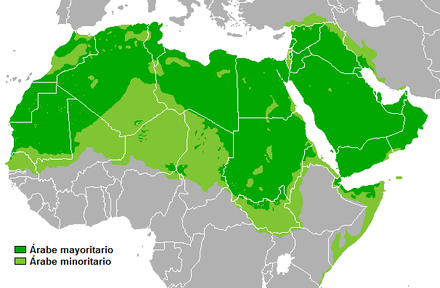
This is the single most important thing a client working with Arabic content needs to understand. Arabic spans more than twenty countries, and across those countries it varies — in dialect, in vocabulary, in tone, in what sounds natural and what sounds foreign — more than most people outside the Arab world expect.
There are two broad layers to this:
The first is Modern Standard Arabic (MSA) — the formal written language used in news, official documents, literature, and formal communication. It’s understood everywhere and doesn’t belong to any single country. It’s also, in most cases, not how people actually talk — and not how people feel talked to.
The second layer is the dialects — Egyptian, Levantine (Syria, Lebanon, Jordan, Palestine), Gulf, Moroccan, and several others. Each is distinct. An Egyptian reader will understand Gulf Arabic, but it won’t feel like home. A Moroccan dialect can genuinely be incomprehensible to a reader from the Gulf.
Choosing the wrong register for your audience isn’t a small style error. It’s the equivalent of writing a warm personal letter in legal language — or launching a campaign in the wrong country entirely.
For a deeper look at how Arabic’s internal variation shapes communication, translation, and AI: (See our article: Arabic Is Twenty Languages Inside One — At Least)
What this means for your content in practice
Here is where most clients make their first mistake: they ask for “Arabic translation” without specifying which Arabic. The translator then makes a judgment call — usually defaulting to Modern Standard Arabic, because it’s safe and neutral. The result is technically correct content that feels like it was written for no one in particular.
The right choice depends on two things: who you’re targeting, and what you want your content to feel like.
When Modern Standard Arabic is the right choice
If your audience spans multiple Arab countries — a pan-Arab brand, a regional news source, an international NGO — MSA is your safest foundation. It reads as educated and neutral, without favoring any one country’s dialect. It’s also the right choice for formal documents, legal texts, academic content, and anything where precision matters more than warmth.
When dialect makes a real difference
If you’re targeting a specific market — a product launch in Saudi Arabia, a social media campaign in Egypt, an app aimed at young people in the Levant — the dialect choice changes everything. Egyptian Arabic is the most widely understood dialect across the Arab world, largely because of Egypt’s long dominance in film and television. Gulf Arabic carries associations of wealth and aspiration. Levantine Arabic tends to feel educated and literary.
These aren’t trivial associations. They shape whether a reader feels your content was made for them — or made for someone else and sent their way.
The register question — formal, friendly, or in between
Even within a single dialect, there’s another layer: register. How formal is the language? How direct? How much warmth is expected?
Arab readers generally expect a warmer, more relational tone in marketing and direct communication than Western audiences do. A cold, efficient style that works in a German product description can feel dismissive in Arabic. On the other hand, a level of formality that would seem stiff in English can feel genuinely respectful in Arabic business communication.
Getting this wrong doesn’t produce something obviously bad. It produces something that feels slightly off — and slightly off, in content aimed at building trust, is enough to lose the reader quietly.
A simple guide for your brief
You don’t need to become an expert in Arabic sociolinguistics. You need to answer three questions before your translator begins:
Where is your audience? A country, a region, or pan-Arab? If you don’t know, say so — a good translator can recommend the safer choice.
What is the context? Formal document, marketing copy, social media, personal communication, or something else? Each has its own expected register.
What do you want the reader to feel? Respected and informed? Warmly welcomed? Excited and energized? The answer shapes the tone more than any rule about dialect.
These three questions, added to the brief we discussed in the previous article, give your translator everything they need to make the right choices — instead of the default ones.
In the next article, we look at the people doing this work: Arab freelancers who specialize in content and translation. What makes the difference between a technically capable translator and one who produces Arabic that actually moves people — and what you’re really paying for when you invest in the second kind.
📌 Next: The Arab Freelancer Advantage: What You’re Actually Paying For