Gulf Arabic | The Most Ancient Arabic Still Spoken

Gulf Arabic is not the language of oil cities — it is the language of the land that predated oil by two thousand years. Words found in pre-Islamic poetry and Dubai cafés simultaneously.
← Previous: Iraqi Arabic | Ancient, Warm, and Closer to Fusha
A British linguist was taking notes in a Riyadh café when he heard an elderly man use a word he had never encountered before. He searched for it later in colloquial Gulf Arabic glossaries and found nothing. Then he searched in Lisan al-Arab — the classical thirteenth-century Arabic dictionary — and found it there, with the same meaning, and a verse from Imruʾ al-Qays as its citation.
He stopped and wrote in his notebook: “This man is not speaking colloquial. He is speaking an ancient Arabic he does not know is ancient.”
“Gulf” — A Name Smaller Than the Land It Describes
When we say “Gulf Arabic” we mean the dialect of the people of the Arabian Gulf. But this name contains a geographical and historical simplification worth pausing over.
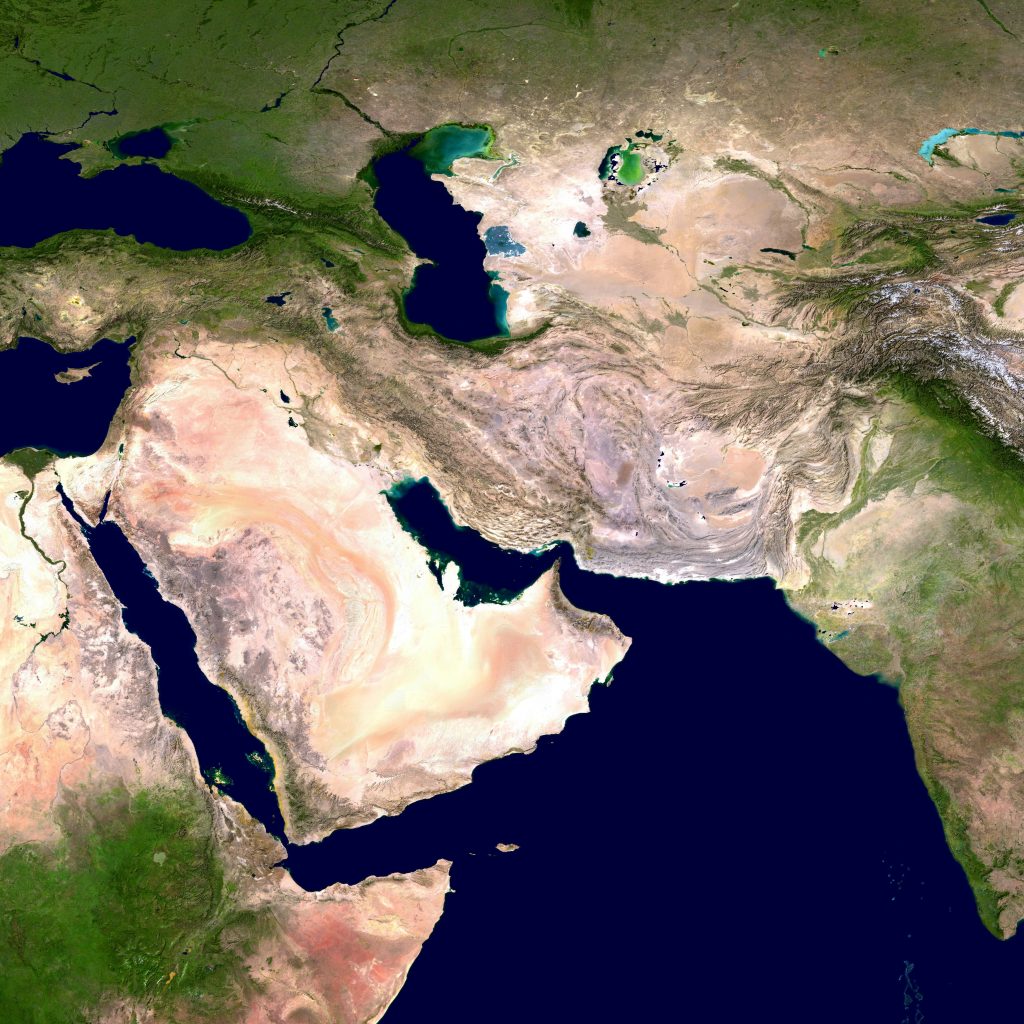
What is called the Arabian Peninsula today — which the ancient Greek and Roman sources called Arabia or Ariba — is a landmass surrounded by sea on three sides: the Red Sea to the west, the Arabian Sea to the south, and the Arabian Gulf to the east. It connects to the Asian continent in the north through the Levant and Iraq. It is a true peninsula — but its inhabitants are not all “Gulf people”.
The Arabs of this vast territory live in Najd, the Hijaz, Yemen, Oman, Hadramawt, and the expansive desert — and these are the people whose dialects carry the oldest layers of Jahili Arabic, from which the language of the Quran emerged. “The Gulf” in its contemporary sense — the UAE, Kuwait, Bahrain, Qatar — is a relatively recent grouping, tied largely to the formation of these small states that were British protectorates before gaining independence in the 1960s and 70s, eventually uniting under the Gulf Cooperation Council in 1981.
The label “Gulf” is a twentieth-century identity — not a language lineage thousands of years old. And the major cities that represent “the Gulf” in global consciousness today — Dubai, Abu Dhabi, Doha, Manama — are largely newly built cities hosting hundreds of thousands or millions of people of many nationalities, where the indigenous population is sometimes a numerical minority.
So what is “Gulf Arabic,” really?
Gulf Arabic is not the language of the oil cities — it is the language of the land that predated oil by two thousand years. The dialect of Najd and the Hijaz and the Arabian desert, whose name was borrowed to describe newer neighbours on the Gulf coast.
Classical Arabic Itself — A Dialect From Mecca
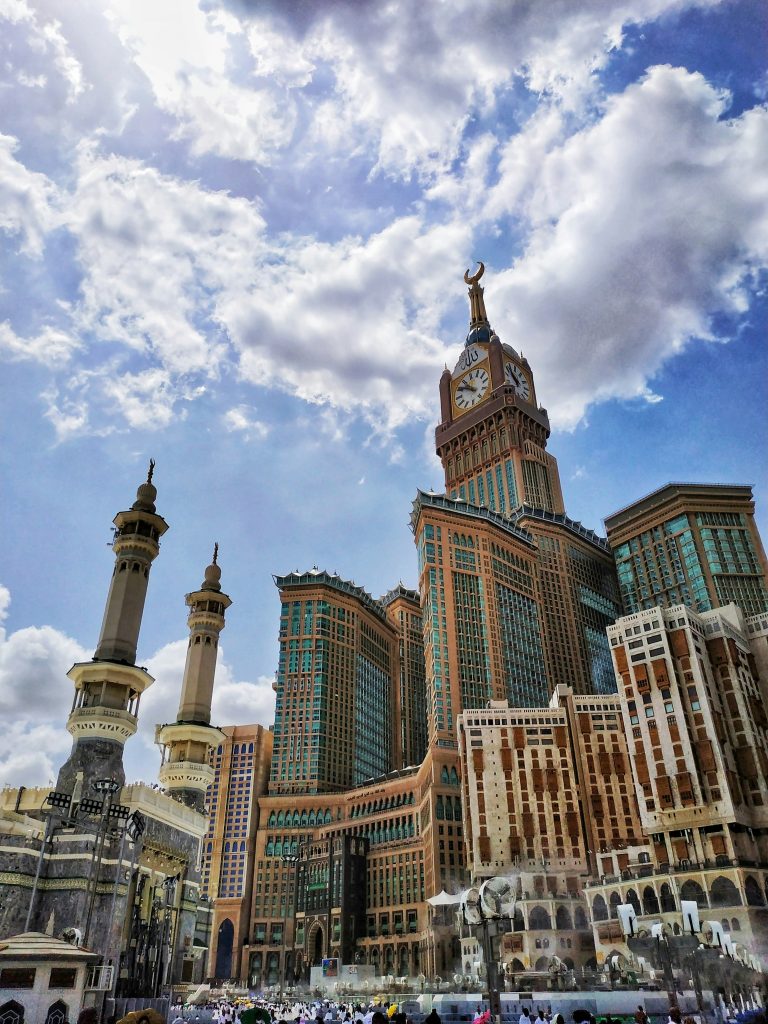
Here is a linguistic secret that few people know: the Classical Arabic we study in schools and read in the Quran is, in origin, a dialect — one among several Arabian dialects that existed across the peninsula before Islam.
Before Islam, Arab tribes spoke multiple related dialects: the dialect of Quraysh in Mecca, the dialect of Tamim in Najd, and those of Hudhayl, Tayyi’, Kinana, and others. The Adnani dialect of Quraysh — the dialect of Mecca specifically — is the one in which the Quran was revealed. And this selection changed the entire linguistic history of the Arabs.
Two forces preserved this dialect and elevated it to a standard. The first: the Quran — a text memorised with extraordinary precision in hearts and on pages, in which no letter could be altered.
The second: the Umayyad state, based in Damascus. When Abd al-Malik ibn Marwan sought to unify the administration of an empire stretching from Spain to Persia, he needed one official language. He adopted the Quranic dialect — the dialect of Quraysh — as the state language, and commissioned the development of its grammar and the standardisation of its written script (the addition of diacritics and dotting attributed to Abu al-Aswad al-Du’ali and those who followed him). A tribe’s dialect thus became a civilisation’s language.
The other dialects — of Tamim, Hudhayl, Tayyi’ — did not die all at once. Their remnants survived in the regions least swept by the great civilisational wave — in the desert, in the Najdi regions, in the south. These remnants are what we call “Gulf Arabic” today: linguistic layers less dense than those of the Levant, Iraq, and Egypt (because languages like Aramaic, Coptic, and Amazigh were not present here with the same weight), but deeply and authentically Arabic from within.
The Words That Did Not Die — Jahili Arabic in Today’s Cafés
This is what fascinates linguistic researchers: in the everyday speech of a Gulf speaker from Najd or Qassim or Yemen, there are words found in the pre-Islamic Mu’allaqat poems and in classical dictionaries, alive in the mouths of people who have never read them:
- “hijjīrā” — a deep-rooted habit, a repeated practice — found in Imruʾ al-Qays and heard in Najdi vernacular poetry today
- “yabghā” — he wants — Classical Arabic “yabghī” appears in the Quran (“wayabghūnahā ʿiwajā”) and the Gulf speaker uses it every day
- “widdī” — I wish, I’d like — from the Classical wudd (affection, wish)
- “al-ḥīn” — now — from Classical ḥīn (a time, a moment), rather than the Iraqi hassa, the Levantine hallaʾ, or the Egyptian dilwaʾti
Gulf Arabic did not drift far from Classical Arabic through layers of foreign languages — it remained in the original homeland of Arabic, so it retained from the Jahili period what other dialects did not.
Nabati Poetry — When the Desert Writes Its Own Verse
If Egyptian Arabic produced cinema and song, and Levantine Arabic produced drama and theatre, Gulf Arabic produced poetry — and what poetry.
Nabati poetry is the folk poetry of the Arabian Peninsula, written in Gulf colloquial for centuries — its origins traced to poets of the sixteenth century CE, developing into a deep popular literary tradition. Its themes: pride, love, wisdom, elegy, and description — the same as pre-Islamic poetry, but in the living language of the tribe.
The programme Sha’er al-Million (Poet of the Million) in Abu Dhabi — watched by millions of Arabs every Ramadan — is the world’s largest popular poetry competition. Poets from across the peninsula compete with verses in Gulf vernacular, before panels and audiences no less serious than any academic literary jury. This programme spread Gulf Arabic into pan-Arab consciousness in a way that television series could not — because poetry strikes deeper.
Mohammed Abdo and the Sung Classical — A Gulf Voice
In the previous article we discussed Kazem Al Saher’s decision to sing Nizar Qabbani’s Classical poetry to contemporary compositions. On the Gulf side, Mohammed Abdo — “Artist of the Arabs” — stands in a comparable and distinct position.
Mohammed Abdo is from Abha in southern Saudi Arabia, began his career in the 1960s, and continues performing today. He became known for singing Gulf Arabic in its traditional modes — but he also sang Classical Arabic and poems from outside the peninsula, moving between colloquial and formal registers with the natural ease of someone whose dialect was never far from the source. His voice, which transitions between Gulf vernacular and Fusha without effort or announcement, is a living demonstration of what we discussed: the original proximity between Gulf Arabic and Classical Arabic needs no performance to be visible.
The broader phenomenon — singing Classical Arabic to contemporary compositions, whether by Kazem, Mohammed Abdo, Majida Al Roumi, or Fairouz — confirms that Arab audiences from Morocco to the Gulf respond to Fusha when it is dressed appropriately for its time. Not as nostalgia, not as academia — but as a shared feeling that requires no translation.
Kuwait — The Cultural Platform That Preceded Oil Television
Development in the Arabian Peninsula has been rapid — the reason is obvious: oil revenues transformed semi-nomadic or semi-agricultural societies into modern states within a single generation. But this transformation was not culturally empty.
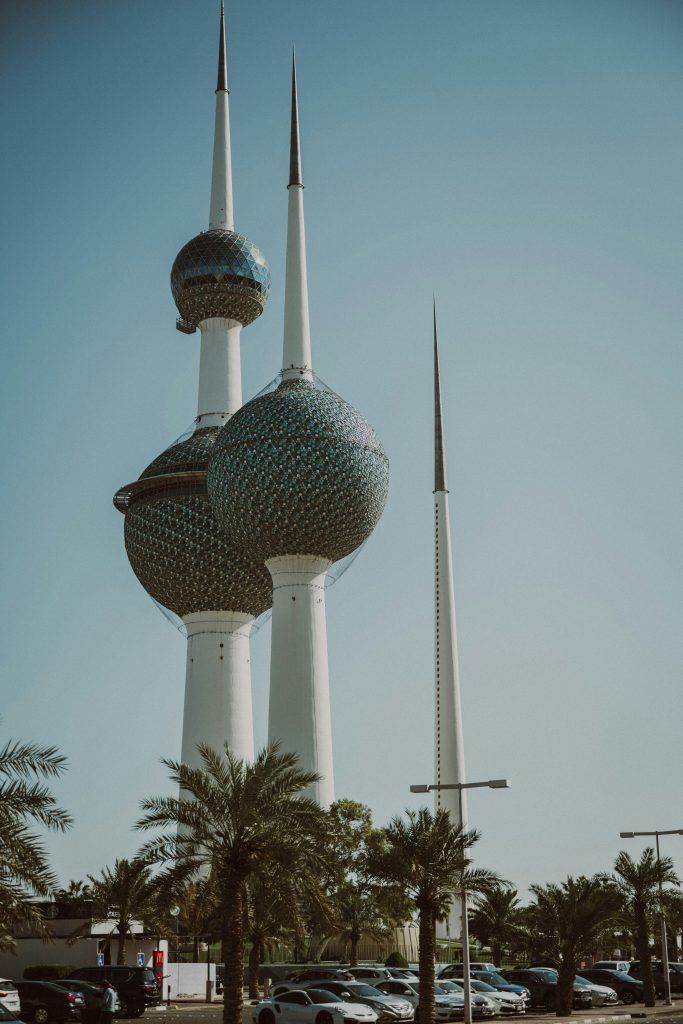
In the twentieth century, from the 1950s onward, Kuwait — despite its small size — was the pan-Arab cultural platform. Not because of its geography, but because it invested its early oil revenues in ambitious cultural projects that no other Arab state matched at the time.
Al-Arabi magazine launched in the late 1950s as a platform for all Arab pens — articles on literature, science, history, philosophy, and travel, in language clear to the non-specialist. It resembled the American Reader’s Digest in philosophy: elevated knowledge within reach of the ordinary reader — but with a purely Arab identity.
Then came the World of Knowledge series (ʿĀlam al-Maʿrifa), published by the National Council for Culture, Arts and Letters since January 1978 — a monthly book presenting a scientific or intellectual subject, authored or translated, at a nominal price. It reached over four hundred volumes covering philosophy, science, sociology, literature, and history. An entire Arab generation in the seventies, eighties, and nineties grew up on this series — seeing its spines lined up in order on home bookshelves was a marker of a cultivated household.
Add to this the academic Alam al-Fikr journal, the World Creations series of translated theatre exceeding four hundred texts, and Al-Arabi al-Saghir and Al-Arabi al-Ilmi for younger readers.
A small country in area, producing what states ten times its size and population did not. The reason is simple: a clear political and cultural will, arriving early when the money was present and the planning was serious.
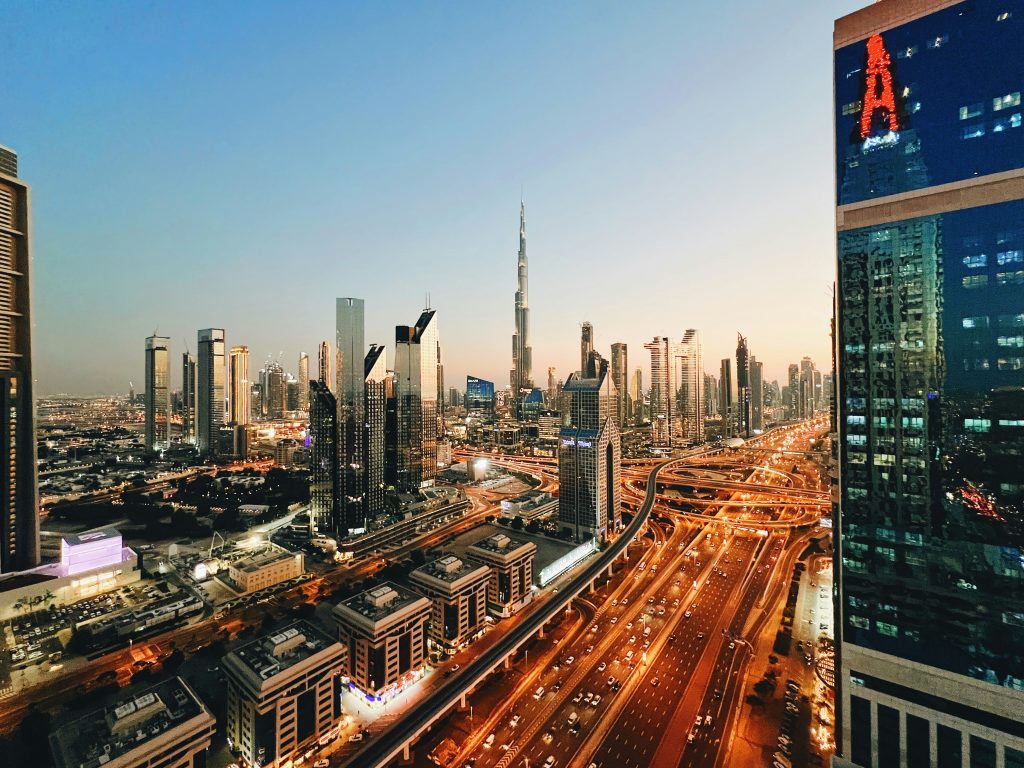
Today the Gulf’s cultural centre of gravity has shifted — by economic weight and demographic pull — to Dubai. The Dubai International Book Fair, publishing houses, literary events, cultural prizes, and digital media all make Dubai today what Kuwait was yesterday: a centre of Arab cultural aggregation and projection.
Digital Gulf Arabic — From the Desert to the Trending Page
The Gulf digital generation — Saudi, Emirati, and Kuwaiti especially — is among the most prolific producers of Arabic content on YouTube, TikTok, and Snapchat. This has created a new model of dialect spread that did not exist before.
Egyptian Arabic spread through cinema and television. Levantine Arabic through produced drama. Gulf Arabic is spreading today through short comedy, vlogs, and podcasts — content requiring no studio and no production budget, only a smartphone and an engaging personality. Gulf words have become familiar to Arabic speakers across the internet: yabghā, zayn, hala w ghala, mā qassar — all have entered the daily speech of Arabs from Morocco to Iraq through the small screen.
Gulf Arabic in the Table
| Meaning | Classical | Gulf | Levantine | Egyptian |
|---|---|---|---|---|
| How are you? | kayfa ḥāluk? | kayf al-ḥāl? / shlōnak? | kīfak? | izzayyak? |
| Now | al-āna | al-ḥīn | hallaʾ | dilwaʾti |
| Good | jayyid | zayn | mnīḥ | kuwayyes |
| He wants | yurīd / yabghī | yabghā | biddoh | ʿāyiz |
| Thank you | shukran | yiʿṭīk aṣ-ṣiḥḥa | yislamu | shukran / mashkūr |
| Nothing / there isn’t | lā yūjad | mā fī / mā fīh | mā fī | mafīsh |
Words That Open Gulf Doors
- “hala w ghala” — the warmest Gulf welcome, technically a response to “ahlan wa sahlan”: “hala” (welcome) and “ghala” (you are precious). Say it to a Gulf person and its warmth needs no explanation.
- “yiʿṭīk aṣ-ṣiḥḥa” — the Gulf’s most beautiful thank-you. Literally: “may God give you health.”
- “mā qassar” — you did not fall short. Said to express gratitude in a way that tells the other person they were generous beyond expectation.
- “zayn” — good, fine. A Classical Arabic word (from zāna yazīnu, to adorn) that survived in Gulf speech and is now spreading digitally to all Arabs.
Next in this series: Moroccan Arabic | When Even Other Arabs Get Lost. If Gulf Arabic is Arabic in its original homeland, Moroccan Arabic is its furthest point — a dialect that fuses Amazigh, French, Spanish, and Arabic into a single sound, and which, on first hearing, leaves you asking: is this even Arabic?
← Previous: Iraqi Arabic | Ancient, Warm, and Closer to Fusha | Next: Moroccan Arabic | When Even Other Arabs Get Lost →