Call of Duty | Real Life? Trump’s Iran Ultimatum and the Terrifying Zero Hour

It is 10 PM in Damascus. In five hours, either a diplomatic deal materializes or Trump says a civilization ends. Here is what war philosophers would say about tonight.
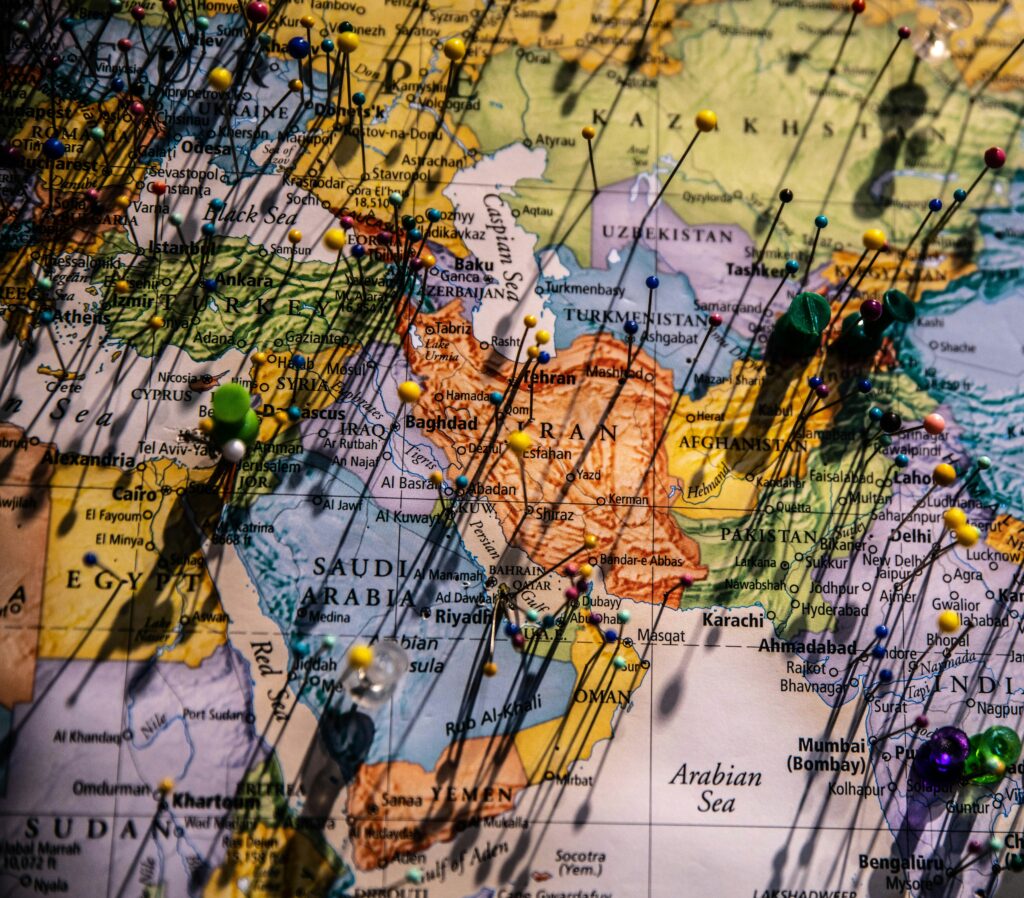
It is 10 PM here in Damascus. I cannot sleep — not because bombs are falling nearby, but because they might be falling somewhere else in a few hours, and the algorithm keeps feeding me updates I did not ask for. On Truth Social this morning — morning by East Coast time, which is our early afternoon — Donald Trump posted what might be the most operatic threat in the history of American foreign communication: “An entire civilization will die tonight and will never return” if Iran does not open the Strait of Hormuz by 8 PM Eastern. He added, characteristically, that he did not want this to happen but that it probably would.
By the time I finish writing this sentence, the White House will have published another update. The Pakistani mediators are still moving between capitals. Tehran’s civilians are queuing for bottled water and charging battery banks. And somewhere in a Pentagon situation room, someone is looking at a countdown that reads, in our time zone, the equivalent of 3 AM on April 8, 2026.
I want to talk about what is actually happening here. Not the geopolitics — others are covering that better than I can from this latitude. I want to talk about the philosophy of what we are watching. Because this is not simply a military standoff. It is a civilization telling a story about itself, using the language of video games and SpongeBob memes, while standing at the edge of something genuinely large.
The White House’s Playlist and the Problem of the Meme War
Let me start with the detail that, as far as I am concerned, tells you everything. The White House communications team — the official communications team of the most powerful military apparatus in human history — has been posting propaganda videos that mix real footage of airstrikes with scenes from Call of Duty, Iron Man, Top Gun, and Gladiator. Officially. With the presidential seal nearby. Someone in the building actually said, on record, that they were “grinding banger memes.”
The Iranian side responded by having their embassies post Lego animations of Trump as a Teletubby. One embassy released a graphic that read: “Trump, please talk. We are bored.”
This is the opening act of what may become a serious war. René Girard, the French philosopher of mimetic desire, spent his career arguing that violence escalates through imitation — that rivals become mirrors of each other, each reflecting the other’s aggression back until the cycle can only be broken by redirecting it toward a sacrificial target. He would have found the current meme war instructive: both sides are competing for the same audience (global attention), using the same tools (viral absurdity), each trying to out-irony the other. The violence underneath the humor is not diminished by the humor. It is, if anything, harder to see clearly because of it.
Gen Z, watching all of this on TikTok, has developed a reflex that is simultaneously sophisticated and dangerous: treating it like content. Not cynically — most young people are not indifferent to the prospect of a regional war. But the format of the information, delivered in the same feed as dance challenges and cooking tutorials, trains the nervous system to process catastrophe the same way it processes entertainment. The countdown to 8 PM Eastern is literally trending next to memes about it. You cannot tell from the interface which one is the joke.
What the Philosophers of War Would Say About Tonight
I have been reading war philosophy in the background of these news updates, and the dissonance is instructive. Sun Tzu, writing in the fifth century BCE, opens The Art of War with a claim that sounds abstract until nights like this: “The supreme art of war is to subdue the enemy without fighting.” Everything that follows in the book is a manual for making that possible — deception, intelligence, knowing your enemy’s weaknesses before committing to engagement. Tonight, by Sun Tzu’s standard, both sides are failing. A threat posted to a social media platform at dawn is the opposite of strategic opacity. It tells the opponent exactly where your red line is, how emotional your decision-making is, and how much of your credibility is staked on a specific time.
Carl von Clausewitz, the Prussian theorist whose On War remains the foundational text of Western military doctrine, gave us the phrase that never stops being relevant: “War is the continuation of politics by other means.” His point was not that war is casual. His point was that war always has a political objective — that the violence is instrumental, not terminal. The objective here is not the destruction of Iran. It is the opening of the Strait of Hormuz and, behind that, a renegotiated nuclear and regional arrangement. The question is whether the threat calibration — “an entire civilization will die” — is a precise political instrument or a rhetorical overflow that has already committed its sender to positions he cannot easily walk back.
Clausewitz also wrote about what he called “friction” — the gap between planned war and actual war, the fog of accidents and misread signals and human exhaustion that makes real military operations nothing like the blueprints. Friction is highest precisely at moments of ultimatum and deadline, when both sides are processing information under time pressure, when the space for miscalculation is at its widest.
B.H. Liddell Hart, the British strategist who spent his career arguing against the direct approach, would look at the current situation and note something quietly alarming: when both sides have committed publicly to positions, the psychological “dislocation” that his indirect strategy depends on becomes impossible to achieve. You cannot unhinge an opponent’s equilibrium when both sides are performing their resolve for a global audience in real time.
Thomas Schelling, the Nobel laureate who theorized nuclear deterrence in the 1960s, described what he called “the rationality of irrationality” — the strategic value of convincing your opponent that you might actually be crazy enough to do something catastrophically costly. The logic requires that the threat be credible. The danger is that making it credible sometimes requires actually following through.
The Numbers Behind the Drama: What Americans Actually Think
While the administration produces content and the cable networks produce heat, the polling tells a different story than either. A Reuters/Ipsos survey from March 31, 2026 found that 66% of Americans want a quick end to the conflict even if it does not fully achieve Trump’s stated objectives. A CNN/SSRS poll from April shows 66% oppose escalation and only 34% support the current military operation. Quinnipiac data shows Republican voters backing the president’s Iran policy at 80-86%, but total-voter support sits at 34-39%.
Put plainly: the American public, by a substantial majority, is not interested in a long engagement. They want a deal, and they want it quickly. The gap between that sentiment and the tone of tonight’s ultimatum is significant.
Larry Fink at BlackRock has framed the economic stakes bluntly: the scenario bifurcates into two extremes. If the Strait opens — by deal, capitulation, or some arrangement the mediators are frantically trying to construct — oil stabilizes around $40 per barrel and global growth continues. If the military campaign escalates into a sustained conflict, oil could reach $150 per barrel, with cascading effects on every economy already straining under post-pandemic debt loads. He puts the split at roughly 50/50. Markets, which are usually the most honest real-time poll available, are pricing in the uncertainty with a volatility that has not been seen since early 2020.
Democratic lawmakers — Representatives Jeffries, Ocasio-Cortez, and others — have filed impeachment motions, citing the “civilization” threat language. Prediction markets put the probability of a successful impeachment by mid-2026 at 4-13%. The Republican majority in Congress makes this a statement rather than a mechanism. It is worth noting not because it matters procedurally but because it shows the temperature of the opposition: even by the standards of the Trump era, threatening to end a civilization on a social media post at 8 AM has crossed a rhetorical threshold that feels new.
Iran’s Strategy Is Older Than America
It is easy, watching this from the American media ecosystem, to read Iran as simply “refusing” — intransigent, irrational, hostile. Maoist theory of guerrilla warfare offers a more useful frame. Mao’s foundational insight was that a weaker power can defeat a stronger one by making the cost of the fight exceed the value of the objective. “The guerrilla must move amongst the people as a fish swims in the sea.” Iran has been practicing a version of this for four decades — proxy networks, asymmetric pressure, the deliberate management of escalation to stay just below the threshold that would trigger a full American commitment.
Their rejection of the 45-day ceasefire proposed through Pakistan, and their counter-demand for a permanent settlement including sanctions removal and reconstruction guarantees, is not irrationality. It is a negotiating position that says: we will not accept a pause that resets us to the status quo. We want the full renegotiation, or we will hold our position. This may be wrong strategically — it may be miscalculating American willingness to absorb the costs — but it is a coherent position.
The civilians queuing for water in Tehran are not part of this calculation. They are the human cost of strategic patience, which is one of the things that makes war philosophy feel clinical from a distance and monstrous up close.
The Civilization Question: Spengler Was Not Wrong About Everything
Trump’s threat to end “an entire civilization” is, as a piece of language, genuinely strange. Civilizations do not die because a president posts a deadline. But the word “civilization” has been floating in the news feed all day, and it deserves a more serious treatment than the meme economy gives it.
Oswald Spengler, the German historian who published The Decline of the West in 1918 — the year the previous great order was finally collapsing after four years of industrial slaughter — argued that civilizations are organic: they are born, they mature, they decline, and they die. Not as a moral judgment but as a historical pattern. The “civilized” phase, in his schema, is actually the phase of decline — the replacement of living culture with mechanism, administration, and technique. We are very good at technique right now.
Joseph Tainter, the archaeologist who wrote The Collapse of Complex Societies in 1988, made a complementary argument from the material side: societies solve problems by increasing complexity, but complexity has diminishing returns. At some point, maintaining the infrastructure of complexity — international institutions, legal frameworks, military alliances, financial systems — costs more than it produces. When that happens, collapse is not a catastrophe that befalls a civilization from outside. It is a rational simplification.
Ray Dalio, who charts these cycles with the obsessive precision of someone whose business depends on predicting them, sees the current moment as the terminal phase of the American-led global order: a reserve currency under pressure, an overextended military, a domestic political consensus fracturing along lines that precede the current administration. He does not predict the date of collapse. He describes the conditions.
Ibn Khaldun, the fourteenth-century North African historian who invented something close to the science of history in his Muqaddimah, called the binding force of a civilization asabiyyah — social cohesion, collective purpose, the willingness to sacrifice for the group. He observed that civilizations lose this when they become wealthy and comfortable, making them vulnerable to groups with less wealth but more cohesion. Whatever one thinks of the current American administration, the polling data above suggests a society with deeply fractured asabiyyah — 34% supporting the military action, 66% wanting it to stop. That is not the profile of a society ready for a long fight.
The Algorithm Is Not the Apocalypse
Here is what I keep coming back to, at 10 PM in Damascus, with the feed still running.
We explored this dynamic in detail in our series on digital caves and algorithmic governance (see: Algorithmic Republic: Who Governs the Digital City? and The Digital Cave: Why We Choose Shadows Again). The recommendation algorithm that keeps showing you war updates is not neutral. It has been optimized to maximize your engagement, and nothing maximizes engagement like proximity to catastrophe. Your nervous system, designed over millions of years to treat predatory threats as the most urgent signals in the environment, is being hijacked by a machine that has learned to simulate the predatory signal for advertising revenue.
This creates a specific cognitive distortion: the feeling that the end is near. Not because the end is near — though it might be, for some geopolitical arrangements — but because the information environment has been tuned to make every crisis feel like the last crisis. Watching this in real time, with notifications every three minutes, produces a sensation of civilizational emergency that is disproportionate to any actual change in the underlying probability of catastrophe.
In our article on the philosophy of history and algorithmic power — The Executioner Who Needs No Excuse — we described the way the algorithm performs a kind of violence without intention: not because it wants to harm you, but because harm is a byproduct of the optimization. Tonight that optimization is running at full power, feeding a planet’s worth of anxiety about a deadline that may resolve, as most deadlines do, into something less than advertised.
Why the Feeling of Apocalypse Is Real — and Also Wrong
I want to be honest about something. The feeling that tonight might be the night something irreversible happens is not entirely irrational. Wars do begin with ultimatums. Civilizational orders do end. The particular arrangement of power that has characterized the world since 1945 is under genuine pressure from multiple directions simultaneously: the fracturing of dollar hegemony, the emergence of multipolar military capacity, the speed of technological change outpacing the institutions designed to manage it. Paul Virilio, the French urbanist and war theorist, spent his career arguing that every technological invention is also the invention of its catastrophe — that the ship invented the shipwreck, that the nuclear reactor invented the meltdown. The internet, in Virilio’s frame, invented the information bomb: a weapon that destroys not buildings but coherence, the shared sense of what is real.
We are living inside the information bomb’s detonation. The White House mixing Call of Duty footage with real airstrikes is not an accident or an error of taste. It is the information bomb in practice — the deliberate collapse of the distinction between simulation and reality, between the game and the war, because that collapse is strategically useful. If your opponent cannot tell which signals are real threats and which are performance, he cannot calibrate his response.
But — and this matters enormously — the fact that we are living through a genuine transition in the global order does not mean we are witnessing the end of civilization. Civilizations have been “ending” by some metric since the first civilization existed. Rome “fell” over roughly three centuries, and in its falling produced the seeds of what became medieval Europe, which produced what became the Renaissance, which produced what we are living in now. The Ottoman Empire “collapsed” and produced most of the current map of the Middle East, including Syria, where I am sitting at 3 AM writing this. The Soviet Union “fell” and produced thirty-one new states, some of which are now members of NATO.
The historian’s view — which is calmer and less engaging than the algorithm’s view — is that what looks like apocalypse from inside the moment usually looks, from outside it, like a transition. Painful, often violent, frequently unjust — but a transition. The system does not end. It reorganizes. The complexity collapses to a simpler form, and then the next cycle of complexity begins.
Plato’s philosopher, in the allegory of the cave — which we have been returning to throughout our Silicon Cave series (Plato’s Cave: A Late Reading) — does not come out of the cave and find the sun pleasant and easy. He is temporarily blinded. The light is overwhelming precisely because his eyes were calibrated for darkness. What he eventually learns is that the darkness was not the whole story — that there was a larger context in which the shadows made sense as shadows, rather than as the only reality.
The information ecosystem of April 7, 2026, at 3 AM Damascus time, is the cave. The shadows on the wall are moving very fast tonight, and they are very vivid, and the algorithm is doing everything in its power to make sure you do not look away. But the light is still there, outside the feed.
The Child Who Thinks the World Ends at Bedtime
There is a specific feeling that children have before sleep — the irrational but vivid conviction that the darkness outside the bedroom window contains something irreversible, something that will not be there in the morning. Every child who has lived through this feeling knows, in retrospect, that the morning always came. The darkness was real. The danger was not.
The adult human mind is not immune to this. It is, in fact, specifically vulnerable to it when the information environment is constructed to simulate permanent threat. The feeling that civilization might end tonight — tonight specifically, because the clock says 8 PM Eastern, because the posts have been coming in all day, because the feed never sleeps — is a genuine feeling. It deserves to be taken seriously as a psychological fact. But it should not be confused with a historical judgment.
Civilizations do not end because a president posts a deadline on a social media platform. They end because the accumulated weight of their contradictions exceeds the capacity of their institutions to contain them — slowly, usually, over decades, sometimes over centuries, with long periods of apparent stability between the convulsions. The Roman Empire felt like it was ending at many points before it actually did. The British Empire felt like it was eternal until it very suddenly wasn’t. The American century may be shortening. The global order that emerged from 1945 is under genuine structural pressure.
But none of that makes tonight’s 8 PM deadline the hinge of history. It makes it one data point in a very long process that was underway before any of us were born and will continue after we are gone.
The philosophers of war — from Sun Tzu to Schelling — all agree on one thing: the actor who mistakes performance for reality, who cannot distinguish between the signal and the noise, is the one who makes the worst decisions. Tonight, the most dangerous thing is not the deadline. It is the conviction, manufactured and amplified by the information environment we described in our Silicon Cave series, that we are watching the last scene.
We are almost certainly not. The morning will come. The civilizational renegotiation will continue, messily and painfully, through channels that do not trend on TikTok. And whoever is in that situation room, looking at the clock, will make decisions shaped by interests and calculations that predate the meme war and will outlast it.
It is 3 AM. I am going to try to sleep.
References and Sources
- Trump posts on Truth Social, April 7, 2026 — reported by CNN, NBC News, The New York Times.
- U.S. strikes on Kharg Island — CNN Live Updates, Fox News, April 7, 2026.
- Iran rejection of 45-day ceasefire — AP News, Reuters (via U.S. outlets), Washington Post, April 7, 2026.
- Trump interview with Bret Baier, Fox News, April 7, 2026.
- Reuters/Ipsos poll on American public opinion — March 31, 2026.
- CNN/SSRS poll — April 2026.
- Quinnipiac University poll — April 2026.
- Larry Fink, BlackRock — quoted in Fortune, March 25, 2026.
- White House video posts mixing Call of Duty and real footage — Mashable and broader U.S. coverage, 2026.
- Sun Tzu. The Art of War. Translated by Lionel Giles.
- Clausewitz, Carl von. On War. Translated by Michael Howard and Peter Paret. Princeton University Press, 1976.
- Liddell Hart, B.H. Strategy: The Indirect Approach. Faber and Faber, 1954.
- Schelling, Thomas. The Strategy of Conflict. Harvard University Press, 1960.
- Spengler, Oswald. The Decline of the West. 1918.
- Tainter, Joseph. The Collapse of Complex Societies. Cambridge University Press, 1988.
- Dalio, Ray. Principles for Dealing with the Changing World Order. Simon & Schuster, 2021.
- Virilio, Paul. The Information Bomb. Verso, 2000.
- Ibn Khaldun. The Muqaddimah. Translated by Franz Rosenthal. Princeton University Press, 1967.
- See also: Plato’s Cave: A Late Reading
- See also: Algorithmic Republic: Who Governs the Digital City?
- See also: The Digital Cave: Why We Choose Shadows Again
- See also: The Executioner Who Needs No Excuse: From Colt to the Algorithm