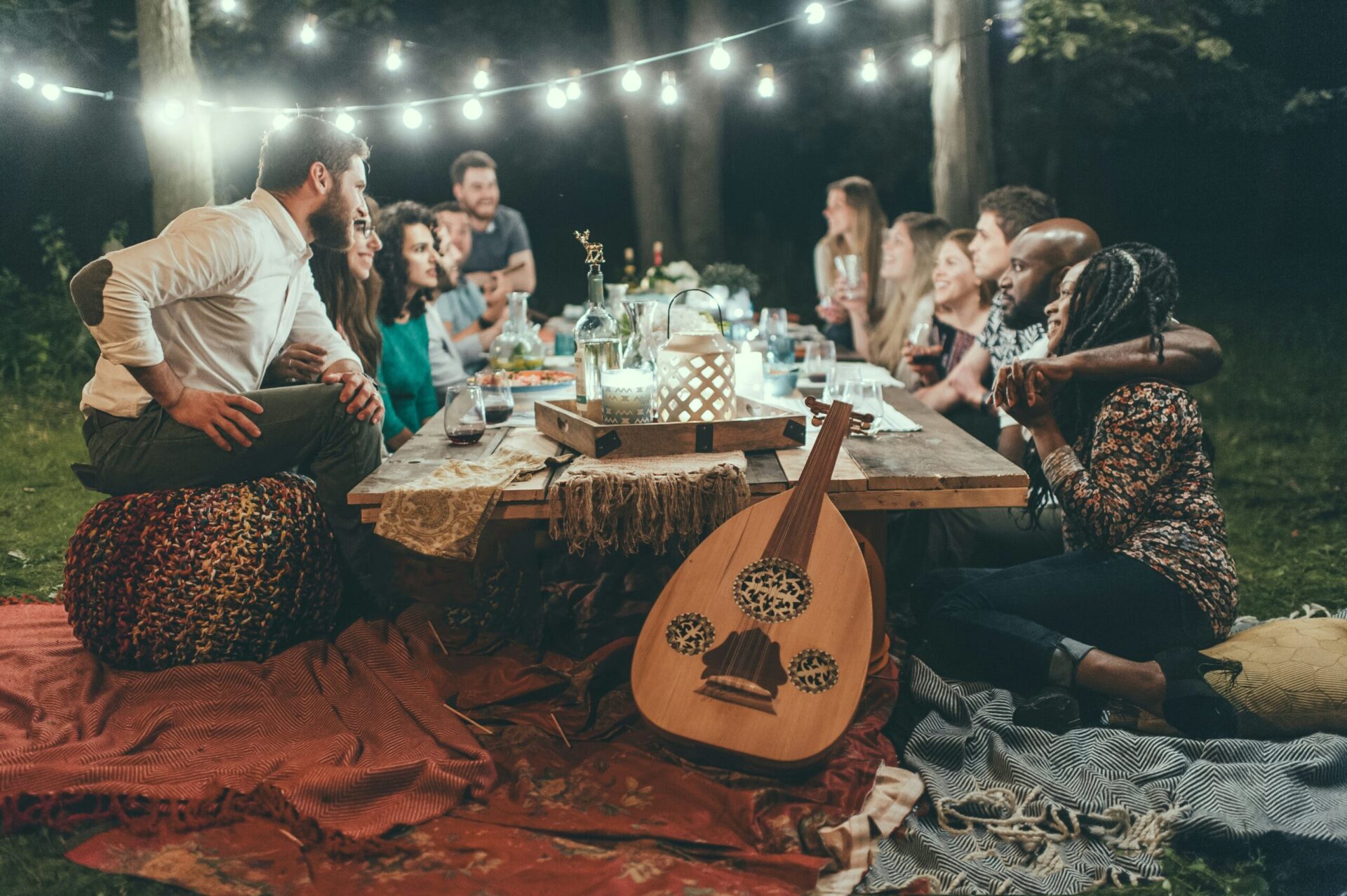
Arab American Traditions: Family, Celebrations & Identity

How Arab Americans preserve traditions of hospitality, Eid celebrations, dabke, calligraphy, and storytelling across generations — and how younger Arabs are making them their own.
There is a story told about the Lebanese-American writer Gibran Khalil Gibran that may or may not be literally true, but that captures something essential. When he arrived in Boston as a young boy, his mother — still carrying the habits of a village in Mount Lebanon — would invite strangers off the street to eat with the family. She had carried the tradition of diyafa across the Atlantic Ocean unchanged. The place was different. The people were different. The gesture was exactly the same.
That is the story of Arab American traditions in microcosm: practices formed over centuries, carried in memory and body across oceans, set down in a new country, and — stubbornly, creatively, sometimes imperfectly — continued. Not because they were required, but because they were felt to be necessary. Because the alternative — to let go of them entirely — would mean letting go of something that could not be replaced.
This is the fourth and final article in our series on Arab American Heritage Month 2026, and it concerns the traditions that have proven most durable across the journey from the Arab world to the United States: the customs of hospitality and family, the religious and seasonal celebrations, the arts of calligraphy and folk dance, and the ways in which a new generation is choosing to hold onto all of this while building something of their own.
Family and Hospitality: The Tradition That Travels Best
If you ask Arab Americans across generations what they feel is most essentially Arab about their families, the answer is rarely a specific food or a specific holiday. It is something more structural: the role of the family as the primary unit of meaning, and the practice of hospitality as a moral obligation, not a social option.
Diyafa — The Duty of the Open Table
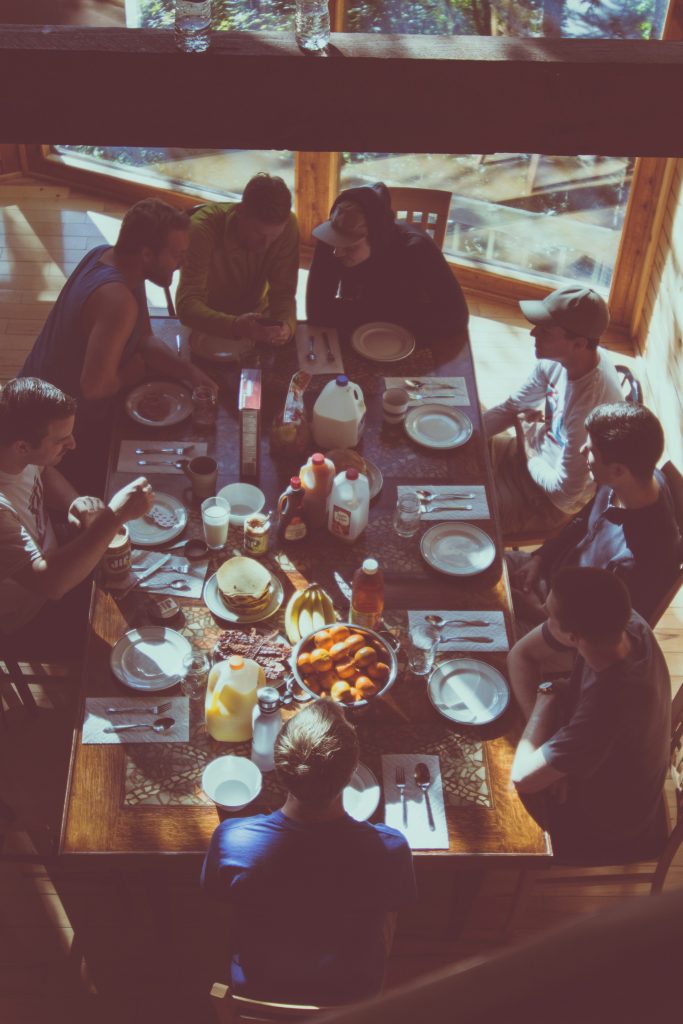
Diyafa (الضيافة) — the Arabic concept of hospitality — is not merely a custom. It is a social contract embedded so deeply in Arab culture that to receive a guest poorly is understood as a form of dishonor. In practice, this means that no Arab American home receives a visitor without offering food and drink, that the guest is always served the best of what is available, and that the host’s own needs are subordinated to the guest’s comfort for the duration of the visit.
The origins of this code reach back to the harsh realities of desert life, where receiving a traveler and providing shelter and food could be the difference between life and death. The tradition has long since detached from that original context, but the emotional logic remains: hospitality is not generosity by choice; it is a responsibility by nature. In Arab American communities, this translates into a specific social texture — houses where you do not leave without eating, where the table expands to accommodate whoever arrives, where refusing food is understood as a small rejection.
Second and third-generation Arab Americans often describe this as one of the most powerful cultural inheritances they have received — and one of the most difficult to maintain in an American social context where dropping by unannounced is considered unusual and where dinner invitations are formal affairs planned weeks in advance. The negotiation between Arab hospitality culture and American social norms is ongoing, often humorous, and almost always resolved in favor of the food.
The Gathering as Institution
In Arab American family life, the weekly or monthly gathering — usually centered on a large shared meal, often prepared collaboratively over several hours — functions as the primary site of cultural transmission. It is where Arabic is spoken or at least mixed with English; where grandparents tell stories that have no English equivalent; where the younger generation learns, through the simple act of sitting at a large table, what it means to come from somewhere specific.
These gatherings are also where the intergenerational negotiation of identity happens most visibly. A grandmother might cook a dish that takes three days of preparation; her granddaughter might document it on a phone to share on social media and receive ten thousand views from Arab diaspora communities across the world who recognize, in that specific dish, their own grandmother’s kitchen. The tradition is the same. The medium has changed entirely.
Celebrations and Holidays: The Calendar of Arab American Life
Arab American communities span multiple religious traditions — Muslim, Christian, Druze, and others — and the holidays they observe reflect this diversity. What they share, across religious lines, is the pattern of celebration itself: the insistence on gathering, on cooking, on marking time with communal ritual.
Eid al-Fitr and Eid al-Adha
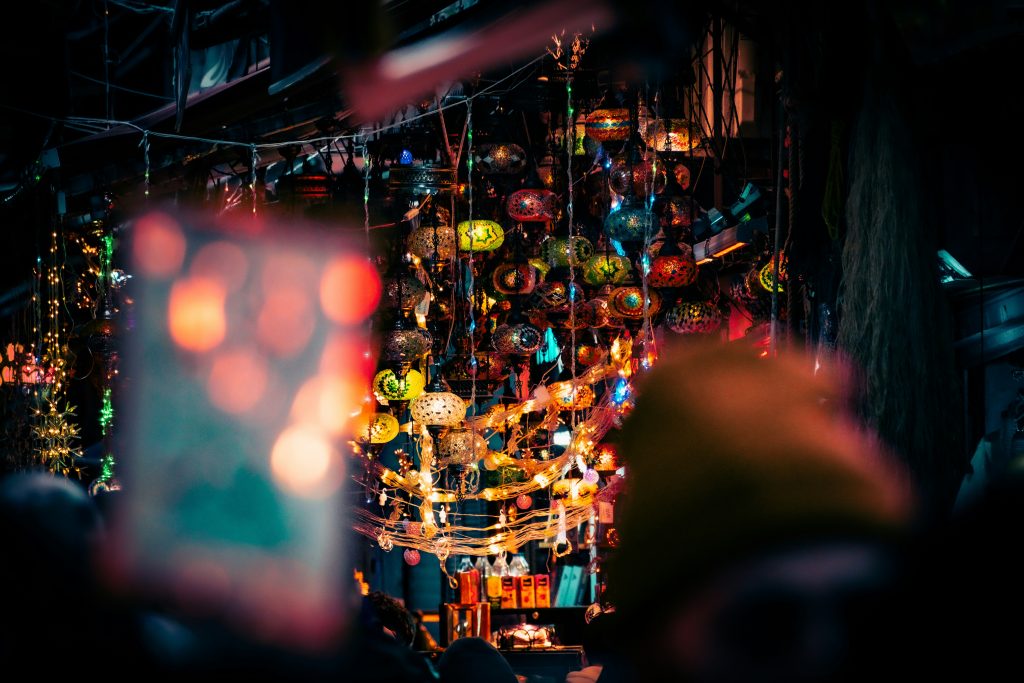
For Muslim Arab Americans, the two Eids are the year’s defining celebrations. Eid al-Fitr, marking the end of Ramadan, is accompanied by new clothes, sweet pastries (ma’amoul filled with dates or nuts is the quintessential Eid sweet), family visits, and in Arab American communities, an almost overwhelming series of door-to-door calls to greet neighbors and relatives. In cities like Dearborn, Eid has become a publicly celebrated holiday — with mosque prayers attended by tens of thousands, street markets, and civic recognition from local government.
Eid al-Adha, marking the conclusion of the Hajj season, is observed with communal prayer and, in many families, the tradition of sharing meat with neighbors and those in need — a practice that Arab Americans have adapted creatively to urban American contexts, often through donations to food banks and community organizations.
Ramadan: The Month That Restructures Time
Ramadan in Arab America is perhaps the most culturally rich of all observances — a month during which the rhythm of daily life changes fundamentally. The pre-dawn meal (suhoor), the breaking of the fast at sunset (iftar), the communal prayers of Tarawih — all of these restructure time and social life in ways that are experienced as deeply bonding even by Arab Americans who are not particularly observant at other times of year.
Iftar gatherings in Arab American communities have also become cross-cultural events: mosques and cultural centers across the country host iftars that invite non-Muslim neighbors, colleagues, and public officials, transforming a religious observance into an opportunity for broader community connection. In 2026, many Arab American organizations are hosting public iftars as part of their National Arab American Heritage Month programming.
Christmas and Easter — The Christian Arab American Calendar
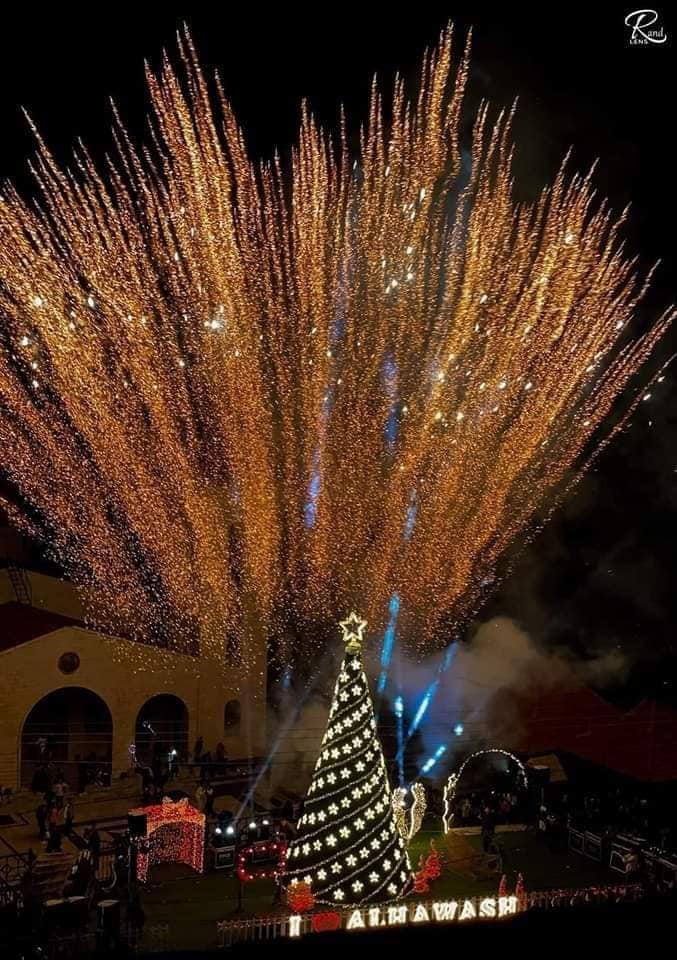
A significant portion of Arab Americans are Christian — Lebanese Maronites, Syrian Orthodox, Egyptian Copts, Palestinian Christians — and their religious calendar is an important part of the community’s cultural texture. Arab Christian celebrations of Christmas and Easter often incorporate elements that are specific to their regional tradition: the Syrian or Lebanese Christmas table with its particular sweets; the Coptic celebration of Easter with specific breads and foods; the communal observances that mark these holidays as distinctly Arab Christian rather than simply American Christian.
Weddings: The Tradition in Full
If there is a single event in Arab American life that brings all the traditions together simultaneously — the food, the music, the dance, the hospitality, the extended family, the communal celebration — it is the wedding. Arab American weddings are famously elaborate affairs, often spanning multiple days and events (the engagement party, the henna night, the wedding itself, and sometimes a day-after brunch), bringing together families that may have spread across multiple American cities or even multiple countries.
The dabke — the Levantine line dance in which participants link arms or hold hands and stomp in unison to increasingly fast rhythmic patterns — is the centerpiece of the wedding dance floor in many Arab American communities. It is participatory, not performative: the goal is not to watch dancers but to join them, and the most respected position is at the front of the line, leading the group. Children learn it by imitation; teenagers teach each other the steps at family parties; adults lead it with a pride that is inseparable from identity.
The Faris El-Layl Folkloric Dance Troupe, which performed at the 2026 NAAHM signature event in Alexandria, Virginia, is one of the most visible American companies keeping this tradition alive in formal performance contexts — but its real vitality is in the wedding halls and community centers where it is danced by ordinary people who learned it from their parents.
Art, Calligraphy, and Folklore: The Aesthetic Traditions
Arab American cultural preservation extends beyond food and celebration into a rich array of artistic practices — forms of expression that require skill, time, and transmission from one generation to the next.
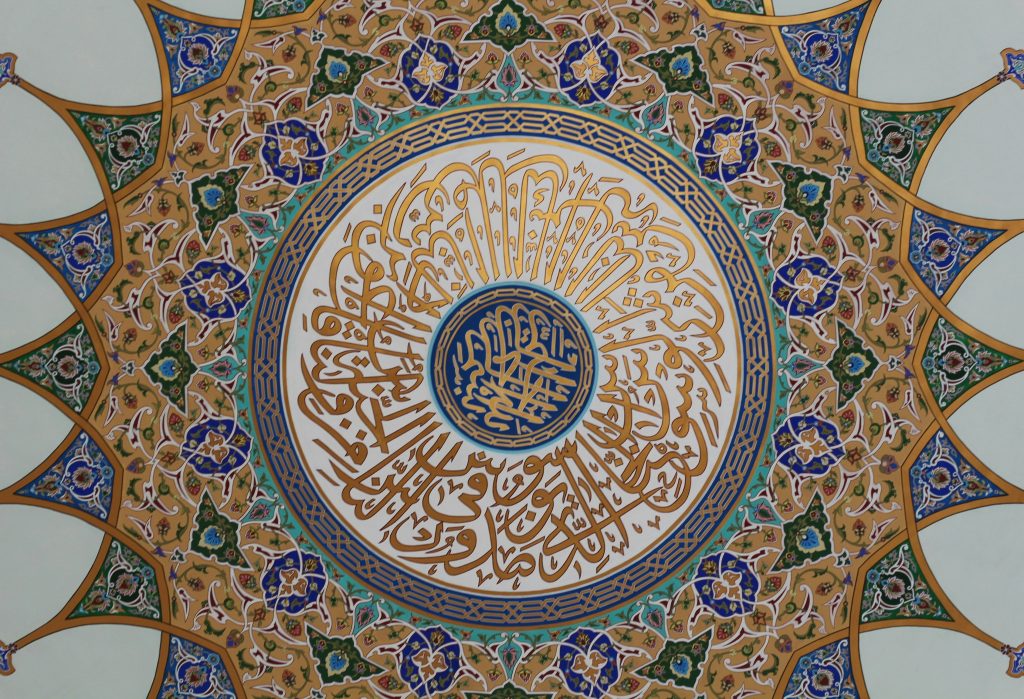
Arabic Calligraphy
Arabic calligraphy is one of the most refined artistic traditions in the world — a practice in which writing is elevated to a visual art form, in which the shape of a letter carries aesthetic meaning alongside its linguistic content. There are six classical styles (Naskh, Thuluth, Diwani, Ruq’ah, Kufi, and Nastaliq among the most recognized), each with its own applications and aesthetic principles, and mastery of even one requires years of dedicated practice.
In Arab American communities, calligraphy has been maintained through cultural centers, mosque programs, and family instruction, and has recently experienced a significant revival among younger Arab Americans who encounter it first as digital art — calligraphic scripts used in graphic design, murals, social media, and fashion — and then trace that interest back to traditional practice. The Arab American National Museum in Dearborn, Michigan, regularly hosts calligraphy workshops and exhibitions, and its Coming to America exhibit documents the full arc of the Arab American experience in a form that includes visual art traditions.
Oral Storytelling and Poetry
The Arabic oral tradition is vast and ancient. From the hakawati (the professional storyteller of the traditional Syrian coffeehouse, who recited epics and folk tales to gathered audiences) to the spoken-word poetry of contemporary Arab American artists, the tradition of using language in performance — narrative, poetic, politically charged — runs through Arab American cultural life. Arab American spoken-word poets like Suheir Hammad, who performed at the 2004 Democratic National Convention, represent one line in this tradition; the storytelling events organized by Arab American cultural organizations represent another.
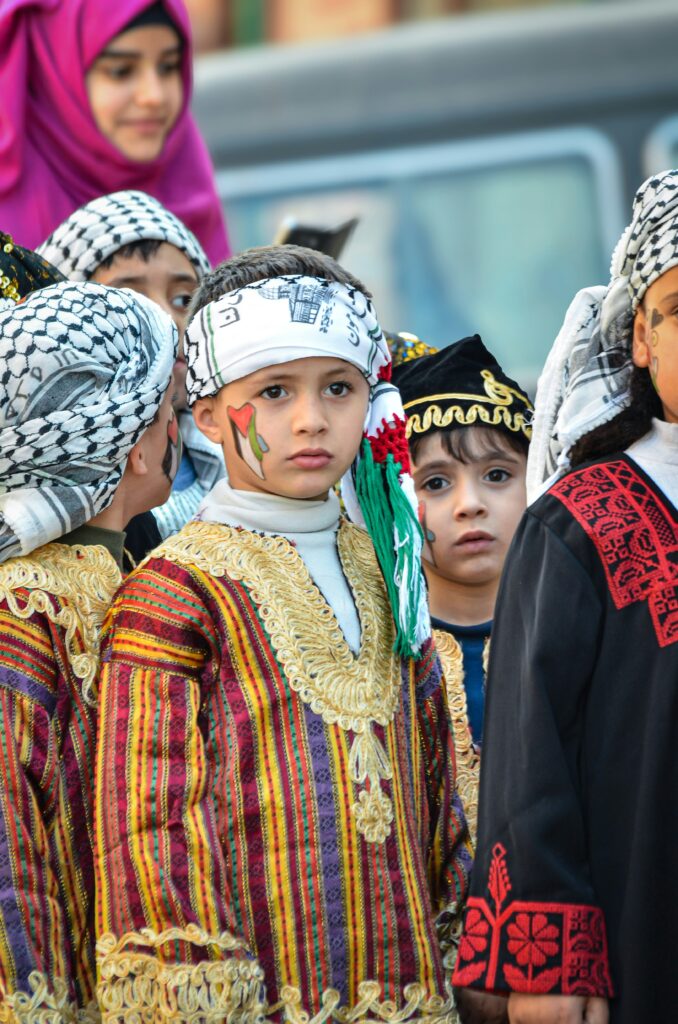
Embroidery and Textile Arts
Palestinian tatreez — the tradition of cross-stitch embroidery specific to Palestinian villages, in which the patterns of the stitching identify the maker’s geographic origin — is one of the most emotionally charged of all Arab American artistic traditions, because it is inseparable from the history of displacement. Palestinian women have maintained tatreez across generations and continents as a form of cultural memory. In the United States, organizations like the Palestinian Museum of Natural History and Humanity in Ramallah and various diaspora groups have worked to document and teach the tradition, and it has been recognized by UNESCO. Many Arab American women wear tatreez-embroidered clothing to formal community events as a deliberate act of cultural affirmation.
How Younger Generations Are Reinventing Traditions
The most interesting cultural story in Arab America in the 2020s is not the preservation of traditions in their original form — it is what the second, third, and fourth generations are doing with them. The general pattern is neither simple assimilation (losing the traditions entirely) nor simple conservation (maintaining them unchanged). It is something more creative: selective adaptation, in which specific traditions are maintained, modified, or invented based on what feels authentic to people who are genuinely and simultaneously Arab and American.
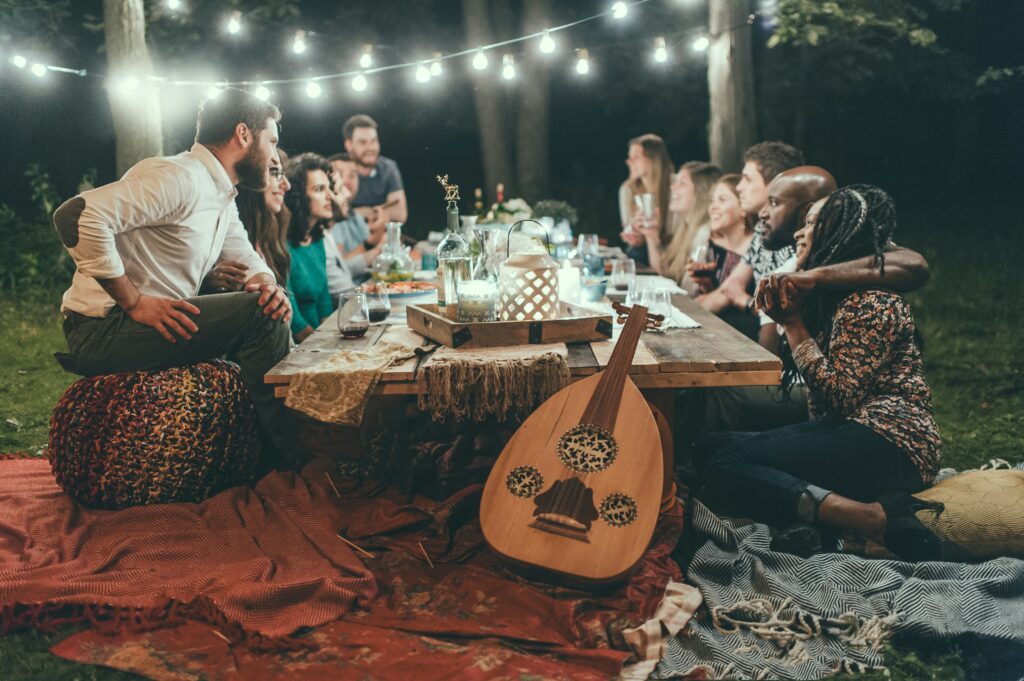
Food social media, for example, has become a primary vehicle for intergenerational cultural transmission. Arab American home cooks document their grandmothers’ recipes and share them to audiences of hundreds of thousands — many of whom are Arab diaspora members who recognize the dish but may not know the specific regional variant being described. The recipe becomes a form of cultural cartography: locating yourself within the Arab world’s diversity by showing exactly how your family made a particular dish.
Dabke has been adapted into fusion dance performances, TikTok videos, and even aerobics classes in some Arab American communities — adaptations that purists sometimes find uncomfortable, but that are demonstrably effective at carrying the practice to people who would not encounter it otherwise. The debate within communities about what counts as authentic preservation and what counts as dilution is itself a healthy sign: it means the tradition is alive enough to be contested.
Arabic language — perhaps the most fundamental carrier of cultural identity — is being maintained by a growing number of Arab American families through deliberate effort: heritage language schools, online tutoring, Arabic-language camps for children, and increasingly, bilingual social media content that explicitly addresses the experience of being Arab American and English-dominant. The cultural conversation about language loss and language revival is one that Arab American families have in common with Lebanese, Egyptian, and Syrian families everywhere. We have explored the deep dimensions of this experience in our series on multilingual families: (See our article: How to Keep Your Heritage Language Alive When You Live Abroad)
At Zy Yazan, we work daily at the intersection of Arabic and English — and we see, in the cultural negotiations of Arab American life, a version of the work we do every day: the effort to carry meaning across a gap without losing what made it meaningful in the first place. Translation, in this broader sense, is what Arab American tradition is.
A Video from the 2026 Celebrations
In honor of National Arab American Heritage Month 2026, UC Davis Chancellor Gary S. May joined Professor Ali H. Musleh to share a message celebrating the Arab American community — its culture, traditions, and contributions to American life. The video is a brief but warm testament to the kind of institutional recognition that has grown significantly since the initiative launched in 2017:
And this short PBS-style celebration of Arab American Heritage Month — produced for broad American audiences — offers an accessible and visually compelling introduction to the community and its contributions:
Closing the Series: What Traditions Are For
We began this series with the observation that Arab American Heritage Month is, at its core, an act of making visible — of insisting that a community of 3.7 million people be seen in its full complexity, rather than reduced to a news item or a security concern or a demographic category.
What traditions do, in this context, is provide substance to that visibility. They say: we are not only here, we come from somewhere specific, and we have been carrying these specific practices across time and distance because they matter to us. The hospitality that greets every visitor at every Arab American door. The Eid sweets made from a recipe passed through three continents. The calligraphy on a wall that spells out a verse the writer learned as a child. The dabke danced at a wedding in Michigan by people who have never seen the Levant but whose feet know the rhythm.
These are not performances for an outside audience. They are the ways a community talks to itself — across generations, across geographies, across the long distance between who we were and who we are becoming. And they are, in the most precise sense, the answer to the question that National Arab American Heritage Month invites Americans to ask: who are Arab Americans? They are this. They are the food, the music, the celebration, the tradition — and the ongoing, generative work of deciding what to carry forward and how.
This concludes our four-part series on Arab American Heritage Month 2026. We invite you to revisit all four articles: the main guide, cuisine, music, and this article on traditions — and to share them with anyone who wants to understand Arab American culture beyond the headlines.
References
- Arab America — NAAHM 2026 Signature Event
- Arab American National Museum — Dearborn, Michigan
- Arab American Institute — Heritage Month Resources
- Michigan School of Psychology — Celebrating Arab American Heritage Month 2026
- YouTube — Arab American Heritage Month 2026 (UC Davis)
- YouTube — Celebrate Arab American Heritage Month
- Zy Yazan — Arab American Heritage Month 2026: Main Guide
- Zy Yazan — From Hummus to Knafeh
- Zy Yazan — The Rhythms of Arab American Heritage
- Zy Yazan — How to Keep Your Heritage Language Alive When You Live Abroad
Arab American Heritage Month 2026
Many Voices, One Community — Four Articles


Arab American Heritage Month 2026 — Four Articles | Zy Yazan