

From Hummus to Knafeh: Arab American Cuisine Guide

Discover how Arab American cuisine — from Lebanese kibbeh to Egyptian koshari — tells a story of family, hospitality, and flavor across generations and regions.
There is a moment known to every Arab who has spent time abroad — when a smell reaches you from a kitchen, or a restaurant, or sometimes just a street stall, and something in you stops. It is not quite homesickness. It is recognition. The smell of sizzling cumin and caramelized onions, or the faint sweetness of orange blossom water in a pot of atayef batter, or the slightly sour perfume of labneh draining through cloth. These are not just smells. They are coordinates. They tell you where you come from.
For Arab Americans — a community of 3.7 million people from more than 22 countries — food is perhaps the most democratic form of cultural memory. It requires no shared language. It survives translation. And it has, over the past two decades, moved from the margins of American dining to its very center. This April, as the United States marks National Arab American Heritage Month 2026, we take a long, unhurried look at the cuisine that has always been Arab America’s most persuasive ambassador — and the people who carry it forward.
Classic Dishes Every Arab American Family Loves
Ask an Arab American to name the dish that most immediately takes them home, and you will receive a different answer from every person you ask. That answer says something important about where they came from, who raised them, and which kitchen they grew up standing in. But certain dishes appear again and again across the geography of Arab America, functioning as a shared culinary vocabulary.
Hummus — The Ambassador Dish
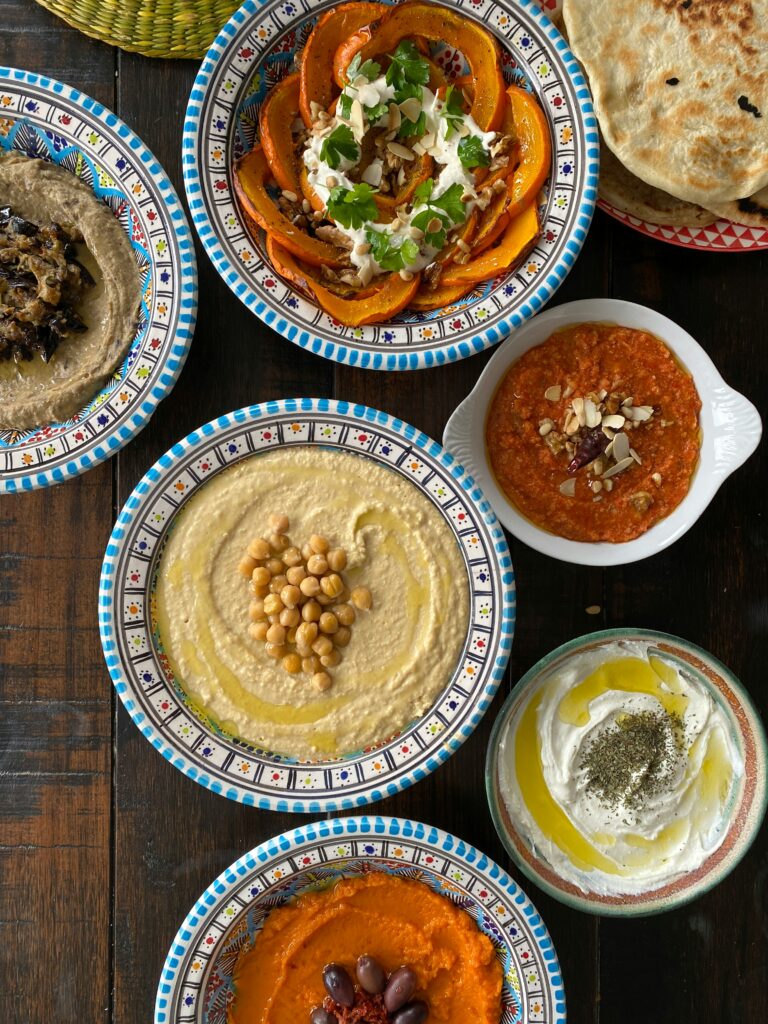
Hummus has become so thoroughly assimilated into American food culture that it is easy to forget it is not originally American. Made from cooked chickpeas blended with tahini, lemon juice, and garlic, it is eaten across the Arab world — though regional variations in texture, seasoning, and toppings are significant. Lebanese hummus tends toward smoothness and lightness; Palestinian hummus is often thicker, served warm, with a pool of olive oil and whole chickpeas. In Arab American homes, the recipe carries the fingerprint of each family’s specific origin.
Kibbeh — The Sunday Dish
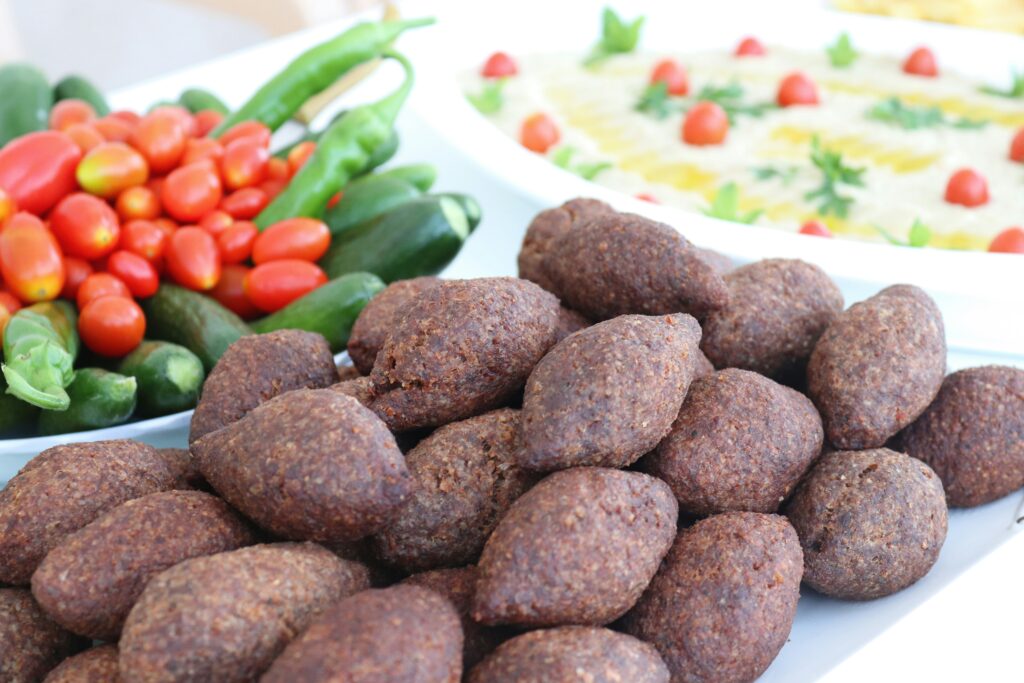
If hummus is the everyday ambassador, kibbeh is the Sunday project. Made from bulgur wheat and minced lamb or beef, it can be served raw (kibbeh nayyeh, considered a delicacy in Lebanon and Syria), baked into a tray layered with caramelized onions and pine nuts, or fried into oval shells filled with spiced meat. Kibbeh preparation in many Arab American families is a communal activity — grandmothers shaping by hand, children watching, the kitchen becoming a laboratory of inherited knowledge. It is, in the truest sense, a dish that cannot be rushed.
Grape Leaves (Warak Dawali) — The Exercise in Patience
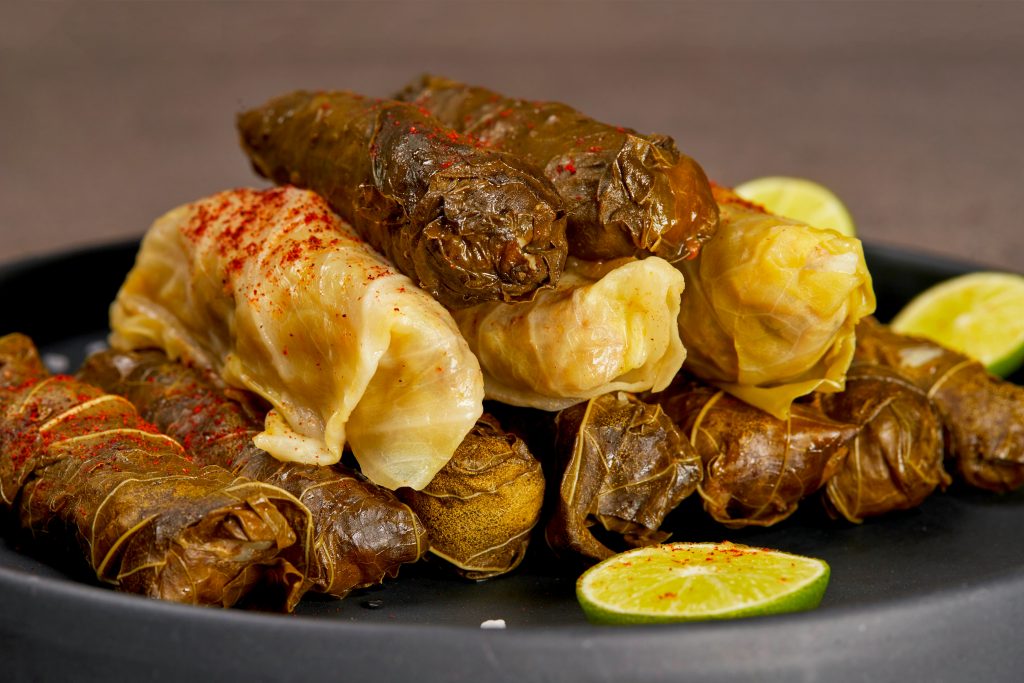
Rolling grape leaves is the task given to daughters. Or it was, in the generation that came before. Blanched grape leaves stuffed with a mixture of rice, tomato, and herbs — sometimes with lamb, sometimes without — rolled tightly and stacked in layers in a pot to steam for an hour or more. The rolled tightness of a grape leaf is a matter of family pride. “Ours are smaller,” an aunt might say, measuring with her fingers. “The other way, they fall apart.”
Tabbouleh and Fattoush — The Salads That Are Not Really Salads
Tabbouleh — finely chopped parsley, mint, tomato, and onion with a tiny amount of bulgur, dressed in lemon and olive oil — is so finely balanced that a small deviation in the parsley-to-bulgur ratio is enough to disqualify it in a purist’s eyes. Fattoush, with its toasted or fried pieces of pita, its sumac dressing, and its seasonal vegetables, is the more forgiving cousin — a salad that welcomes improvisation. Both appear on virtually every Arab American table when company is expected.
Knafeh — The Dessert That Requires a Crowd
Knafeh is not a dessert for one person. It is made from shredded wheat pastry or semolina layered over a filling of stretchy white cheese, soaked in sugar syrup scented with orange blossom or rose water, and sometimes topped with crushed pistachios. It arrives warm, it must be eaten immediately, and it is best shared. In the Palestinian tradition it is associated with the city of Nablus; in Lebanese and Syrian variants, the cheese and syrup ratios shift. In Arab American neighborhoods from Dearborn to Brooklyn, knafeh has become the dish that announces celebration — and that keeps people at the table long after they planned to leave.
Regional Flavors in America: One Arab World, Many Tables
To speak of “Arab cuisine” as a single thing is like speaking of “European cuisine” — a useful shorthand that obscures an enormous diversity. The Arab world stretches from the Atlantic coast of Morocco to the Persian Gulf, encompassing radically different climates, agricultural traditions, and culinary histories. In America, these regional differences have been preserved, adapted, and in some cases fused in ways that would not have happened had the communities stayed in their countries of origin.
| Region | Key Flavors & Techniques | Signature Dishes in America |
|---|---|---|
| Levantine (Lebanon, Syria, Palestine, Jordan) | Fresh herbs, lemon, olive oil, sumac, za’atar, pomegranate molasses | Hummus, kibbeh, shawarma, man’oushe, fattoush, knafeh, musakhan |
| Egyptian | Deep flavor layers, fenugreek, dukkah, heavy use of legumes and slow cooking | Koshari, ful medames, molokhia, hawawshi, om ali |
| Gulf / Khaleeji (Saudi, Emirati, Kuwaiti, Bahraini) | Warming spices — cardamom, dried lime (loomi), saffron, rose water in savory dishes | Kabsa, machboos, harees, jareesh, balaleet |
| North African / Maghrebi (Morocco, Algeria, Tunisia, Libya) | Preserved lemons, harissa, chermoula, ras el hanout, slow-braised tagines | Couscous, tagine, b’stilla, merguez, makroud |
In cities with large Arab American populations, like Dearborn, these regional cuisines exist side by side, and a visitor to its main streets on a single afternoon might eat Lebanese sfeeha, Egyptian kushari, and Yemeni saltah before heading home with a box of Moroccan baklava. The proximity has produced creative cross-pollination — a Syrian-owned restaurant serving an Egyptian-influenced rice dish, or a Palestinian bakery incorporating Moroccan spice blends into its bread.
Arab American Chefs and Restaurants Making Waves
The past decade has seen Arab American chefs move from the community kitchen into the national culinary conversation — bringing with them ingredients, techniques, and stories that American diners had little prior exposure to.
Michael Rafidi — Washington, D.C.
Michael Rafidi, the Palestinian-American chef behind Albi (“my heart” in Arabic) in Washington, D.C., is perhaps the most visible figure in fine-dining Arab American gastronomy today. Albi has been awarded a Michelin star, and the Michelin Guide praised its open-fire cooking, noting that Rafidi’s dishes weave flavors of the eastern Mediterranean with local ingredients full of surprises. Rafidi learned to cook at home with his Palestinian family; his grandmother, who immigrated to the U.S. in the late 1940s, remains a phone call away when he hits a creative wall at the restaurant. His companion café YELLOW, in Georgetown, incorporates Levantine flavors like sumac and orange blossom into traditional French viennoiserie — a croissant filled with za’atar and labneh that is deeply Arab American in its comfortable hybridity.
Rawia Bishara — Brooklyn, New York
Palestinian-American chef Rawia Bishara runs Tanoreen, offering a fusion of traditional Palestinian and Mediterranean dishes with a modern twist — musakhan rolls, lamb shank, and homemade hummus are among its favorites. Bishara, who opened Tanoreen in Bay Ridge, Brooklyn in 1998, represents an earlier generation of Arab American restaurateurs who built institutions long before Arab food became fashionable. Her restaurant is the kind of place where regulars have been coming for twenty years — where the food tastes like someone’s grandmother cooked it, because in a real sense, it does.
Reem Assil — Oakland, California
Reem Assil, a Palestinian-Syrian American baker and activist, opened Reem’s California in Oakland in 2017 with a mission that was as political as it was culinary: to build a community gathering space anchored in Arab street food — man’oushe flatbreads, seasonal mezze, Arabic sweets — made with California ingredients and values. The restaurant was named one of the best new restaurants in America by Bon Appétit, and Assil later published Arabiyya: Recipes from the Life of an Arab in Diaspora, a cookbook that doubles as a memoir of displacement, identity, and the act of cooking as resistance.
Al Ameer — Dearborn, Michigan
Al Ameer is a James Beard Award-winning institution and a staple of the Arab American community in Dearborn, known for its slow-roasted lamb, creamy garlic sauce, and fresh-baked bread. It is the kind of restaurant that serves as a community anchor — where Arab Americans bring non-Arab colleagues to explain who they are, and where three generations of a family might eat together on a Sunday after prayers.
“Food is a point of connection. At Albi, our tasting menu is served family-style so people can relax over a shared meal. We want our service to be intentional and polished but really welcoming and inviting.” — Chef Michael Rafidi
Four Easy Recipes to Try at Home
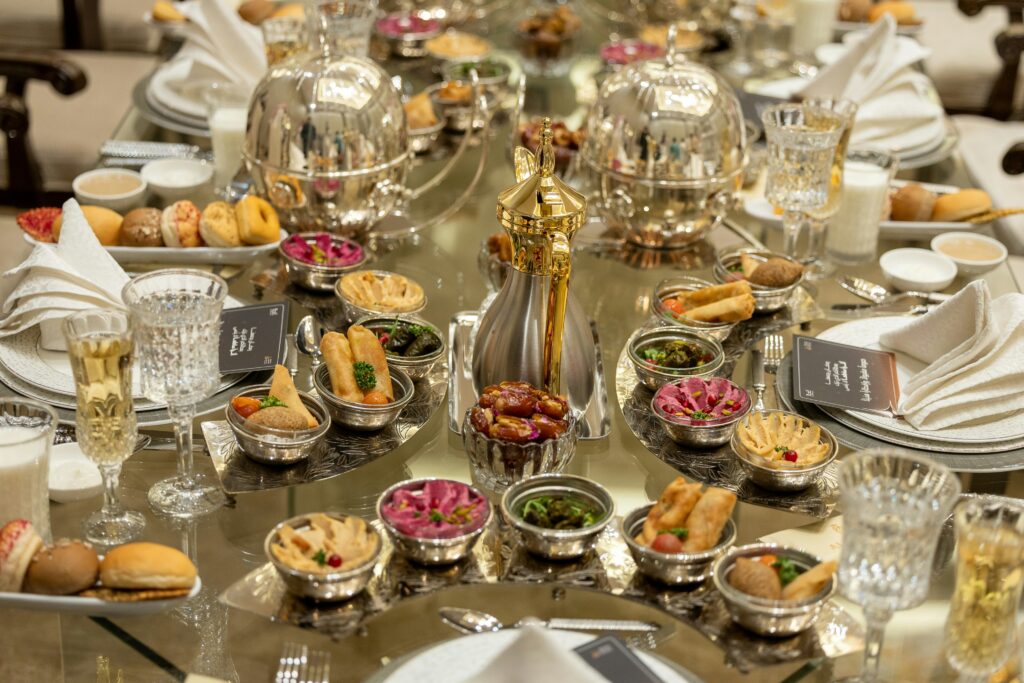
Arab cooking at home does not require a specialty store or a culinary education. Most of the ingredients called for below are available in any American supermarket. What they do require is time, attention, and a willingness to taste as you go — the three qualities that Arab cooks have always brought to the kitchen.
1. Hummus from Scratch
Serves: 6–8 as a dip
Ingredients: 1 can (400g) chickpeas (or 200g dried, soaked overnight and boiled until very soft) · 3 tablespoons tahini · juice of 1 large lemon · 1 small garlic clove · ½ teaspoon salt · 2–4 tablespoons ice-cold water · olive oil, paprika, and parsley to serve
Method: Drain and reserve the chickpea liquid. Blend chickpeas, tahini, lemon juice, garlic, and salt in a food processor until very smooth, adding ice-cold water tablespoon by tablespoon to reach a silky consistency. Taste and adjust lemon and salt. Spread into a shallow bowl, drizzle generously with olive oil, dust with paprika, and garnish with parsley. Best eaten at room temperature with warm pita or fresh vegetables.
Tip: The secret to restaurant-quality hummus is blending for much longer than you think necessary — at least 4–5 minutes in a food processor — and using very cold water. Some Arab home cooks add a pinch of cumin; others consider this heresy.
2. Fattoush Salad
Serves: 4
Ingredients: 2 rounds of pita bread, torn into pieces and toasted or fried · 2 medium tomatoes, roughly chopped · 1 cucumber, diced · 5–6 radishes, sliced · a large bunch of parsley, roughly chopped · a few mint leaves · 3 spring onions, sliced · Dressing: 3 tablespoons olive oil · juice of 1 lemon · 1 teaspoon sumac (available in Middle Eastern stores or online) · salt and pepper
Method: Whisk dressing ingredients together. Combine all vegetables and herbs in a large bowl. Add the pita pieces just before serving — they should retain some crunch. Dress and toss immediately. Serve at once.
Tip: Sumac is the ingredient that makes fattoush fattoush — its tart, fruity sourness is irreplaceable. It is worth seeking out. You can find it in most Middle Eastern grocery stores or order it online.
3. Mujaddara (Lentils and Rice with Crispy Onions)
Serves: 4–6
Ingredients: 1 cup green or brown lentils · 1 cup long-grain rice · 3 large onions, thinly sliced · ½ cup olive oil · 1 teaspoon cumin · salt and pepper · water or vegetable stock
Method: Cook the lentils in salted water until just tender (about 20 minutes); drain. Meanwhile, fry the onions in the olive oil over medium-high heat, stirring regularly, until they are deeply golden and caramelized — this takes 20–25 minutes and should not be rushed. Remove half the onions and set aside for topping. Add the rice, cumin, salt, and pepper to the remaining onions in the pan. Add 2 cups of water or stock, bring to a boil, then layer the lentils on top. Cover tightly, reduce heat to very low, and cook for 15–18 minutes. Serve topped with the reserved crispy onions, with plain yogurt and a green salad alongside.
Tip: Mujaddara is one of the oldest dishes in the Arab culinary tradition — a complete protein, deeply satisfying, and inexpensive. The crispy onions are not optional. They are the point.
4. Simple Knafeh (with Ricotta)
Serves: 8–10
Ingredients: 400g kataifi (shredded wheat pastry, available in Middle Eastern stores or online) · 150g unsalted butter, melted · 500g ricotta cheese (a practical substitute for the traditional nabulsi cheese, which is harder to find) · Syrup: 1 cup sugar · ½ cup water · 1 teaspoon lemon juice · 1 teaspoon orange blossom water · To finish: a handful of crushed pistachios
Method: Make the syrup first: combine sugar, water, and lemon juice in a small saucepan, bring to a boil, stir until dissolved, then simmer 5 minutes. Remove from heat, add orange blossom water, and cool. Preheat oven to 180°C / 350°F. Toss the kataifi with the melted butter until well coated. Press half into a lightly greased baking dish to form a base. Spread ricotta evenly over the top. Cover with the remaining kataifi, pressing down gently. Bake for 30–35 minutes until golden. Remove from oven and immediately pour cooled syrup over the hot knafeh. Top with crushed pistachios. Serve warm.
Tip: Knafeh is best eaten within 20 minutes of coming out of the oven. It does not keep well — which is perhaps why it is always better eaten in company.
Food as Bridge: What Arab American Cuisine Offers America
There is a pattern that repeats across the history of immigrant cuisines in America: first they are exotic, then they are fashionable, then they are simply part of the landscape. Italian, Chinese, Mexican, Vietnamese — each followed this arc. Arab cuisine is somewhere in the middle of this journey. It is fashionable enough to appear on the menus of upscale restaurants, but not yet so thoroughly absorbed that its origins have been forgotten.
That in-between moment is actually valuable. It is the moment when the conversation can still happen — when a non-Arab American can try knafeh for the first time and ask what it is, and the answer opens a door into a culture, a geography, a family story. Arab American chefs like Michael Rafidi understand this intuitively. He opened Albi to communicate his culture — to celebrate his family’s traditions and heritage — and says that many of the dishes on the menu, like sfeeha, are inspired by his grandparents’ recipes.
Food cannot carry the full weight of cultural understanding. But it is often the first thing that gets people into the room. And in that room, other conversations become possible.
At Zy Yazan, we work daily at the intersection of Arabic and English — translating not just words but the worldviews embedded in them. When we write about Arab American food, we are writing about a form of translation that has been happening in kitchens for over a century: the work of preserving something essential while letting it breathe and change in a new place.
This is the second article in our series on Arab American Heritage Month 2026. The next article explores the sounds that carry Arab identity across generations — from the oud to modern Arab American music. (See our article: The Rhythms of Arab American Heritage: From Classic Oud to Modern Hits)
References
- The New Arab — Chef Michael Rafidi is Redefining Arab-American Gastronomy
- Rakwa News — Top 10 Arab Restaurants in the USA
- Reem’s California — Official Website
- Arab American National Museum — Yalla Eat! Chef Series
- Spoon University — Arab American Food Content Creators
- Zy Yazan — Arab American Heritage Month 2026: The Main Guide
How to prepare hummus “masabaha” the Syrian way
Arab American Heritage Month 2026
Many Voices, One Community — Four Articles



Arab American Heritage Month 2026 — Four Articles | Zy Yazan