Future of Quantum Computing: Saying Goodbye to Classical PCs?

A deep dive into the quantum revolution, its radical impact on encryption and scientific research, and whether it will truly replace our classical processors.
The world today stands at a historical crossroads in technical evolution, much like the moment humanity transitioned from manual abacuses to steam engines, and then to silicon. “Quantum Computing” is not merely an improvement in processing speed; it is a fundamental redefinition of how we perceive and process information in the universe.

Cracking the Code: What is Quantum Computing?
While our traditional (classical) computers rely on the “Bit” as the smallest unit of information—restricted to one of two states: zero or one—quantum computing originates from the principles of quantum mechanics, specifically “Superposition” and “Entanglement.”
The Quantum Bit (Qubit)
Instead of being just a zero or a one, a Qubit can exist in both states simultaneously. Imagine a coin spinning on a table; while spinning, it is neither “heads” nor “tails,” but a blend of both. This ability allows quantum computers to explore millions of possibilities at once, outperforming even the most powerful current supercomputers in specific, complex tasks.
Cybersecurity: A Seismic Shift in Encryption
Our digital security, from bank accounts to military communications, has long relied on the mathematical difficulty of solving complex problems, such as factoring large prime numbers. What takes classical computers thousands of years to crack could be accomplished by an advanced quantum computer in minutes.
“The advent of quantum computing imposes a race against time to develop ‘Post-Quantum Cryptography’ to protect data privacy before our current digital walls become completely transparent to these new processors.”
Medicine and Scientific Research: Simulating Nature
Biochemistry is far too complex for classical computers because it fundamentally follows quantum laws. Quantum computers will be capable of simulating molecular interactions with extreme precision, leading to:
- Drug Discovery: Identifying new therapeutic compounds for incurable diseases like Cancer and Alzheimer’s in record time.
- Materials Science: Creating superconductors or batteries that last for weeks through a deeper understanding of atomic bonds.
- Climate Change: Finding efficient ways to capture and convert carbon, and developing fertilizers that consume less energy.
Will We Say Goodbye to Classical Computers?
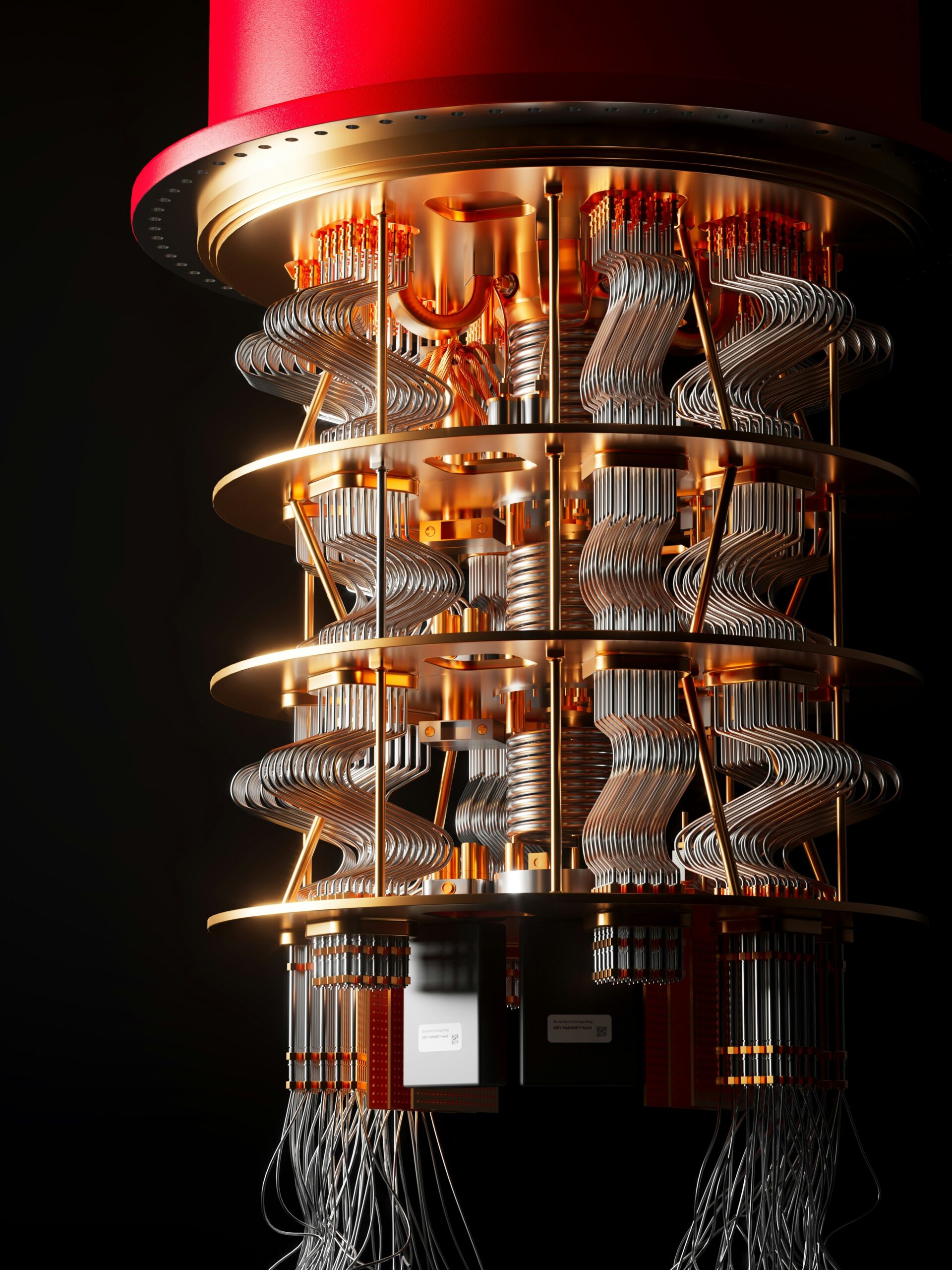
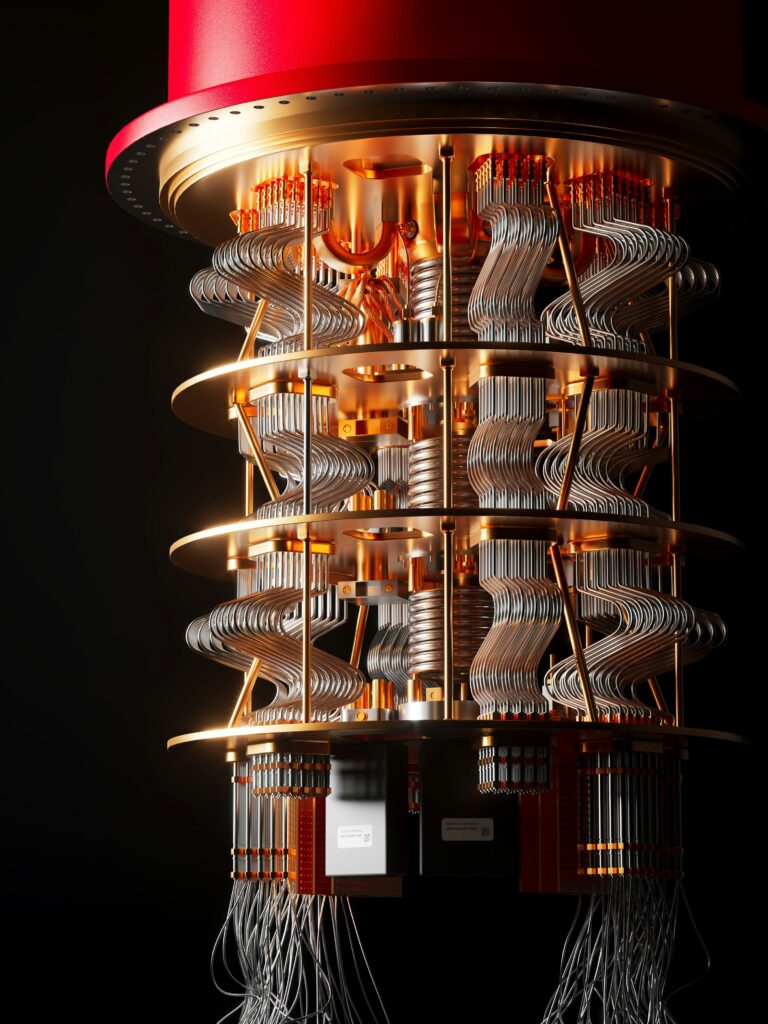
The short answer is: No, at least not in the near future for daily purposes. Quantum computers are not “faster” at everything; they excel at solving specific mathematical and structural dilemmas. Furthermore, they require extreme operating conditions, such as temperatures near absolute zero (-273°C), to isolate qubits from environmental noise.
A Hybrid Future
We are likely to live in an era of “Hybrid Computing.” We will use our smartphones and laptops for standard tasks like writing and browsing, while quantum data centers via the cloud handle the heavy lifting in medicine, cryptography, and artificial intelligence.
Conclusion: Philosophical Reflections on the Quantum Era
The transition toward quantum computing is not just a technical arms race; it is a human attempt to understand the deep language of the universe. For us as translators and content creators, this shift will reshape our professional tools—from neural machine translation becoming more intuitive to the complete overhaul of the digital infrastructure we inhabit.