Zy Yazan’s Language Guide: How to Perfect Your Accent and Pronunciation Using AI

Struggling with an accent or difficulty understanding native speakers? In the second part of our language workshop, we reveal the secrets of deep listening and pronunciation using AI.
Beyond Words: The Art of “Vocal Mastery” and Digital Ear Training
In my previous article on Zy Yazan Platform, we discussed breaking the fear barrier and beginning to “coexist” with a language. But let’s be realistic; you can memorize a thousand sentences and master every grammar rule, yet the moment you open your mouth in the streets of Paris or Seoul, you might encounter puzzled looks from native speakers. Why? Because every language has its own “music,” and AI in 2026 is no longer just silent text—it has become an incredible tool for tuning that music.
I am currently struggling with Korean phonetics; those sounds that seem identical to me but completely change a word’s meaning. Here, in my room in France, my computer has turned into a vocal laboratory. I no longer need to embarrass myself in front of strangers at the start; language models have taught me how to “hear” first, and then how to “mimic.”
Deep Listening: Why Don’t We Understand Native Speakers?
The problem isn’t your ears; it’s the “filter” your brain sets based on your mother tongue. At our platform, we believe that learning pronunciation starts with the ear, not the tongue. Traditional programs give you a robotic voice, but today, we use AI to analyze “Pitch” and “Intonation.”
| The Hard Skill | Traditional Solution | AI Solution (2026) |
|---|---|---|
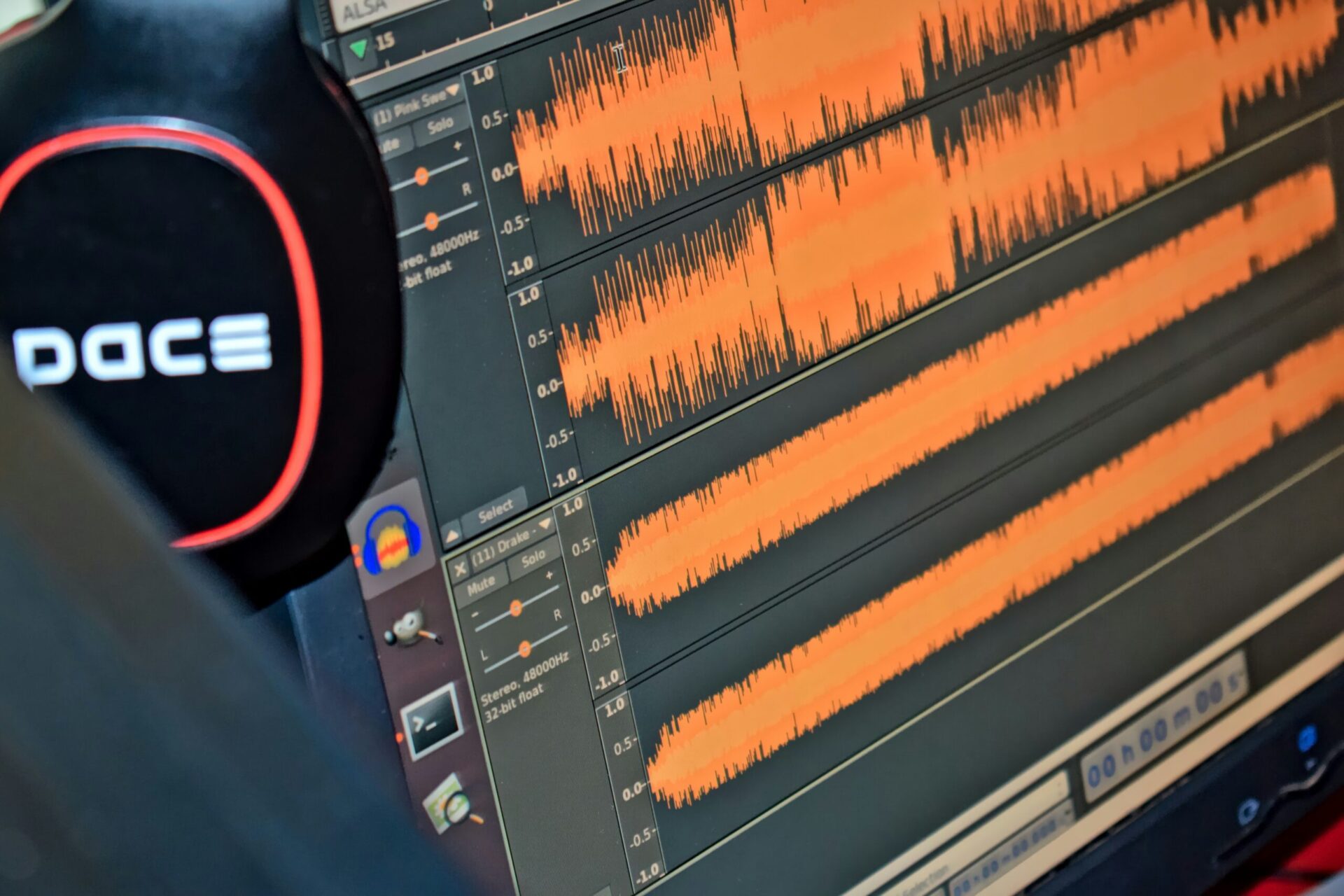
| Accent | Blind repetition behind a recording | Waveform analysis and real-time comparison with native speakers. |
| Natural Speed | Listening to slow, boring stories | Converting complex text into vocal dialogue with real human speeds. |
| Auditory Discrimination | No effective solution | Customized “Minimal Pairs” exercises just for you. |
“There is a point I must mention as an art critic; most of us rely heavily on series, movies, and songs to help learn a target language. While this truly helps, real life is much broader and more expansive. Life carries rhythms and speeds of speech far beyond what is included in an artistic work—which is designed for aesthetic expression, not education. Therefore, AI programs excel here in their ability to simulate those vocal variations and realistic speeds, incorporating them into live conversations with you, effectively shortening the distance.”
Your Personal Vocal Lab: Pronunciation and Listening Prompts
Here are the commands I use to train my ears and throat. Make sure to enable “Voice Mode” in the app you use for the best results:

Prompt 5 — The Analytical Pronunciation Coach
Prompt 6 — Deep Listening Challenge
As an art critic, I find that expressing “emotions” through pronunciation is the hardest stage. How do you show anger or admiration through your tone in a foreign language?
Prompt 7 — Tone & Emotion Simulator

Advice from the Heart of the French Experience
At Zy Yazan Platform, we’ve noticed many fear speaking because of their “accent.” My advice to you: An accent isn’t a flaw; it’s an identity. The goal of using AI isn’t to erase your identity, but to ensure you are “intelligible.” When I practice Korean, I’m not trying to be Korean; I’m trying to make Koreans understand my passion without my phonetic slips getting in the way.
“A conscious ear is the gold mine for any language learner. If you can hear the difference, you will one day be able to pronounce it.”
In the next and final article of this series, we will move to the “Next Level”: How to turn AI into a tool for refining your literary writing and building your unforgettable Personal Knowledge Base.
Workshop Articles (Zy Yazan Language Guide):
- 1: How I Rediscovered Language Learning via AI? (Foundations)
- 2: How to Master Your Accent Using AI? (This article)
- 3: Using AI to Refine Your Literary Writing. (Writing Mastery)