
Fernweh: The Longing for Distant Places

Exploring Fernweh—the German word for deep yearning toward places you’ve never visited, the beautiful ache of absence, and the philosophy of human longing.
Word Count: ~1,500 • Reading Time: 10 minutes
Fernweh: The Ache for Places You’ve Never Seen
When you yearn for a place before you’ve ever been there
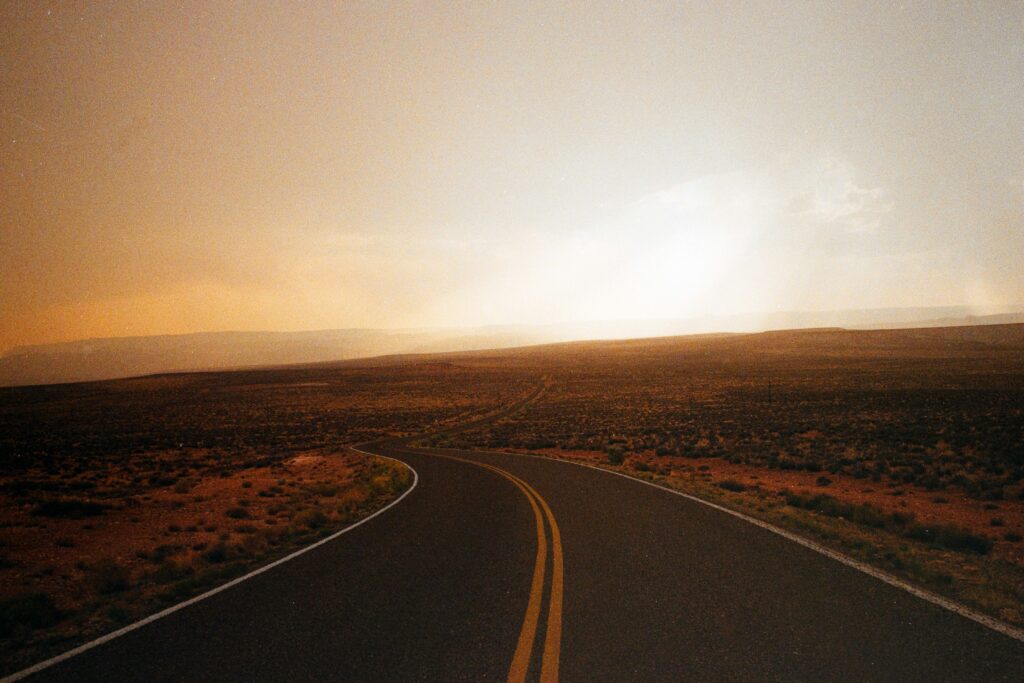
There’s a peculiar and painful feeling that settles in. You’re sitting at your desk or in your room, and suddenly you feel an intense longing for the Tyrolean mountains of Germany you’ve never visited. Or for a street in Bangkok you’ve never walked down. Or for a Portuguese beach whose name you don’t even know.
The Germans have a word for this exact feeling: Fernweh.
And it’s one of the most beautiful words that no other language has managed to fully translate.
Fernweh isn’t mere longing. It’s a deep yearning for a place that might exist only in your imagination, before you’ve ever laid eyes on it.
Deconstructing the Word: Building Meaning Letter by Letter
German is a master language at building complex words from simple components. Fernweh is no exception.
- Fern: The distant, the absent, what lies beyond the horizon
- Weh: Pain, ache, longing
Thus, Fernweh literally means “the pain of distance” or “the ache of absence.”
But this literal definition fails to capture the word’s essence. Because Fernweh isn’t just pain. It’s a deep desire, a call of the soul, a hunger without food.
It’s longing before loss—you yearn for a place you’ve never actually lost.
Why German? Culture and Geography
Perhaps it’s fitting that this word comes from German, not any other language.
The Germans—especially those in central Europe—are surrounded by the world. They sit at the continent’s heart. Mountains to the south, seas to the north, rivers and forests in every direction. But all this “nearness” reminds them of what lies further beyond.
German culture likely plays a role too. The German Romantic period (especially the 19th century) celebrated “Wanderlust”—the desire to roam. German poets and philosophers were fascinated by the idea of travel, the unwalked path, the distant horizon.
Fernweh is Wanderlust’s twin, but deeper. More painful. More honest.
Wanderlust is the desire to wander. Fernweh is the desire to be somewhere else right now, immediately, even if you don’t know where that somewhere is.
The Hidden Philosophy: Longing and Identity
Now comes the philosophical part that makes Fernweh far more than mere travel longing.
Fernweh raises a profound question: Do we really belong to the place where we were born?
German philosopher Heidegger spoke about “Heimat” (homeland, home, belonging). But he recognized that most of us are “homeless” in a certain sense. We don’t fully belong anywhere.
Fernweh is an embodiment of this metaphysical homelessness. You yearn for a place that might not exist—or it might exist but not for you. You might reach it and discover it’s nothing like you imagined. The perfect place always remains in the distance.
Maybe Fernweh isn’t about the place at all. Maybe it’s about who you might become if you went there. The better version of yourself that exists only in your imagination.
Fernweh in the Modern Age: Social Media and Fantasy
In the pre-internet era, Fernweh was a vague state. You longed for places you heard about from others or read about in books.
Now? Instagram, Pinterest, and YouTube have intensified Fernweh.
You see a sunset photo from Santorini, or a video of a small street in Shanghai, and suddenly Fernweh strikes hard. The problem: the images lie. Filters hide reality. Angles are selective. People behind the images force their smiles.
So what are you actually longing for? The real place? Or the filtered version you saw on screen?
Fernweh in our era is often false Fernweh. Longing for something that might not exist.
And perhaps that’s its beauty. To yearn for a place as you wish it to be, not as it actually is.
Is Fernweh a Sickness or a Cure?
The practical question you might ask yourself: is this constant longing healthy?
The truth is complicated.
On one hand, Fernweh is a powerful motivation for exploration and growth. Without this yearning, most of us would never venture beyond our comfort zones. We wouldn’t travel, explore, or grow.
On the other hand, Fernweh might be escapism. It might be a way to flee your current life without actually dealing with your real problems. Always longing for somewhere else might mean you’re never satisfied with the present.
Fernweh might also be pain without resolution. Because the perfect place might not exist. And even if you find it, you might feel Fernweh toward it after a few weeks.
Perhaps the wisdom lies in balancing listening to Fernweh—in traveling, exploring, growing—while simultaneously “rooting” yourself in your present. Finding beauty in the place you’re at right now.

Conclusion: Longing Without End
Fernweh is one of those words that reveals a deep human truth: we are romantic beings who long for absence more than we long for presence.
We yearn for places we haven’t visited. For people we haven’t met. For versions of ourselves we might become if we made different choices.
Maybe this is what makes us human. This ability to long for something beyond our reach. This beautiful ache from afar.
And perhaps, ultimately, Fernweh isn’t about arriving at the place. It’s about the journey toward it, and the longing that propels us forward.
References and Sources:
- Heidegger, M. “Being and Time” – On home and estrangement
- Pinder, L. “The Wandering Mind” – On German Romanticism
- Klinenberg, E. “Going Solo” – On modern longing and solitude
- Gaskins, S. “The Longing” – On the history of the word Fernweh
Final Note: Fernweh is a universal human phenomenon, though German alone has a word for it. The very existence of this word might itself reflect the German spirit—capable of naming what others cannot find words for.