
The US UFO Disclosure: When Governments Opened the Alien Files

Comprehensive analysis of the US government’s release of 161 UFO files and the deeper philosophical question: does intelligent life exist elsewhere, and why haven’t we found them?
Word Count: ~2,950 • Reading Time: 20 minutes
The Secret Documents Are Open: What the US Just Released About UFOs
161 files, decades of mystery, and a bigger question: Are we truly alone in the universe?
The Event: What Happened on May 8, 2026?
On an ordinary day in May 2026, something extraordinary occurred. The United States government officially launched a new government website: war.gov/ufo.
On this site, they posted 161 complete files related to UAP (Unidentified Aerial Phenomena)—what was previously known as UFO (Unidentified Flying Objects).
This move came via a direct order from President Donald Trump, who issued a public directive in February 2026 asking the Department of War and other government agencies to begin declassifying all files related to extraterrestrial life and unexplained aerial phenomena.
Trump posted on Truth Social: “The people deserve to decide for themselves what the hell is going on. Have Fun and Enjoy!”
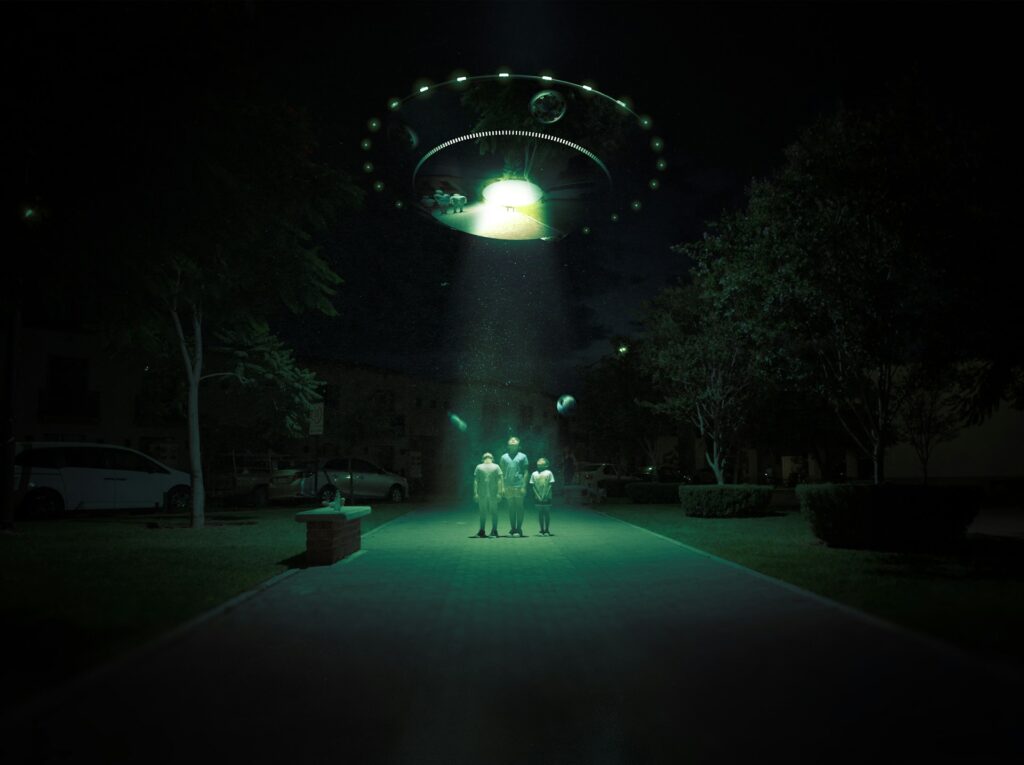
The Contents: What Did We Find?
Scale and Scope
The first batch contains:
- 161 complete files (some reports say 160+)
- Hundreds of pages of written documents
- Videos from military encounters
- Photographs and official reports
- Testimonies from military personnel and astronauts
Important context: This is not everything. Governments worldwide hold tens of millions of pages of files. Releases will continue on a rolling basis every few weeks.
What Time Periods Do These Cover?
The files span an enormous timeline:
- 1940s-1950s: The classic flying saucer era, public reports of sightings, cases like Roswell (1947)
- Cold War: Soviet and American military reports of strange phenomena
- Apollo missions: Reports from astronauts on Apollo 11, 12, and other missions
- Modern era (2000s-2024): Military sightings from Iraq, Syria, UAE, Europe, and the Pacific
What Do the Files Actually Say?
The most compelling claims:
- Spherical objects: Reports of craft flying at extraordinary speeds and changing direction without visible propulsion
- Rotating discs: Historical testimonies about classic “saucer” shapes
- Flashing lights: Optical phenomena on the moon and in the sky
- Military videos: Encounters with F-18 fighter jets, thermal camera footage showing “hot orbs”
Notably: most of these objects don’t match any known human technology from their respective time periods.
What Did Official Sources Say?
The Government’s Official Statement
The US government was clear:
- No evidence of aliens: The files don’t prove the existence of extraterrestrial life or alien visitation
- Most cases are explainable: Balloons, secret military aircraft, optical illusions, misidentifications
- Unexplained doesn’t mean alien: Could be advanced human technology from other nations (Russia, China)
- Transparency matters: But conclusions must be based on evidence, not speculation
Watch the videos yourself:
If you want to see the real videos released by the US government:
Watch all US government videos
NBC News explained the files
What Did Experts Say?
From scientific agencies:
- SETI (Search for Extraterrestrial Intelligence): “Intriguing data, but inconclusive. We need stronger evidence.”
- NASA: “No evidence of alien visitation. Unexplained phenomena deserve scientific study.”
- Physicists and astronomers: Unfazed. Interesting data, but requires rigorous analysis
From specialized researchers:
- Jeremy Corbell (UFO researcher): “This represents a historic step toward transparency. Now we can discuss this seriously.”
- Skeptical voices: “We must be cautious. This could fuel conspiracy theories without proper scientific analysis.”
The Deeper Philosophical Question: Are We Alone?
Now, let’s set the files aside for a moment. Let’s ask the real question that all of this raises:
In a universe containing billions upon billions of planets, is it reasonable to believe Earth is the only place where life exists?
The Staggering Numbers
Let’s put this in perspective:
- Number of visible stars: Approximately 2 trillion stars in the observable universe alone (2,000,000,000,000)
- Potential planets: Estimates suggest at least 1 trillion planets (possibly far more)
- Habitable zones: Millions of planets could contain water, heat, and the chemical elements necessary for life
- Life on Earth: Emerged roughly 3.8 billion years ago from simple origins
The logical conclusion: If life emerged here so relatively quickly (billions of years after Earth’s formation), it seems statistically unreasonable that we’re alone.
Drake Equation: Calculating the Probability of Intelligent Life
In 1961, astronomer Frank Drake proposed an equation to estimate the number of intelligent civilizations in our galaxy (Milky Way):
N = R × fp × ne × fl × fi × fc × L
Where:
- R: Rate of star formation (roughly one per year)
- fp: Fraction of stars with planets (80-90%)
- ne: Number of habitable planets per system (1-10)
- fl: Fraction where life emerges (??)
- fi: Fraction where intelligent life develops (??)
- fc: Fraction that develops communication technology (??)
- L: Duration intelligent civilizations last (??)
The unknown variables make the equation complex. But even with conservative estimates, the result suggests dozens or hundreds of intelligent civilizations in our galaxy alone.
This doesn’t mean they’re visiting us. It means the math suggests we’re probably not alone—statistically, almost certainly not.
The Real Problem: The Distance Problem
The Unbridgeable Gap
Here’s where the story gets depressing. Even if intelligent life exists, contacting it might be practically impossible.
The distances are simply too enormous.
- Nearest star to us (Sirius): 8.6 light-years away. Light from that star takes 8.6 years to reach us.
- Nearest potentially habitable planet (Proxima b): 4.2 light-years away
- Center of our galaxy: 26,000 light-years away
- Nearest galaxy (Andromeda): 2.5 million light-years away
What this means: Even if we sent a signal right now to the nearest potentially habitable planet, it wouldn’t arrive for 4.2 years. If they responded immediately, we wouldn’t hear from them until 8.4 years from now.
The Speed of Light: The Ultimate Speed Limit
And there’s a deeper problem: nothing can travel faster than light (according to Einstein’s theory of relativity).
This means:
- Interstellar travel is impractical: Even a spacecraft traveling at 10% light speed (incredibly fast) would take 42 years to reach Proxima b
- Instant communication is impossible: No known method exists to send information faster than light
- Cosmic isolation: Each civilization in the universe may be trapped within its own “bubble,” unable to reach others
Fermi’s Paradox: The Deafening Silence
This leads us to a classic paradox:
If billions of intelligent civilizations exist in the universe, why haven’t we heard from any of them yet?
Possible answers:
- We really are alone: Intelligent life might be statistically rare despite the odds
- They’re too far away: Distance makes contact impossible before civilizations die out
- They prefer silence: They may not want to communicate (perhaps it’s dangerous, or they’re simply uninterested)
- We’re blind: They might be sending signals, but we can’t receive or understand them
- Timing: Other civilizations might exist, but at different times. When we evolved, they were already extinct

So, What About Those US Files?
After all this, we return to the original question: What do these files mean?
The uncomfortable truth: The files currently don’t prove anything definitive about extraterrestrial life.
But what do they prove?
- Unexplained phenomena genuinely exist: Military pilots and officers witnessed strange things. This isn’t “conspiracy theory.”
- Governments were hiding information: Decades of secrecy suggest something worth concealing
- Science needs an open discussion: Rather than denial, scientists should study these cases seriously
- Transparency matters: The public deserves to know what their government knows (security caveats aside)
Conclusion: Maybe We’re Not Alone. But…
Let’s be honest:
1. Mathematically and probabilistically: It seems highly likely that life exists elsewhere. The universe is vast, and life emerged relatively quickly here. The odds suggest other civilizations exist.
2. Physically and realistically: But contacting them seems impossible due to cosmic distances. We’re trapped in our own “light bubble,” unable to escape it.
3. Regarding these US files: They’re a positive step toward transparency, but they don’t prove alien visitation. What they demonstrate is that unexplained phenomena deserve serious scientific study.
Perhaps the sadder truth is this: We’re probably not alone, but we might as well be. We’re isolated by the vastness of space, unable to reach across the cosmic gulf that separates us from any other civilization that might exist.
Read our articles: Return to the Moon: Artemis, Artificial Intelligence, and the Laboratory in the Sky.
References and Sources:
- war.gov/ufo – Official government disclosure repository
- Drake Equation – Frank Drake (1961)
- Fermi Paradox – Enrico Fermi
- NASA Astrobiology Institute
- SETI Institute – The Search for Extraterrestrial Intelligence
- Scientific American – “The Probability of Extraterrestrial Life”
- BBC News – Coverage of May 8, 2026 Disclosure
- NPR, Reuters, AP News – Contemporary reporting
Final Note: This article attempts to balance enthusiasm with skepticism, mathematics with physics, hope with realism. The universe is vast and mysterious. Our curiosity is natural. But science requires solid evidence, not mere wishes.