Arabic LLMs in the Gulf: Jais, Falcon, Allam vs. Gemini, Claude & DeepSeek

A deep dive into the leading Arabic AI models (Jais, Falcon, Allam) compared with global giants (Gemini, Claude, DeepSeek). Analyzing performance, data sovereignty, and business ROI.
Series: The Future of AI in Arabic · Article 1 of 2
Introduction: The Dawn of Arabic Digital Sovereignty
The Arab region, particularly the Gulf, is driving a radical shift in the global technology landscape with the rise of Large Language Models (LLMs) purpose-built for the Arabic language. In a world of over 400 million speakers, a persistent digital gap long hindered the development of AI tools that understand the region’s unique cultural and linguistic nuances. Today, fueled by massive investments under Saudi Vision 2030 and the UAE’s AI Strategy, global models are no longer the only option. “Sovereign models” like Jais, Falcon, and Allam have emerged to challenge giants like Gemini.
The significance of these models transcends simple chat capabilities; it is a matter of identity, national data security, and the building of a sustainable knowledge economy. This article provides a rigorous, objective comparison of these four models—while integrating global benchmarks like Claude and DeepSeek—to highlight their strengths, practical applications, and what this evolution means for both major enterprises and the Arabic-speaking freelance community.
“Digital sovereignty is not a technological luxury; it is the cornerstone of protecting the cultural narrative and strategic data of the region in the age of algorithms.”
Investing in localized models results in lower costs for processing Arabic text (tokenization) and higher accuracy in targeting local audiences, all while ensuring data remains within the region’s regulatory borders.
Background: Why Arabic LLMs Matter
Arabic differs fundamentally from Latin languages due to its complex morphology, diacritics (Tashkeel), and diglossia—the gap between Modern Standard Arabic (MSA) and various spoken dialects. Traditional global models were trained on datasets that were over 90% English, often resulting in Arabic outputs that felt like clunky machine translations lacking cultural soul.
The Gulf has positioned itself as a global hub for Sovereign AI to bridge this gap. Initiatives from the Saudi Data and AI Authority (SDAIA) and the Technology Innovation Institute (TII) in Abu Dhabi haven’t just “translated” tech; they’ve rebuilt models from the ground up using massive datasets including classical Arabic literature, government archives, and local social media content to ensure a profound grasp of the Gulf and broader Arab context.
Overview: The Leading Contenders
1. Jais (UAE – G42/Inception)
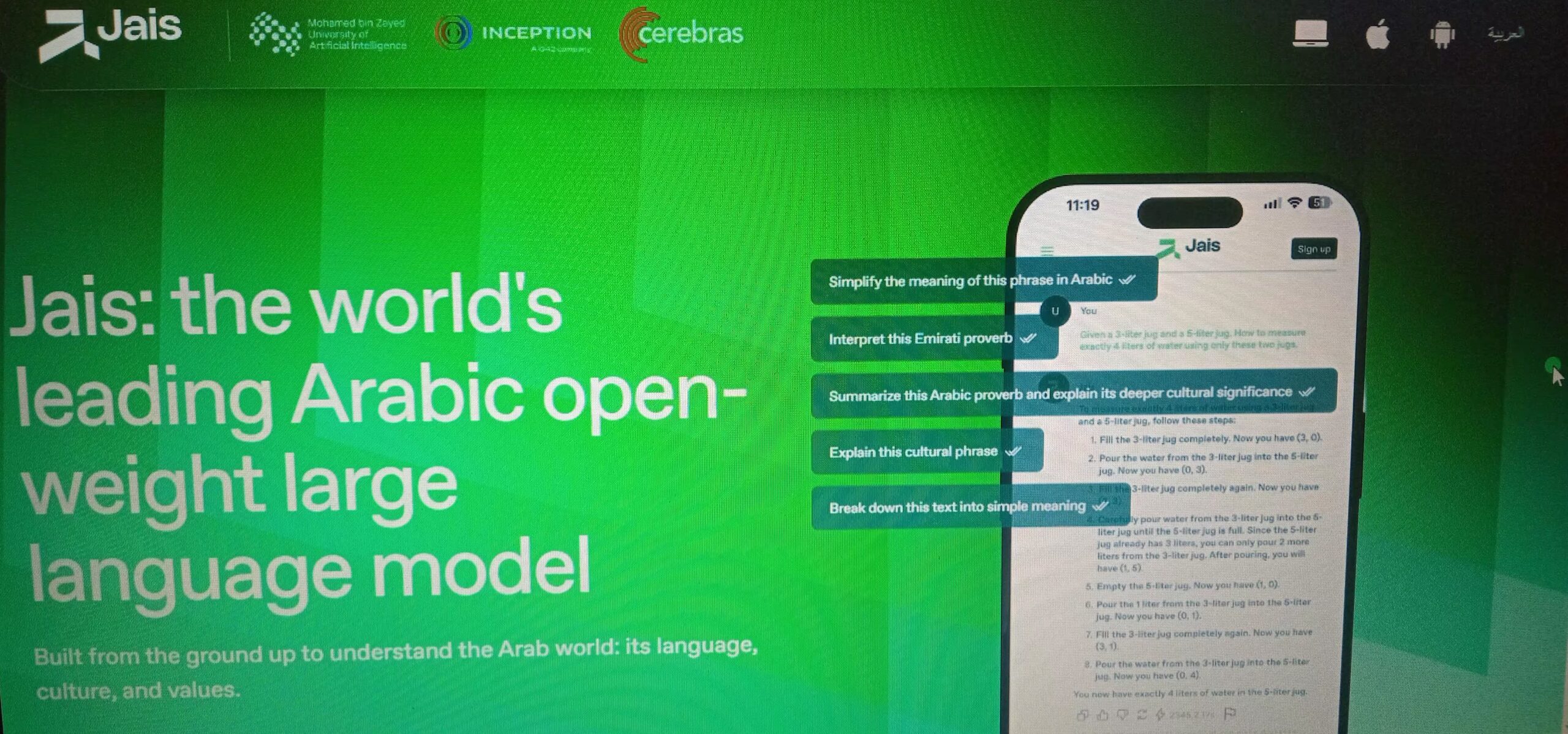
Developed by Inception (a G42 company) in collaboration with MBZUAI, Jais was the most accurate Arabic model at its launch. The Jais 2 (70B) version features a superior ability to process Arabic and English in parallel. As an open-weight model, it allows developers to customize and deploy it internally.
2. Falcon (UAE – TII)
Released by the Technology Innovation Institute in Abu Dhabi, Falcon gained global fame as a powerful open-source model. The Falcon-H1 Arabic edition utilizes a hybrid architecture (Mamba-Transformer) to support multimodality and robust linguistic performance with high efficiency.
3. Allam (Saudi Arabia – SDAIA)
The pride of Saudi technical engineering, developed by SDAIA. Allam was trained on hundreds of millions of Arabic pages with a specific focus on Saudi and Gulf content. It excels in understanding cultural nuances and local regulations, making it the premier choice for government entities in the Kingdom.
4. Gemini (Google)
As the primary global model in this comparison, Google’s Gemini represents the pinnacle of multimodal AI. It supports Arabic through a massive context window, allowing it to analyze huge PDFs or long videos in Arabic, while integrating seamlessly with the Google Workspace ecosystem.
Technical Comparison: Performance and Capabilities
The following table highlights the core differences between these models, now including Claude (Anthropic) and DeepSeek (China) for a global perspective:
| Model | Key Strengths | Arabic Accuracy (MSA + Dialects) | Speed & Efficiency | Gulf Cultural Context | Coding & Big Data | Best Gulf Use-Case |
|---|---|---|---|---|---|---|
| Jais (UAE) | Arabic-first training, open-weight | Excellent | Good | ★★★★☆ | Good | Translation, Content, Chat |
| Falcon-H1 (UAE) | Hybrid architecture, long context | Excellent | Excellent | ★★★★☆ | Very Good | Gov sector, Long docs |
| Allam (SDAIA) | Deep Saudi/Gulf cultural focus | Excellent | Good | ★★★★★ | Good | Public sector, Local content |
| Gemini (Google) | Multimodal, massive context window | Very Good | Excellent | ★★★☆☆ | Excellent | Enterprise, Analysis, Coding |
| Claude (Anthropic) | Natural prose, deep reasoning | Excellent (MSA) | Good | ★★★☆☆ | Excellent | Professional writing, Reports |
| DeepSeek (V3/R1) | High performance, low cost MoE | Very Good (improved) | Excellent | ★★★☆☆ | Excellent | Tech analysis, Dev-ops |
Linguistic Performance: MSA vs. Dialects
Allam and Jais significantly outperform others in grasping Gulf dialects and cultural idioms. While Gemini provides technically accurate answers, Allam excels at phrasing responses with the “spirit” of the Saudi and Gulf communities, using authentic local analogies.
Claude stands out for its exceptionally natural and elegant prose in Modern Standard Arabic, making it a top choice for high-quality marketing content and professional reports. Jais proves highly efficient at code-switching (alternating between Arabic and English), a vital feature for the bilingual Gulf workforce. DeepSeek shows impressive technical performance in Arabic-related coding tasks, though it remains less culturally grounded than the home-grown Gulf models.
Data Sovereignty and Security
For government clients and financial institutions in the Gulf, Jais and Allam remain the safest bets. Their ability to be hosted on-premise or within national cloud environments ensures that sensitive data never leaves the country, a critical factor for compliance with local laws like Saudi Arabia’s PDPL.
Conversely, foreign models like Gemini, Claude, and DeepSeek rely primarily on external servers, posing challenges for high-security applications. However, Claude offers high levels of ethical alignment, while DeepSeek offers flexibility for companies utilizing open-source versions or local APIs to manage costs without sacrificing power.
- When choosing a model, look beyond raw benchmarks; focus on token efficiency, national data sovereignty, and local hosting capabilities.
- Open or semi-open models like Falcon, Jais, and DeepSeek are often more cost-effective for large-scale enterprise projects and custom applications.
- Claude is a strong contender for firms prioritizing natural writing quality and high-level reasoning.
End of Part One. In the next article, we will discuss the practical applications of these models in business sectors and the golden opportunities for freelancers to capitalize on this AI boom.
References:
- Inception G42. (2023). Jais: A Highly Proficient Arabic LLM. [White Paper].
- Technology Innovation Institute (TII). (2024). Falcon LLM Documentation.
- SDAIA. (2024). Project ALLAM: Saudi National AI Initiative.
- Google DeepMind. (2024). Gemini Models Technical Report.
- Anthropic/DeepSeek Technical Documentations (2025-2026).