

Digital Parenting in Arab Homes: Have We Lost Control?

The generational screen battle in Arab households is real. Here’s how to reclaim your role as a digital parent — without the guilt or the war.
I remember the day I picked up my phone to film my toddler playing — and found his eyes locked on the screen, not on the toy in front of him. I stopped. Put the phone down. Then watched him reach toward the screen instead of toward me.
That was a small wake-up call. But it was enough.
Across Arab homes today, a quiet battle is unfolding between two generations: one that grew up with satellite TV and paper textbooks, and another that opens its eyes to a world of infinite notifications. Between them stand parents — caught between the instinct to ban screens entirely and the reality that screens have become an extension of the world itself.
The Algorithm Doesn’t Know Your Child’s Age
The problem isn’t the phone or the tablet. The problem is that digital platforms are not designed with your child’s wellbeing in mind — they’re designed to maximize engagement time. Research from Common Sense Media found that average daily screen time for children aged 8–12 exceeded five hours in 2023 — and the number keeps climbing.
YouTube’s recommendation algorithm knows what captures your child’s attention, sometimes better than you do. That’s not an indictment of parents — it’s an accurate description of a machine built to override adult willpower. What chance does a child have?
When you hand your child a tablet for “half an hour,” you’re not giving them one video. You’re handing them a recommendation engine designed to keep them up past their bedtime.
Three Types of Digital Parents — Which One Are You?
In conversations with parents around me — and in what I read and observe — three patterns keep appearing:
| Type | Description | Typical Outcome |
|---|---|---|
| The Strict Guardian | Bans devices completely or sets extremely rigid limits | Kids feel isolated at home, binge screens everywhere else |
| The Surrendering Parent | Sees the screen as a convenient babysitter and outsources entertainment to it | A child whose tastes and values are shaped by algorithms, not family |
| The Conscious Parent | Negotiates with technology — makes it a tool, not an environment | A child who knows how to use screens without being used by them |
The third type isn’t perfect. It’s actually the hardest. But it’s the only one that makes a lasting difference.

What’s Specific to Arab Homes
Let’s be honest: Arab households carry extra pressure. On one side, there’s identity anxiety — no one wants their children to grow up disconnected from their language, culture, and values. On the other, there’s school pressure: platforms, apps, and online assignments are now standard. And there’s peer pressure too: kids talk about games, memes, and content that yours might not recognize.
Mothers especially — and I count myself here — find ourselves in an exhausting double bind. We set the screen-time rules. We also feel guilty when we hand over the phone just to get dinner on the table. That guilt is real, and it’s heavy.
What I’ve learned — slowly, through mistakes — is that this isn’t about banning. It’s about presence. When I’m genuinely there for my child, the screen’s pull weakens on its own.
Five Practical Steps for a More Intentional Digital Home
- Screen-free zones: The bedroom and the dinner table — no exceptions. This protects real family time.
- Co-viewing, not surveillance: Sit with your child sometimes and watch what they watch. You’ll learn a lot, and they’ll feel trusted rather than policed.
- Screen time as a reward, not a right: Tying screen time to other activities — reading, outdoor play, free play — naturally restores balance.
- Productive tech: Coding, digital drawing, photography — these are screens too, but they build skills. (See our article: What is Robotics Programming? Why Start with Scratch?)
- Conversation, not confiscation: Taking the phone away without explanation damages trust. Explaining why builds awareness.
Arab Identity in the Digital Space
One of the real anxieties I hear from Arab parents — whether in diaspora or at home — is: “My child only wants English content and has stopped speaking Arabic at home.” The concern is legitimate. Quality Arabic content for children remains significantly less abundant on most platforms compared to English.
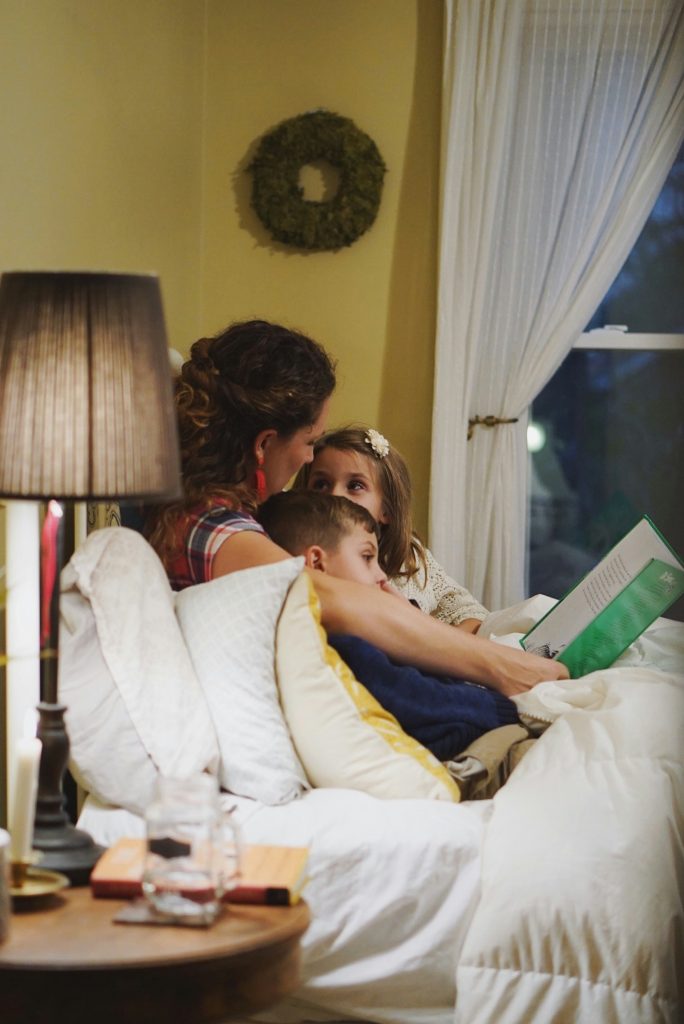
The solution isn’t a ban. It’s making Arabic feel like fun inside the home — bedtime stories in Arabic, songs, interactive games in the mother tongue — so that Arabic becomes the language of joy, not just obligation. This is exactly what we explored in our Multilingual Family series, particularly in (See our article: How to Keep Your Heritage Language Alive When You Live Abroad).
Arabic isn’t competing with technology — it can live inside it and thrive, if we give it the chance.
We Haven’t Lost Control — But We Need to Recalibrate
The question in our headline carries no accusation. We haven’t completely lost control — but we may have left the driver’s seat empty for a while. Returning to it doesn’t mean a war on technology. It means remembering that we — not the algorithm — decide the values and priorities of our home.
The digitally aware child isn’t born. They’re raised. And that upbringing starts with us — with our own awareness, before we ask our children for theirs.
As for me? I’m still learning. Every single day.
See our article: The Bilingual Brain Advantage: What Science Says About Raising Multilingual Children
References:
- Common Sense Media (2023). The Common Sense Census: Media Use by Kids Age Zero to Eight. View Report
- American Academy of Pediatrics — Screen Time Recommendations by Age
- Twenge, J. M., & Campbell, W. K. (2019). Associations between screen time and lower psychological well-being among children and adolescents. Preventive Medicine Reports.