Charcoal and Fuel Production: Income from Wood Waste

Learn charcoal and briquette production from wood waste and agricultural byproducts. Transform free materials into $240-520 monthly income.
Charcoal and Fuel: Income from Wood and Agricultural Waste
Article 6 of 12 in the Ultra-Small Projects Series | Survival Economy
We search for ways to transform waste into useful products. Charcoal production from wood scraps and agricultural waste is ancient and simple, yet highly profitable. Charcoal is constantly demanded (cooking, heating, industry). Raw materials are nearly free: sawmill waste, dry leaves, corn stalks, even dried animal manure.
Why Charcoal Production Is Highly Profitable
Charcoal is simple but constantly demanded. Every household needs it for cooking or heating. Every craftsperson and industry requires it. Every barbecue needs charcoal. Prices are stable with little fluctuation.
Charcoal is relatively light, easy to transport and store. You can produce slowly and stockpile, selling gradually without pressure.
Required Resources (Very Low Investment)
Everything you need:
- Raw materials: Wood scraps, dry leaves, corn stalks, palm fronds, even dried manure. All free or very cheap.
- Kiln or pit: Build simple kiln from clay or metal, or even dig pit in ground with cover.
- Basic tools: Axe, shovel, water container (tools in every household).
- Work space: Open area, preferably away from houses (heavy smoke).
- Bags or boxes: For storage and packaging.
Part One: Traditional Charcoal from Wood
Old, simple, proven method. From wood to charcoal in 24-48 hours.
Resources:
- Wood scraps (carpentry waste, dry branches, firewood).
- Kiln or prepared pit.
- Water.
- Metal or clay container.
Steps:
Step 1: Prepare Raw Materials
Collect wood waste and cut to small, uniform sizes (about 10-15cm). Preferably completely dry. If wet, dry first.
Step 2: Build Kiln (If Needed)
Very simple: pit in ground about 1 cubic meter, or large metal drum without bottom, or brick kiln. Important: must be sealed on top with small holes for air flow.
Step 3: Fill Kiln
Place wood loosely stacked (air needs to circulate). Leave small gaps on sides and bottom for air.
Step 4: Light and Monitor Burn
Light fire from bottom. Let wood burn slowly. Process takes 12-24 hours. Important: avoid fast burning; charcoal needs slow burn with low oxygen.
Step 5: Cool and Collect
When thick smoke stops (sign burning is nearly complete), let kiln cool completely. Carefully spray water to speed cooling. Remove charcoal and bag it.
Yield and Income:
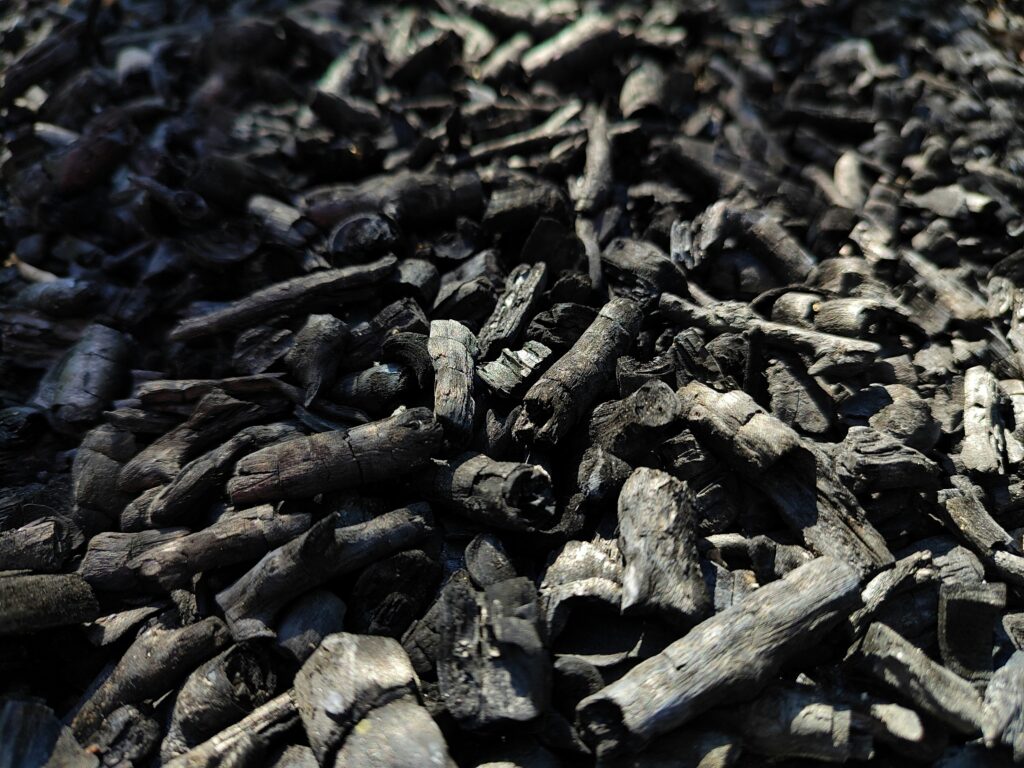
- From 100kg wood: Approximately 25-30kg charcoal (wood loses 70% weight).
- Wood cost: Free if scraps; $1-2 if purchased.
- Fuel cost to burn: May need additional firewood = $1-2.
- Total cost: Only $2-4.
- Selling price: Charcoal sells for $0.50-1.50 per kg locally.
- From 25kg charcoal: $12-37 income.
- Profit: From $2-4 investment, sell for $12-37 = profit of $8-35.
Part Two: Compressed Charcoal Briquettes
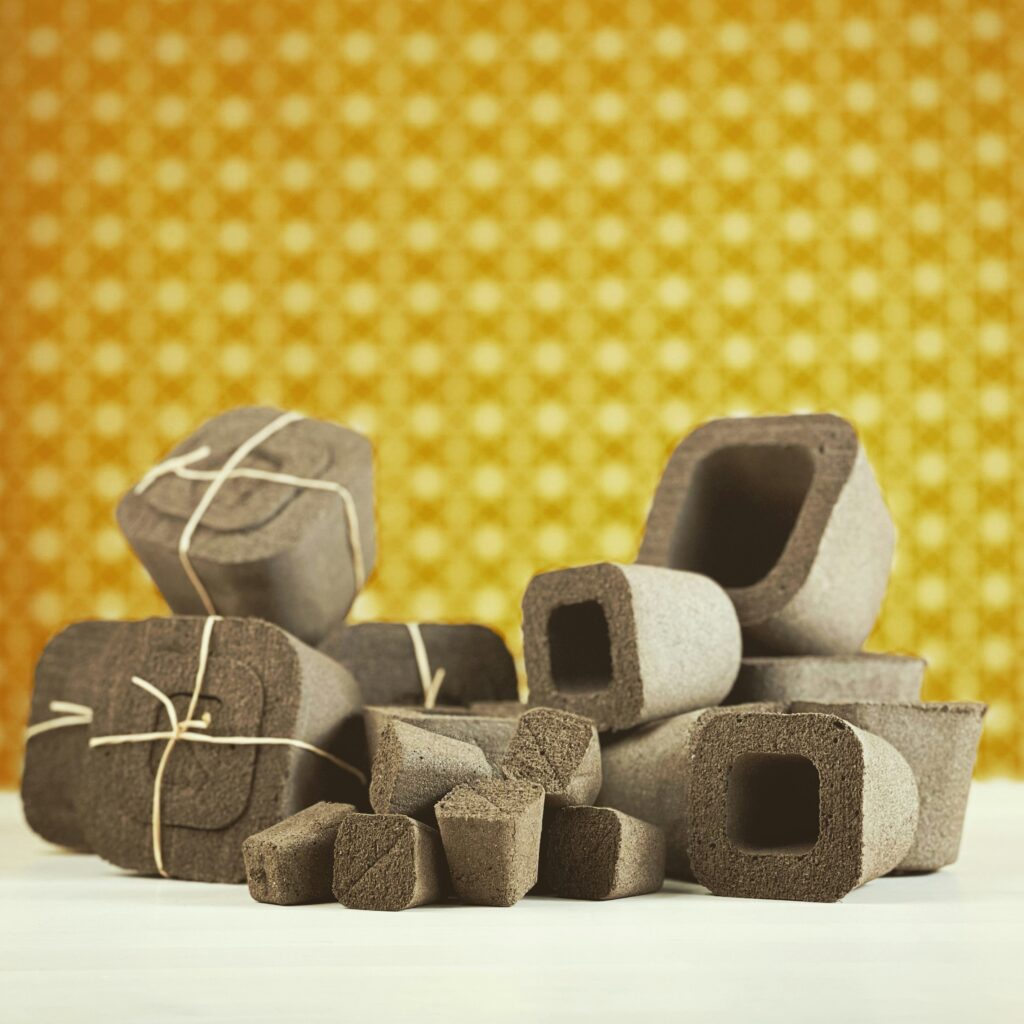
Superior product to raw charcoal. Charcoal compressed into uniform blocks. More expensive and better quality.
Resources:
- Rough charcoal (from previous process).
- Water, clay, or starch (binder).
- Simple or even hand-operated press machine.
Steps:
Step 1: Prepare Charcoal
Take rough charcoal and crush slightly (not powder, just smaller).
Step 2: Mix with Binder
Add water or starch solution carefully (about 5-10% by weight). Mix well until moist mixture (not waterlogged).
Step 3: Press and Shape
Place mixture in simple mold (can use jar or any container) and press firmly. Or use hand-operated press machine for larger quantities.
Step 4: Dry
Place briquettes in sun or dry location for 2-3 days until completely dry.
Yield and Income:
- From 25kg charcoal: Approximately 30kg briquettes (water adds weight initially but exits during drying).
- Additional cost: Water and starch = about $0.50.
- Selling price: Briquettes sell for $1-2.50 per kg (premium over raw charcoal).
- From 30kg briquettes: $30-75.
- Additional profit: From 25kg charcoal, make 30kg briquettes for $30-75 instead of $12-37 = additional profit of $18-38.
Part Three: Charcoal from Agricultural Waste
Instead of wood only, use agricultural byproducts. Rice husks, corn stalks, palm fronds, even dried animal manure.
Resources:
- Agricultural waste (nearly free from farmers).
- Same burning and kiln process.
Benefits:
- Completely free: Farmers discard this waste.
- Alternative fuel: Some prefer rice or stalk charcoal.
- Environmentally friendly: Transform waste into useful product.
Yield:
- Nearly same yield (25-30kg charcoal from 100kg raw material).
- But cost is lower (raw material is free).
- Profit higher: $20-50 from same batch.
Part Four: Fuel from Animal Manure
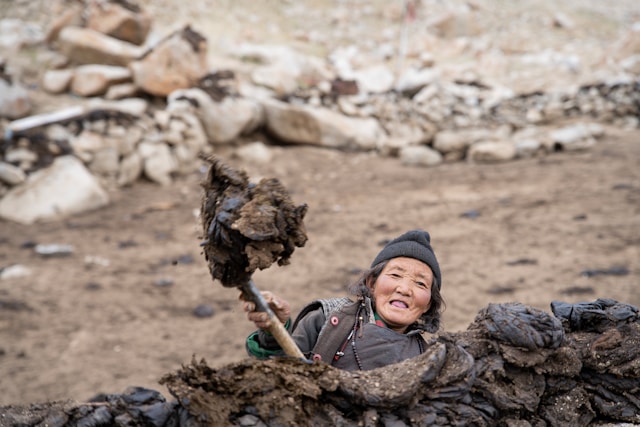
Dried animal manure transforms into fuel (Dung Cakes).
Steps:
Step 1: Collect Manure
Gather animal manure (cattle, sheep, goats). Fresh is preferred.
Step 2: Mix with Fiber
Mix manure with straw or plant fiber (strengthens it). Ratio: 80% manure, 20% fiber.
Step 3: Shape
Press mixture in simple molds (flat or round shapes).
Step 4: Dry
Place cakes in sun for 2-3 weeks until completely dry.
Yield and Income:
- From 50kg fresh manure: Approximately 15-20kg dried fuel.
- Cost: Free (manure available).
- Price: $0.30-0.80 per kg.
- From 20kg fuel: $6-16.
- Additional benefit: Cleaner animal areas; use manure productively instead of disposal.
Combining All Four Projects: Diversified Income
Working on all types together:
- Regular wood charcoal: Two batches monthly = $24-74.
- Processed briquettes: Two batches monthly = $60-150.
- Charcoal from agricultural waste: One batch monthly = $20-50.
- Dried manure fuel: Continuous = $60-160 monthly.
- Monthly total: $164-434 with very low initial investment.
Marketing and Sales
Charcoal and fuel have very stable markets:
- Local households: For cooking and heating.
- Restaurants and grills: Need charcoal constantly.
- Bakeries and bathhouses: Use charcoal and firewood daily.
- Craftspeople: Blacksmiths, carpenters need it continuously.
- Grocery stores: Resell to customers for profit.
- Seasonal markets: Winter heating demand increases significantly.
Expected Profits and Income
Practical example (regular work):
- One week:
- Wood charcoal batch: $20-50.
- Briquette batch: $30-60.
- Small quantities: $10-20.
- Weekly: $60-130.
- Monthly: $240-520.
- Initial investment: Simple kiln ($20-50 one-time) and basic tools ($10).
- Payback: Less than a week.
Common Challenges and Solutions
Challenge 1: Kiln Burns Wood Too Fast
Cause: Air holes too large, or burning too quickly.
Solution: Close some air holes. Control air flow. Slow burning is better.
Challenge 2: Charcoal Comes Out Wet or Weak
Cause: Burn incomplete or wood was too wet.
Solution: Ensure wood is dry before burning. Let kiln burn longer (24-30 hours).
Challenge 3: Excessive Smoke (Neighbor Complaints)
Solution: Place kiln far from houses. Use well-sealed kiln. Notify neighbors beforehand.
Challenge 4: Briquettes Break Easily
Cause: Too-fast drying or weak binder.
Solution: Dry slowly (shade instead of direct sun). Use better binder (starch or clay).
Gradual Expansion
After initial success:
- Increase production: From one weekly batch to two or more.
- Improve quality: Cleaner charcoal, uniform briquettes.
- Diversify products: Wood charcoal, briquettes, dried agricultural charcoal, manure fuel.
- Build better kiln: Invest in improved kiln = higher production = higher income.
- Hire help: Distribute work = increase production.
Online Growth Opportunities (Once Established)
Charcoal is primarily local, but build strong local reputation through quality and reliable delivery. Over time, sell to large stores or contractors.
Moving to Reality
Charcoal making is ancient but requires knowledge of fire and heat. Poor kiln produces poor charcoal. Good kiln produces excellent charcoal. Key is controlling temperature and oxygen flow.
Raw materials also differ by location. Wood types differ (hardwood burns slowly, soft burns quickly). Agricultural waste varies by season. Learn from local charcoal makers: best wood types? Proper timing? How do they control kilns?
Safety matters greatly. Fire and smoke are dangerous. Use basic protective equipment (mask, gloves). Never leave kiln unattended.
How to Make Charcoal and Briquettes Traditionally
Bottom Line
Charcoal production is ancient and highly profitable. Transform wood scraps and agricultural waste into constantly demanded fuel. Low investment, high income, guaranteed market.
Start with simple wood charcoal. Master the method. Then add briquettes and other products. Each new product increases income and options.
This is true sustainability: transforming waste into useful resources.
Similar series: Crafts that Resist Automation
— Ultra-Small Projects Series | Survival Economy —
Previous Article: 5 – Knitting and Textile Crafts
Current Article: 6 – Charcoal and Fuel Production
Next Article: 7 – Rope and Net Making
References and Resources:
- Traditional charcoal production methods and kiln designs
- Agricultural waste utilization for fuel production
- Local market demand for charcoal and alternative fuels
Survival Economy | Micro-businesses
Your Practical Guide to Self-Sufficiency — 12 Articles



Series Survival Economy | Micro-businesses — 12 Articles | Zy yazan