Basketry and Mat Weaving: Income from Local Fibers

Learn basket and mat weaving from free local materials. Diverse products sell for $8-100 each with $280-940 monthly income.
Basket and Mat Weaving: Ancient Craft from Local Fibers
Article 8 of 12 in the Ultra-Small Projects Series | Survival Economy
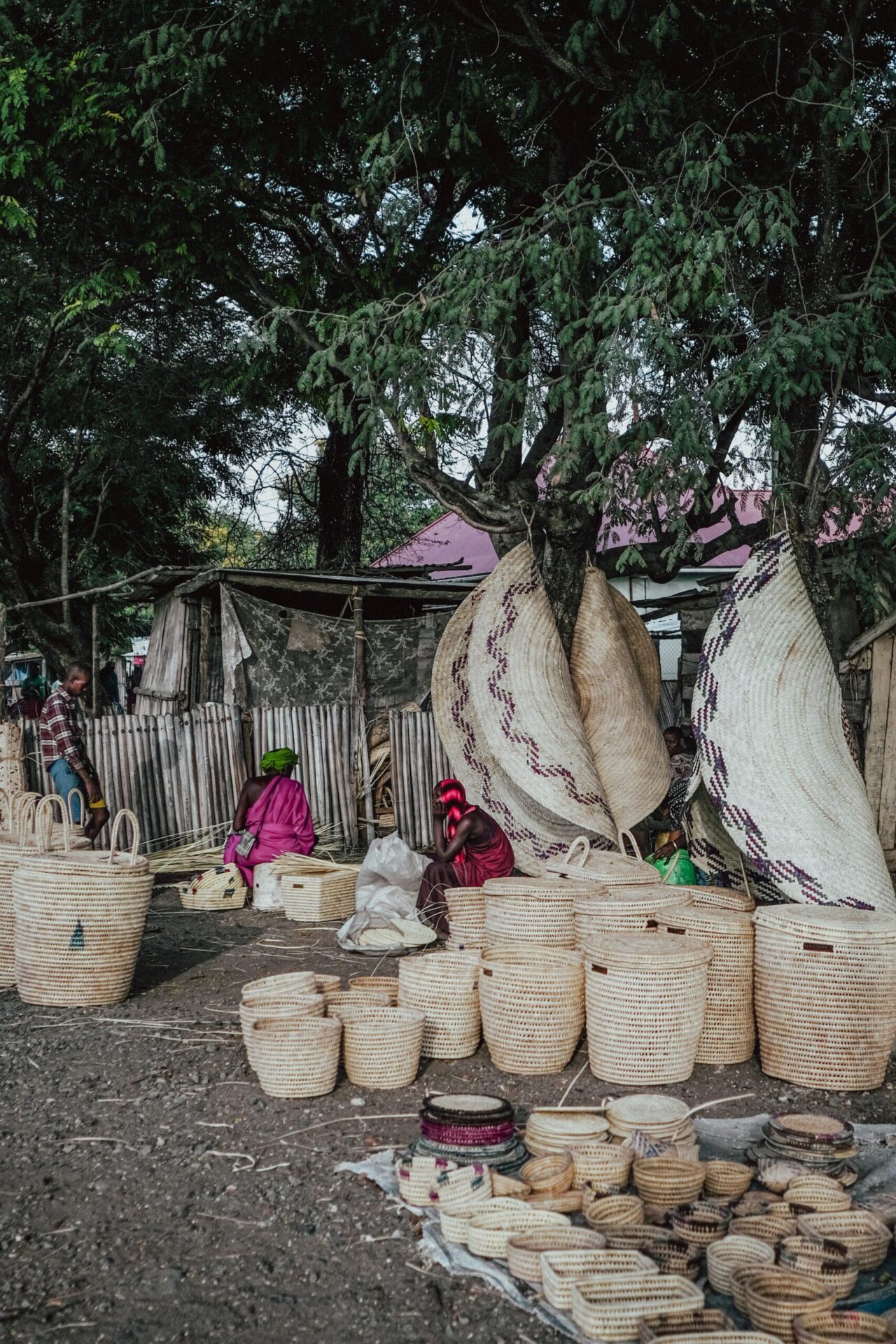
We search for projects using nearly free local resources. Basket and mat weaving is ancient, present in every culture. Raw materials surround you: dried grasses, palm fronds, straw, even old burlap. Products have high demand: storage baskets, floor mats, decorative covers.
Why Basket and Mat Weaving Is Profitable
Raw materials are free or very cheap. Woven baskets sell for $10-50. Mats for $20-100. Demand is constant: every household needs storage, every shop wants beautiful baskets, every hotel uses decorative mats.
The required skill is very simple to learn. Anyone can master it in days. Production is relatively fast.
Required Resources (Very Low Investment)
Everything you need:
- Raw materials: Palm fronds, dried grass, hay, old burlap, even cardboard. Free or very cheap.
- Tools: Scissors, thick needle or hook. Your hands are the main tool.
- Water: To soften dried materials slightly (optional).
- Work space: Any room or open area.

Part One: Simple Baskets
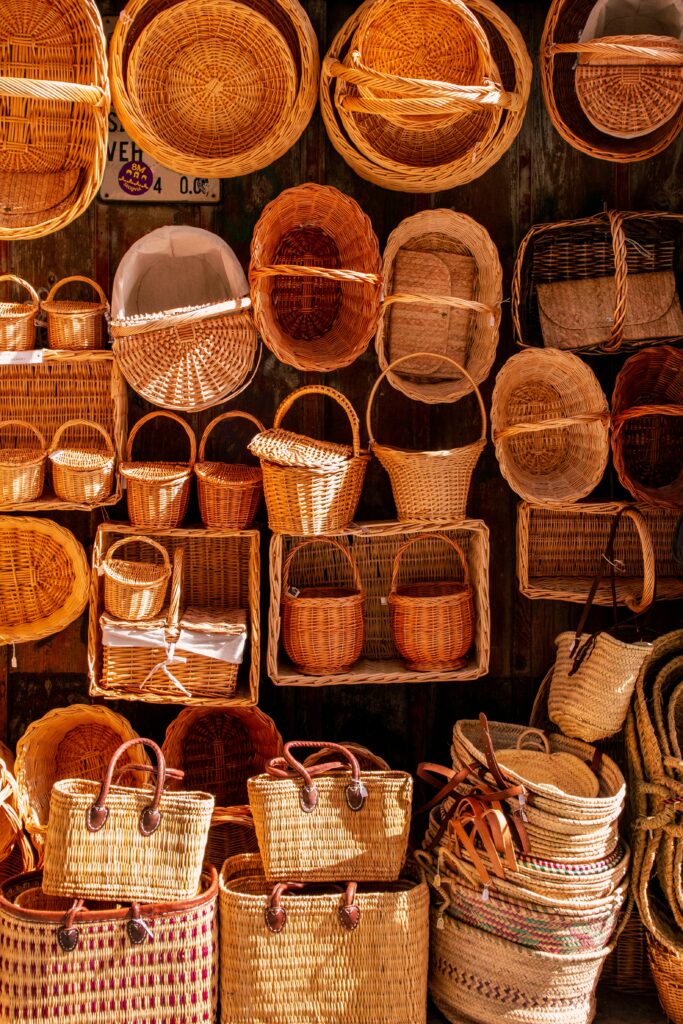
Easiest product. Round or square storage and decorative basket.
Resources:
- Palm fronds or dried grass.
- Cotton or plant thread.
- Scissors.
Steps:
Step 1: Prepare Raw Material
Cut palm fronds or grass into equal strips (about 1-2cm wide). If too dry, soak in warm water 10-15 minutes to soften.
Step 2: Shape Base
Wind strips around each other circularly or square (depending on desired shape). Use cotton thread to bind strips together.
Step 3: Build Gradually
Continue winding and binding strips, raising layer by layer until desired height reached.
Step 4: Finish
Complete edges neatly and beautifully. Add handle if desired (same materials).
Yield and Income:
- Small basket: 2-3 hours, cost $0.50-1, selling price $8-15.
- Medium basket: 4-5 hours, cost $1-2, selling price $15-30.
- Large basket: 6-8 hours, cost $2-3, selling price $30-50.
- Profit per basket: $7-47.
Part Two: Woven Mats
Larger, more stable product. Floor mats, wall mats, or decorative mats.
Resources:
- Palm fronds, grass, or old burlap.
- Strong thread.
Steps:
Step 1: Prepare Base
Arrange long strips parallel (on ground or board).
Step 2: Cross Weave
Begin weaving other strips perpendicularly. Creates crossed pattern (like checkerboard).
Step 3: Secure
Use thread to secure edges firmly so they don’t unravel.
Step 4: Finish and Cut
Cut excess edges for straight, beautiful finish.
Yield and Income:
- Small mat (1 square meter): 4-6 hours, cost $1-2, selling price $20-35.
- Medium mat (2 square meters): 8-10 hours, cost $2-3, selling price $40-70.
- Large mat (3+ square meters): 12-15 hours, cost $3-5, selling price $70-100.
Part Three: Decorative Baskets
Baskets with colors and beautiful designs. Luxury product.
Resources:
- Colored natural materials (can dye fibers with natural colors).
- Beads or decoration (optional).
Steps:
Step 1: Dyeing (Optional)
For colors, use natural dyes (plant roots, leaves, even coffee). Soak fibers in dye.
Step 2: Color Weaving
Use colored fibers to create beautiful patterns and designs.
Step 3: Extra Decoration
Add beads or colored ribbons for additional beauty.
Yield and Income:
- Decorated basket: 6-8 hours, cost $1-2, selling price $25-50.
- Profit: $20-45 per basket.
Part Four: Woven Kitchen Items
Small baskets for fruit, pot holders, table mats.
Yield and Income:
- Fruit basket: 2-3 hours, $10-18.
- Pot holder: 3-4 hours, $12-22.
- Table mat: 4-5 hours, $15-28.
Part Five: Wall Mats and Room Dividers
Mats for wall covering or room division. Artistic and practical.
Yield and Income:
- Wall mat: 6-8 hours, $30-60.
- Room divider (section): 10-12 hours, $60-100.
Part Six: Cushion and Furniture Covers
Woven coverings for cushions, seats, chairs.
Yield and Income:
- Cushion cover: 3-4 hours, $10-20.
- Seat cover: 5-6 hours, $20-40.
Part Seven: Luxury Gift Baskets
Beautiful baskets for gift packaging. Luxury product with premium price.
Yield and Income:
- Small gift basket: 3-4 hours, $20-35.
- Large gift basket: 6-8 hours, $40-70.
Combining Products: Diversified Income
Producing different types:
- Simple and large baskets: 5-10 monthly = $75-350.
- Mats: 2-3 monthly = $80-240.
- Decorated baskets: 3-4 monthly = $75-200.
- Other products: Varied = $50-150.
- Monthly total: $280-940.
Marketing and Sales
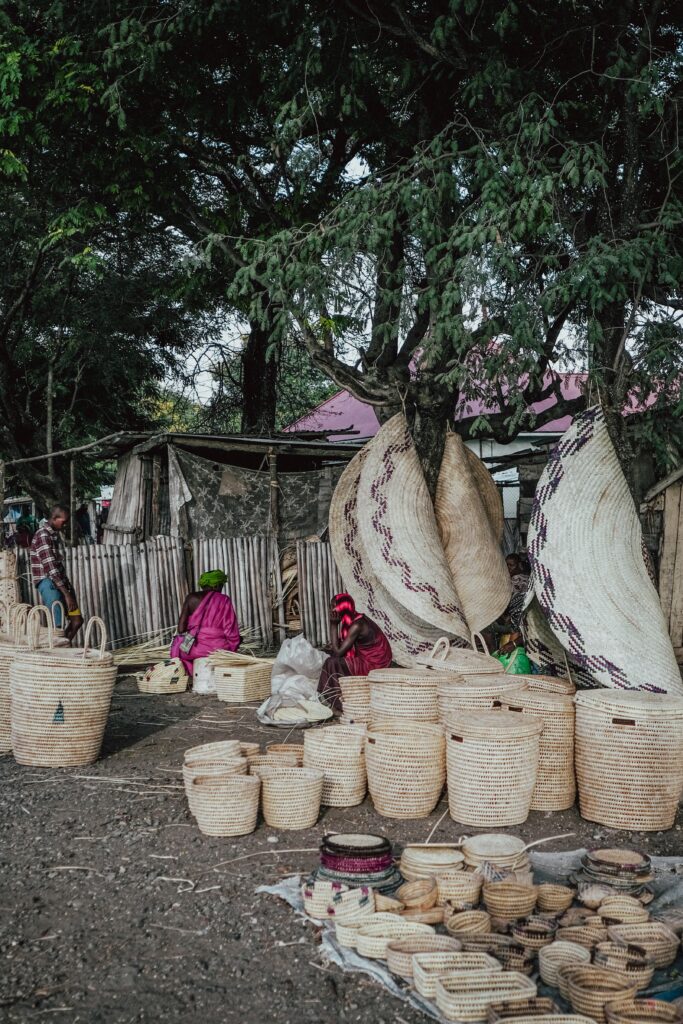
Baskets and mats reach multiple markets:
- Families: For storage and decoration.
- Shops and boutiques: Buy in quantity.
- Hotels and resorts: For decoration and display.
- Restaurants and cafes: For service and food presentation.
- Gift shops: For luxury baskets.
- Craft markets and exhibitions: Direct sales.
- Celebrations and events: For decoration and gifts.
Expected Profits and Income
Practical example:
- One week (40 hours):
- 5 different baskets: $70.
- 1 medium mat: $50.
- 2 decorated baskets: $50.
- Small items: $30.
- Weekly: $200.
- Monthly: $800.
- Initial investment: $0-5 only (if using free local materials).
Common Challenges and Solutions
Challenge 1: Raw Materials Break or Crack
Solution: Soak materials in warm water before use. Makes them flexible.
Challenge 2: Weaving Is Uneven or Unequal
Solution: Practice improves quality. After 10-15 products, much better.
Challenge 3: Product Unravels or Collapses
Solution: Use strong thread. Bind edges firmly. Test durability before selling.
Challenge 4: Market Saturated, Sales Slow
Solution: Focus on quality and unique design. Beautiful, unique baskets sell faster.
Gradual Expansion
After initial success:
- Increase production: From one daily product to multiple.
- Develop designs: From simple to complex and artistic.
- Use colors: Hand-dye fibers = unique products.
- Build reputation: Customers request you by name.
- Hire help: Distribute work = higher production.
Online Growth Opportunities (Once Established)
Hand-made products have huge online demand, especially luxury baskets and mats. Beautiful photos showing hand craftsmanship, story behind each product, short weaving videos. Buyers pay premium prices for unique hand-made items.
Moving to Reality
Basket and mat weaving seem simple but quality requires practice. Even weaving and strong structure don’t come quickly. Learn from old craftspeople in your area: how do they select materials? When do they harvest palm fronds? How do they dye them naturally?
Raw material preparation is critical. Fresh palm needs proper drying. Improperly prepared fronds may not stay strong. Learn correct methods from the start.
Unique designs are the secret. Don’t copy exactly. Add new colors. Create different shapes. Each unique product sells faster.
Learn Traditional Basket and Mat Weaving
Bottom Line
Basket and mat weaving is a wonderful craft with modern income potential. Free natural resources transform into beautiful, profitable products. Very low investment, very high income.
Start with simple baskets. Learn. Add mats. Then decorated baskets. Each step increases your income.
This is true sustainability: using nature wisely to create beauty and income.
Similar series: Crafts that Resist Automation
— Ultra-Small Projects Series | Survival Economy —
Previous Article: 7 – Rope and Net Making
Current Article: 8 – Basketry and Mat Weaving
Next Article: 9 – Oil Extraction from Seeds
References and Resources:
- Traditional basket and mat weaving techniques across cultures
- Natural fiber preparation and dyeing methods
- Local market demand for handwoven products