Return to the Moon: Artemis, Artificial Intelligence, and the Laboratory in the Sky

Artemis II has flown around the Moon. But the real revolution is not the mission — it is what AI will do on the surface when we finally land and stay.
I need to admit something before we go any further. When I tell people I am writing an article about the Moon, the most common first response — faster than curiosity, almost reflexive — is some version of: “Did they really go?”
We have been living with this question for more than fifty years. It is, in many respects, the most successful conspiracy theory in modern history — not because it is true, but because it has lodged itself so deeply in popular skepticism that it resurfaces with every generation. The Flat Earth forums, the subreddits, the TikTok accounts — they all eventually get to the Moon. I think it is worth spending a few paragraphs here not to dismiss the question with contempt, but to actually answer it, because the answer is stranger and more interesting than either side usually admits.
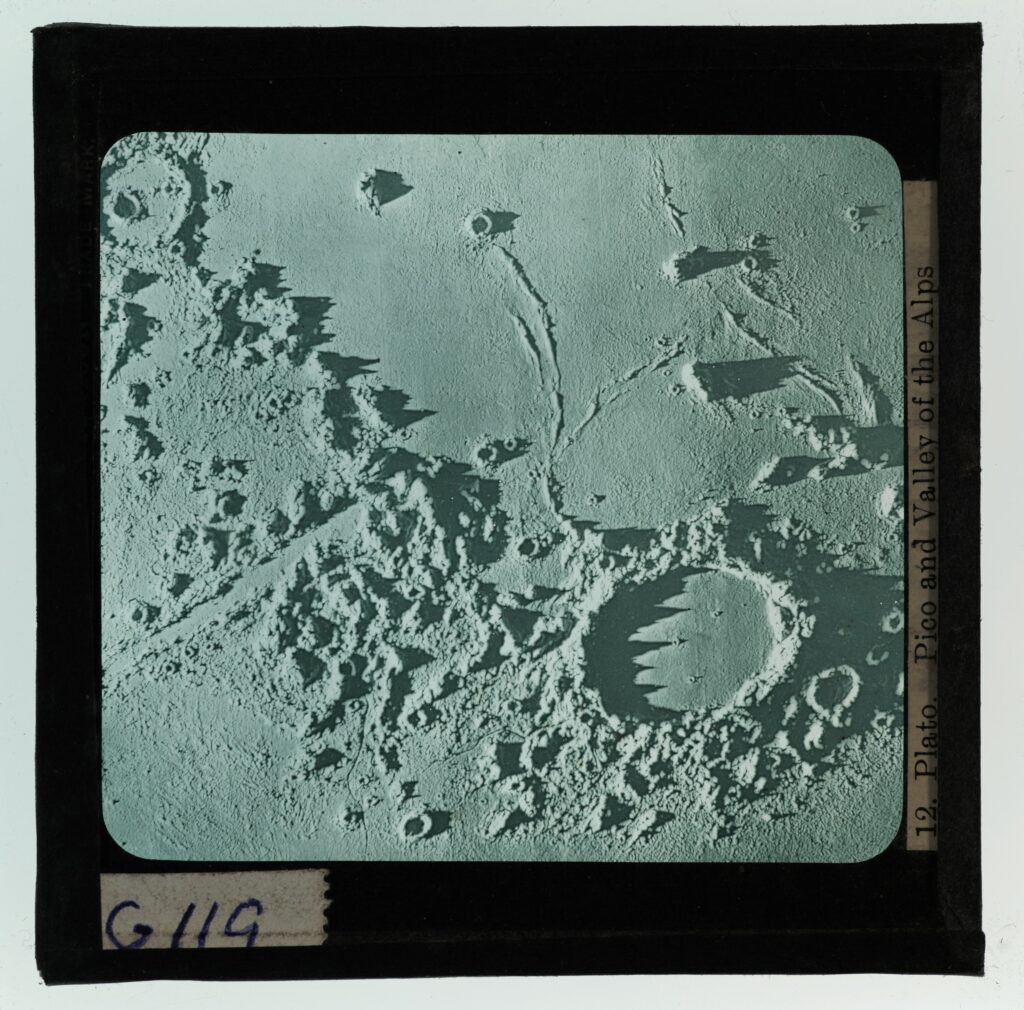
The Hoax That Never Was: A Rapid Debunking Worth Reading
The Moon landing conspiracy theory gained its first major mainstream audience in 1976 with Bill Kaysing’s self-published pamphlet. It was largely incoherent, but it planted a seed that has not stopped growing. The core claim: NASA faked the Apollo landings, likely in a film studio, because the technology was not advanced enough and the radiation of the Van Allen belts would have killed the astronauts.
Here is what makes this theory collapse under any serious examination. First, the Soviet Union. The Soviets had the most sophisticated tracking capabilities in the world in 1969, were engaged in a bitter and existential space race with the United States, and had every possible incentive to expose a hoax. They tracked every Apollo mission in real time and never disputed a single one. If there had been anything to expose, they would have exposed it. Second, the retroreflectors. During the Apollo missions, astronauts placed corner-cube laser reflectors on the lunar surface. Today, in 2026, any observatory with sufficient equipment can fire a laser at those precise coordinates and receive a return signal. France’s Observatoire de la Côte d’Azur does this routinely. The reflectors are there. Third, the modern photographs. Japan’s Kaguya spacecraft (2007–2009) and NASA’s Lunar Reconnaissance Orbiter (2009–present) have both photographed the Apollo landing sites from orbit at resolutions high enough to see the descent stages, the flag bases, and the equipment left behind. You can look at these images today on NASA’s website. They are not secrets.
Finally, and perhaps most conclusively: approximately 400,000 engineers, technicians, scientists, and contractors worked on the Apollo program. The idea that all of them, or enough of them to sustain the deception, kept a secret for more than fifty years defies everything we know about human nature, institutions, and the way secrets actually work.
The Apollo landings happened. All six of them. Twelve human beings walked on the Moon between July 1969 and December 1972. And now, in April 2026, we are finally — after fifty-three years — going back.
A History Written in Craters: Every Mission, Briefly
Before we reach the present moment, it helps to understand the full arc. The exploration of the Moon is the longest continuous human space program in history, and it looks nothing like the simplified version most people carry in their heads.
It began in 1959. Luna 1 (USSR) became the first spacecraft to escape Earth’s gravity in January of that year. Luna 2, in September 1959, became the first human-made object to reach another celestial body when it impacted the lunar surface. Luna 3 photographed the far side of the Moon for the first time in October 1959, revealing terrain no human eye had ever seen.
The 1960s were a decade of relentless failure on the way to eventual success. The United States’ early Ranger program (1961–1965) suffered five consecutive failures before Ranger 7 finally succeeded. The Soviets achieved the first soft landing with Luna 9 in 1966, then the first lunar orbit with Luna 10. The Americans responded with the Surveyor program (five successful soft landings) and the Lunar Orbiter series (five successful orbiters mapping the surface for Apollo site selection).
Then came the Apollo era. Between December 1968 and December 1972, the United States flew eleven Apollo missions to or near the Moon. Apollo 8 (1968) was the first crewed lunar orbit. Apollo 11 (July 1969) was the first crewed landing. Apollo 17 in December 1972 was the last, with geologist Harrison Schmitt the only professional scientist to walk on the Moon. Total: twelve astronauts, six landings, 382 kilograms of returned samples.
While the Americans were landing crews, the Soviets were conducting remarkable uncrewed science. The Lunokhod 1 and 2 rovers (1970 and 1973) traversed a combined 48 kilometers of lunar terrain. The Luna 16, 20, and 24 missions returned samples automatically. Luna 24 in 1976 was the last Soviet lunar mission — and after that, the Moon was essentially abandoned for thirty-seven years.
The return came with China’s Chang’e 3 in 2013, the first soft landing since 1976. Chang’e 4 (2019) made the first-ever landing on the far side of the Moon. Chang’e 5 (2020) returned fresh lunar samples — the first since 1976. India’s Chandrayaan-3 (August 2023) made the first successful soft landing near the lunar south pole. Japan’s SLIM (January 2024) became the fifth nation to achieve a soft landing. And in February 2024, Intuitive Machines’ IM-1 became the first commercial mission to successfully land on the Moon.
Then, on November 16, 2022, NASA launched Artemis I — the first flight of the Space Launch System, carrying an uncrewed Orion capsule on a 25-day journey around the Moon and back. The mission was a technical success. The stage was set for something we had not done since 1972.
Artemis II: The Mission Happening Right Now
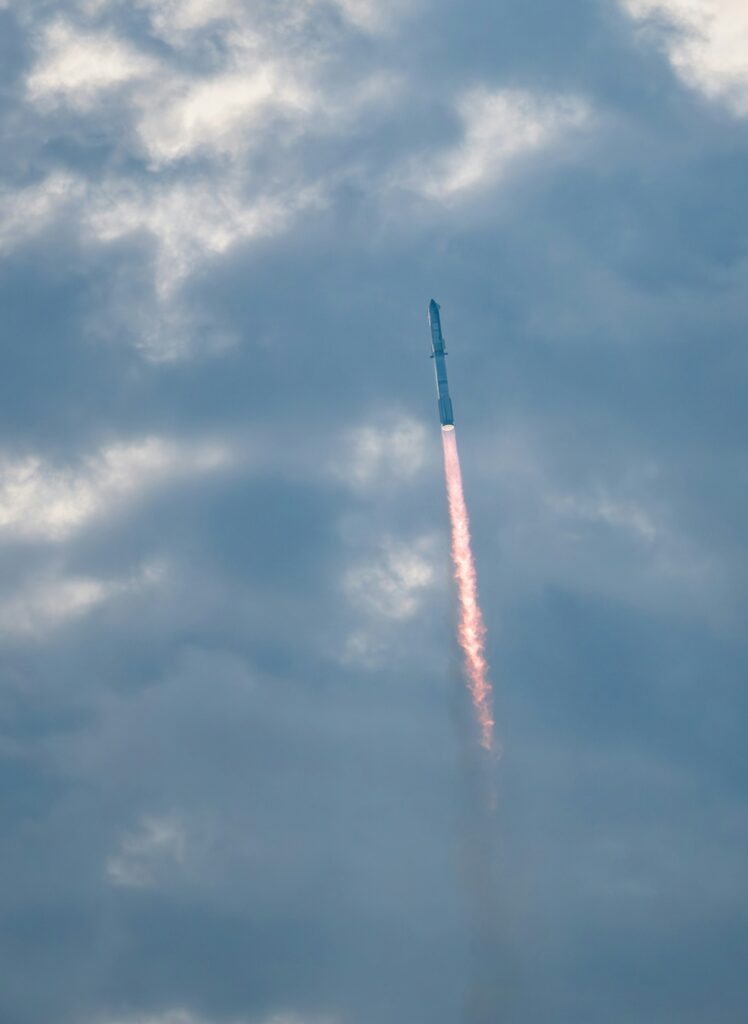
On April 1, 2026, at 6:35 PM Eastern Time, a Space Launch System rocket lifted off from Launch Complex 39B at Kennedy Space Center in Florida, carrying four human beings toward the Moon for the first time in fifty-three years. I am writing this on April 8–9, 2026, as the crew returns to Earth.
Their names deserve to be stated clearly. Reid Wiseman, commander, US Navy aviator and NASA veteran. Victor Glover, pilot, the first Black astronaut assigned to a lunar mission. Christina Koch, mission specialist, holder of the record for the longest single spaceflight by a woman (328 days), a scientist with deep-space mission expertise. Jeremy Hansen, mission specialist from the Canadian Space Agency, the first Canadian to travel to the vicinity of the Moon.
They named their Orion spacecraft Integrity. The choice was theirs.
On April 6, the crew performed their closest lunar approach and broke the all-time record for the farthest distance any human has traveled from Earth: 406,773 km from Earth, surpassing the record set by the Apollo 13 crew in 1970.
In Greek mythology, Artemis is the twin sister of Apollo and the goddess of the Moon — and, significantly, the goddess of the hunt and the wilderness. The name was chosen to signal continuity with the original Apollo program while marking something new: the Artemis program was designed, from its inception, to land the first woman and the first person of color on the Moon. When the programme began, this was one of its primary stated goals. However, this was removed from NASA’s website around March 2025 without public explanation. What remains is a program with a more complicated political context than its original framing, though the scientific objectives have never been clearer.
What Comes Next: The Revised Artemis Timeline
The current Artemis schedule, as of April 2026, has been significantly revised. Artemis III, originally planned as the first crewed lunar landing, has been redesigned as a Low Earth Orbit test mission scheduled for 2027, testing the docking of Orion with commercial landers from SpaceX and Blue Origin and the new Axiom AxEMU spacesuits designed in collaboration with fashion house Prada. Artemis IV and V, the first actual Moon landings, could happen in 2028. NASA continues to target early 2028 for the first Artemis lunar landing. The Lunar Gateway space station was also shelved in March 2026; NASA is now prioritizing surface infrastructure near the south pole.
China is not standing still. Three additional Chang’e uncrewed missions are planned between 2025 and 2028, in preparation for the International Lunar Research Station China and Russia plan to construct in the 2030s, with crewed lunar landings targeted by 2029 or 2030. The space race is back, with different players and different objectives.
Why the Moon, This Time? The Laboratory Nobody Has Used Yet
The Apollo missions were fundamentally about political symbolism, scientific reconnaissance, and national prestige — in roughly that order. They succeeded on all three counts. But they were not designed for sustained presence. Every Apollo mission was a visit, not a stay.
The scientific case for sustained lunar presence rests on several pillars that did not exist during Apollo, or were not yet understood. First: the confirmed presence of water ice at the lunar poles, particularly in the permanently shadowed craters near the south pole. Water ice means the potential for drinkable water, breathable oxygen (through electrolysis), and hydrogen fuel — without shipping them from Earth. Second: a unique scientific environment — microgravity, near-total vacuum, extreme temperature cycling, high-energy radiation — that allows experiments simply impossible here. Third: the Moon’s value as a stepping stone to test the systems needed for Mars, at a fraction of the distance and with the option of emergency return.
The fourth pillar was not available to Apollo, and it changes the entire equation: artificial intelligence. The ability to run autonomous scientific experiments, process massive data streams from a surface with a fourteen-second communication delay from Earth, and manage complex engineering systems without human intervention at every step — this changes what is possible on the Moon in fundamental ways.
The AI Revolution in Science: What “Scientific AI” Actually Means
When most people hear “AI in science,” they think of data analysis — a faster, more tireless version of what a graduate student does with a spreadsheet. That framing has become obsolete. The transformation in scientific AI over the last several years is not accelerated data processing. It is something closer to accelerated hypothesis generation and experimental design.
The clearest example is AlphaFold. DeepMind’s protein structure prediction system compressed a problem that had defeated structural biology for fifty years into a computational process that produces results in minutes. The consequence is not just faster biology — it is biology operating at a different level of abstraction, where the question is no longer “what does this protein look like?” but “which proteins should we design to achieve a specific effect?”
NASA recognized the shift explicitly, launching a new program element in 2025 called FAIMM — Foundational Artificial Intelligence for the Moon and Mars — specifically to develop AI tools for lunar and Martian science and exploration. The program reflects an institutional acknowledgment that AI is no longer a supporting tool in space research but a structural component of it.
The concept of the self-driving laboratory is perhaps the most striking development. Traditional laboratory science requires a human scientist at every step: formulating a hypothesis, designing an experiment, running it, observing results, formulating the next hypothesis. Self-driving labs use AI to close this loop autonomously — the AI proposes an experiment, automated robotic systems execute it, sensors collect results, the AI analyzes them and proposes the next — all without a human in the loop for individual steps. This kind of system is already operating in drug discovery and materials research on Earth. On the Moon, where every human-hour is expensive and real-time oversight is impossible, self-driving labs move from interesting to essential.
Regolith: Mining the Moon’s Dust for Survival
The word “regolith” comes from the Greek for “stone blanket.” It is the layer of loose, fragmented material — rock, mineral dust, glass beads created by billions of years of meteorite impacts — that covers the entire lunar surface. It looks like grey powder and it is one of the most scientifically valuable materials in the solar system.
Lunar regolith is approximately 43% oxygen by mass, chemically bound in mineral oxides. It contains iron, aluminum, calcium, silicon, and titanium. In the permanently shadowed craters near the south pole, it contains water ice. The challenge is extraction — separating these elements from the mineral matrix under extreme conditions, at scale, with minimal energy input.
NASA’s ISRU Pilot Excavator (IPEx) project is developing an autonomous robotic system designed to excavate and transport lunar regolith. The system is designed to excavate up to 10,000 kg in a single lunar day — a significant improvement over previous missions that collected tens of kilograms. The robot uses AI-driven navigation to map its environment in real time and make autonomous decisions about excavation paths and load management.
Beyond excavation, German scientists have proposed manufacturing solar cells directly on the Moon using regolith-based “moonglass,” which could save an astonishing 99% of material transport weight and associated costs. NASA’s MMPACT project is exploring large-scale robotic 3D printing for construction using simulated lunar regolith, with machine learning algorithms optimizing structural shapes and printing parameters for the specific constraints of lunar construction: low gravity, extreme temperature swings from −170°C to +120°C, and micro-meteorite bombardment.
This connects to what we have discussed in our article on The Future of Creative Professions and AI: the human role shifts from executing each step to defining the goal and evaluating results. On the Moon, this is not a metaphor for workplace trends. It is an operational necessity.

The Biology of Staying: CRISPR, Microbiomes, and the Human Body in Space
The biology of the Moon is not only the question of what lives there (nothing, at present, that we know of). It is the question of what happens to human biology — to cells, DNA, gut bacteria, immune response, and bone density — when you remove someone from the conditions under which their entire evolutionary history occurred.
The microbiome question is less discussed but equally important. Human gut bacteria are exquisitely sensitive to environment. A disrupted microbiome affects immune function, mood, digestion, and a range of other systems. On long missions, microbiome degradation is a medical problem with no easy fix. AI-driven modeling of microbiome dynamics under simulated space conditions is now a research priority, with machine learning used to map the interactions between hundreds of bacterial species and their responses to the combined stressors of space.
On the side of intervention, the combination of CRISPR gene editing and AI is opening possibilities that would have seemed purely speculative five years ago. Designing radiation-resistant crops for lunar or Martian growing environments — by identifying which DNA repair mechanisms in extremophile organisms could be inserted into food plants — is now computationally tractable in ways that laboratory-only approaches were not. AlphaFold-class tools can model the protein-level effects of proposed genetic modifications, dramatically reducing the number of wet-lab experiments required.
As we discussed in our article on technology and the body (The Body Is the New Cage: Escaping Biology Through Technology), the question of what we can and should modify about human biology is one of the genuinely contested questions of the coming decades. Space exploration provides perhaps the most urgent practical context for this debate: the Moon and Mars are not compatible with unmodified human physiology at any duration worth describing as “sustained presence.”
What Scientists Are Actually Worried About
Space agency press releases tend toward the inspirational. The actual conversations among researchers tend toward the specific and occasionally alarming.
Radiation shielding is the dominant concern for anything beyond a short surface stay. The Apollo astronauts spent at most three days on the surface; a thirty-day stay — the kind of duration that makes real science possible — is a different calculation entirely. Currently proposed solutions include regolith-based shielding, polyethylene composites, and pharmaceutical countermeasures. AI is being used to model dose distributions from various shielding configurations and optimize habitat design for minimum mass per unit of protection.
Dust remains an unsolved problem the Apollo astronauts identified. Lunar regolith particles are sharp, electrostatically charged, and pervasive. They stick to everything — suits, visors, equipment, life support systems. They are small enough to be inhaled. The Electrodynamic Dust Shield tested on the Blue Ghost Mission 1 in March 2025 demonstrated one mitigation approach, but the problem at the scale of a long-duration base is considerably harder.
The ethics of contamination is a question that does not appear in engineering specifications but that a growing number of scientists are raising seriously. The permanently shadowed craters where water ice is concentrated are also scientifically pristine environments undisturbed for billions of years. ISRU operations there would alter them irreversibly. Is the scientific value of the resources worth losing the scientific value of the environment? As we explored in our Silicon Cave series (The Metaverse as Infrastructure: Building the Cave), the question of who has the right to alter an environment for economic purposes runs deeper than any particular technology.
The circular economy problem is the engineering expression of a philosophical challenge: how do you build a system that genuinely does not depend on continuous resupply from Earth? A sustainable lunar presence requires a closed-loop system — waste becomes feedstock, air is recycled, energy comes from local sources, building materials come from the surface. Managing the complex interdependencies of a closed-loop life support system with hundreds of variables and no tolerance for failure requires continuous optimization that no human crew could perform manually. This is where AI becomes structural rather than supplementary.
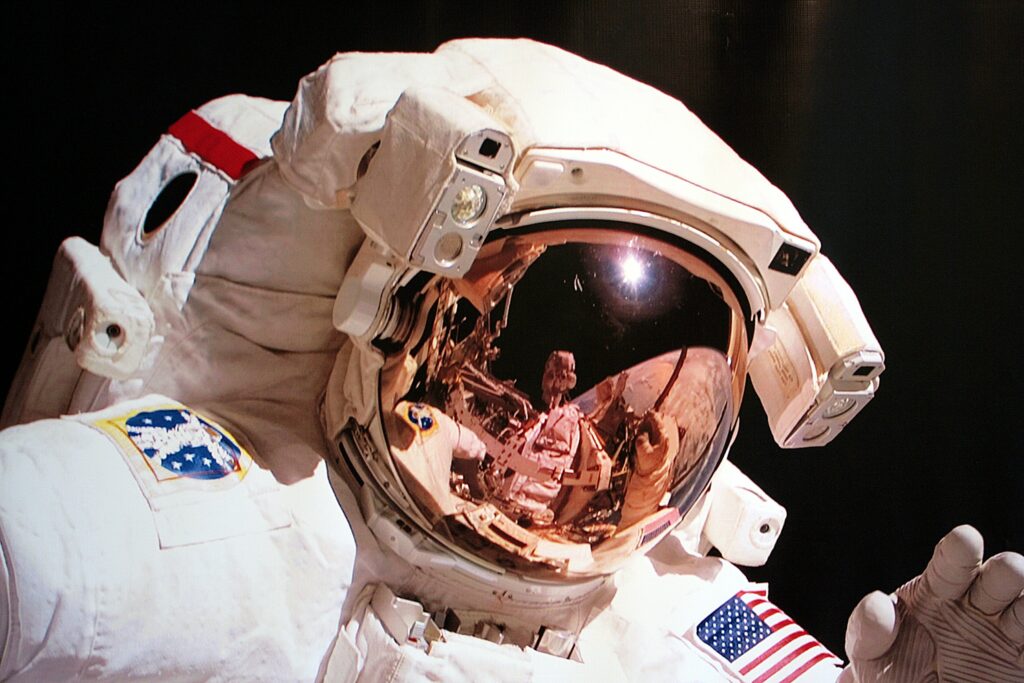
The Moon as Gateway: Where This Actually Goes
The Moon is not simply a practice run for Mars. It has scientific value in its own right — the permanently shadowed polar craters contain a record of the early solar system going back four billion years that is unavailable anywhere else in the reachable universe. The far side of the Moon, permanently shielded from Earth’s radio interference, is the only location in the inner solar system from which low-frequency radio astronomy is possible — and it may hold observations about the cosmic dawn, the era when the first stars formed, that are simply inaccessible from Earth.
What strikes me, looking at all of this from this particular moment — the Artemis II crew is en route back to Earth as I write these words, having traveled farther from Earth than any human in history — is that the gap between what we are doing now and what we need to do to make the Moon a genuinely productive scientific environment is largely a gap in AI capability, not in rocket science. The rockets exist. The spacecraft exist. The limiting factor is the intelligence of the systems that will operate on the surface with minimal human oversight.
We have been writing across various articles on this site about the relationship between artificial intelligence and human cognition — in the workplace, in creative work, and in the more unsettling question of what the algorithm does to our sense of reality (Algorithmic Republic: Who Governs the Digital City?). The Moon is where those questions become existential rather than professional. An AI system on the lunar surface that makes a wrong material decision, mismanages life support, or fails to detect a dangerous radiation event is not an inconvenience. It is a catastrophe.
Which means, paradoxically, that the Moon will force us to develop AI that is genuinely reliable rather than merely impressive — a standard that most current systems, for all their capabilities, do not consistently meet. The Moon does not accept a hallucination.
A Note to the Generation That Will Actually Be There
The Artemis II crew is returning from humanity’s first crewed voyage to the vicinity of the Moon in fifty-three years. The first actual landing — if the current schedule holds — will happen in 2028. The sustained lunar presence that Artemis is intended to build toward will be in its early operational phases when someone currently in high school reaches their professional peak.
The software that will navigate autonomous excavators across the lunar surface has not been fully written. The algorithms that will manage closed-loop life support in a habitat exposed to cosmic radiation have not been finalized. The machine learning models that will identify anomalies in regolith chemistry and flag them for remote scientists on Earth are in early development. The teams that will build these things are forming now, at universities and research institutions and startup companies.
The Moon landing of the 1960s was watched on television by people who had no direct role in it — spectators of a spectacle created by a specialized few. The lunar science of the 2030s will be distributed in ways that Apollo never was: software running on systems that a programmer in any country with internet access could in principle contribute to, data processed by algorithms that a data scientist in any discipline could help design. You do not need to be an astronaut to work on the laboratory that will operate on the surface of the Moon.
Artemis II is overhead somewhere, returning. The Moon is there. The ice is there. The chemistry is there. The instruments are getting smarter. The question is whether our ambitions are as well.
References and Sources
- NASA. Artemis II Mission Page. nasa.gov
- NASA. Moon to Mars — Artemis Program Overview. nasa.gov
- NASA Science. C.12 FAIMM — Foundational Artificial Intelligence for the Moon and Mars. January 2026. nasa.gov
- NASA. ISRU Pilot Excavator (IPEx). nasa.gov
- Apollo11Space. “Next-Gen Space Power: AI & Materials Science Advancements for Moon & Mars in 2025.” June 2025. apollo11space.com
- NASA. 2024 AI Use Case Inventory. nasa.gov
- US GAO. NASA Artemis Missions: Exploration Ground Systems Program. October 2024. gao.gov
- NSSDCA. Lunar Exploration Timeline. nssdc.gsfc.nasa.gov
- EarthSky. “Artemis 2 successfully launches toward the moon!” April 2026. earthsky.org
- Al Jazeera. “A visual guide to Artemis II and previous missions to the moon.” April 2026.
- Wikipedia. Artemis Program, Artemis II, Artemis III, List of missions to the Moon. Accessed April 8–9, 2026.
- Royal Museums Greenwich. “Artemis Programme: what you need to know.” Updated April 2026.
- See also: The Body Is the New Cage: Escaping Biology Through Technology
- See also: The Future of Creative Professions and AI
- See also: Algorithmic Republic: Who Governs the Digital City?
- See also: Smart Cities: Is Humanity Ready for Life in the Future?
- See also: The Metaverse as Infrastructure: Building the Cave