The Emergency Fund — How Much Do You Need and How to Build It as a Freelancer

34% of freelancers have no emergency fund. One had to buy international flights in the middle of the night to flee a crisis. Another faced an unexpected tax bill that would have ended most. Both survived — because they had built a fund. Article 4 of Freelancer Finance Secrets.
Plane Tickets at Midnight
Freelance writer Carol Tice was working in Nicaragua in April 2018 when the political situation collapsed overnight. Within hours, staying was no longer safe. She needed to book same-day international flights — for herself and her young daughter — at whatever price the last-minute market demanded. There was no time to compare options, no time to wait for a better fare, no time for anything except acting immediately.
She wrote about that night later on her platform Make a Living Writing. Her assessment was direct: if she hadn’t had an emergency fund ready and liquid at that moment, the night would have been a financial catastrophe layered on top of a human one. She had the fund. She paid from it. She rebuilt it afterward.

Her situation was extreme in its circumstances — but what happens to freelancers every week is not necessarily gentler in its financial impact: an unexpected medical bill, a laptop that fails in the middle of a critical deadline, a client who delays payment by three months, or a quiet stretch that runs far longer than expected. Emergencies don’t schedule themselves around your income cycle.
This article isn’t written to convince you that crises happen — you already know they do. It’s written to put exact numbers and a realistic methodology in your hands for building an emergency fund that fits the specific reality of irregular freelance income.
The Number That Should Concern Every Freelancer
Before the methodology, the data:
34% of freelancers worldwide have no emergency fund whatsoever. And more broadly, 71% report genuine difficulty saving due to the unpredictability of their income.
This means that one in three working freelancers is one unexpected event away from financial desperation — one bill, one lost client, one bad quarter away from accepting whatever project appears at whatever rate it pays. And that desperation is not just uncomfortable. It structurally undermines the freelancer’s position in every negotiation they enter:
When you cannot afford to walk away, you cannot negotiate. When you cannot negotiate, your rates stagnate or fall. When your rates stagnate, your savings remain impossible. The loop feeds itself.
Having an emergency fund doesn’t only mean you can survive a crisis. It means you can afford to reject bad projects and wait for good ones. That is what real negotiating power looks like.
Preston Lee — Ten Years, and a Fund Built from Day One
Preston Lee is the founder of Millo — one of the most widely-read resources for freelancers, built over more than a decade of direct experience. He writes about his financial history with a level of candor that’s rare among public figures in the freelance space.
When he started out, he encountered what most early freelancers encounter: clients who paid late, clients who didn’t pay at all, and large clients who terminated without notice. But from the very beginning, he made a deliberate decision to build an emergency fund — even when his income was still small and inconsistent.
Then came the shock he hadn’t anticipated: a government pre-tax bill that arrived with neither warning nor flexibility in its deadline. For a freelancer without reserves, that kind of unexpected fiscal demand means selling assets, taking on debt, or financial collapse. Preston paid from his fund — and rebuilt it.
His conclusion after a decade: the fund doesn’t only protect you in a crisis — it protects you every single day because you know it’s there. That psychological security translates directly into better professional decisions — the kind made from clarity rather than fear, from strength rather than desperation.

The 6-to-12-Month Rule — Why Freelancers Need More Than Everyone Else
The standard recommendation for any working person is to maintain three to six months of essential expenses in an emergency fund. That guidance is built for someone with a predictable monthly income and the occasional unexpected expense.
For a freelancer, the structural reality is fundamentally different:
- No unemployment benefit in most legal systems.
- No paid sick leave or paid vacation.
- Income itself fluctuates — some months can approach zero even without any crisis.
- Rebuilding a client base after a gap takes weeks to months, not days.
For these reasons, most financial advisors who specialize in self-employment recommend targeting six to twelve months of essential expenses — not three to six. The twelve-month target is particularly relevant for freelancers who work in regions with weak social safety nets, who support dependents, or whose income varies dramatically across seasons.
Some certified financial planners who work specifically with freelancers recommend going even further — maintaining twelve months at the business level plus the standard three to six months at the personal level — treating them as two distinct buffers. That’s an advanced target, but it illustrates the direction of thinking.
Calculating Your Own Number
The formula is straightforward, but it requires honesty:
- Calculate your essential monthly expenses — not your full spending, but the non-negotiables: rent, food, utilities, communications, insurance, any loan payments. These are your true survival costs.
- Multiply by six for your primary target. Multiply by twelve for your ideal target.
- Practical example: If your essential monthly expenses are $2,000, your six-month fund = $12,000. Your twelve-month fund = $24,000.
The number may look large at first — that’s normal. It isn’t built in a single month. It’s built methodically, payment by payment, over time. The goal of this article is to show you exactly how.
Three Methods for Building a Fund on Irregular Income
The real challenge of building an emergency fund as a freelancer isn’t intellectual — it’s applied. A salaried employee knows their income in advance and can set a fixed monthly transfer. A freelancer doesn’t know what next month will bring. How do you build a savings plan around that uncertainty?
Method One: A Fixed Percentage of Every Payment Received
Instead of saving a fixed monthly amount, commit to a fixed percentage of every payment you receive — before touching anything else. The most widely recommended range is 10 to 20% of every payment.
When a payment of $1,500 arrives, transfer $150 to $300 to a separate emergency fund account before spending anything else. When an exceptional month brings in $5,000, transfer $500 to $1,000. The amount varies because your income varies — but the percentage is always honored.
This approach solves the “slow month” problem automatically: when income is lower, your savings contribution is proportionally smaller without creating pressure. When income is higher, contributions increase without any additional decision required.
Method Two: Zero-Sum Budgeting — Every Dollar Has a Place
The principle: at the start of each month, allocate every dollar you expect to receive across specific categories until the unallocated balance reaches zero. Categories include: essential expenses, emergency fund, estimated taxes, professional development, and discretionary spending.
When freelancers begin applying this method, they typically discover expenses they hadn’t noticed — unused digital subscriptions, recurring services they’d forgotten about, small purchases that seem negligible individually but accumulate meaningfully. Identifying those flows is what makes it possible to redirect money toward the fund without necessarily earning more.
Method Three: A Separate Account With a Yield
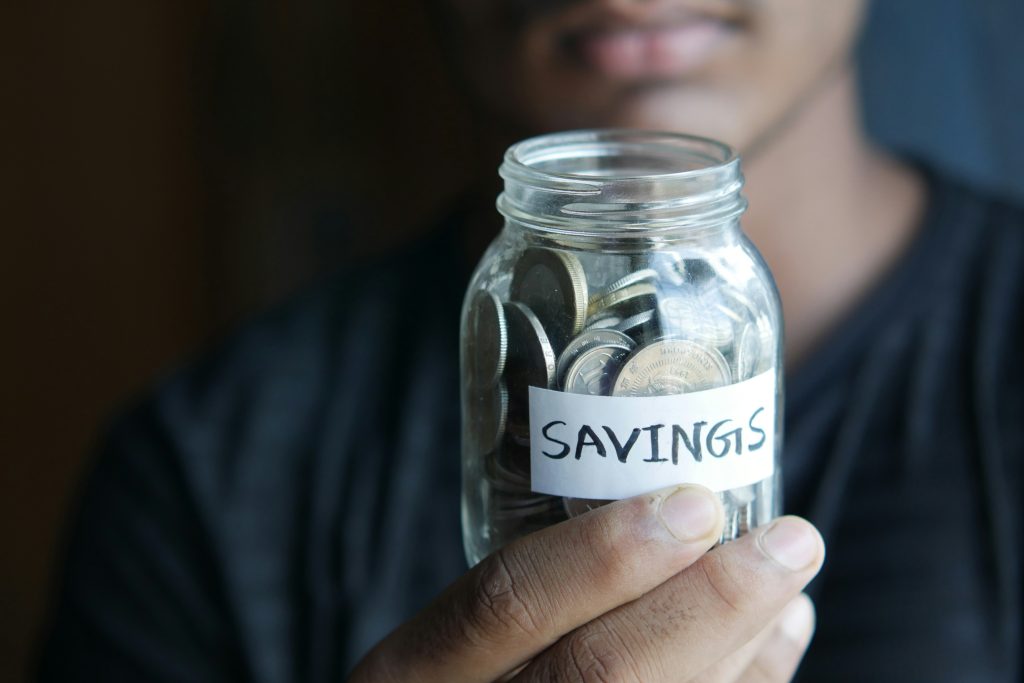
Your emergency fund should not sit in your regular checking account — for two reasons. First, it will gradually disappear into everyday spending without your realizing it. Second, a separate account creates a psychological barrier that makes accessing it for non-emergencies genuinely inconvenient, and inconvenience is a form of protection.
The smarter move: choose an account that generates a return on your balance. Many digital banking platforms (Revolut, Wise, and various regional alternatives depending on where you’re based) offer high-yield savings features with annual returns of 3 to 5% on held balances. An emergency fund of $10,000 in an account earning 4% annually generates $400 per year with no effort — effectively offsetting a portion of its own opportunity cost.
Alex — The Tracking App That Changed Everything
One story worth examining closely: Alex, a freelance developer and designer profiled in a 2024 financial case study, believed his monthly expenses ran around a certain figure — until he started logging every transaction in an expense tracking app.
Two weeks in, he found his actual spending was nearly 40% higher than he’d estimated. The gap wasn’t in major line items — it was in accumulation: forgotten subscriptions, delivery apps used more often than he’d registered, small purchases that felt negligible in isolation. Once he knew the real number, he could build a savings plan based on reality rather than assumption.
The lesson: you cannot build an emergency fund if you don’t know what’s draining it. Expense tracking isn’t a technical accounting exercise — it’s the first real step toward any meaningful form of savings discipline.
The emergency fund doesn’t prevent crises. It converts them from catastrophes into manageable problems. That distinction makes all the difference — financially and psychologically.
Good Months — A Rule That Must Never Break
One of the most consistent financial mistakes among freelancers: spending the surplus from strong months entirely.
A good month arrives and the instinct to reward yourself for difficult preceding months is entirely human and understandable. But a strong month is precisely the moment to accelerate contributions to the fund — because the quiet months will follow, and when they do, you’ll wish you had.
The guidance from Preston Lee and most financial advisors who work with self-employed professionals: in strong months, raise your savings rate to 25 or 30%. In slower months, drop to the minimum 10% or temporarily pause discretionary savings. But never pause the baseline contribution entirely. Even 5% of a small payment is better than zero — because the habit matters as much as the amount.
The compounding effect of consistent behavior over time produces results that feel counterintuitive early on. A freelancer saving 15% of every payment for twelve consecutive months — regardless of the income variation across those months — will find the total more substantial than they expected. Consistency outperforms volume.
The Fund Is Not Just for Emergencies — It’s for Freedom
A point that doesn’t receive enough emphasis: the emergency fund isn’t purely defensive insurance against disasters. It is an active tool of professional freedom.
When you hold six months of expenses in reserve, your professional posture changes measurably:
- You can decline a bad client without fear of the financial gap that follows.
- You can wait for the right project instead of accepting the first one that appears.
- You can take a month to develop a new skill or build a digital product without immediate income pressure.
- You can negotiate from a position of choice rather than a position of need.
Preston Lee captures this precisely: the larger his fund grew, the more freedom he had to pursue ideal clients and take calculated professional risks. The fund isn’t a defensive position — it’s the platform from which better decisions become possible.
A Step-by-Step Table — Building Your Fund in Stages
| Stage | Target | Action | Timeline |
|---|---|---|---|
| One | One month of essential expenses | Open a separate account — transfer 10–15% of every payment | 3–6 months |
| Two | Three months | Maintain the same rate — increase it during strong months | 6–12 additional months |
| Three | Six months (primary goal) | Move fund to a yield-bearing account — continue building | Year 2 to 3 |
| Four | Twelve months (ideal target) | Allocate surplus from exceptional months to this stage | Year 3 to 4 |
Three Numbers You Must Know — Precisely
- Your actual essential monthly expenses: The specific number — not an estimate.
- Your lowest realistic monthly income: Not your average — the lowest figure from a genuinely slow month.
- The gap between them: This is the number your fund must cover first, before any other financial goal.
What Counts as an Emergency — and What Doesn’t
A question that deserves its own space: what actually justifies opening the emergency fund?
Genuine emergencies that warrant a withdrawal:
- One or more months of total income absence.
- A medical expense that is necessary and not covered by insurance.
- Failure of essential working equipment (computer, tools without which you cannot work).
- A family emergency requiring immediate financial response.
What does not qualify as an emergency:
- A travel opportunity that arrived unexpectedly and is simply tempting.
- An upgrade to equipment that functions adequately but feels insufficient.
- A month in which spending exceeded the budget without any genuine crisis.
The psychological barrier between the fund and these temptations is part of the financial training that defines a professionally serious freelancer. The fund is not a general savings pool. It is a line you defined in advance — and you don’t cross it for anything that doesn’t meet that definition.
Tell Us Where You Are — Your Story Matters
Before we close, we genuinely want to hear from you.
Do you currently have an emergency fund? How many months does it cover? Have you ever been in a situation where you needed it — and it was there, or wasn’t? Or are you reading this article and realizing, for the first time, that this is something missing entirely from your financial picture?
Leave a comment below and tell us. Not only because your experience matters to us, but because another freelancer is reading this page right now, looking for a story from someone in a situation that resembles their own. Your comment might be exactly the thing that helps them take the first step — or the second, or the harder third.
Conclusion — Start Today With One Percentage
Don’t wait for the big month to begin. Don’t wait for a stable income to plan. Start with the next payment you receive — whatever its size — and transfer 10% before you touch anything else. Open a separate account, label it clearly, and let it grow.
Preston Lee built his fund from day one — when his income was still fragile. Carol Tice survived a night in Nicaragua because she had built hers before she needed it. You don’t know what next month holds. But you know exactly what you can do today.
In the next article, we turn to a question that costs many freelancers serious money — and at exactly the wrong moment: how do you price your services with intelligence rather than fear? (See our article: What’s Your Hour Worth?)
Sources:
- Carol Tice — “Be Prepared: How One Resilient Freelancer Built an Emergency Fund” — Make a Living Writing.
- Preston Lee — “Why Every Freelancer Needs an Emergency Fund” — Millo, October 2024.
- Automateed — “Emergency Fund Planning for Freelancers” — March 2026.
- FileLater — “Emergency Fund for Freelancers: How to Start Saving” — February 2025.
- Found.com — “How to Budget as a Freelancer” — 2025.
- Ruul.io — “How to Start an Emergency Fund as a Freelancer” — 2024.
- DollarScaler — “Emergency Funds for Freelancers: Navigating Financial Uncertainties” — April 2024.
- Erika Kullberg — “How to Create a Budget as a Freelancer” — March 2025.
- Let’s Make a Plan (CFP) — “Master Your Finances on Freelance Income” — 2025.