The Attraction of Unfinished Stories

Why do stories with open endings stay in our minds longer than neatly finished ones? This article explores the connection between psychology and literature, showing how unfinished narratives invite readers to actively participate in creating meaning.
Most of us have probably had this experience: we finish a novel with an open ending and feel a slight discomfort, like a small lack of air that makes breathing uneasy. Yet after a few days, we realize we are still thinking about the fate of its characters. Why does this happen? Why do unfinished stories have a strange power to stay with us, while many tightly closed stories fade quickly?
The answer may not lie in literature alone. It is connected to how our minds work and to our deep relationship with the idea of endings themselves.
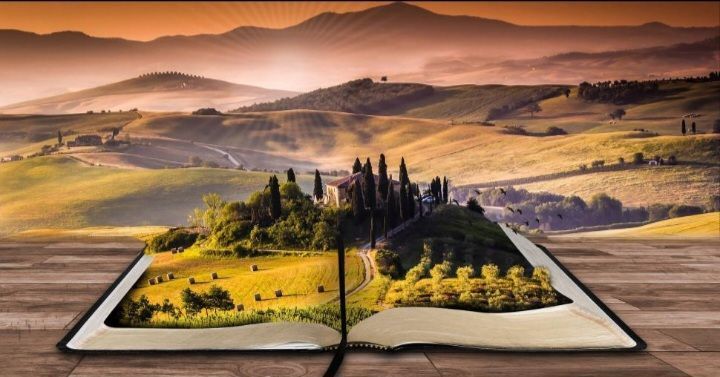
A Memory That Refuses Closure
In psychology, the Russian researcher Bluma Zeigarnik described a phenomenon now known as the Zeigarnik effect: people tend to remember unfinished tasks more than completed ones [1]. The mind treats incompleteness as a suspended tension, like a knot that has not yet been untied. As long as it remains unresolved, it stays active in memory.
An open story works in the same way. It presents the reader with something incomplete. When the narrative refuses to give us a final conclusion, it creates a cognitive tension inside us. As readers, we silently complete the story ourselves. We imagine possible endings, rearrange events, and fill the gaps with our own experiences. Reading then becomes more than passive consumption — it turns into a hidden collaboration in writing.
But this is not only a simple psychological mechanism. If the brain only wanted closure, we would hate all ambiguity. Yet many people are drawn to ambiguity in art. There seems to be a delicate balance between clarity and uncertainty: enough mystery to create curiosity, but not so much that it becomes chaos.
In this sense, a story that does not end is not incomplete — it is designed to remain alive.
The Open Ending as a Literary Language
Examples of historical novels with clearly closed endings:
● Les Misérables by the French writer Victor Hugo: the novel follows Jean Valjean’s life from prison to moral redemption and ends with his peaceful death after his human journey is complete.
● War and Peace by the Russian writer Leo Tolstoy: it traces the development of several characters within the larger picture of Russian society during the Napoleonic wars, ending with the main characters settled into stable family lives.
● Crime and Punishment by the Russian writer Fyodor Dostoevsky: the story explores the psychological life of a poor student before and after committing murder, leading to confession and the beginning of moral atonement.
● Madame Bovary by the French writer Gustave Flaubert: a woman tries to escape the boredom of her life through affairs and fantasy, and the novel ends with her suicide and the collapse of her world.
● Don Quixote by the Spanish writer Miguel de Cervantes: the tale of a dreamer knight living in illusions ends with his return to sanity and death, closing his symbolic journey.
In the history of storytelling, open endings were not always welcomed. Classical literature preferred closure: problems were solved, justice was restored, and the narrative moved clearly from beginning to end. But as the modern novel developed, writers began to question the very idea of endings. Gradually, some novels deliberately used ambiguous or unusual endings, which caused criticism and debate before becoming an conscious artistic choice.
Novels With Ambiguous or Unusual Endings That Sparked Criticism
● In Gone with the Wind by the American writer Margaret Mitchell, the heroine Scarlett O’Hara loses the love of her life and remains suspended between past and future. Some critics found the ending unsatisfying because it leaves the emotional conflict unresolved, while others saw it as realistic and fitting for Scarlett’s character. From a modern perspective, the novel’s powerful depiction of the American Civil War — especially from the defeated Southern side — makes the ending feel almost unavoidable.
● In 1984 by the British writer George Orwell, a man rebels against a totalitarian regime only to have his consciousness completely reshaped. Many readers were shocked by the pessimistic ending and considered it cruel and hopeless, while others believed it was necessary for the novel’s message. Viewed today, knowing Orwell’s socialist background and his critique of Soviet-style communism, we can understand why such an ending was accepted by some readers. Yet after the fall of communism, we still recognize elements of totalitarian systems around us, which makes the story feel disturbingly relevant. Interestingly, film adaptations often modify the ending to suit modern audiences.
One may argue that a wide audience prefers clear endings. Commercial cinema, for example, often depends on strong narrative closure to satisfy expectations — especially when there is no plan for a sequel. This is partly true. Closed endings provide immediate psychological comfort: a sense that order has been restored.
However, beyond commercial demands, there is a difference between comfort and impact. Works that provide quick comfort may be forgotten quickly, while works that leave open questions continue to operate inside us. They disturb us slightly, but they also expand our thinking.
This does not mean that all ambiguity is valuable or that every open ending is deep. Sometimes ambiguity hides artistic weakness. But when used consciously, it becomes a powerful tool that invites the reader to participate in creating meaning. Lovers of literary ambiguity may not enjoy it for its own sake, but because it suggests that the story trusts their intelligence and invites them to become partners in it.
Modern Novels With Open Endings
● The Trial by the Czech writer Franz Kafka: the protagonist is arrested without knowing his crime and becomes trapped in an absurd bureaucracy. His death leaves the meaning of guilt and judgment open to interpretation.
● Fight Club by the American writer Chuck Palahniuk: an unnamed narrator forms an anarchic group with a figure who turns out to be part of his own psyche. The ending leaves the fate of both society and the protagonist uncertain.
● Life of Pi by the Canadian writer Yann Martel: a young man survives a shipwreck and drifts at sea with a Bengal tiger, later offering two conflicting versions of events. The novel lets the reader choose which story to believe.
● The Road by the American writer Cormac McCarthy: a father and son travel through a post-apocalyptic world trying to survive. The novel ends without clearly resolving the child’s fate or the future of the world.
The Italian critic Umberto Eco argued that a literary text is not a closed object but a “lazy machine” that needs the reader to function [2]. The open ending is the clearest expression of this idea. It does not deliver a fixed meaning but opens space for interpretation.
There is also an important difference between an open ending and a broken one. A broken ending feels like a sudden power outage — frustrating because the narrative is technically unfinished. An open ending, by contrast, is a deliberate artistic choice that suggests life inside the text is too large to fit into a single conclusion.
When a writer leaves the characters’ fate unresolved, they indirectly admit that reality itself rarely offers neat endings. Life does not stop at a musical climax or close its doors perfectly. Events continue after we leave the story, and we carry only fragments of them. In this sense, an open story may feel more realistic than a fully closed one.
Humans as Incomplete Beings
Behind our attraction to unfinished stories lies a deeper reason: we ourselves are incomplete beings. None of us lives life from the outside with the ability to see its ending. Every person lives inside an open narrative, making decisions without knowing the final outcome. Some people accept this uncertainty, while others seek comfort in religion or belief systems that offer explanations of meaning.
In a rapidly changing world where certainties are eroding and questions are multiplying, unfinished stories perform a function beyond entertainment. They train us to live with incompleteness and teach us to remain inside questions rather than rushing toward ready-made answers. They remind us that meaning is not a destination but an ongoing process of interpretation.
When we close a book with an open ending, we do not simply feel that the story is unfinished. We feel that part of it has moved into us. We carry it in our conversations, reflections, and in the way we view our own experiences. The story becomes a shared space between writer and reader, between text and life.
The French philosopher Paul Ricoeur suggested that humans understand themselves through narrative, and that identity is not fixed but continuously shaped like a story [3]. If our lives themselves are open texts, it is natural that we feel a special connection to works that reflect this structure. Closed stories may offer an illusion of control — a clear beginning, a logical path, and a decisive ending. Open stories, however, bring us closer to real existence, where meaning is not predetermined but gradually built or revealed.
This may explain why some literary works remain alive across generations. They do not impose a single interpretation but allow each era to reread and reshape them according to its own questions. An open text does not age easily because it does not fully belong to the moment in which it was written.
Open stories do not leave us suspended as much as they leave us awake. They refuse to comfort us with final closure and instead push us to continue thinking. In this quiet tension between what is said and what is left unsaid lies one of literature’s most beautiful functions: reminding us that life itself is not a finished story, but one that is still being written.
References
[1] Zeigarnik, B. (1927). On finished and unfinished tasks.
[2] Umberto Eco, The Role of the Reader.
[3] Paul Ricoeur, Time and Narrative.