
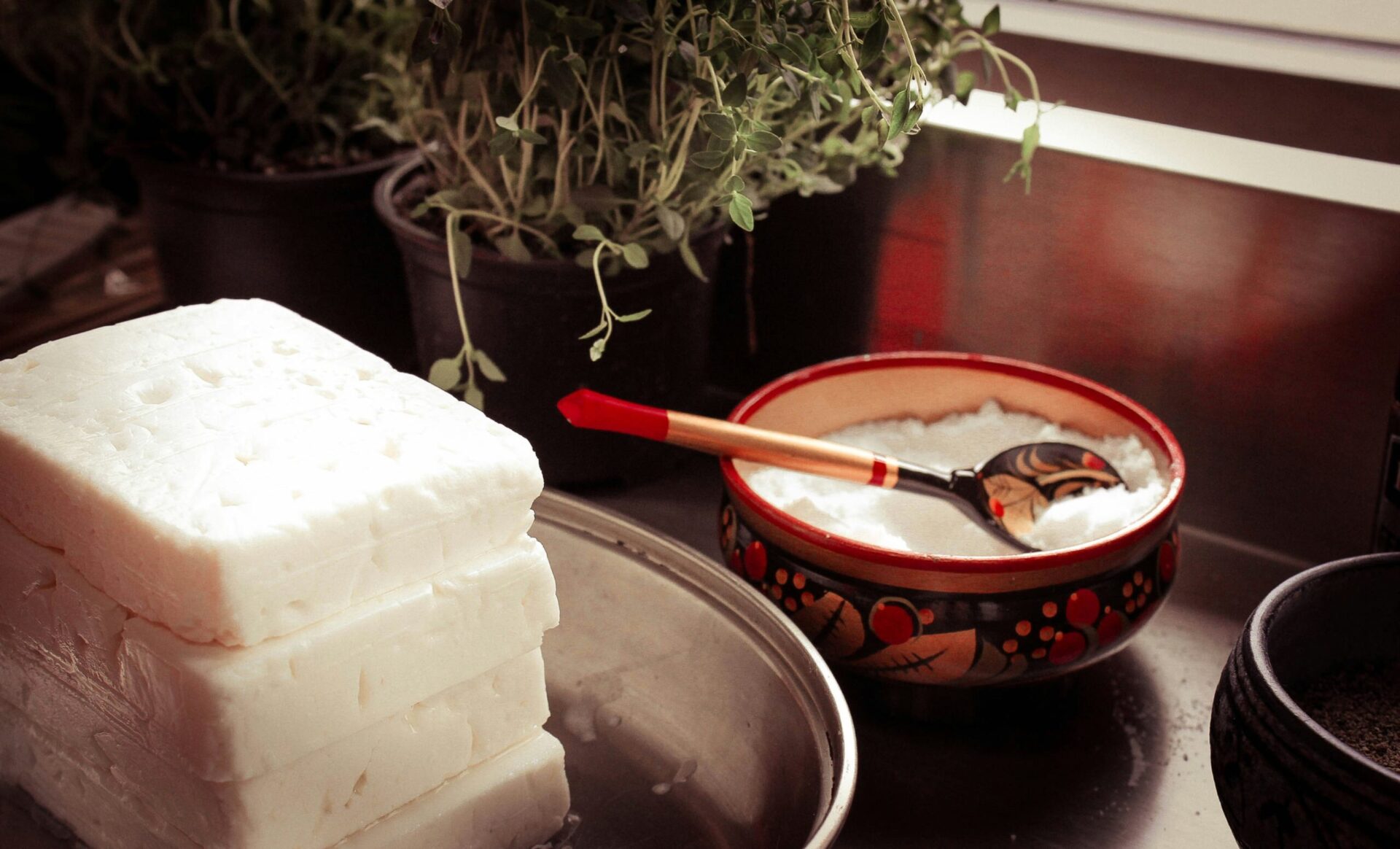
Simple Dairy Products: Homemade Cheese, Butter, and Yogurt from Fresh Milk

Learn to make cheese, yogurt, and butter at home from fresh milk. Simple project turning $1 milk into $10 daily income with stable, consistent earnings.
Homemade Dairy: Cheese, Butter, and Yogurt from Fresh Milk
Article 3 of 12 in the Ultra-Small Projects Series | Survival Economy
We are searching for ways to transform fresh milk into higher-value products. Homemade cheese, butter, and yogurt require no special skills or expensive equipment. Everything is already in your kitchen. Most importantly: milk that would spoil today becomes products lasting days or weeks.
Why Dairy Processing Is Highly Profitable
If you have fresh milk (from cows, sheep, or goats), processing it doubles or triples its value. Fresh milk may sell for $1-2 per liter, but cheese from that same milk sells for $8-15 per kg, yogurt for $3-5 per kg, and butter for $10-20 per kg.
Dairy products have constant demand. Every household needs cheese, yogurt, and butter. The market is stable and prices don’t fluctuate wildly.
Required Resources (Very Low Investment)
Everything you need:
- Milk: Fresh milk from a home animal or from local farms. If not available, buy from the cheapest source.
- Salt: Regular kitchen salt (in every kitchen).
- Vinegar or lemon: To curdle milk (kitchen staple).
- Cheesecloth: Clean cotton fabric or old clothing pieces.
- Container: Any large pot (no specialized equipment needed).
- Stable temperature: Warm room (no electric heating required).
- Curdling enzyme (optional): Improves cheese quality (not essential to start).
Part One: Fresh Cheese (Cottage Cheese)
Fresh cheese is the easiest and fastest dairy product. From milk to finished cheese in just a few hours.
Resources:
- 1 liter fresh milk.
- 1 tablespoon vinegar or lemon juice.
- Salt to taste.
- Large pot.
- Clean cheesecloth.
Steps:
Step 1: Heat the Milk
Place milk in a pot on medium heat. Warm to 40-45°C (warm but not hot). Test with your finger: if you can hold it comfortably for 10 seconds, the temperature is right.
Step 2: Add Vinegar
Add one tablespoon of white vinegar (or lemon juice) to the milk. Stir slowly. You’ll see milk separate into white curds and yellowish liquid (whey). The process is working.
Step 3: Wait and Drain
Let the mixture sit 5-10 minutes to solidify further. Pour into hanging cheesecloth over another container. Let whey drip (30 minutes to 1 hour).
Step 4: Season and Pack
Add salt to taste. Optional: add herbs (mint, thyme) for flavor. Place cheese in a clean container.
Yield and Income:
- From 1 liter milk: Approximately 200g fresh cheese.
- Price: 200g sells for $2-3 locally.
- Profit: Buy milk at $1, sell cheese at $2-3 = profit of $1-2 per liter.
- From 10 liters daily: $10-20 daily income.
Part Two: Yogurt
Yogurt is a stable product with extremely high demand. Income is consistent because it keeps long.

Resources:
- 1 liter fresh milk.
- 1 tablespoon previous yogurt (containing live cultures).
- Container.
- Stable temperature 40-45°C (warm room or wrapped in blankets).
Steps:
Step 1: Heat the Milk
Warm milk to 40-45°C (same as fresh cheese).
Step 2: Add Starter Culture
Add one tablespoon of yogurt (with live cultures) to warm milk. Mix thoroughly.
Step 3: Incubate
Pour mixture into a container. Place in a warm location (under blankets, in a turned-off oven with a light bulb, or in an insulated box). Let yogurt set 4-6 hours until solid. Longer incubation = stronger (more acidic) yogurt.
Step 4: Cool and Pack
Once solid, refrigerate or place in cool storage. Optional: add salt, fruit, or honey for flavor.
Yield and Income:
- From 1 liter milk: Approximately 900g to 1 liter yogurt.
- Price: Yogurt sells for $3-5 per liter.
- Profit: From $1 milk, sell yogurt at $3-5 = profit of $2-4 per liter.
- From 10 liters daily: $20-40 daily income.
- Advantage: Yogurt keeps in refrigerator 2-3 weeks, so you can produce once and sell gradually.
Part Three: Butter
Butter commands the highest price of dairy products. And making it is remarkably simple.
Resources:
- 1 liter full-fat milk (higher fat content preferred).
- Jar or container with lid.
- Cold water.
- Salt (optional).
Steps:
Step 1: Separate the Cream
If fresh milk sits in a fridge, cream floats to the top. Collect it with a spoon or pour milk gently and let cream settle on top. You need about 20% of milk as cream (from 1 liter, about 200ml cream).
Step 2: Churn (Shake)
Place cream in a sealed jar. Begin vigorous shaking. Continue for 10-20 minutes. You’ll feel cream gradually transform into solid grains in liquid. This is butter separating from remaining milk (buttermilk).
Step 3: Drain and Wash
Pour jar contents into fine strainer. Collect the butter (solid part). Rinse with very cold water while squeezing to remove all remaining liquid. The more liquid removed, the longer butter keeps.
Step 4: Add Salt (Optional)
Add salt to taste. Mix well. Store in a clean container.
Yield and Income:
- From 1 liter milk: Approximately 150-200g butter (from 200ml cream).
- Price: Butter sells for $10-20 per kg locally.
- Profit: From 200g butter: $2-4, while milk cost only $1.
- Note: Butter is dense and valuable by weight. From 10 liters milk, you get 1kg butter = $10-20 income.
Part Four: Hard Cheese (Optional – Advanced)
Once you master fresh cheese and yogurt, you can advance to hard cheese. But it requires longer aging (weeks) and more careful attention.

Basic Concept:
- Process similar to fresh cheese but with additional steps.
- Requires curdling enzyme (rennet) for better results.
- Cheese ages 2-4 weeks in a cool, well-ventilated space.
- From 10 liters milk: approximately 1kg hard cheese = $15-30 income.
- Challenge: Hard cheese needs a more sterile environment, but rewards justify the effort.
Combining All Three: An Integrated Project
If you have daily milk (5-10 liters), make all three:
- Fresh cheese: From 5 liters = $5 daily.
- Yogurt: From 3 liters = $10 daily (or $30 every 3 days, since it keeps).
- Butter: From 2 liters = $4 daily.
- Total: $19 daily or $570 monthly from just 10 liters of milk.
Marketing and Sales
Homemade dairy products have a strong market:
- Family and friends: First potential buyers.
- Neighbors and surrounding villages: Most people prefer fresh local dairy over factory products.
- Local restaurants and cafes: Need cheese, butter, yogurt daily.
- Bakeries: Buy butter in quantities.
- Health-food stores: Prefer “natural” and “local,” paying premium prices.
Expected Profits and Income
Starting with 5 liters of milk daily (from a cow or goat):
- Fresh cheese (3 liters): $3 daily.
- Yogurt (2 liters): $6 daily (or $18 every 3 days).
- Total: $9 daily (without butter).
- From 5 liters daily for a month (150 liters): $270 monthly income.
Initial investment:
- Simple equipment (pot, cloth): $5-10.
- Milk: free if you have an animal, or buy cheaply.
Payback: under 2 days.

Common Challenges and Solutions
Challenge 1: Fresh Cheese Sours Quickly
Cause: Room temperature too high or milk not fresh enough.
Solution: Refrigerate cheese immediately after making. Use the freshest milk available. Avoid leaving cheese at high temperatures.
Challenge 2: Yogurt Doesn’t Set
Cause: Unstable temperature, old milk, or weak starter culture.
Solution: Maintain 40-45°C consistently (use thick blankets or insulated box). Use very fresh milk. Add active live yogurt culture.
Challenge 3: Butter Is Soft or Doesn’t Firm
Cause: Cream too warm or insufficient shaking.
Solution: Use cold cream. Shake vigorously and continuously. If needed, place jar in cold water while shaking.
Challenge 4: Strange Taste or Odor
Cause: Unclean equipment or bad bacteria.
Solution: Clean all equipment with very hot water or steam. Source milk from clean suppliers. Avoid milk stored too long.
Gradual Expansion
After mastering basic products:
- Scale production: From 5 liters to 20 liters daily.
- Add new products: Smoked cheese, herb-flavored cheese, fruit yogurt.
- Improve packaging: Use attractive, safe containers to increase value.
- Build a brand: Name and logo for products (local reputation is crucial).
- Organize distribution: Set up a small shop or regular delivery schedule.
Online Growth Opportunities (Once Established)
When the project stabilizes, use social media to post product photos, take WhatsApp orders, and build a regular customer base. But start with direct local sales requiring no additional costs.
Moving to Reality
Homemade dairy differs greatly from factory processing, and that’s part of its strength. Local milk may contain different bacteria depending on animal diet, season, and climate. This means the “recipe” may need minor adjustments for your local environment.
For example, summer milk may be less fatty than winter milk (animals eat watery grass in summer). Goat milk differs completely from cow milk. Milk from a mountainous region may need different temperatures than milk from a plains area.
The solution is experimentation and listening to local dairy farmers. Ask people in your area: how do they make cheese and yogurt? What differs from the standard method? Local knowledge is worth more than any book.
Cleanliness and speed matter more than quantity. Fresh milk (less than an hour from the animal) and scrupulously clean equipment = high quality. Old milk and dirty equipment = weak product, even with more milk.
How to Make Cheese and Yogurt at Home Easily
Bottom Line
Dairy processing is one of the easiest ways to transform low-value raw material into high-value product. Milk selling for $1 becomes cheese at $3 and yogurt at $4. Initial investment is nearly zero. Income starts day one.
Start with fresh cheese. Master the steps. After week one, add yogurt. Then butter. Each new product adds $5-10 to daily income.
This is survival economics at its simplest: local resources, simple knowledge, high value-added.
— Ultra-Small Projects Series | Survival Economy —
Previous Article: 2 – Backyard Poultry
Current Article: 3 – Simple Dairy Products
Next Article: 4 – Traditional Fermentation and Preservation
Similar series: Crafts that Resist Automation
References and Resources:
- FAO Guidelines on Traditional Dairy Processing (Food and Agriculture Organization)
- Small-scale cheese and yogurt making: traditional methods
- Local dairy production practices and market demand
Survival Economy | Micro-businesses
Your Practical Guide to Self-Sufficiency — 12 Articles






Series Survival Economy | Micro-businesses — 12 Articles | Zy Yazan