
Biomimetics | How Technology Inspires Designs from Nature

How engineers learned to design bullet trains from kingfishers, aircraft from sharks, and surgical adhesives from gecko feet — the science of learning from nature.
An Old Question in a New Form
Before Leonardo da Vinci sketched his famous flying machines in the late fifteenth century, he had spent years watching birds — studying the curves of their wings, the arrangement of feathers, the way they pushed against air. He never built a working aircraft. But he asked the right question: if nature solved the problem of flight millions of years ago, why not learn from it?
That question is the foundation of what we now call biomimetics — the scientific discipline that studies natural systems and designs to draw engineering solutions for human problems. Nature, as its practitioners argue, is the oldest and most efficient engineer in the planet’s history. Four billion years of evolution and natural selection have produced extraordinarily precise solutions to extraordinarily complex problems: aerodynamic resistance, surface adhesion, self-cleaning, structural strength under constraint.
We are only beginning to read these solutions systematically.
A Small Bird Fixes an Enormous Train
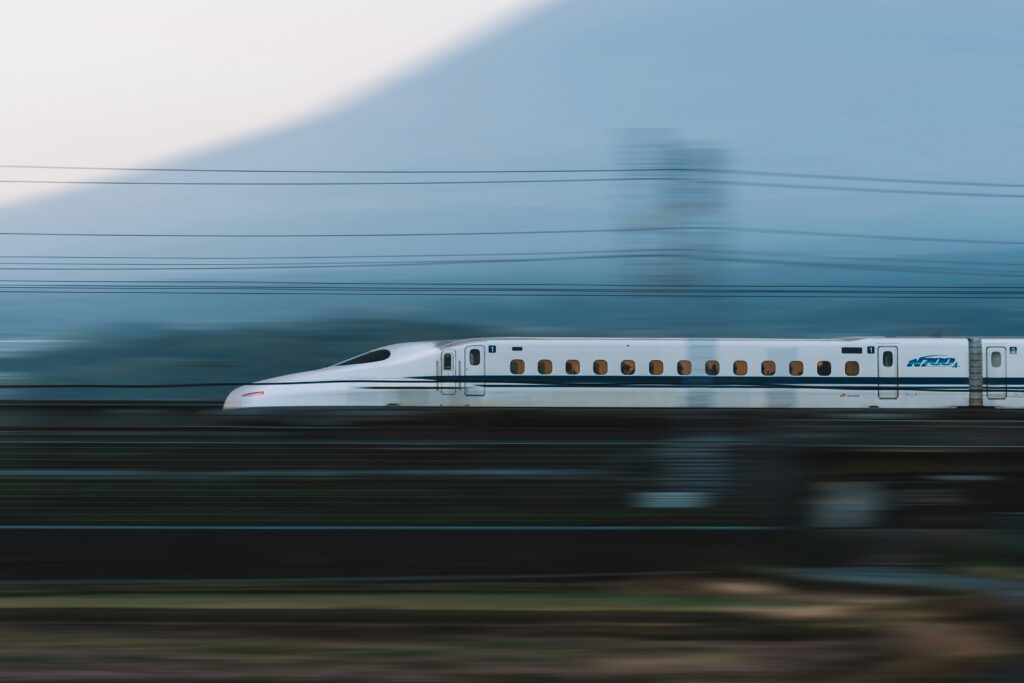
In 1989, Japan’s West Railway Company faced a costly problem. Its famous Shinkansen bullet trains — reaching speeds exceeding 200 miles per hour — were producing a thunderous boom each time they exited a tunnel. The phenomenon, known as a “tunnel boom,” occurred when the train compressed air as it entered the tunnel, building a pressure wave that exploded outward at the exit. The sound was audible more than 400 meters away, disturbing residents across entire neighborhoods. Japan imposed a strict decibel limit, and the company had to find a fundamental solution.
The problem was physical: the train’s rounded nose compressed air rather than parting it. The only fix was to change the way the train met the air in the first place.
This is where Eiji Nakatsu entered the picture. Nakatsu was the general manager of the company’s technical development department — and a passionate birdwatcher. As he sat with the problem, he asked himself a simple question: is there anything in nature that moves quickly between two mediums of very different density without making noise?
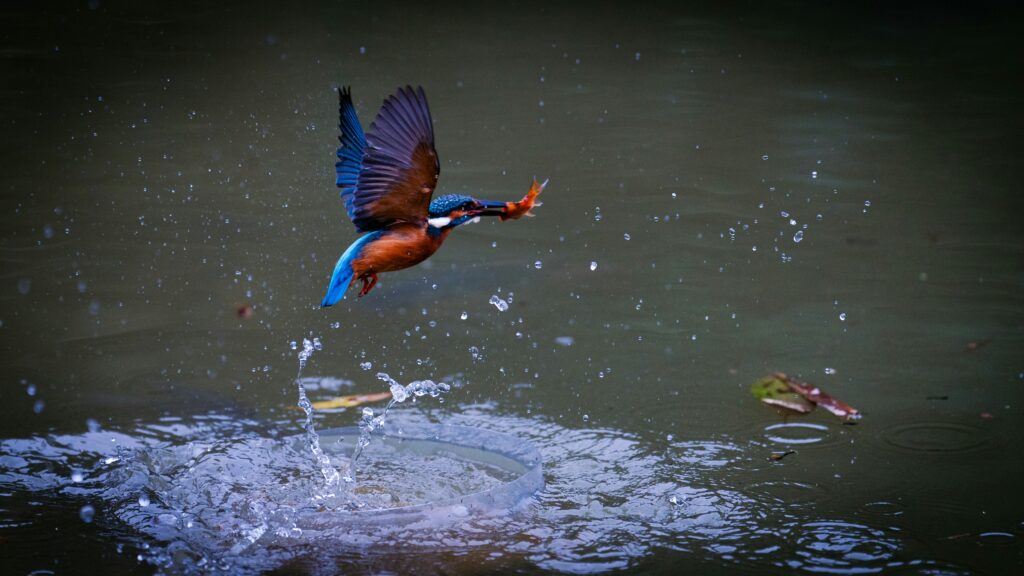
The answer was the kingfisher — that small, brilliantly colored bird with a long, narrow beak that plunges from air into water at speeds approaching 25 miles per hour without producing almost any splash. Water is more than 800 times denser than air, yet the kingfisher crosses that boundary with remarkable smoothness, because its beak distributes pressure gradually rather than confronting it head-on.
Nakatsu and his team redesigned the front of the train to mimic the kingfisher’s beak — long, tapered, and gradually widening. According to Biomimicry 3.8, one of the leading organizations in the field, the redesigned train was not only quieter — it ran 10% faster while using 15% less electricity. All from watching a bird.
Nakatsu didn’t stop at the kingfisher. The train’s external pantograph structures were designed to mimic the serrated feathers of the silent-flying barn owl to reduce electrical noise. The body shape drew from the streamlined profile of the Adélie penguin to reduce air resistance. The result was described as combining “the wings of an owl, the belly of a penguin, and the beak of a kingfisher.”
Shark Skin, Swimsuits, and Aircraft Wings
Shark skin is not smooth. It is covered in tiny tooth-like structures called denticles, which create microscopic grooves running in the direction of the shark’s motion through water. These grooves disrupt turbulence formation at the skin’s surface, reducing drag and allowing the shark to swim faster while burning less energy.
In the early 2000s, Speedo developed the Fastskin swimsuit, modeled on this design, with ridged surfaces mimicking shark denticles. At the 2008 Beijing Olympics, swimmers wearing the suit broke numerous world records — until the International Olympic Committee banned it for competitive fairness reasons.
But the more significant application of this design came in aviation and maritime shipping. Engineers today apply shark-skin-inspired surface patterns to aircraft wings and ship hulls, reducing friction, lowering fuel consumption, and cutting emissions. In maritime shipping, antifouling coatings based on shark denticle geometry are being tested on ship hulls to prevent barnacle and algae attachment without toxic chemicals — a greener alternative to traditional hull paints.
Nature does not design for beauty. It designs for efficiency. When we learn that efficiency and apply it, we find that our best engineering solutions were already there — in shark skin, in bird feathers, in a kingfisher’s beak.
The Lotus Leaf That Cleans Itself
When a drop of water falls on a lotus leaf, it does not spread across the surface. It beads up and rolls off like mercury, carrying dust and debris with it, leaving the leaf clean. The reason is a microscopic surface structure: tiny waxy protrusions that make the surface almost impossible to wet. Water contacts only the tips of these protrusions, the contact area is so small that the droplet rolls rather than spreads, taking whatever has settled on the surface with it.
This is called the “lotus effect,” and it has inspired an entire industry: self-cleaning exterior paints for buildings, waterproof and stain-resistant fabrics, glass coatings that use rain as a cleaning mechanism. The underlying engineering principle is consistent — design nanoscale surface roughness that redistributes the water contact area.

The Gecko That Inspires Surgery
Geckos walk upside down on glass and across ceilings without falling. The mechanism is not chemical adhesive — it is millions of nanoscale hair-like structures covering their toe pads that generate adhesive force through molecular attraction, known as Van der Waals forces. The adhesion is directional, repeatable, and leaves no residue.
Researchers are now developing surgical tissue adhesives inspired by this system: flexible, biocompatible, biodegradable tape with nanopatterned surfaces for bonding delicate internal tissues — a smarter alternative to conventional sutures and staples. The medical biomimetics market was valued at approximately $35.68 billion in 2024 and is projected to exceed $55 billion by 2030.
Velcro: When Invention Starts With a Walk
In 1941, Swiss engineer George de Mestral was walking his dog in the Alps when he noticed that burs from the burdock plant had attached themselves to his wool clothing and his dog’s fur. Curiosity led him to examine them under a microscope, where he found tiny hooks that caught on any looped fiber they encountered.
He spent years attempting to replicate the system synthetically, eventually producing what became known as Velcro — the hook-and-loop fastening system now used in everything from children’s shoes to spacecraft equipment. What this story reveals is that the first engine was not necessity but curiosity. De Mestral wasn’t looking for a fastener. He was asking why.
The Science Gets a Name
American biologist Janine Benyus formalized and named this field with her 1997 book Biomimicry: Innovation Inspired by Nature. Her argument was both simple and radical: nature is not merely a source of raw materials to extract — it is a mentor to learn from. The web of living organisms shaped by four billion years of evolution represents the largest engineering database in the history of the planet.
Since then, the Biomimicry Institute she co-founded has maintained a publicly searchable database of biological strategies that inventors and engineers can consult when tackling design problems. The same logic is inspiring today’s smart city designers, who borrow from natural systems — honeycomb grids, water flow patterns, forest density gradients — to build cities that use resources more efficiently. And in the broader conversation about humanity’s relationship to biology, biomimetics represents one of the most promising answers to how we build without destroying.
Every organism that has survived for millions of years represents a tested solution to an equation of limited resources and harsh requirements. That is exactly what good engineering is for. The question isn’t whether to learn from nature — it’s how much we’re still missing.
What Comes Next
From shark skin that inspires aircraft wings, to a kingfisher’s beak that fixes a bullet train, to gecko toe pads that inspire surgery, to burdock burs that inspire children’s shoes — the same pattern repeats: the best solutions are not invented from nothing. They are read.
The question that stays open is this: how many solutions are still hidden in the living world, waiting for a curious engineer to look up from their screen and out the window? The next breakthrough may well begin with a walk and a pair of alert eyes — just as it did for de Mestral and his dog eight decades ago.
References
- Biomimicry 3.8 — Case Study: Learning Efficiency from Kingfishers (Shinkansen)
- Biomimicry New Zealand — The Shinkansen and the Kingfisher
- ScienceInsights — What Is Biomimetics? How Nature Inspires Innovation (2026)
- AskNature — High Speed Train Inspired by the Kingfisher
- USC Illumin — From Shark Skin to Speed