

Sex and Emotional Relationships Between Humans | The Society That Built the Market

AI companions didn’t emerge from nowhere. They emerged from a society that exhausted people economically, fragmented families, and made emotional connection a luxury.
In the previous article, we left a question hanging: why does a rational person find in a computer program what they cannot find among their own kind?
We said it was never about sex. We said it was about needing to be heard without judgment.
But that’s still only half the answer. Because the real question comes before all of this: why can’t a person find that in another human being?
The answer isn’t only in psychology. It’s in sociology, economics, and history together. In the way humans have built their societies — and what that construction has done
to their ability to connect.

Marriage Was Never Just About Love
Let’s begin with a small shock: marriage as a historical institution was not built, for most of its history, on emotional fulfillment. It was built on something colder and more durable: resource distribution and the reduction of survival costs.
Across most civilizations, marriage was primarily an economic and social contract — a division of roles, shared housing, reproductive legitimacy, mutual protection. Love was a bonus when it arrived, not the original purpose. And the stability of those marriages didn’t come from emotional satisfaction — it came from the cost of exit, which was in many cases higher than anyone could bear.
When exit became financially possible, relationships were genuinely tested for the first time in history. This explains a phenomenon that is widely misunderstood: rising divorce rates in wealthier nations don’t indicate greater emotional failure — they indicate greater freedom to leave when a relationship causes pain. In poorer countries, many marriages “survive” because leaving is unaffordable, not because the marriages are healthy. [1]
In the United States, between 42 and 53% of marriages end in divorce. In Scandinavian countries, the range is 40–50%. Even in societies considered traditional, rates rise quickly as women’s income and financial independence increase. [1]
These numbers don’t tell a story of failure. They tell a story of transition: marriage shifting from a necessary economic contract to a voluntary emotional choice. And this transition, for all its principled beauty, created a gap that didn’t previously exist — millions of people who were once “attached” by necessity are now alone by circumstance.
When Love Becomes a Luxury
But the deeper transformation wasn’t in marriage law. It was in something more daily: the cost of being alive.
In cities like New York, London, Sydney, and Toronto, an entire generation of young adults spends between 40 and 60% of their income on rent alone. [2] In this equation, emotional commitment isn’t primarily an emotional decision — it’s a logistical and financial one. Can I afford to have another person live alongside me? Are the costs of attachment lower than the costs of separation?
You won’t find this calculation written in any romance novel. But you’ll hear it in every conversation between young couples in every city.
Social researcher Björn Andersson describes this with uncomfortable precision: “Modern capitalism reorganizes human life around production and consumption, and leaves relationships whatever time remains — and usually not much remains.” [3] Americans work an average of 1,811 hours per year compared to 1,400 in most European countries. Less time means thinner relationships, and thinner relationships mean deeper loneliness. [3]
The loneliness epidemic documented by the US Surgeon General and the World Health Organization is not an individual psychological accident — it’s the structural output of an economic system designed to produce isolation.

The Family That Became a Source of Pain
The family was supposed to compensate for what marriage failed to provide. And in the traditional model — parents, siblings, grandparents under one wide roof or in close proximity — it often did. The extended family was a real psychological safety net: in grief, in illness, in celebration, in loss.
That model has collapsed.
Not only because of changing values, but because of a changing economy. Rural-to-urban migration, then city-to-city movement in search of work, separated families geographically. And a market that needs a mobile, flexible individual — unburdened by place-based attachments — made social isolation an implicit condition of professional success in many fields.
But more damaging than geographical fragmentation is this: in advanced societies, the family has transformed in many cases from a source of support into a source of stress. Multiple studies in family psychology show that most patients who seek therapy carry wounds from their original homes, not from the world outside. [4] A family that never received the tools for healthy communication and emotional conflict management produces children who carry a relational deficit into every subsequent relationship.
In advanced societies especially — where individual awareness is higher and the vocabulary of expression is broader — people now see what their parents never saw: that what they experienced in childhood was not normal. This awareness, for all its therapeutic value, also produces a generation more cautious about commitment, more afraid of re-living what they survived the first time.
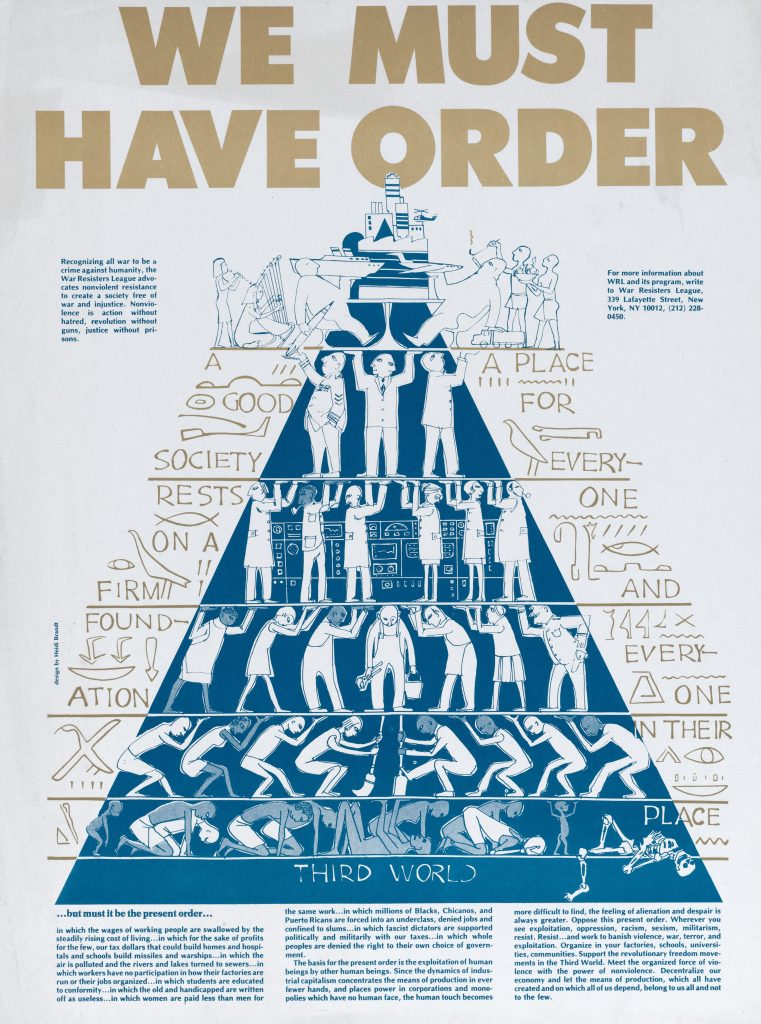
Maslow and the Hunger That Has No Name
In the mid-twentieth century, psychologist Abraham Maslow charted his famous hierarchy of needs: at the base, air, water, food, and warmth; then safety; then belonging and love; then esteem; then self-actualization at the peak.
Sex sits at the base — in the first physiological tier, right beside food and sleep. Not as an ornament, but as a fundamental biological need.
But something notable happens when complex social, religious, and moral restrictions are imposed on this need: the distinction between sex as a biological requirement and sex as emotional expression collapses. Both merge into a single heavy mass, loaded with guilt, fear, and social expectation — until the person no longer knows clearly which they want, or when, or why.
In societies where this need is expressed naturally and healthily — or that have begun to move in that direction — something interesting is observed: people become more capable of distinguishing sex as a biological need from deep emotional connection. Sex is satisfied as a need and no longer occupies all available mental space, no longer carries more meaning than it can bear. Emotional attachment becomes what it actually is at its core: safety, understanding, companionship. [5]
But when sex is suppressed and wrapped in social layers of shame and propriety, the two needs fuse into one, and the emotional relationship is burdened with the weight of repressed sexual need on top of its ordinary emotional weight. A relationship carrying more than it can hold will break in ways its participants don’t understand.
The Man Broken in His Lit Room
Among all the phenomena produced by this layered reality, one emerged in the second decade of this century that social scientists have documented with troubling detail: incel communities — an abbreviation for “involuntary celibate.”
These are men — mostly young — experiencing acute sexual and emotional isolation, which they attribute to factors outside their control: their appearance, financial situation, a social structure that favors others. Some reach a state of anger and bitterness directed at women and society at large. A number of individuals have committed documented acts of violence.
But what concerns us here is not the criminal fringe — which represents an extreme margin — but what the phenomenon reveals about the core of the crisis. These men are not necessarily incapable of emotional connection by nature. Many carry an ordinary human need for attachment. But they have intersected with a social and economic system that doesn’t provide them with equal opportunities to realize it. And when they find in AI chatbots an acceptance they don’t find in life, they are not healed — they are stabilized in their circuit. The bot offers programmed recognition that soothes the immediate pain without changing the causes. [6]
AI doesn’t treat loneliness — it defers it in an empty cycle of engagement and instant relief. Deferral is not treatment. It is a prescription for the wound to deepen.

The Tool Is Not the Problem — and Not the Solution
Emotional and sexual chatbots were not invented in a vacuum. They were born in a society suffering from a documented loneliness epidemic, and in a market that sees in them commercial opportunity before anything else.
When mobile phones first appeared, they were for the elite. Today, the poorest people in the most remote corners of Africa carry them. Emotional and social robots will follow the same path — they will become cheaper, more sophisticated, more widely available. This is not prophecy; it is the nature of how tools humans invent evolve.
But the tool, however advanced, will not solve the problem it presents itself as solving. Because the problem is not the absence of the right tool — it is the absence of the conditions that make human connection possible and sustainable.
A study conducted by MIT in collaboration with OpenAI on 981 participants over four continuous weeks found something resembling a complete paradox: high daily use of AI chatbots — regardless of the nature of the conversation — was associated with higher levels of loneliness and a measurable decline in engagement with actual humans. [7] The more you “satisfy” your need through the bot, the less motivation you have to seek what actually satisfies it.
OpenAI knows this. Or at least, its internal Expert Council knows it. Yet commercial pressure is stronger. Competing platforms have already moved into “digital companionship” and some are generating millions monthly. Ceding that market means financial loss. And a company that spent 2.5 billion dollars in half a year cannot ignore the calculations. [8]
This doesn’t mean these companies are villainous in any melodramatic sense. It means they operate by market logic — logic they were designed to follow. And markets reward consumption, not healing.
The Frameworks That Did Not Evolve
There is a final layer in this anatomy that cannot be bypassed: the laws of marriage and the social frameworks governing relationships between genders.
In most of the world — and particularly in the Global South and in countries where religion organizes social life — these frameworks were inherited without fundamental revision from centuries long past. They were not reviewed for their compatibility with a world in which women’s economic and social roles have transformed entirely, nor for their alignment with what modern psychology has revealed about human emotional needs.
The old frameworks were built for a time when women were economically dependent on men, and when the family was a unit of production rather than a unit of emotional fulfillment. When these conditions changed and the frameworks did not, a structural tension was created that millions of couples live with every day — not necessarily because they dislike each other, but because they are trying to live a twenty-first-century life inside templates from the seventh century or the seventeenth.

The Closing Question
So here we are before a more complete picture:
A person living in a city of unaffordable costs, working long hours, carrying wounds from a family that didn’t know how to love them the way they needed, finding in sex a social and moral weight that makes it loaded with more meaning than it can hold, inheriting frameworks for marriage designed not for their personal happiness but for the stability of a different society in a different time — and then opening an app on their phone and finding something that hears them, remembers their name, asks about their day, doesn’t judge.
Is it surprising that they stay?
But — and this is the question I want to leave with you — when humans genuinely begin to repair what their economic system has done to their capacity for connection — when housing becomes accessible, when time exists, when sex is no longer loaded with the weight of ownership and fear, when social frameworks are revised to enable people rather than confine them — will they leave their bots?
Or will they discover that loneliness was never an economic problem — but rather the oldest human question, one that no civilization, in any era, has ever answered well enough?
Perhaps the bot didn’t reveal the failure of technology. Perhaps it revealed our own failure — our ancient, persistent failure to be present for each other sufficiently, in the way we need, at the moment we need it.
And that failure is older than capitalism. Older than religion. Older than cities and markets.
It is perhaps what makes us human.
(See our article: Sex, Loneliness, and Artificial Intelligence — It Was Never About Sex)
(See our article: Muruwwa | Can It Really Be Translated?)
References
[1] Ortiz-Ospina, E. & Roser, M. — “Marriages and Divorces.” Our World in Data, 2020 (updated 2024). Comparative global data on divorce rates and their relationship to income levels and women’s economic independence.
[2] Joint Center for Housing Studies, Harvard University — “The State of the Nation’s Housing 2024.” Documents the proportion of youth income spent on rent in major Western cities.
[3] Andersson, B. & Holmström, R. — “Capitalism, Time Poverty, and the Erosion of Social Bonds.” Acta Sociologica, 2023. Annual working hours drawn from OECD comparative data for 2023.
[4] Van der Kolk, B. — The Body Keeps the Score (2014). Documents extensive evidence on family-origin psychological wounds and their impact on adult attachment patterns.
[5] Perel, E. — Mating in Captivity (2006). The renowned therapist Esther Perel analyzes the relationship between sexual repression and emotional dysfunction in comparative cultural and religious contexts.
[6] Ging, D. & Casey, A. — “Incels, Algorithms, and the Architecture of Male Grievance.” New Media & Society, 2023. Documents AI use in these communities and its effect on deepening isolation.
[7] Küçük, A. et al. (MIT Media Lab / OpenAI) — “Social Displacement and AI Companionship: A Randomized Controlled Trial.” March 2025. Summary published in Nature Human Behaviour.
[8] Roose, K. & Metz, C. — “OpenAI Plans to Let ChatGPT Generate Explicit Sexual Content.” The Wall Street Journal, October 2025. Company expenditure figures drawn from internal financial reports cited in the same article.