
Fyodor Dostoevsky | Dissecting the Labyrinths of the Human Soul

A deep dive into the world of Fyodor Dostoevsky; from mock execution to the profound psychological dissection of the human soul in Crime and Punishment and The Brothers Karamazov.
Word Count: 1,700 · Reading Time: 8 minutes
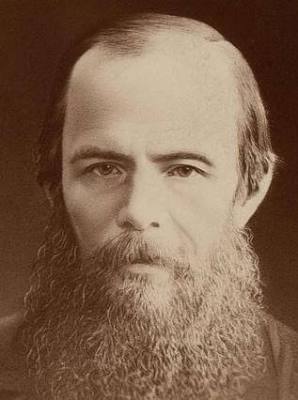
Fyodor Dostoevsky
Anatomist of Dark Souls: A Secret Journey Into the Labyrinths of Human Consciousness
Some writers make you feel like they know you. No, let me correct that: they make you feel like they lived inside your head before you even knew yourself. Fyodor Dostoevsky is one of those rare few. When I picked up Crime and Punishment for the first time back home in Tunisia, when I was about seventeen, I thought I was simply opening a classic crime novel. I told myself, “Let’s see if this Russian guy can write a detective story as cleverly as Agatha Christie!” I had no idea I was about to read a mirror of my own soul.
Dostoevsky is not just a storyteller. He is a surgeon who slices open the human spirit with a scalpel and says, “Look at what is inside you, and find the courage to face it.” This is where that profound awe attached to his name comes from—the kind of awe that forces even experienced readers to set the book down after a single chapter just to catch their breath before diving back in.
In this article, we will explore the shadows Dostoevsky inhabited: his suffering-forged upbringing, his lesser-known personal struggles, his monumental masterpieces and their earth-shattering philosophy, and finally, the long shadow he cast over global literature and thought, continuing to this day.
The Formative Years: When Suffering Breeds Genius
Fyodor Mikhailovich Dostoevsky was born in Moscow in 1821, the son of a strict military doctor named Mikhail. His father was notorious for his harsh treatment of the serfs bound to his estate. In 1839, when Fyodor was just eighteen, his father was murdered by those very serfs. This incident was not merely a family tragedy; it became, as many critics note, the initial seed for his lifelong obsession with guilt, crime, and the psychological bond between a perpetrator and his victim.
Then came the definitive turning point of his life. In 1849, Dostoevsky was arrested for belonging to the “Petrashevsky Circle,” a dissident intellectual group that discussed banned socialist and reformist ideas. He was sentenced to death. He was marched out, tied to a pillar, and stood before a firing squad. The commands were called out. At the absolute last second—three minutes before the trigger pull—a message of pardon arrived from the Tsar himself.
Five minutes facing death is enough to permanently alter the chemistry of the soul. Dostoevsky emerged from that mock execution believing that every single moment of life is a miracle, and that conscious awareness of it is a price not easily paid.
What followed was four years of hard labor in Siberia, living alongside murderers, thieves, and hardened criminals. Dostoevsky did not waste this time; he turned it into a living psychological laboratory. He studied human nature in its most extreme states, an experience that later produced Notes from a Dead House, an incredibly brutal yet deeply humane testament to that era.
During this period, nineteenth-century Tsarist Russia was brewing a massive ideological conflict: the “Westernizers,” who viewed modern Europe as a model for liberation, versus the “Slavophiles,” who clung tightly to authentic Russian Orthodox identity. Dostoevsky found himself at the heart of this struggle, evolving from a young man infatuated with Western ideals into a fierce defender of the traditional Russian soul—a conflict vividly reflected in his characters and their ideological battles.
The Hidden Side: What You Don’t Read in Forewords
No one matches Dostoevsky in being as profoundly contradictory in life as he was in his fiction. Here are facets of his life rarely highlighted in standard biographies:
- Gambling Addiction and Crushing Debt: He spent years betting recklessly in European casinos, entangling himself in debts that nearly ruined his future. When he signed an exploitative contract with a predatory publisher requiring him to deliver a brand-new novel in just 26 days or forfeit the rights to all his past works, he wrote The Gambler within that exact deadline. He did this by dictating it to a young, fast-working stenographer named Anna Grigoryevna. She eventually became his wife, his business manager, his muse, and the woman who saved him from himself.
- A Neurological Frontier for Insight: Dostoevsky’s affliction was not ordinary epilepsy; it was a rare neurological condition known medically as “ecstatic epilepsy.” This unique electrical storm in his brain was not merely a physical curse. Seconds before losing consciousness, it granted him an overwhelming flood of supreme joy, a sense of cosmic peace, and absolute intellectual clarity. Dostoevsky described these seizures as “moments of complete harmony and a direct approach to divine inspiration,” where all existence condensed into a single flash passing human expression. He channeled this intense personal experience directly into Prince Myshkin in The Idiot, turning a bodily malfunction into a superb literary tool to map human consciousness.
- Destructive Romances: He was involved in a volatile, emotionally draining relationship with Apollinaria Suslova, a rebellious young woman who exhausted his spirit. Her rejection caused him deep pain, yet she provided the exact blueprint for the “femme fatale” archetype that manifests later in characters like Nastasya Filippovna and Grushenka.

The Missing Frame: A composite portrait bringing together Fyodor Dostoevsky and his wife and muse, Anna Grigoryevna. Historical archives contain no actual photograph of the two together in a single frame. Due to nineteenth-century photography techniques requiring long, static individual poses, the couple who changed the course of Russian literature never documented their shared presence before a camera lens, leaving their physical togetherness as a portrait painted solely in the reader’s imagination.
Anatomy of the Masterpieces
Crime and Punishment (1866)
Raskolnikov, an impoverished and arrogant student, murders an old pawnbroker, operating under the belief that a “great man” possesses the right to transcend ordinary moral laws. Nietzsche’s philosophical concepts had not yet been formally articulated, but Dostoevsky completely dismantled the idea of the “Superman” before it was ever born. The real punishment in the novel does not come from the legal system, but from within Raskolnikov himself. His conscience convicts him long before any judge can, presenting a terrifying genius premise: consciousness itself is hell, not prison.
The Idiot (1869)
What happens when a truly good, innocent man—a “Russian Christ,” as Dostoevsky envisioned—enters a corrupt, artificial society? He is treated as a fool or an idiot. Prince Myshkin is pure to the point of extreme fragility, and the world around him treats this purity as a weakness rather than a virtue. The novel remains a painful, open question: can absolute goodness survive in a world deeply rooted in systemic evil?
Demons (1872)
A spectacularly prophetic political masterpiece. Decades before the Bolshevik Revolution of 1917, Dostoevsky foresaw the grave dangers of nihilism and revolutions founded upon the systematic erasure of all traditional values. A clandestine revolutionary cell tears through a small town, orchestrating crimes and conspiracies in the name of “freedom.” The social critique here does not merely twist the arm of radicalism; it breaks it completely.
The Brothers Karamazov (1880) — The Pinnacle
His final and greatest work. A depraved father is murdered, and four brothers share the moral guilt and responsibility:
- Dmitri: The impulsive, emotionally driven brother who openly hates his father yet loves him, capable of immense anger but not murder.
- Ivan: The rational atheist who rejects a universe where a benevolent God allows the suffering of innocent children. He composes “The Grand Inquisitor,” perhaps the most philosophically profound exploration of the conflict between freedom and authority in literary history.
- Alyosha: The deeply spiritual, pure novice monk who serves as Dostoevsky’s ultimate hope for humanity.
- Smerdyakov: The marginalized, illegitimate son who acts out the dark, unspoken desires that Ivan merely thought.
This novel is a comprehensive summary of Dostoevsky’s philosophy: God, free will, guilt, suffering, and redemption all intertwine seamlessly within a gripping detective plot that captivates the mind while crushing the intellect.
Deep Dive: Philosophical and Psychological Themes
What sets Dostoevsky apart from every novelist who preceded or followed him? His impact can be distilled into four core themes:
First: The Duality of Good and Evil in One Soul. There are no purely villainous caricatures in his works. He understands every executioner from the inside out, forcing you to understand them too, which many readers find deeply unsettling. He famously noted that the battlefield between light and dark is the human heart, and those who believe they are entirely immune to this conflict are the most dangerous of all.
Second: Suffering as a Path to Consciousness. To him, suffering is not a sentimental indulgence; it is a profound philosophical and spiritual conviction. Pain is the price human beings pay to transcend their superficial existence and reach authentic truth. This is not a justification for cruelty, but an advanced understanding of the soul’s machinery.
In “The Grand Inquisitor,” the elderly prosecutor refuses to release the returned Christ, telling Him: “You gave people freedom, but they do not want it. They want bread and security, not the crushing burden of choosing for themselves.” Written over 150 years ago, this text remains a flawless mirror for modern geopolitics.
Third: Freedom as an Existential Burden. The novella Notes from Underground serves as the absolute foundational stone for modern existentialism. The narrator viciously critiques optimistic rationalism, crying out: “I do not want to be a cog in your equations of happiness! I want the freedom to be miserable if I choose!” Jean-Paul Sartre read this and extracted his core existential framework.
Fourth: The Unconscious Mind Before Freud. Dostoevsky possessed a terrifying ability to depict what human beings actively hide from themselves in their deepest depths: repressed desires, dual consciousness, and the severe friction between who a person believes they are versus who they actually are. We are talking about psychological insights written in the 1860s.
The Shockwaves of Influence: How Dostoevsky Shook Global Thought
Sigmund Freud penned a famous study titled “Dostoevsky and Parricide,” declaring him one of the greatest psychologists in human history. He recognized The Brothers Karamazov as a literary realization of the Oedipus complex long before it became an official psychoanalytic concept.
Friedrich Nietzsche stated: “Dostoevsky is the only psychologist from whom I had anything to learn.” This carries immense weight coming from a philosopher who rarely granted praise to his contemporaries.
Jean-Paul Sartre and Albert Camus drew heavily from Notes from Underground and his broader philosophical dilemmas to establish French existentialism.
Franz Kafka, Thomas Mann, and Gabriel García Márquez all openly acknowledged their immense debt to Dostoevsky’s art of diving deep into human interiority and creating intense narrative worlds that pressure human awareness.
It is no exaggeration to state that the structure of the modern psychological novel rests firmly on the foundations Dostoevsky poured.
Dostoevsky Among His Contemporaries and His Long Shadow
It remains a fascinating historical irony that Dostoevsky and Leo Tolstoy—the two titans of Russian literature—never once met in person. Tolstoy felt that Dostoevsky “exaggerated” the darkness of human nature, while Dostoevsky believed Tolstoy romanticized reality under far too many layers of idealized hope. Furthermore, Dostoevsky’s relationship with Ivan Turgenev, the highly Westernized liberal, was openly hostile, leading to a famous, bitter falling out in Paris.
On the broader European horizon, Dostoevsky was a contemporary of Charles Dickens in Britain and Victor Hugo in France. While both Dickens and Hugo were intensely preoccupied with the marginalized and the impoverished, they approached them from a perspective of social and political reform. Dostoevsky, by contrast, dove straight into the existential reality of the soul, irrespective of social mechanics.
This brings me to what I consider a genuine critical dilemma: the massive, towering wall built by the dual legacy of Dostoevsky and Tolstoy—alongside Chekhov, Gogol, and Turgenev—has effectively cast a shadow over the rest of Russian literary history. The global reader almost always stops at this “Golden Age” and fails to cross beyond it. Phenomenal, brilliant writers like Mikhail Bulgakov, who authored The Master and Margarita, or the complex voices of Soviet and post-Soviet literature, remain unjustly marginalized due to this perpetual, unforgiving comparison. Here, classicism did not merely open a window; it closed a massive door behind it.
This critical dilemma of a “Great Wall” overshadowing other literary works finds a strikingly intense parallel in my own Arab world, through a unique phenomenon centered around the late Syrian translator, **Sami Al-Droubi**. Just as the Russian Golden Age captured the imagination of global readers, Al-Droubi’s literary translations entirely captured the minds of Arabic readers. With a magnificent linguistic genius, he managed to fully “arabize” the very souls of Dostoevsky, Tolstoy, and Chekhov, forging a parallel text in the Arabic language that matches the original in its poetry and depth. Growing up reading his work, I experienced firsthand how Al-Droubi established an overwhelming aesthetic standard. He wove Dostoevsky’s worlds so deeply into the Arabic cultural consciousness that it created a psychological loop: as Arabic readers, many of us find ourselves completely unable to appreciate Russian literature through any other translation—even modern ones translated directly from Russian. We always yearn for that signature “Al-Droubi tone,” which is uniquely melancholic, warm, and profoundly intimate. For me, and for millions of others, Al-Droubi’s translation ceased to be a mere bridge; it became an architectural fortress of its own, condensing the entirety of Russian literature into his personal style and building another wall whose magic we simply cannot escape.
If you are interested in how geography interacts with emotion in literature, you might enjoy our article: Toshka: The Geography of Sorrow in the Russian Soul.
Conclusion: The Human Soul Has Not Changed
Dostoevsky was more than a novelist; he was a visionary who saw far into the distance long before philosophical and psychological frameworks had matured enough to articulate what he witnessed. He sat among convicts in Siberia and emerged saying, “These are not monsters; they are broken human beings.” He stood before a firing squad and came away saying, “Every single moment is an almost unbearable gift.” He wrote while drowning in debts and suffering heart complications, insisting, “Suffering teaches what libraries cannot.”
His words remain intensely alive today for a beautifully simple reason: the human soul he mapped has not changed. We still rage, we still sin, we still question, we still suffer, and we still yearn, exactly like Raskolnikov, Ivan Karamazov, and Prince Myshkin. This is the secret to his immortality: he did not write exclusively about nineteenth-century Russia. He wrote about you.
Related Articles
- Toshka: The Geography of Sorrow in the Russian Soul
- Haruki Murakami: A Journey Into the Worlds of Magical Realism and Contemporary Solitude
- Yoko Ogawa | The Serenity of Japan in Words
- The Guide to 100 Arab Novelists
- Walter Stace | The Philosopher Who Crossed Borders
- Scheherazade | When the Name Is the Story
References
- Fyodor Dostoevsky, The Complete Literary Works, trans. Sami Al-Droubi, Cairo: Egyptian General Authority for Editing and Publishing, 1970.
- Joseph Frank, Dostoevsky: A Writer in His Time, Princeton University Press, 2010.
- Sigmund Freud, “Dostoevsky and Parricide” (1928), in The Standard Edition of the Complete Psychological Works of Sigmund Freud, Volume XXI.
- Friedrich Nietzsche, Letters and commentary on Dostoevsky, cited in: Ronald Hayman, Nietzsche: A Critical Life, 1980.
- Anna Dostoevskaya, Reminiscences, Liveright Publishing, 1975.
- Fyodor Dostoevsky, The Brothers Karamazov, translated by Richard Pevear and Larissa Volokhonsky, Farrar, Straus and Giroux, 1990.