Learn Spanish in a Week (7) Emergencies, Pharmacy, Health & Safety

We hope you never need it — but this is the most important lesson of the trip. Learn how to call for help, describe your pain, and handle any health or safety situation in Spanish with total confidence.
Learn Spanish in a Week: Your Real-World Guide from Scratch
Day 7: Emergencies, Pharmacy, Health & Safety
Welcome to Day 7 of our series on the Zy Yazan Platform. After exploring the markets of Spain and Latin America and picking up our shopping and bargaining skills, we’ve arrived at the most important lesson of any trip: knowing how to protect yourself and ask for help when you need it.
We sincerely hope you never have to use a single phrase from this guide — but smart travelers always prepare for every scenario. Knowing how to describe pain, call for help, and communicate with a doctor or pharmacist in Spanish isn’t a bonus skill. It’s a necessity that could make a real difference in a critical moment.
1. Calling for Help: The First Words in Any Emergency
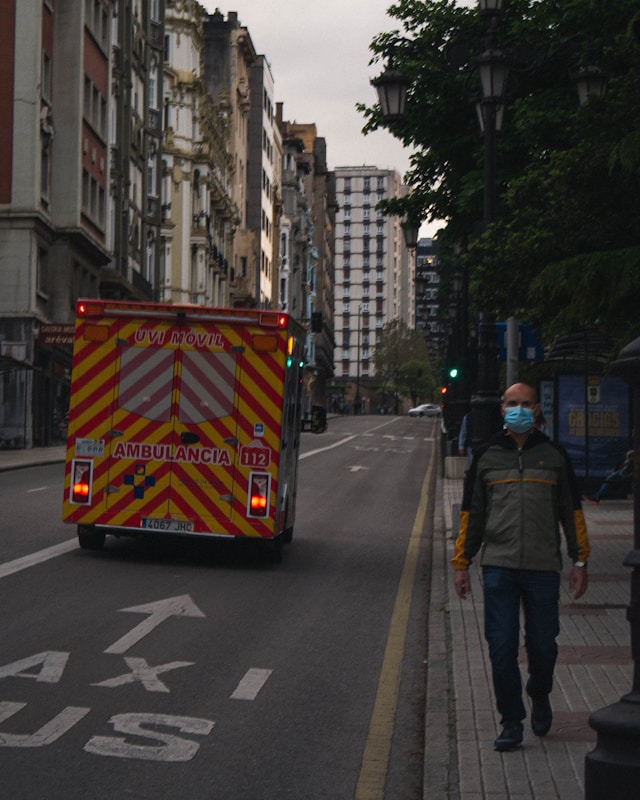
In a crisis, simplicity is everything. One clear phrase said loudly is enough to get help moving. These are the most important expressions to memorize before anything else — ideally before you even board the plane:
- ¡Ayuda! — Help! (ah-YOO-dah)
- ¡Llame a una ambulancia! — Call an ambulance! (YAH-meh ah OO-nah am-boo-LAN-syah)
- ¡Llame a la policía! — Call the police! (YAH-meh ah lah poh-lee-SEE-ah)
- ¡Llame a los bomberos! — Call the fire department! (YAH-meh ah lohs bom-BEH-rohs)
- ¡Es una emergencia! — This is an emergency! (ehs OO-nah eh-mer-HEN-syah)
- Necesito ayuda, por favor. — I need help, please. (neh-seh-SEE-toh ah-YOO-dah, por fah-VOR)
- ¿Hay alguien que hable inglés? — Is there anyone who speaks English? (eye AL-gyen keh AH-bleh een-GLEHS)
🚨 Essential Emergency Numbers — Save These Before You Go
Spain: The unified emergency number is 112 (covers ambulance, police, and fire). National Police: 091.
Mexico: Unified emergencies: 911.
Argentina: Ambulance: 107, Police: 101.
Colombia: Unified emergencies: 123.
Save these in your phone and write them on a card in your wallet before every trip.
2. At the Doctor: Describing Symptoms and Pain
Accurately describing your symptoms to a doctor is a skill worth practicing in advance. The difference between a correct and incorrect diagnosis often comes down to how precisely you communicate. These phrases cover the most common medical situations travelers face:
- Me duele aquí. — It hurts here. (meh DWEH-leh ah-KEE)
- Tengo mucho dolor. — I’m in a lot of pain. (TEN-goh MOO-choh doh-LOR)
- Tengo fiebre. — I have a fever. (TEN-goh FYEH-breh)
- Me siento mareado / mareada. — I feel dizzy. (meh SYEN-toh mah-reh-AH-doh / dah)
- Tengo náuseas. — I feel nauseous. (TEN-goh NOW-seh-ahs)
- Me cuesta respirar. — I’m having trouble breathing. (meh KWES-tah reh-spee-RAR)
- Me he torcido el tobillo. — I twisted my ankle. (meh eh tor-SEE-doh el toh-BEE-yoh)
- Creo que me he roto algo. — I think I broke something. (KREH-oh keh meh eh ROH-toh AL-goh)
- Soy alérgico / alérgica a la penicilina. — I’m allergic to penicillin. (soy ah-LER-hee-koh / kah ah lah peh-nee-see-LEE-nah)
- Tomo este medicamento regularmente. — I take this medication regularly. (TOH-moh ES-teh meh-dee-kah-MEN-toh reh-goo-lar-MEN-teh)
- ¿Puede escribirme la receta? — Can you write me a prescription? (PWEH-deh es-kree-BEER-meh lah reh-SEH-tah)
- ¿Necesito hospitalización? — Do I need to be admitted to the hospital? (neh-seh-SEE-toh os-pee-tah-lee-sah-SYON)
💡 Cultural Note: Healthcare in Spain vs. Latin America
Spain consistently ranks among the top healthcare systems in the world according to the WHO. Public hospitals (Hospitales públicos) are free for residents, and travelers with a European Health Insurance Card can access care at little or no cost. For American travelers, Spain’s private clinics are excellent and far more affordable than comparable care back home — but travel insurance is still strongly recommended.In Latin America, the picture varies. Costa Rica and Argentina have solid public health infrastructure, while in more remote tourist destinations you’ll want to stick to private clinics and carry comprehensive travel insurance. Whatever your destination, sort your coverage before you leave — no exceptions.
3. At the Pharmacy: Getting What You Need
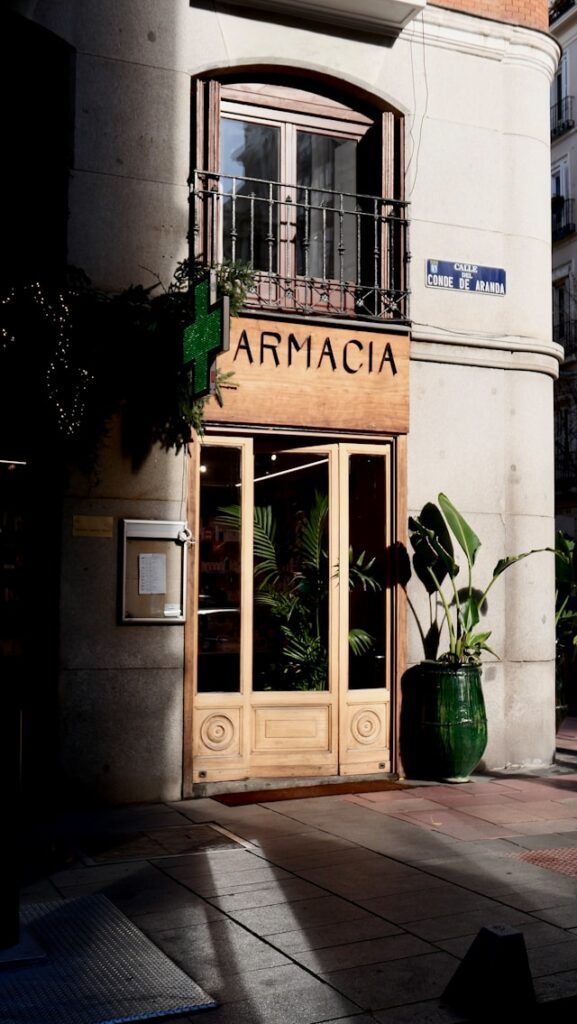
Look for the glowing green cross (Cruz verde) — that’s the universal pharmacy sign across Spain and most of Latin America. Spanish pharmacists (Farmacéuticos) are highly trained and hold more authority than their counterparts in the US; they can recommend and dispense treatment for many common conditions without a prescription. Use these phrases to get what you need:
- Necesito algo para el dolor de cabeza. — I need something for a headache. (neh-seh-SEE-toh AL-goh PAH-rah el doh-LOR deh kah-BEH-sah)
- Necesito algo para la tos. — I need something for a cough. (neh-seh-SEE-toh AL-goh PAH-rah lah tohs)
- Necesito algo para la diarrea. — I need something for diarrhea. (neh-seh-SEE-toh AL-goh PAH-rah lah dyah-REH-ah)
- ¿Tiene algo sin receta? — Do you have anything over the counter? (TYEH-neh AL-goh seen reh-SEH-tah)
- Aquí tiene mi receta médica. — Here’s my prescription. (ah-KEE TYEH-neh mee reh-SEH-tah MEH-dee-kah)
- ¿Cuántas veces al día debo tomarlo? — How many times a day should I take it? (KWAN-tahs VEH-sehs al DEE-ah DEH-boh toh-MAR-loh)
- ¿Tiene efectos secundarios? — Does it have side effects? (TYEH-neh eh-FEK-tohs seh-koon-DAR-yohs)
- Necesito tiritas / vendas. — I need band-aids / bandages. (neh-seh-SEE-toh tee-REE-tahs / BEN-dahs)
- ¿Tiene protector solar? — Do you have sunscreen? (TYEH-neh proh-tek-TOR soh-LAR)
-

The iconic green cross — the universal sign of a pharmacy in Spain. Madrid.
4. Dealing with the Police: Reporting an Incident
Petty theft — especially pickpocketing — is the most common problem tourists face in major Spanish and Latin American cities. If you’re the victim of a theft or accident, go directly to the nearest police station and file a report. You’ll need that report for any insurance claim. These phrases will help you get through it:
- Me han robado la cartera. — My wallet was stolen. (meh ahn roh-BAH-doh lah kar-TEH-rah)
- Me han robado el pasaporte. — My passport was stolen. (meh ahn roh-BAH-doh el pah-sah-POR-teh)
- He perdido mi bolso / mi mochila. — I lost my bag / backpack. (eh per-DEE-doh mee BOL-soh / moh-CHEE-lah)
- Quiero poner una denuncia. — I want to file a police report. (KYEH-roh poh-NER OO-nah deh-NOON-syah)
- Fue hace una hora, aproximadamente. — It happened about an hour ago. (fweh AH-seh OO-nah OH-rah, ah-proks-ee-mah-DAH-men-teh)
- Necesito contactar con mi embajada. — I need to contact my embassy. (neh-seh-SEE-toh kon-tak-TAR kon mee em-bah-HAH-dah)
- ¿Puede ayudarme a llamar a un intérprete? — Can you help me reach an interpreter? (PWEH-deh ah-yoo-DAR-meh ah yah-MAR ah oon een-TER-preh-teh)
💡 Cultural Note: The Spanish Pharmacist — Your First Line of Defense
Here’s a habit worth borrowing: in Spain, people go to the pharmacist before the doctor for anything minor. Spanish pharmacists complete a five-year university degree and are considered the frontline of the healthcare system — not just pill dispensers. Every neighborhood has a 24-hour duty pharmacy (Farmacia de guardia), and you can find the nearest one listed on the door of any closed pharmacy. It’s a genuinely smart system that saves hours of waiting in urgent care for something a pharmacist can handle in five minutes.
Emergency & Health Glossary: 50 Essential Words for Every Traveler
Here’s your complete reference table — the key medical and safety vocabulary organized by situation, with pronunciation guides for each term:
| Spanish | Pronunciation | English | Category |
|---|---|---|---|
| La emergencia | lah eh-mer-HEN-syah | Emergency | Help & Rescue |
| La ambulancia | lah am-boo-LAN-syah | Ambulance | Help & Rescue |
| Los bomberos | lohs bom-BEH-rohs | Firefighters | Help & Rescue |
| La policía | lah poh-lee-SEE-ah | The police | Help & Rescue |
| ¡Ayuda! | ah-YOO-dah | Help! | Help & Rescue |
| ¡Fuego! | FWEH-goh | Fire! | Help & Rescue |
| ¡Ladrón! | lah-DRON | Thief! | Help & Rescue |
| El hospital | el os-pee-TAL | Hospital | Help & Rescue |
| El dolor | el doh-LOR | Pain | Symptoms & Body |
| La fiebre | lah FYEH-breh | Fever | Symptoms & Body |
| El mareo | el mah-REH-oh | Dizziness | Symptoms & Body |
| La náusea | lah NOW-seh-ah | Nausea | Symptoms & Body |
| La tos | lah tohs | Cough | Symptoms & Body |
| La alergia | lah ah-LER-hyah | Allergy | Symptoms & Body |
| La herida | lah eh-REE-dah | Wound / Injury | Symptoms & Body |
| La fractura | lah frak-TOO-rah | Fracture / Break | Symptoms & Body |
| La cabeza | lah kah-BEH-sah | Head | Symptoms & Body |
| El pecho / El estómago | el PEH-choh / el es-TOH-mah-goh | Chest / Stomach | Symptoms & Body |
| La espalda / El cuello | lah es-PAL-dah / el KWEH-yoh | Back / Neck | Symptoms & Body |
| La rodilla / El tobillo | lah roh-DEE-yah / el toh-BEE-yoh | Knee / Ankle | Symptoms & Body |
| La farmacia | lah far-MAH-syah | Pharmacy | Medicine & Pharmacy |
| El medicamento | el meh-dee-kah-MEN-toh | Medicine / Medication | Medicine & Pharmacy |
| La receta | lah reh-SEH-tah | Prescription | Medicine & Pharmacy |
| El analgésico | el ah-nal-HEH-see-koh | Painkiller | Medicine & Pharmacy |
| El antibiótico | el an-tee-BYOH-tee-koh | Antibiotic | Medicine & Pharmacy |
| El jarabe | el hah-RAH-beh | Syrup / Liquid medicine | Medicine & Pharmacy |
| La pastilla / El comprimido | lah pas-TEE-yah / el kom-pree-MEE-doh | Pill / Tablet | Medicine & Pharmacy |
| La tirita / La venda | lah tee-REE-tah / lah BEN-dah | Band-aid / Bandage | Medicine & Pharmacy |
| Sin receta | seen reh-SEH-tah | Over the counter (no prescription needed) | Medicine & Pharmacy |
| La dosis | lah DOH-sees | Dose / Dosage | Medicine & Pharmacy |
| El médico / La médica | el MEH-dee-koh / lah MEH-dee-kah | Doctor (male / female) | Medical Staff |
| El enfermero / La enfermera | el en-fer-MEH-roh / lah en-fer-MEH-rah | Nurse (male / female) | Medical Staff |
| El farmacéutico | el far-mah-SEH-oo-tee-koh | Pharmacist | Medical Staff |
| La consulta | lah kon-SOOL-tah | Doctor’s appointment / Consultation | Medical Staff |
| Urgencias | oor-HEN-syahs | Emergency room / ER | Medical Staff |
| El seguro médico | el seh-GOO-roh MEH-dee-koh | Health insurance | Medical Staff |
| La denuncia | lah deh-NOON-syah | Police report | Safety & Police |
| El robo | el ROH-boh | Theft / Robbery | Safety & Police |
| El accidente | el ak-see-DEN-teh | Accident | Safety & Police |
| La comisaría | lah koh-mee-sah-REE-ah | Police station | Safety & Police |
| La embajada | lah em-bah-HAH-dah | Embassy | Safety & Police |
| El intérprete | el een-TER-preh-teh | Interpreter | Safety & Police |
| El seguro de viaje | el seh-GOO-roh deh BYAH-heh | Travel insurance | Safety & Police |
| Peligroso / Seguro | peh-lee-GROH-soh / seh-GOO-roh | Dangerous / Safe | Safety & Police |
| Diabético / Diabética | dyah-BEH-tee-koh / kah | Diabetic (male / female) | Special Conditions |
| Embarazada | em-bah-rah-SAH-dah | Pregnant | Special Conditions |
| Inconsciente | een-kon-SYEN-teh | Unconscious | Special Conditions |
| No puedo moverme | noh PWEH-doh moh-VER-meh | I can’t move | Special Conditions |
| Llame a un médico, por favor | YAH-meh ah oon MEH-dee-koh, por fah-VOR | Please call a doctor | Special Conditions |
| Estoy bien, gracias | es-TOY BYEN, GRAH-syahs | I’m fine, thank you | Special Conditions |
Listen & Practice: Real Emergency Conversations in Spanish
Reading phrases on a page is one thing — understanding them at speed when you’re stressed is another. Listening repeatedly to real Spanish medical and emergency conversations before your trip is one of the smartest things you can do. Hit play, follow along, and repeat until these phrases feel natural:
Emergency and health conversations in Spanish for travelers
5. Safety Tips: Before and During Your Trip
Before we wrap up, here are the practical recommendations every seasoned traveler swears by — the kind of things you only learn the hard way if you skip them:
- Get travel insurance. No exceptions. A single night in a European hospital can cost thousands of dollars without coverage. Comprehensive travel insurance that includes emergency medical care and medical evacuation is non-negotiable.
- Back up your documents. Keep digital copies of your passport, insurance cards, and emergency contact numbers in your email and on your phone. A stolen passport is stressful enough without having to reconstruct everything from memory.
- Carry a medical card in Spanish. If you have a chronic condition or allergy, prepare a small card written in Spanish that describes it and keep it in your wallet at all times.
- Don’t drink tap water in parts of Latin America. Tap water in Spain is completely safe. In many parts of Latin America, stick to bottled water to avoid stomach issues that can derail your trip.
- Take the sun seriously. Heat in Spain and Mexico — especially in summer — is intense. Sunstroke (Insolación) is one of the most common reasons tourists end up seeking medical care during peak season. Hydrate, seek shade, and use sunscreen.
That’s your full Spanish safety toolkit — you can now call for help, describe symptoms, navigate a pharmacy, file a police report, and handle any health situation that comes your way, all in Spanish. In Day 8 we shift into a new gear: advanced daily phrases and the grammar basics that will take you from sounding like a tourist to sounding like someone who actually knows the language. ¡Hasta mañana!
— Learn Spanish in a Week —
Previous: 6 — Shopping, Buying, and Local Markets
Current: 7 — Emergencies, Pharmacy, Health & Safety
Next: 8 — Advanced Daily Phrases and Grammar Basics
Similar series: Learn Indonesian in a Week | Learn Turkish in a Week
- Instituto Cervantes — Health and Emergency Vocabulary for Travelers (Level A1–A2).
- World Health Organization (WHO / OMS) — International Traveler Health Terminology Guide.
- Ministerio de Sanidad, Spain — Emergency Services and Pharmacy Guide for Foreign Visitors.