
Learn Spanish in a Week (6) Shopping, Buying, and Dealing with Local Markets
Discover the secrets of shopping in local markets and bargaining like a local, along with a special tour of the major festivals in the Spanish-speaking world.
Learn Spanish in a Week Series: Your Practical Guide from Scratch
Day Six: Shopping, Buying, and Dealing with Local Markets
Welcome to day six of our educational series on Zy Yazan Platform. Now that we have mastered transportation and picked our perfect hotel, it is time to hit the streets and alleys where real life happens. Local markets in the Spanish-speaking world are not just places to buy things; they are vibrant cultural hearts where smells, colors, and sounds mix to tell the story of every city and its people.
In this guide, we will provide you with everything you need to shop with confidence: from asking about prices and understanding deals, to polite bargaining and paying correctly. Along the way, we will stop at the most famous major festivals in the Spanish-speaking world to see how these cultures combine shopping and celebration in an incredible mix.
1. Exploring the Market: Entering and Asking About Goods
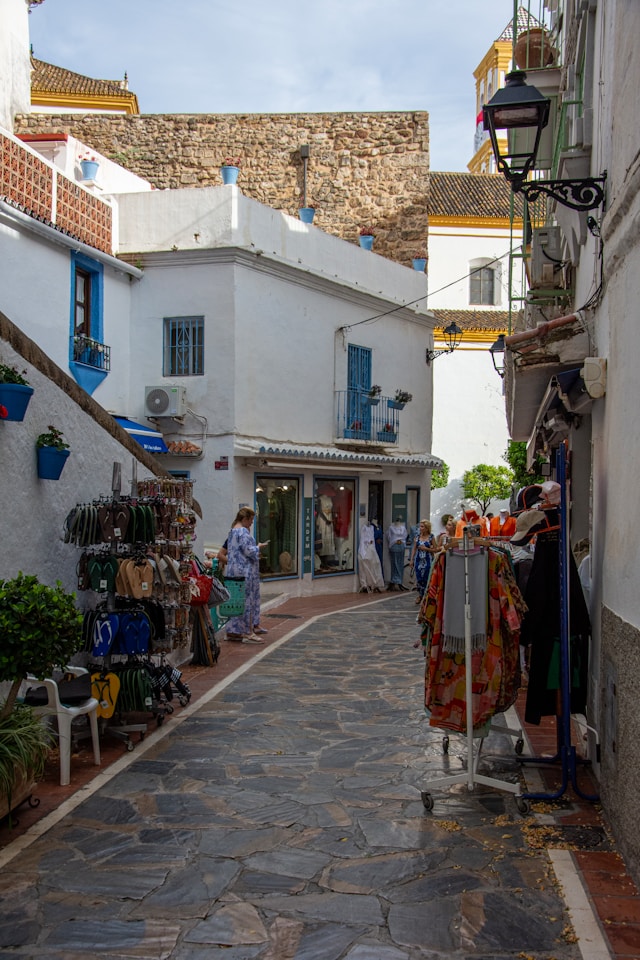
The first thing you do when you enter a market is look around and take in the atmosphere. Vendors in Spanish and Latin American markets appreciate it when you try to speak their language, even if it is just a few simple words. Start with these phrases to break the ice and open the door for communication:
- ¿Disculpe, me puede ayudar?: Excuse me, can you help me? (dees-KOOL-peh, meh PWEH-deh ah-yoo-DAHR?)
- ¿Cuánto cuesta esto?: How much does this cost? (KWAHN-toh KWEHS-tah EHS-toh?)
- ¿Tiene algo más barato?: Do you have anything cheaper? (TYEH-neh AHL-goh mahs bah-RAH-toh?)
- ¿En qué colores lo tiene?: What colors do you have this in? (ehn keh koh-LOH-rehs loh TYEH-neh?)
- ¿Puedo verlo?: Can I see it / check it out? (PWEH-doh BEHR-loh?)
- ¿Tiene una talla más grande / pequeña?: Do you have a larger / smaller size? (TYEH-neh OO-nah TAH-yah mahs GRAHN-deh / peh-KEH-nyah?)
💡 Cultural Spotlight: The Spanish Mercado — More Than Just a Market
The word Mercado (market) in Spain does not just mean a place to buy vegetables; it refers to an entire social space. The most famous is Mercado de la Boqueria in Barcelona, which sees over fifty thousand visitors daily, and Mercado de San Miguel in Madrid, which has turned into a prime tourist and cultural destination. In Latin America, the atmosphere is even richer, taking on a spiritual and ritualistic dimension; in Guatemala and Bolivia, you will find vendors decorating their stalls with herbs and charms alongside vegetables and spices. It is a very rich world where you should definitely slow down your pace.
2. The Art of Bargaining and Price Negotiation
Bargaining in local Latin American markets is an art form in itself, and it is acceptable and even expected in many cases. In Spain, things are generally more formal, but in Mexico City, Bogotá, or Lima, you will find that polite negotiation is part of the buying process. Here are the most important phrases:
- ¿Es su mejor precio?: Is this your best price? (ehs soo meh-XOHR PREH-syoh?)
- ¿Me puede hacer un discount?: Can you give me a discount? (meh PWEH-deh ah-SEHR oon dehs-KWEHN-toh?)
- Lo compro si me lo deja en veinte euros: I will buy it if you let me have it for twenty euros. (loh KOHM-proh see meh loh DEH-xah ehn BEYN-teh EW-rohs)
- ¿Y si compro dos, me hace precio?: And if I buy two, will you give me a better price? (ee see KOHM-proh dohs, meh AH-seh PREH-syoh?)
- Es un poco caro para mí: It is a bit expensive for me. (ehs oon POH-koh KAH-roh PAH-rah mee)
- Voy a pensarlo: I am going to think about it. (boy ah pehn-SAHR-loh)
- Me lo llevo: I will take it. (meh loh YEH-boh)
3. Paying and Completing the Purchase
Once you have picked what you like and agreed on a fair price, the final moment arrives. These phrases ensure you finish your transaction smoothly without any confusion:
- ¿Aceptan tarjeta?: Do you accept cards? (ah-SEHP-tahn tahr-XEH-tah?)
- Voy a pagar en efectivo: I am going to pay in cash. (boy ah pah-GAHR ehn eh-fehk-TEE-boh)
- ¿Me puede dar un recibo?: Can you give me a receipt? (meh PWEH-deh dahr oon rreh-SEE-boh?)
- ¿Tiene bolsa?: Do you have a bag? (TYEH-neh BOHL-sah?)
- ¿Me puede envolver esto para regalo?: Can you wrap this as a gift? (meh PWEH-deh ehn-bohl-BEHR EHS-toh PAH-rah rreh-GAH-loh?)
- El cambio no está bien: The change is not correct. (ehl KAHM-byoh noh ehs-TAH byehn)
4. A Tour of Major Festivals: When Cities Turn into Festive Markets
In the Spanish-speaking world, celebration and shopping are two sides of the same coin. Major festivals are not just opportunities to watch shows; they are live street markets packed with handicrafts, traditional foods, and unique antiques that you will not find anywhere else. Here are the most prominent ones:
🇲🇽 Día de Muertos — Mexico (November)
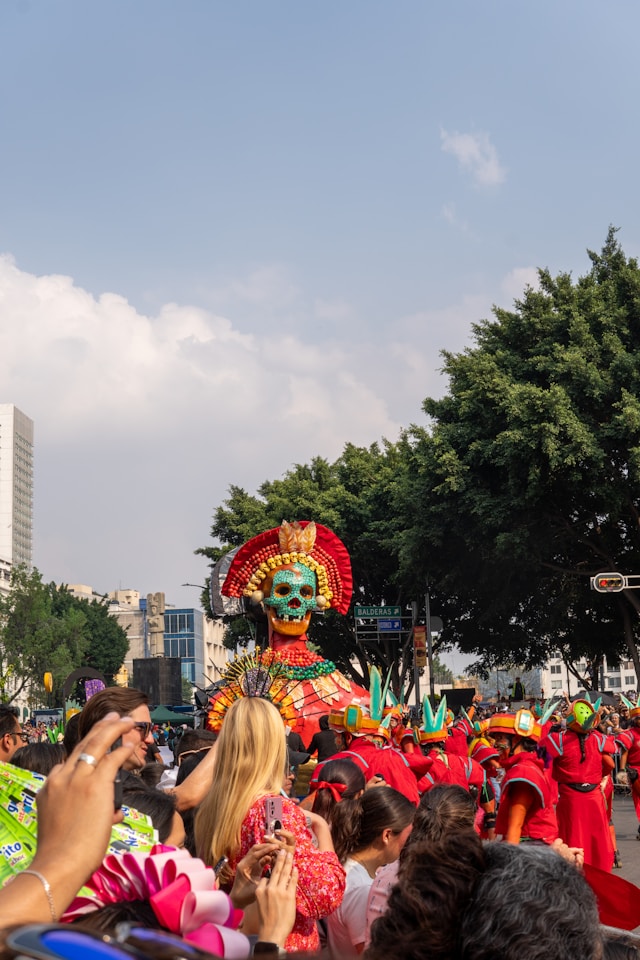
Día de Muertos or “Day of the Dead” is without a doubt the most famous festival in the Spanish-speaking world. It is celebrated on the first and second of November across Mexico, and what amazes you most is the beautiful contrast between its name and its nature; it is actually a celebration of life and memory, not death. The streets fill with orange marigold flowers, altars decorated with photos of the departed, and brightly painted skeleton masks. The markets accompanying the festival bustle with clay figures, colorful charms, and sugar skulls — unforgettable souvenirs.
🇪🇸 Feria de Abril — Seville, Spain (April)
Feria de Abril or “April Fair” is the largest and most authentic Andalusian celebration. For an entire week in late April, Seville turns into a city of colorful tents (Casetas) that open their doors for dancing, music, and food. Women wear ruffled flamenco dresses (Trajes de gitana) and men dress in traditional horse-riding outfits, while stalls of flower sellers, handicrafts, and Andalusian sweets line both sides. This festival teaches you one word above all: ¡Olé!
🇨🇴 Carnaval de Barranquilla — Colombia (February)
Carnaval de Barranquilla is the second-largest carnival in the world after Rio de Janeiro, and UNESCO has listed it as an Intangible Cultural Heritage of Humanity. Every February, the Colombian port of Barranquilla turns into a sea of feathers, masks, and loud rhythms. The accompanying markets are packed with fabrics, traditional costumes, and authentic gold and turquoise jewelry — the heritage of pre-Columbus civilizations is strongly present in every corner.
🇦🇷 Vendimia — Mendoza, Argentina (March)
Fiesta Nacional de la Vendimia or “National Grape Harvest Festival” takes place in the Argentine city of Mendoza, the capital of the finest wines in Latin America. Every March, after the harvest season, the city celebrates the crowning of the festival queen amidst stunning light shows and tango music. The festival markets offer the finest Argentine wines alongside grape jams, olive products, and local cheeses that match European quality.
💡 Cultural Spotlight: Souvenirs Worth Looking For
If you want to come back with gifts of real value, look for Talavera ceramics (Talavera), bottled extra virgin olive oil, and handmade Andalusian fans in Spain. In Mexico, hunt for hand-painted Otomi pottery (Talavera Poblana) and Zapotec embroidery. In Peru, do not miss out on soft alpaca textiles that are warmer than Scottish wool. In all these markets, remember that one phrase opens doors for you: ¡Qué hermoso! (How beautiful!)
Shopping and Market Vocabulary: 50 Essential Words for Every Traveler
To be a skilled conversationalist in any market or store, here is a comprehensive dictionary categorized by different situations:
| Word in Spanish | Pronunciation | Meaning in English | Category |
|---|---|---|---|
| El mercado | ehl mehr-KAH-toh | The market | Shopping Places |
| La tienda | lah TYEH-ndah | The store / shop | Shopping Places |
| El centro comercial | ehl SEHN-troh koh-mehr-SYAHL | The shopping mall | Shopping Places |
| El puesto | ehl PWEHS-toh | The stall / booth | Shopping Places |
| La farmacia | lah fahr-MAH-syah | The pharmacy | Shopping Places |
| La panadería | lah pah-nah-deh-REE-ah | The bakery | Shopping Places |
| La carnicería | lah kahr-nee-seh-REE-ah | The butcher shop | Shopping Places |
| La librería | lah lee-breh-REE-ah | The bookstore | Shopping Places |
| El precio | ehl PREH-syoh | The price | Prices & Negotiation |
| El descuento | ehl dehs-KWEHN-toh | The discount | Prices & Negotiation |
| La oferta | lah oh-FEHR-tah | The offer / sale | Prices & Negotiation |
| Barato / Caro | bah-RAH-toh / KAH-roh | Cheap / Expensive | Prices & Negotiation |
| ¿Cuánto cuesta? | KWAHN-toh KWEHS-tah | How much does it cost? | Prices & Negotiation |
| El regateo | ehl rreh-gah-TEH-oh | The bargaining / haggling | Prices & Negotiation |
| El precio fijo | ehl PREH-syoh FEE-xoh | Fixed price (no bargaining) | Prices & Negotiation |
| Me lo llevo | meh loh YEH-boh | I will take it | Prices & Negotiation |
| Voy a pensarlo | boy ah pehn-SAHR-loh | I am going to think about it | Prices & Negotiation |
| No me interesa | noh meh een-teh-REH-sah | I am not interested | Prices & Negotiation |
| El pago | ehl PAH-goh | The payment | Payments & Receipts |
| El efectivo | ehl eh-fehk-TEE-boh | The cash | Payments & Receipts |
| La tarjeta de crédito | lah tahr-XEH-tah deh KREH-dee-toh | The credit card | Payments & Receipts |
| El recibo | ehl rreh-SEE-boh | The receipt | Payments & Receipts |
| La factura | lah fahk-TOO-rah | The invoice / official bill | Payments & Receipts |
| El cambio | ehl KAHM-byoh | The change | Payments & Receipts |
| El IVA | ehl EE-bah | VAT (Value Added Tax) | Payments & Receipts |
| La bolsa | lah BOHL-sah | The bag | Payments & Receipts |
| La ropa | lah ROH-pah | The clothes | Clothing & Sizes |
| La talla | lah TAH-yah | The size | Clothing & Sizes |
| El probador | ehl proh-bah-DOHR | The fitting room | Clothing & Sizes |
| Me queda bien / mal | meh KEH-dah byehn / mahl | It fits me well / poorly | Clothing & Sizes |
| Grande / Pequeño / Mediano | GRAHN-deh / peh-KEH-nyoh / meh-DYA-noh | Large / Small / Medium | Clothing & Sizes |
| El color | ehl koh-LOHR | The color | Clothing & Sizes |
| Rojo / Azul / Verde | ROH-xoh / ah-SOOL / BEHR-deh | Red / Blue / Green | Clothing & Sizes |
| Negro / Blanco / Amarillo | NEH-groh / BLAHN-koh / ah-mah-REE-yoh | Black / White / Yellow | Clothing & Sizes |
| El recuerdo / El souvenir | ehl rreh-KWEHR-doh / ehl soo-beh-NEER | The souvenir | Souvenirs & Quality |
| El artesano | ehl ahr-teh-SAH-noh | The artisan / craftsman | Souvenirs & Quality |
| Hecho a mano | EH-choh ah MAH-noh | Handmade | Souvenirs & Quality |
| Es auténtico | ehs ow-TEHN-tee-koh | It is authentic / real | Souvenirs & Quality |
| ¿Tiene garantía? | TYEH-neh gah-rahn-TEE-ah | Does it have a warranty? | Souvenirs & Quality |
| ¿Puedو devolverlo? | PWEH-doh deh-bohl-BEHR-loh | Can I return it? | Souvenirs & Quality |
| La joyería | lah xoh-yeh-REE-ah | The jewelry store | Souvenirs & Quality |
| La cerámica | lah seh-RAH-mee-kah | The ceramics / pottery | Souvenirs & Quality |
| El tejido | ehl teh-XEE-doh | The textile / fabric | Souvenirs & Quality |
| El cuero | ehl KWEH-roh | The leather | Souvenirs & Quality |
| ¿A qué hora abre / cierra? | ah keh OH-rah AH-breh / SYEH-rrah | What time does it open / close? | Business Hours |
| Está cerrado / abierto | ehs-TAH seh-RRAH-doh / ah-BYEHR-toh | It is closed / open | Business Hours |
| La siesta | lah SYEHS-tah | Midday rest break | Business Hours |
| Solo estoy mirando | SOH-loh ehs-TOY mee-RAHN-doh | I am just looking | Business Hours |
| ¡Que aproveche! | keh ah-proh-BEH-cheh | Enjoy! / Bon appétit! | Business Hours |
| ¡Buen provecho! | bwehn proh-BEH-choh | Enjoy your meal! | Business Hours |
Listen and Practice: Real Conversations from Spanish Markets
To get used to the rhythm of real conversations in markets and shops, we invite you to listen to this educational clip that simulates the most common shopping situations:
Learn shopping and negotiating in Spanish in local markets
5. Golden Tips for an Unforgettable Shopping Experience
Before we leave you in this guide, here is a collection of practical tips that set a regular tourist apart from a traveler who lives the experience deeply:
- Respect the siesta: In Spain, shops usually close between 2:00 PM and 5:00 PM. Do not be surprised by this, and plan your time in advance.
- Street markets are best in the morning: The best time to visit local street mercados is early morning when the goods are fresh and prices are more flexible.
- Do not over-bargain: In Spain and most Latin American countries, extreme haggling can annoy the seller. A reasonable discount between 10% and 20% is safest.
- Carry small change: Many street stalls do not accept cards, and some might not have enough change for large bills.
- Bargain out of respect, not exploitation: Remember that many artisans and vendors in local markets rely on this income to support their families; fairness is essential.
With this wealth of language and culture, you are now ready to stroll through the finest and most popular markets in the Spanish-speaking world with the spirit of an expert shopper, not an overwhelmed visitor. In the next article, we will move on to something we hope you will not need much, but is absolutely essential: emergencies, the pharmacy, health, and safety. ¡Hasta mañana!
— Learn Spanish in a Week Series —
Previous Article: 5- Hotels, Booking Accommodations, and Hotel Services
Current Article: 6- Shopping, Buying, and Dealing with Local Markets
Next Article: 7- Emergencies, the Pharmacy, Health, and Safety
Similar Series: Learn Indonesian in a Week | Learn Turkish in a Week
- The Official Cervantes Institute (Instituto Cervantes) – Commercial Communication and Shopping Guide for Travelers (Level A1-A2).
- The Royal Spanish Academy (Real Academia Española) – Dictionary of Commercial Terms and Popular Markets.
- UNESCO – Intangible Cultural Heritage List: Carnival of Barranquilla and Día de Muertos (2008 and 2003).