Happiness Across Languages: From Hygge to Ikigai

What if your language shapes how happy you feel? A journey through hygge, ikigai, and other untranslatable words that hold the secret to family warmth.
When I asked my three-year-old what makes her happy, she looked at me with complete seriousness and said: “When you’re with me.”
I haven’t found a better answer in any philosophy book since.
Happiness is a vast concept — but languages have compressed it into small, dense words, each carrying a whole world inside it. And when our own language lacks a specific word, it doesn’t mean we lack the feeling. It might mean the feeling is too expansive to fit into a single syllable.

Hygge: The Warmth That Gathers Us
If there’s one word that has broken free from its language and become a global phenomenon, it’s the Danish word hygge (pronounced hoo-gah). It means — roughly — that warm, cozy feeling you get when you’re with the people you love, in a comfortable place, sheltered from the noise of the world.
Hygge isn’t happiness in the celebratory sense. It’s shared stillness. A lit candle, a warm cup of something, a quiet evening with family when it’s raining outside. Danes regularly cite it as a key reason their country ranks among the world’s happiest year after year, according to the World Happiness Report.
When I first read about it, my immediate thought was: isn’t this what we call samar in Arabic? That evening gathering after dinner when everyone sits together — no agenda, no schedule — simply because the time is shared and the space is the same.
Hygge isn’t a Danish invention. It’s a fundamental human need — one many families have been practicing for generations without ever naming it.
Ikigai: A Reason to Wake Up
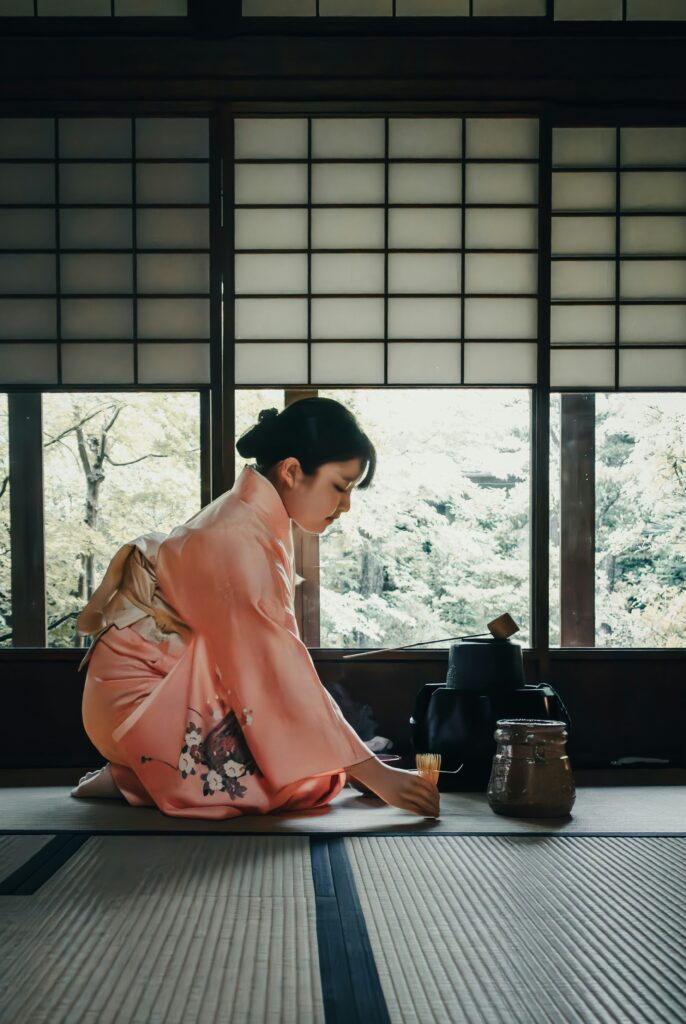
In Japan, there’s a concept called ikigai (生き甲斐) — meaning, roughly, “reason for being” or “what makes life worth living.” It sits at the intersection of four things: what you love, what you’re good at, what the world needs, and what you can be paid for.
What’s beautiful about ikigai is that it refuses to separate the self from family and community. In Japanese culture, a person’s ikigai might simply be raising their children — or feeding the people they love — or practicing a craft they’ve mastered for decades. No heroic goal required.
This definition resonates when I hear Arab mothers say they feel their real life is “on hold” — as if life will truly begin once the children grow up, or once things settle down. Ikigai gently argues otherwise: it’s here, now, in exactly what you’re doing. (See our article: Why We Cry, Pray, and Fall in Love in Our Mother Tongue)
Other Concepts Worth Borrowing
The beautiful words don’t stop at these two:
| Word | Language | Approximate Meaning |
|---|---|---|
| Lagom | Swedish | Just the right amount — not too much, not too little; the perfect measure of everything |
| Gemütlichkeit | German | A warm sense of belonging to a place and its people — deep social comfort |
| Sobremesa | Spanish | The time spent with family lingering at the table after a meal — no agenda, just presence |
| Ubuntu | Zulu / Sub-Saharan Africa | “I am because we are” — identity built through and within the community |
| Meraki | Greek | Putting your soul into what you make — doing something with love and full devotion |
What About Arabic?
Arabic doesn’t have a single word that maps onto “hygge” — but it has something richer: a whole network of interwoven concepts. Al-uns (the warmth of togetherness), al-samar (the evening gathering), al-ridā (contentment), al-ṭuma’nīna (inner stillness and peace) — each one illuminates a different facet of the same human state.
Interestingly, ṭuma’nīna — rooted in the Arabic for stability and calm — may come closest to what Western happiness researchers call “eudaimonic wellbeing”: not fleeting joy, but a deep, settled state of being. Not an emotion you chase, but one you cultivate.
When we raise children in more than one language, we don’t just give them grammar — we give them multiple ways of feeling and naming that feeling. (See our article: The Bilingual Brain Advantage: What Science Says About Raising Multilingual Children)

What We Can Actually Apply at Home
The point isn’t to import foreign words and paste them onto our lives. What these concepts reveal is that happy families everywhere share one essential quality: intentional shared presence.
Hygge says: set aside time that isn’t trying to accomplish anything.
Ikigai says: find meaning in the small and daily.
Sobremesa says: don’t leave the table the moment the meal ends.
Ubuntu says: your existence is woven into the existence of those around you.
All of these, in one form or another, already exist in Arab family traditions — in the shared evening sitting, in the morning coffee ritual, in the family dinner, in the hospitality that is never calculated. (See our article: Morning Coffee Rituals: More Than Just Caffeine for Syrians)
Perhaps we don’t need to import happiness — but to see what we already have of it, name it, and protect it with intention.
A Small Practice for This Week
Pick one concept from the list and try it for a single day. Sit with your family after dinner without phones for twenty minutes (sobremesa). Or notice that small thing you do every day with genuine love — and recognize it as your ikigai.
Tell us: which word from this list felt like it described something in your life that you’d never had a name for?
See also: How to Keep Your Heritage Language Alive When You Live Abroad
References:
- Wiking, M. (2016). The Little Book of Hygge. William Morrow.
- García, H., & Miralles, F. (2016). Ikigai: The Japanese Secret to a Long and Happy Life. Penguin Books.
- World Happiness Report 2024 — worldhappiness.report