
“Hayawan” — One Word That Reveals How a Civilization Treats Life

When a philosopher jumped into a river to save a cat, and when an actor stood before the world to speak for a cow — neither was showing weakness. Both were proving their humanity was still alive. Compassion toward the weakest creatures is not a moral luxury. It is the oldest and most precise measure of how far a human being has truly come.
Defending living creatures is not soft emotionalism, nor is it green extremism — it is one of the oldest and most precise measures of how far a human being has come in their humanity.
The Man Who Jumped Into the River
He was walking alone along the riverbank, as he often did, when he heard laughter. He moved closer and saw what stopped his feet cold: a small crowd of adults and children watching a cat drowning in the water — and perhaps they were the ones who had thrown her in. The philosopher Zaki al-Arsuzi did not deliberate long. He jumped into the river and pulled that drowning soul out.
Al-Arsuzi was not an animal rights activist. He was not preparing a political statement. He was a philosopher and a teacher on an ordinary day, and in a single unplanned moment he revealed more than years of speeches ever could: that true humanity does not stop at the boundaries of species.This article begins with that drowning cat — and does not end there.
“Hayawan”: When One Word Contains an Entire Philosophy
Before any discussion of compassion or cruelty, one Arabic word deserves a long pause.The Quran states: “And indeed, the Hereafter — that is the hayawan — the true life.” A careful reader of Arabic grammar notices something unusual: the subject of the sentence is singular, and in Arabic, the predicate must agree with it. This means hayawan here is not the plural of hayah (life) — it is a form of intensive amplification. An Arabic superlative built from the root of life itself.
The word hayah (حياة) — life — has no plural in classical Arabic. Life, the language seems to say, is by definition bounded: it begins at birth and ends at death. What exceeds those boundaries, what cannot be pluralized because it does not end — that is hayawan (حيوان).
And here the etymology deepens into something remarkable. Three Arabic words share the same root — hayya (حيي), meaning to live: Hawwa (حواء) — Eve, the giver of life. Hayawan (حيوان) — the living creature, but also the boundless life. Hayya (حية) — the serpent.
Three words, one root, three roles in a single ancient story. The language itself does not easily separate the woman, the animal, and the creature that moves between them. They all drink from the same source.If the language sees this kinship at its foundation, the question returns with new weight: why does the human being — who speaks this language — enforce such distance between himself and the other living things that share his root?
Al-Arsuzi and the Cat: When a Philosopher Reveals Himself in a Moment
Zaki al-Arsuzi was not merely a thinker — he was a man of reflex. The Syrian philosopher who spent his life building a philosophy of the Arabic language and human identity is the same man who could not stand on the shore and watch.
In his Complete Works, al-Arsuzi writes of the human soul as an indivisible whole. The person who raises a hand against a weaker creature does not prove their strength — they reveal a fracture within themselves. And the person who moves to protect a creature to whom they owe nothing — no social contract, no mutual benefit — demonstrates that their humanity is not conditional.
That cat did not know him. He did not know her. But the body moved before the mind could calculate.
This same impulse, a century later and on the other side of the world, was waiting for an American actor standing before the largest audience of his life.
The Oscars Speech That Surprised the World
In 2020, Joaquin Phoenix — the American actor who had just won the Academy Award for Best Actor for his role as the Joker — stood at the podium before hundreds of millions of viewers around the world and did not say what actors usually say.He said: “We feel entitled to artificially inseminate a cow, and when she gives birth, we steal her baby — even though her cries of anguish are unmistakable.” The room fell quiet. He was not talking about his role or his film. He was talking about how human beings treat the weaker living creatures placed beside them — and he was doing it at the most public moment of his life.
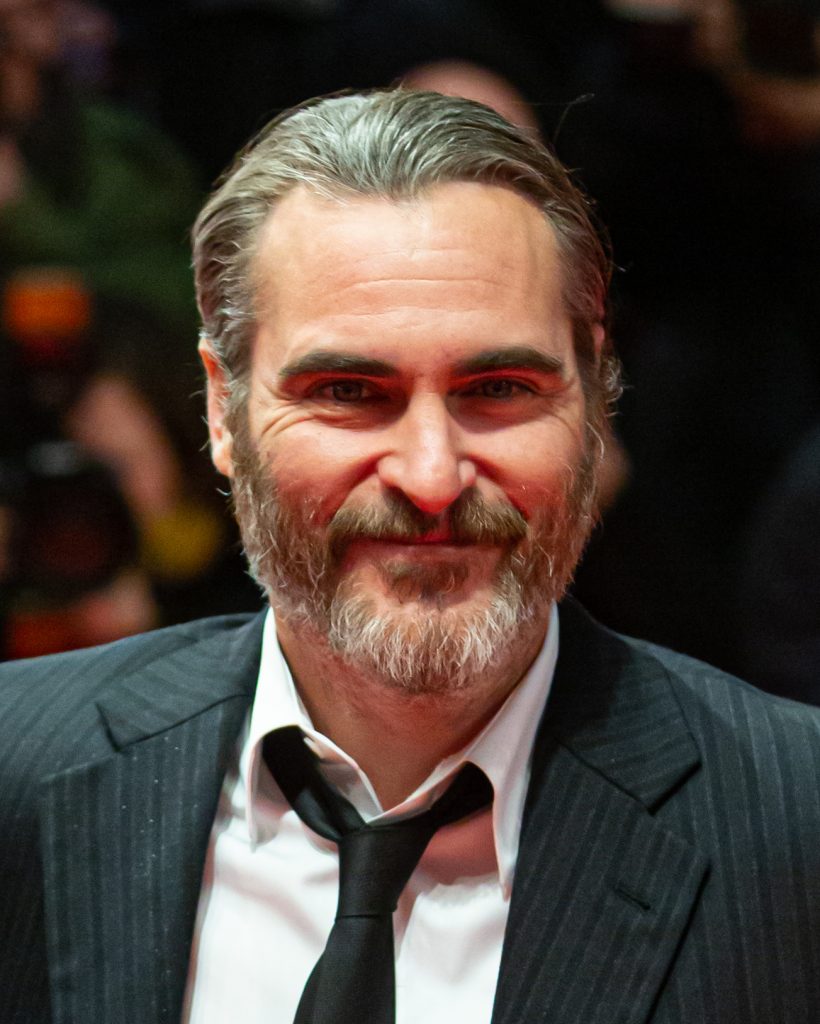
Phoenix has been vegan since the age of three, when he watched fishermen pull fish from the water through the window of his family’s car. No one needed to explain to a child that age what he was seeing. He simply saw it. And what he saw did not leave him.
Al-Arsuzi jumped into a river. Phoenix stood before the world and said the truth. Two different methods. One soul.
The University and the Dog: When Institutions Reveal What Speeches Conceal
It is not enough to speak only of philosophers and actors. The truth begins in ordinary places — in universities, in hospitals, in streets.
At a Syrian university, a stray dog found its way into a room on the third floor. A staff member caught him and threw him from the window. A medical student — presumably studying the preservation of life — watched and did not move. Another student rushed to help the dog, but the veterinarian who arrived declared the case hopeless and administered a sedative so the animal could die quietly.
A small story in a large institution. But it carries everything: who throws, who watches, and who tries to rescue what remains.
In 2024, video footage leaked from a veterinary college in Cairo showing stray dogs collected, confined, and subjected to repeated surgeries without adequate anesthesia. Students and staff who filmed the footage described psychological trauma from what they witnessed. An international animal rights organization called for a formal investigation. Veterinary students causing suffering to animals — the precise opposite of what the profession exists to do.
Institutions do not guarantee humanity. And a degree does not manufacture conscience.
Plato Already Knew This
In Book Three of The Republic, Plato sets an unusual condition for training true warriors: they must be taught music and poetry alongside combat.
Not as decoration. Not as a luxury of military life. But because a fighter who knows no beauty will become a tool. And a killing tool without a soul cannot distinguish between enemy and innocent — or between human and animal.
The true warrior in Plato’s vision is one who knows when to fight and when to stop, when to take life and when to show mercy. This discernment does not come from military training alone — it comes from cultivating the soul.
And a soul that cannot feel the pain of another living creature — any creature — is a soul that has lost part of its capacity for distinction.
The Counterargument: When Killing Is Necessary
Here we must stop and be honest.
Speaking of animal welfare does not mean denying a very old biological reality: life sometimes requires taking another life. Human beings have eaten animals since the earliest moments of their existence. This is not a crime — it is part of the circle of life that no one stands outside.
But there is an enormous distance between necessity and pleasure. Between a conscious, painful act of taking and a careless, indifferent cruelty.
In 2017, the Hungarian film On Body and Soul — directed by Ildikó Enyedi, winner of the Golden Bear at the Berlin International Film Festival — was set somewhere no one expected: a slaughterhouse. A manager and a quality inspector, a man and a woman who work daily in the flow of slaughter, discover they share the exact same dream every night. In it, they meet as a stag and a doe, free in a snow-covered forest.
The film does not condemn the slaughterhouse, nor does it glorify it. It does something harder: it places the necessity of death and the beauty of life side by side, and asks — can someone who takes life every day still keep their soul? The answer the film suggests: yes — as long as they remain aware of the cost.
Humane slaughter is not a contradiction in terms. It is a philosophical position that says: I do what life requires, but I do not forget that I am doing it and what it weighs.
When Goodness Becomes an Abyss
A philosopher can also see the error in the opposite direction.
For years, Zhanna Samsonova was a Russian influencer who posted about an extreme vegan lifestyle — eating only raw fruit and sunflower seeds, claiming she had lived without drinking water for years because fruit was sufficient. She built a wide digital following of people who believed in her message. In 2023, she died at the age of thirty-nine. Those close to her described a body that had reached a degree of thinness resembling a twelve-year-old girl. The official medical cause was never confirmed, but those who had followed her life understood what they understood.
There is no fault in seeking a life that causes less harm. But when a principle becomes an extremism that denies the body’s basic needs, it ceases to be compassion and becomes self-punishment.
Life is not honored by denying what it requires. It is honored by engaging with it consciously, in balance.

The Feminine as the Source of Life and Knowledge
There is a thread connecting all of this to something deeper.
In the ancient Arabic narrative — where Hawwa (Eve) and hayya (the serpent) both flow from the same root as hayah (life) — Eve is the giver of life, the serpent is the guide, the one who pointed toward the path of knowledge. Three derivations from one spring: life, the living creature, and knowledge — all feminine in their linguistic and symbolic structure.
In contemporary neuroscience, researchers describe the two hemispheres of the brain in constant dialogue: the left hemisphere, associated with logic, speed, and immediate judgment; the right hemisphere, associated with holistic experience, empathy, and the capacity to see the larger picture. No human being is purely one or the other — every person carries both poles, and is defined by how much they allow them to speak to each other.
The culture that glorifies absolute masculinity and suppresses its other half is a culture that severs the nerve of awareness toward the other. And one who cannot sense the pain of another creature will not sense the pain of another human being. It is the same incapacity.
When al-Arsuzi jumped into the river — which part of him moved first?
The Circle of Life: From Mineral to Human
The last thing this article must say goes beyond ethics into pure biological truth.
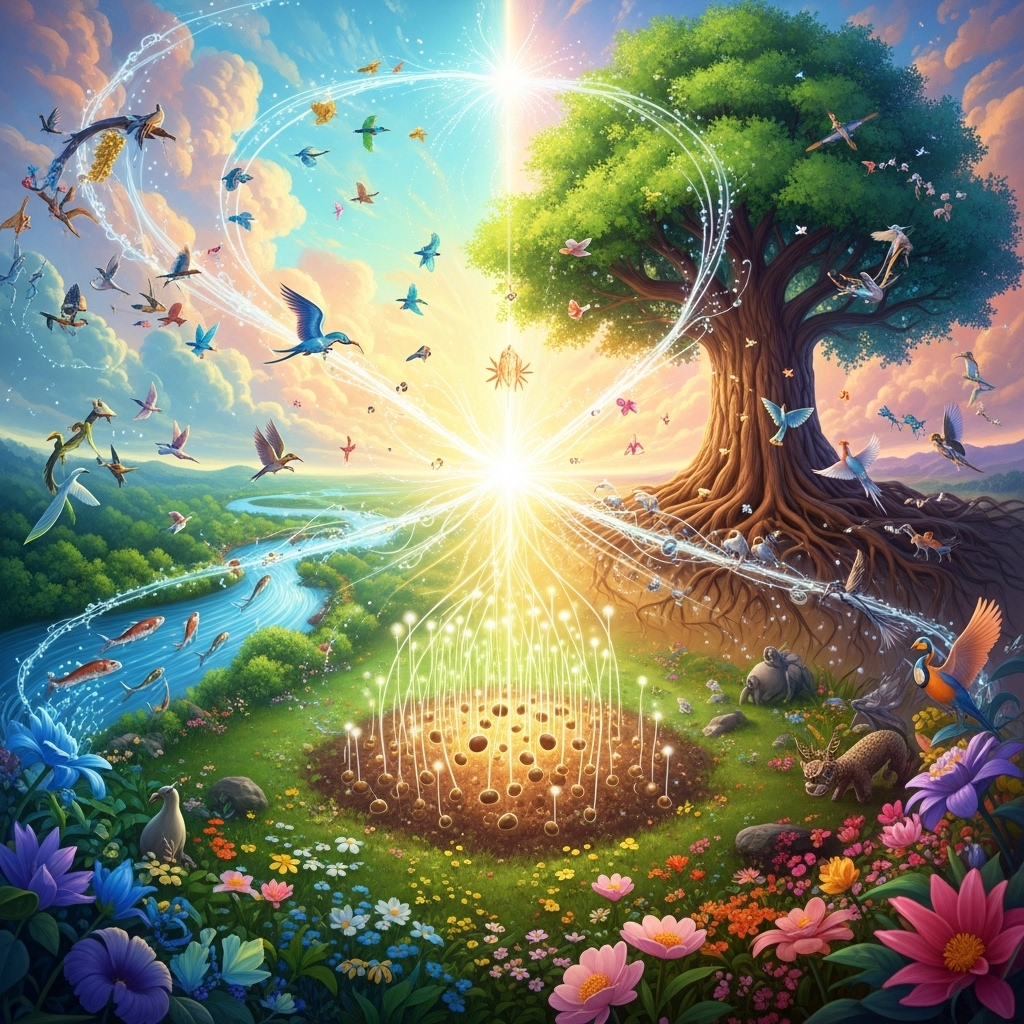
Life on this planet is not a series of independent floors — it is a series of overlapping circles. Minerals feed the soil, soil grows the plant, the plant feeds the insect and the animal, the animal returns to the earth what it borrowed. The human being is not above this circle — they are a link within it. And when a link disappears, the entire circle distorts.
Extinction does not threaten only the extinct creature. It threatens what that creature ate, and what ate it in turn. Humanity is not at the apex of an isolated pyramid — it is at the center of a web it cannot survive without.
Defending animals is therefore not a tender emotion that weakens the human being. It is a scientific understanding of the nature of existence. And it is a moral measure of how far a person has developed — because one who treats the weakest with a mercy born of awareness, not weakness, announces that their humanity is still alive.
Closing: Between the River and the Award Speech
Al-Arsuzi did not think long. He jumped. And because he jumped, a cat survived — and a philosopher proved that philosophy is not words in books.
Phoenix stood before the world and said what is not said in those moments. He did not wait for a conference or a symposium. He used the largest platform ever given to him to remind people of a creature that cannot speak and cannot complain.
Between them: a century of time, two continents, two entirely different cultures. And one result: when the circle of compassion expands to include a creature to whom you owe nothing, you prove that your awareness of life has moved beyond the boundaries of your own self-interest.
As for balance — it is not the midpoint between compassion and cruelty. It is an awareness of necessity and a willingness to bear the weight of it when life demands it. To take a life when life requires it, but with full knowledge of what you are doing and the gravity of what it costs.
This is what the culture of unconscious violence does not teach — the one that kills because killing is pleasurable, or because the weak are standing there and nothing is stopping you.
And this is what a drowning cat in an old Syrian river taught, in its own quiet way.
Glossary
Hayawan (حيوان): Commonly translated as animal, but etymologically an intensive form of hayah (life) — meaning boundless, unending life. Used in the Quran to describe the eternal nature of the afterlife.
Hayah (حياة): Life. In classical Arabic, it has no plural — life is grammatically singular and bounded. The root from which hayawan, Hawwa, and hayya all derive.
Hawwa (حواء): Eve. The Arabic name shares its root with hayah (life) and hayya (serpent) — all three from the same etymological spring.
Hayya (حية): The serpent. Shares its root with life and Eve — a linguistic kinship the Arabic language preserves that most translations erase.
Zaki al-Arsuzi: Syrian philosopher from the Sanjak of Alexandretta, considered one of the most important Arab nationalist thinkers of the twentieth century.
(Zaki al-Arsuzi — المؤلفات الكاملة, Complete Works)
Joaquin Phoenix: American actor, Academy Award winner for Best Actor 2020. Known for his extensive activism in animal rights.
On Body and Soul: Hungarian film, 2017, directed by Ildikó Enyedi. Winner of the Golden Bear at the Berlin International Film Festival.
Zhanna Samsonova: Russian influencer who promoted an extreme raw fruitarian lifestyle. Died in 2023 at thirty-nine. Official medical cause unconfirmed. ( — 2023)
Plato — The Republic, Book III: On the education of guardians: the necessity of teaching music and poetry alongside combat to preserve their full humanity.