

Helicopter Parenting in America: Is the Trend Reaching Us?

Helicopter parenting is reshaping how a generation grows up — with real psychological costs. What the research says, and what a smarter alternative looks like.
My friend Sarah is, by every visible measure, a devoted mother.
She knows her son’s class schedule by heart. She reviews his homework before he submits it. She calls his teacher whenever a grade comes back lower than expected. She books his extracurricular slot, then waits outside the door until he’s done. Her son is twelve.
When I mentioned the term “helicopter parent,” she laughed. Then went quiet. Then asked: “Is that me?”
What Exactly Is a Helicopter Parent?
The term first appeared in 1969 in psychologist Haim Ginott’s book Between Parent and Teenager, when a teen described his mother as hovering “like a helicopter.” It caught on because it captured something real: a parenting style defined by close surveillance, preemptive problem-solving, and a steady effort to shield children from frustration, failure, and risk.
The intention is always loving — protection, care, a desire for the best outcomes. But the effect, research increasingly shows, can run directly counter to those intentions.
A child who is never allowed to fail doesn’t learn how to get back up. They learn to wait for someone else to lift them.
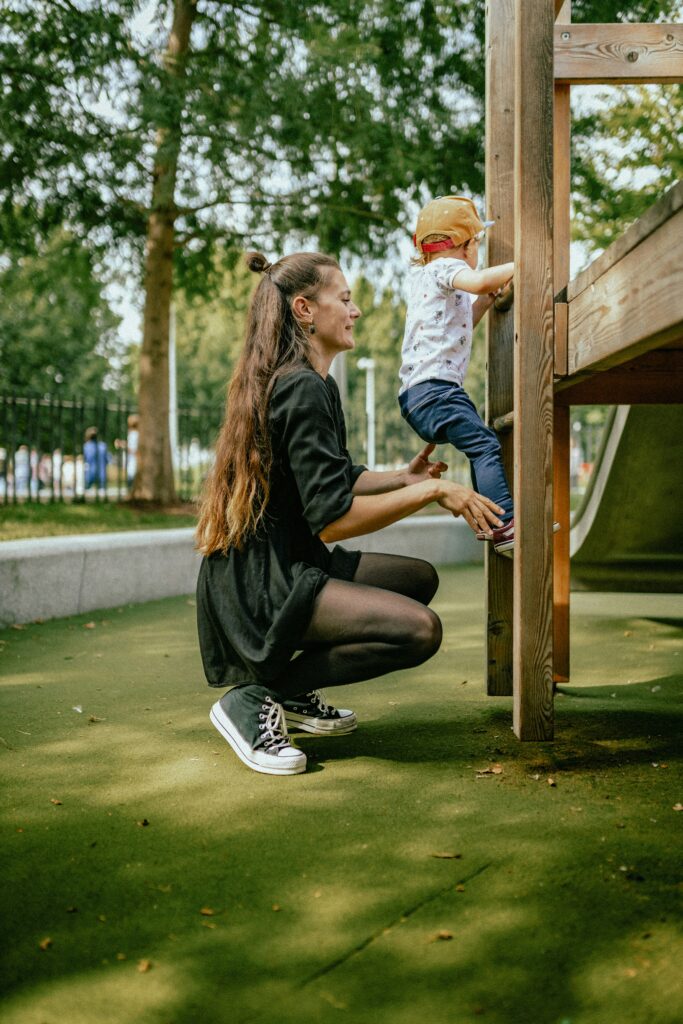
Why America — And Why Now?
Helicopter parenting isn’t a random emotional trend. It’s the product of specific structural pressures that have intensified over the past few decades, especially in the U.S.:
- Academic competition anxiety — When parents feel their child’s future is determined by middle school GPA, every assignment becomes an existential event.
- Zero-risk culture — A rising fear of physical and social danger has made unsupervised outdoor play feel, to many parents, like negligence rather than childhood.
- Social media’s perfect-parent effect — Curated feeds of other people’s flawless parenting generate constant anxiety about whether you’re doing enough.
- Post-pandemic anxiety spike — Multiple studies have documented a measurable rise in parental anxiety following COVID-19, with some of those patterns becoming entrenched.

What the Research Actually Shows
The data isn’t reassuring. A widely cited study in the Journal of Child and Family Studies found that college students who reported helicopter parenting in childhood showed higher rates of anxiety and depression, and lower levels of self-efficacy and resilience when facing challenges on their own.
Julie Lythcott-Haims, former Stanford dean of freshmen and author of How to Raise an Adult, put it plainly: we are producing young adults who struggle to sit across from their boss and advocate for themselves, because they were never required to do it for themselves growing up.
The consequences show up not just in mental health, but in practical life skills. Studies find overparented young adults are less likely to cope well with setbacks, more likely to need external validation, and slower to develop the executive function that comes from navigating difficulty independently.
Is It Spreading Beyond America?
Honestly: yes — though it takes on different shapes in different cultures.
In Arab households, extended family structures and communal child-rearing historically gave children more room to breathe and fail and figure things out. But urbanization, shrinking family sizes, rising academic pressure, and the global spread of “the exceptional child” culture are reshaping things. The parent who completes their child’s school project so it looks better. The father who argues with a principal over every mark. The teenager who’s never been asked to make a meal because no one’s let them try.
These aren’t uniquely American scenes anymore. (See our article: Digital Parenting in Arab Homes: Have We Lost Control?)

The Alternative Isn’t Neglect — It’s Intentional Presence
The case against helicopter parenting is not a case for checked-out parenting. The approach the research consistently supports is what psychologists call authoritative parenting — warm and connected, but structured around building independence rather than preventing difficulty:
- Emotional warmth alongside clear, reasonable expectations.
- Letting small frustrations run their course rather than intervening immediately.
- Being present and available when asked — and strategically stepping back when not.
- Praising effort and process, not only results.
The goal isn’t to hover above your child or to let them fall — it’s to be within reach when they need you and a step back when they don’t. That balance is harder than hovering. But the children it produces are measurably more capable of navigating a world their parents can’t control for them.
See also: The Bilingual Child at School: Challenges, Rights, and How to Advocate for Them | The Bilingual Brain Advantage: What Science Says About Raising Multilingual Children
References:
- Ginott, H. G. (1969). Between Parent and Teenager. Macmillan.
- Lythcott-Haims, J. (2015). How to Raise an Adult. Henry Holt and Co.
- Schiffrin, H. H., et al. (2014). Helping or hovering? The effects of helicopter parenting on college students’ well-being. Journal of Child and Family Studies, 23(3), 548–557. View study
- Lythcott-Haims, J. (2015). How to raise successful kids — without over-parenting. TED Talk.