
Jack Dorsey Just Fired Half His Company — History Says He’s Not the First, and Won’t Be the Last

Jack Dorsey just told 4,000 people their jobs no longer exist — not because the company is struggling, but because it is thriving. This is not the first time a technology has rewritten the rules of work overnight. It is, however, the first time a CEO has said so this openly. The question is not whether AI will change everything. It already has. The question is who pays the price — and who decides how to share what comes next.
The AI layoffs have begun in earnest. But the real story isn’t about Block, or Dorsey, or even artificial intelligence. It’s about a pattern humanity has lived through before — and never quite learned to manage.
A Letter That Arrived on a Thursday Morning
On Thursday, February 26, 2026, more than 4,000 people opened their work email and found a message from their CEO. Some were in the middle of their morning coffee. Some had just dropped their children at school. Some had mortgages signed on the assumption that this job would last.
Jack Dorsey, founder of Twitter and CEO of Block — the financial technology company behind Square, Cash App, and Afterpay — wrote to tell them they no longer had a position. Not because the company was failing. His words on this were direct: “Our business is strong. Gross profit continues to grow, we are serving more customers, and profitability is improving.” The reason, he said, was something else entirely: artificial intelligence had fundamentally changed what it means to build and run a company, and Block’s workforce of over 10,000 was no longer the right size for what came next. The new target was fewer than 6,000.
Over 4,000 people. In a single letter.
Before we go any further, it is worth pausing on what that number means in human terms. Four thousand people is not a statistic. It is four thousand separate lives, each with its own set of pressures and plans that were made possible by a salary that no longer exists. History will record this as a corporate restructuring. But the people inside it are experiencing something closer to a rupture — and that deserves to be said plainly before we move on to the larger picture.
Because the larger picture is important. And it did not begin on Thursday.
This Is Not New: The Pattern History Keeps Repeating
The second law of thermodynamics — what physicists call entropy — tells us that systems naturally move toward transformation. Energy does not disappear; it changes form. Stability is always temporary. Change is the only constant the universe enforces without exception.
Human civilization has lived inside this law for as long as it has existed. And every few generations, a technological shift arrives that forces the question: *what do we do with the people whose skills the new system no longer needs?
The Luddites — 1811
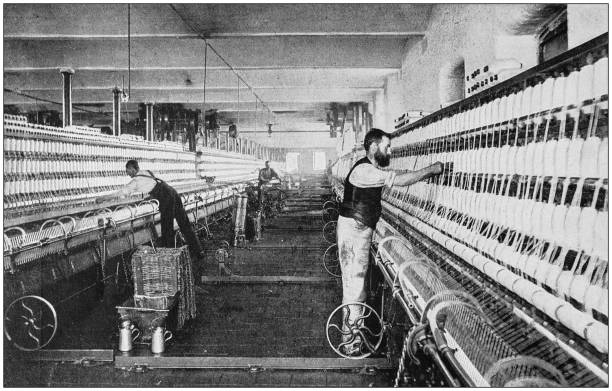
In the textile districts of northern England, skilled weavers who had spent years mastering their craft watched as industrial looms began producing in hours what had taken them weeks. They did not accept this quietly. Between 1811 and 1816, groups of workers — who came to be called Luddites — broke into factories at night and destroyed the machines. The British government responded by making machine-breaking a capital offense. Soldiers were deployed. Leaders were hanged or transported to penal colonies.
The machines stayed. The weavers adapted or disappeared. And the textile industry grew into something far larger than it had ever been before — eventually employing more people than it had before the machines arrived, though in entirely different roles and under entirely different conditions.
History remembers the Luddites as people who fought against progress. What history tends to forget is that they were not opposed to technology. They were opposed to bearing the entire cost of a transition that enriched others.
The Printing Press — 1440
When Johannes Gutenberg introduced the movable type printing press to Europe, the occupation of the manuscript copyist — a respected, well-compensated, often monastic profession — began its quiet extinction. Within a generation, the demand for hand-copied books collapsed. Thousands of scribes across the continent lost the only livelihood they had trained for.
But what replaced them was not less. Europe went from producing a few thousand books per year to millions within decades. Literacy spread. Ideas traveled. The Renaissance, the Reformation, the Scientific Revolution — all of them were accelerated by the printing press and the abundance of information it created. The scribes paid the price. Everyone else — eventually — benefited.
Marx and the Industrial Revolution
Karl Marx was not primarily a revolutionary. He was, first, an observer. Standing in the factories of mid-nineteenth-century England, he saw something specific: workers who possessed only their own labor in a system that was rapidly finding ways to need less of it. He described the emergence of what he called a reserve army of labor — a permanent pool of unemployed people whose existence kept wages low and workers compliant, because everyone knew they could be replaced.
Marx’s analysis was not wrong. What he underestimated was the system’s capacity to generate new kinds of work — work that could not have been imagined before the machines arrived. But his core observation — that the gains of technological transformation are not automatically distributed to those who bear its costs — remains one of the most accurate diagnoses of how these transitions actually unfold.
What Makes This Time Feel Different
Every previous industrial disruption replaced physical labor. The machines took the work that bodies did — lifting, weaving, assembling, carrying.
What artificial intelligence is doing is different in a way that matters enormously: it is replacing cognitive labor. The work that minds do — writing, analyzing, coding, planning, evaluating — is now being done, partially or entirely, by systems that do not need salaries, benefits, or sleep.
This is not a warning about the future. It is a description of the present. Dorsey did not say that AI might change things. He said it already has. The tools Block had been building and using internally had already demonstrated that smaller, leaner teams could accomplish what larger ones previously required. He was not speculating about a coming disruption. He was responding to one already underway.
And then he said something that deserves more attention than it received: “I believe most companies will arrive at the same conclusion and make similar structural changes in the coming year.“
That sentence is not about Block. It is a forecast about the entire economy.
The Grief Is Real, and It Deserves Its Space
There is a tendency, in writing about large-scale economic shifts, to move too quickly into the historical and the abstract — to reach for the long arc of progress before finishing with the human weight of the moment.
So let this be said clearly: for the people who received that email on Thursday, the historical arc is not a comfort. The fact that textile workers eventually found new roles does not pay a mortgage in San Francisco in 2026. The knowledge that the printing press created more work than it destroyed does not help someone explain to their family why they are updating their resume tonight.
Dorsey chose to announce all 4,000 decisions at once rather than through rolling cuts over months or years. His reasoning was stated directly: repeated rounds of layoffs destroy morale, scatter focus, and erode the trust that clients and shareholders place in leadership’s ability to lead. He preferred one hard, clear action over a slow bleed that arrives at the same place.
It is a defensible logic. It does not make Thursday morning easier for the people who lived it.
Those 4,000 people built what Block is. Dorsey acknowledged this explicitly. Whatever the strategic rationale, the disruption is real, the loss is real, and the uncertainty that follows is real. The historical pattern says that new opportunities will eventually emerge. But “eventually” is not a timeline anyone can live inside right now.
The Real Problem Is Not Artificial Intelligence
Here is where the story is most often misunderstood — and where it matters most to be precise.
Artificial intelligence is not the problem. This needs to be said without ambiguity.
A technology that can do in weeks what once took months, that can process in hours what once required years of specialized expertise, that can make medical diagnoses faster, design safer infrastructure, accelerate scientific discovery, and reduce the cost of producing nearly everything — this technology is not a threat to humanity. It is potentially the largest expansion of human productive capacity in history.
The economists have a word for what it creates: abundance. More output. More capability. More of what humans need and want, produced with less human toil.
The problem — the only real problem — is distribution.
When a printing press made one man’s operation worth fifty scribes, the question was not whether the press should exist. The question was: who benefits from the surplus it creates? When industrial looms quadrupled textile output, the question was not whether looms were evil. The question was: why do the factory owners become wealthy while the weavers become destitute?
The same question is being asked again, now, in 2026. Artificial intelligence will create enormous surplus value. It already is. The shareholders of companies that deploy it effectively will see extraordinary returns. The question that history keeps posing — and that societies keep failing to answer cleanly — is how to ensure that the people displaced by the transition receive a share of the abundance they helped make possible.
Dorsey’s letter was honest about the technology. It was less clear about this part.

What Societies Have Tried When the Math Stopped Adding Up
This is not a new problem, and it is not one that has gone unanswered. It is one that has gone *unsolved* — which is different.
Universal Basic Income: The Experiment That Keeps Being Run
The idea of a universal basic income — an unconditional payment to every citizen, enough to cover basic needs, regardless of employment status — is older than it sounds. Thomas Paine proposed a version of it in 1797. Milton Friedman advocated a related concept, the negative income tax, in the 1960s. The United States and Canada ran large-scale experiments in the 1970s.
The experiments have continued. Finland ran a national pilot between 2017 and 2018, paying 560 euros per month to 2,000 unemployed citizens unconditionally. Recipients in the unconditional group showed 33% less poor mental health compared to the control group receiving conditional benefits — the same money, different rules, dramatically different human outcomes. [Shaqhaf]
In rural Kenya, researchers from MIT and Princeton tracked over 20,000 people across nearly 200 villages receiving unconditional cash transfers. The common concern about “laziness” never materialized — recipients did not work less, but invested more, became more entrepreneurial, and earned more. [MBRF Book]
The evidence from these experiments, taken together, challenges the central objection to universal basic income: that people given money without conditions will stop contributing. Across multiple studies, UBI does not cause a mass exodus from the labor market. The efficiency of unconditional cash transfers is generally higher than highly conditional welfare programs. [Internet Archive]
What the experiments have not resolved is the harder question: who pays for it at scale? A pure, sufficient UBI is extremely costly and almost inevitably involves a restructuring of the tax system. [Internet Archive] And restructuring tax systems requires political will that has, so far, consistently fallen short of what the economic logic demands.
Finland’s experiment generated huge international attention and featured in political debates across the globe — yet domestically, it had no impact on actual social policy. [هندواي] The gap between what the evidence shows and what politics delivers remains the central frustration of every serious attempt to address this problem.
Dorsey’s Gamble and What It Reveals
What makes Dorsey’s announcement unusual is not the layoffs. Companies lay off workers constantly. What is unusual is the honesty about why.
Most corporate restructurings come wrapped in language about “strategic realignment,” “organizational efficiency,” or “evolving market conditions.” The actual cause — a technology that makes human workers less necessary — is rarely named directly. It would sound callous. It would invite a kind of scrutiny that euphemism successfully deflects.
Dorsey did not deflect. He named the cause, explained the reasoning, and then said out loud what most executives in his position are privately calculating: that this is not a Block-specific decision, but an industry-wide reckoning that is coming whether companies prepare for it or not.
That honesty has a cost — it exposes Block to criticism that gentler language would have avoided. But it also does something more valuable: it forces the conversation into the open. If Dorsey is right that most companies will make similar decisions within the year, then the public — workers, policymakers, citizens — deserves to be having this conversation now, not after the letters have already been sent.
He also revealed something about his expectations of the employees who remain. Block’s future workforce, he said, will be one where artificial intelligence is embedded in everything — in how the company operates, in what it builds, in how it serves its customers. Remaining at Block is not a guarantee of stability. It is an invitation to participate in a transformation whose shape is not yet fully known.
The Abundance That No One Is Talking About
Here is the part of this story that tends to get lost beneath the legitimate grief and the historical analogies.
The reason artificial intelligence is disrupting labor markets is precisely because it is extraordinarily productive. The same capability that eliminated 4,000 jobs at Block is also capable of accelerating drug discovery, making legal services accessible to people who cannot currently afford them, reducing the cost of education, and expanding access to expertise that has historically been available only to those wealthy enough to pay for it.
The Luddites broke machines that would go on to clothe the world more cheaply than handlooms ever could. The scribes who lost their livelihoods to the printing press lived to see knowledge spread to people who had never owned a book. Every previous technological disruption has, on net, expanded the total amount of goods, services, and opportunity available to human beings — even as it distributed the transition costs unevenly and unfairly.
Artificial intelligence will do the same. The question is not whether the abundance will exist. It will. The question is whether the political and social imagination exists to distribute it in a way that does not simply recreate the same pattern: enormous gains at the top, displaced costs in the middle, and a generation of workers told to retrain for jobs that will themselves be automated before they finish the training.
This Is Bigger Than Jack Dorsey
Dorsey ended his letter with a commitment to the people who remain: to build a company where artificial intelligence is at the center of everything, and to help customers do the same.
It is a vision for the future of Block. It is not a vision for the future of work — and it was never meant to be. That is not a CEO’s job. It is, in the most literal sense, a political job: a question about what kind of society we want to live in, what we owe each other in moments of disruption, and who gets to benefit from the surplus that new technologies create.
The entropy principle tells us that this disruption is not a malfunction. It is physics. Transformation is not optional. The only question that remains open is whether human institutions — governments, tax systems, social contracts — can evolve at a pace that prevents the transformation from becoming a catastrophe for the people caught in its path.
History’s record on this is mixed, at best. The Industrial Revolution eventually raised living standards for nearly everyone. It also produced a century of labor conflict, poverty, child labor, and political upheaval before it did.
We do not have to repeat that particular journey. We know more now. We have the data from Finland and Kenya. We have the economic models. We have the political concepts. What we have not yet demonstrated is the collective will to use them before the letters have already been sent.
Thursday was a reminder that the letters are being sent now.
References
1. Jack Dorsey, company-wide memo, Block Inc., February 26, 2026.
2. Block Inc. financial reports and analyst coverage — Bloomberg, Reuters, CNBC, February 2026.
3. Finland Basic Income Experiment 2017–2018, Ministry of Social Affairs and Health, Helsinki: Kela.
4. Scott Santens, *Finland Gave Two Groups Identical Payments — One Experienced 33% Better Mental Health*, December 2025.
5. GiveDirectly, *Early Findings from the World’s Largest UBI Study*, 2023.
6. Hochman, Larkin & Corbet, *A Survey of Universal Basic Income Experiments*, Basic Income Studies, Vol. 19, 2024.
7. Heikki Hiilamo, *A Truly Missed Opportunity: The Political Context and Impact of the Basic Income Experiment in Finland*, 2022.
8. Karl Marx, *Das Kapital*, Vol. I, 1867.