
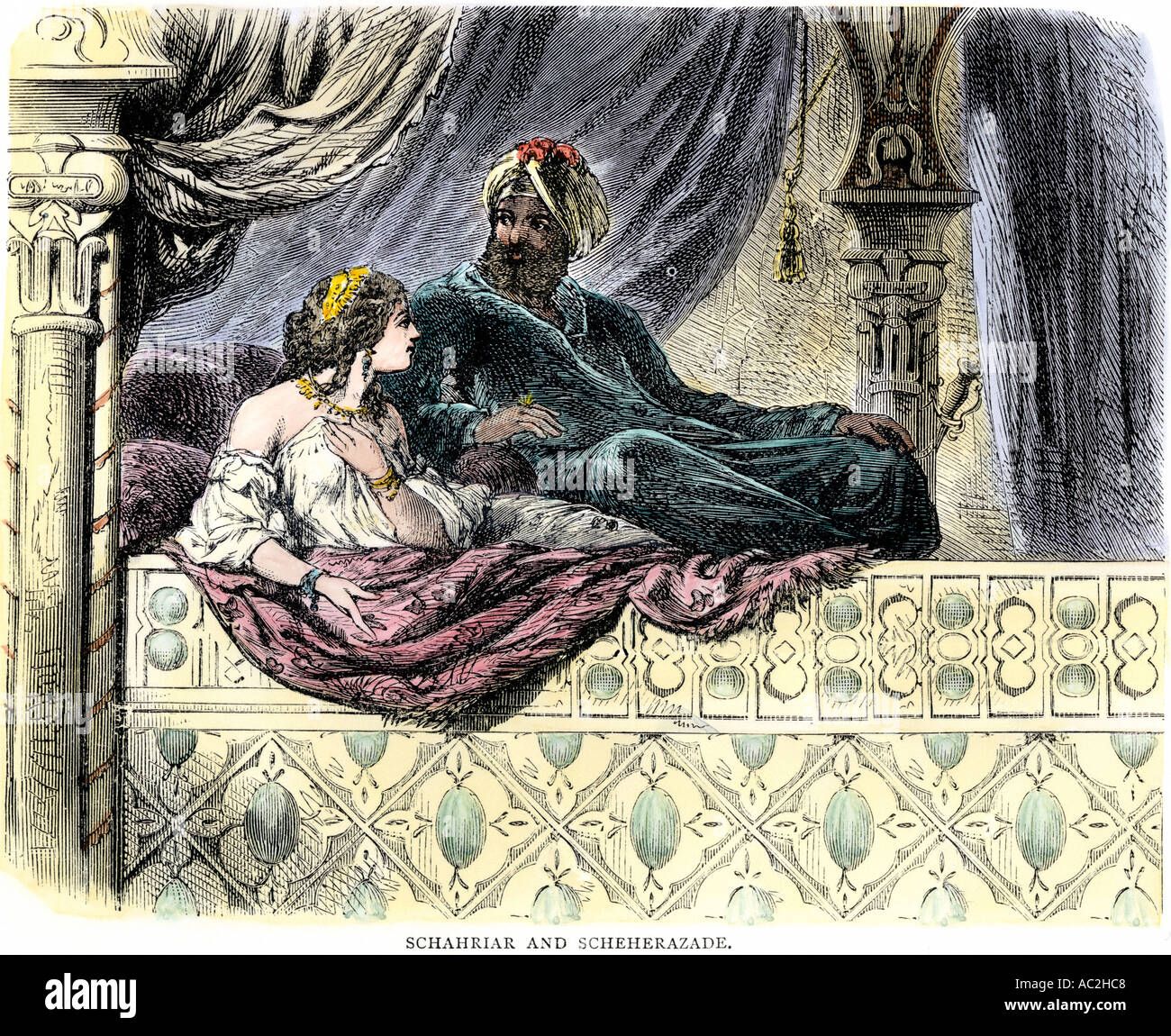
Scheherazade: When the Name Is the Story Itself

There is a simple question that can open doors we never knew existed: Why does Eastern tradition name its characters after what they mean?
This is not an oversight. It is not coincidence. It is a method — and understanding this method is the real key to entering One Thousand and One Nights, not through the back door of entertainment, but through the front door of thought.
Before we reach Scheherazade, we must first understand the law she operates by.
The Question Nobody Asks
There is a simple question that can open doors we never knew existed: Why does Eastern tradition name its characters after what they mean?
This is not an oversight. It is not coincidence. It is a method — and understanding this method is the real key to entering One Thousand and One Nights, not through the back door of entertainment, but through the front door of thought.
Before we reach Scheherazade, we must first understand the law she operates by.
Language Hides in Order to Speak
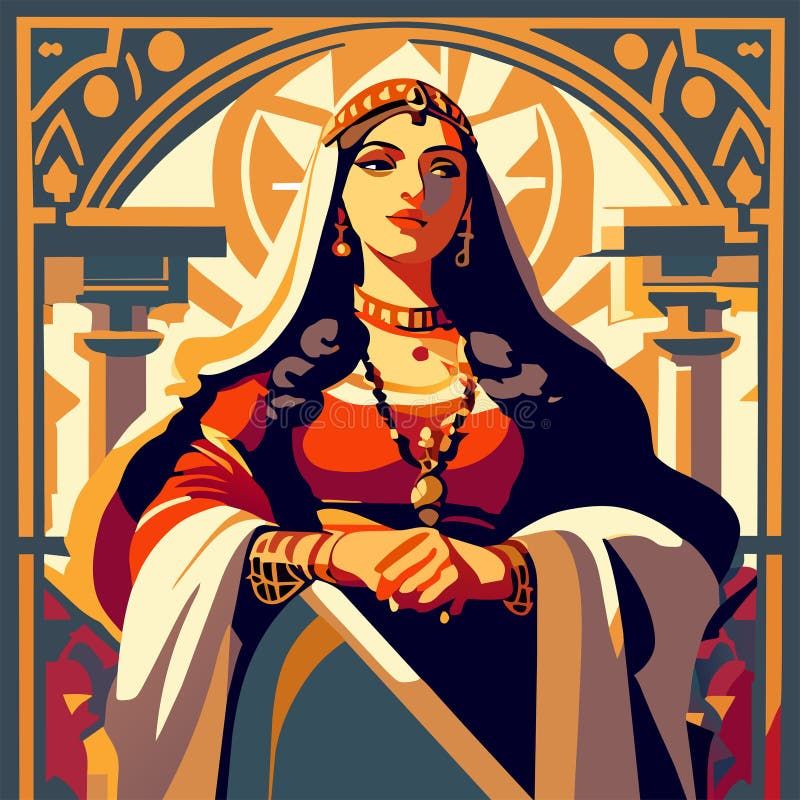
In Eastern — and particularly Arab — tradition, a name is never merely an identifier. It is a functional definition compressed into two syllables, a silent lesson encoded in sound. The named carries within their name their entire program.
Perhaps the most illuminating example comes from the ancient narratives of creation. The word “Adam” (آدم) traces back in Arabic to “al-adeem” (الأديم) — the surface of the earth, the soil — and the same root refers to the deep reddish-brown color that is, simply, the color of dirt. “Eve” — “Hawwa” (حواء) — derives from the root “hayya” (حيي), meaning life itself. And what is truly striking: the word “hayya” (حية), meaning serpent, shares that exact same root. Three names, one root, three roles in a single ancient story.
The Arabic word “ustura” (أسطورة), often translated as “myth,” does not carry the Western connotation of the impossible or the fabulous. It derives from “satar” (سطر) — a line of writing — so an ustura is literally what was written in the lines (ما كُتب في السطور). This neither confirms nor denies whether something happened; it only tells you the source of the information: a written account, recorded to be preserved. The deeper meaning remains hidden, and what it implies is left for the listener or reader, each in their own time.
So these three names may carry, together, a description of the basic structure of human existence: the human is made of earth, life is the driving force, and temptation arose from the very same source as life. The name here is not purely a religious marker — it is also a philosophy compressed into sound. And however much the three Abrahamic religions that transmitted this story have treated it as theology, the names of its characters continue to overflow with a human and philosophical resonance that transcends any single era.
This is precisely what Adonis means when he writes in *Al-Thabit wa al-Mutahawwil* (The Fixed and the Changing): “The poetic Arab vision cannot be understood in isolation from the religious vision — the phenomenon of poetry is part of the entire Arab civilizational whole, explained not by poetry itself but by the civilizational structure of that whole.” [1]
The boundaries between the religious, the literary, and the philosophical in Arab heritage are not clean dividing lines. They are overlapping layers, each permeating the other — and the name is precisely the point where all these layers intersect.
The Literary Mask: When the Fox Speaks of the King
Before Arab tradition developed this method of naming, it developed an equally important parallel method: the mask.Its two most famous examples in the classical Arab canon are Kalila wa Dimna by Abdullah ibn al-Muqaffa, and the animal fables of al-Jahiz.
Ibn al-Muqaffa — a Persian-born translator who mastered Arabic so completely that his prose became a benchmark for the language — did not simply transfer Kalila wa Dimna from the Indian tradition of Panchatantra in faithful translation. He transformed it into a political and moral mirror, carefully aimed at the early Abbasid caliphs. The messages he could not deliver directly to rulers who held men’s lives in their hands — he delivered through the mouth of a fox, the beak of a crow, the wisdom of a lion. The intelligent reader understood; the casual reader was entertained; the ruler could grasp it if he chose to, or ignore it if he preferred. That double register was not a limitation — it was the genius of an author surrounded by the sword.
Al-Jahiz — Amr ibn Bahr al-Basri, the most deeply rooted and intellectually free of Arab theologians — did the same when he wrote at length through animal voices. He was not pursuing a literary hobby. He was dismantling a social, political, and sectarian system using tools that could not earn their owner a caliph’s punishment, because one does not file a complaint against animals.
This is what Taha Hussein argued by a different road, when he confronted the literary tradition with the sharp instrument of methodological doubt: “When we approach the study of Arab literature and its history, we must forget our nationality and all that defines it, and must not be bound by anything or submit to anything except the methods of correct scientific inquiry.” [2]
When we apply that method to what is before us, we arrive at this: classical Arab literature was, in many of its forms, a literature of encoded layers — apparent to those who read, hidden to those who understand.
The West Did It Too
This method was not exclusive to the East. In nineteenth-century Europe, Jacob and Wilhelm Grimm did something remarkably similar to what Ibn al-Muqaffa had done a thousand years before them: they collected folk tales circulating orally in the German countryside and wrote them down — but they did not transcribe them as they found them. They refined and reshaped them to carry specific moral and pedagogical values, stories that read to a child as adventure, and to a reflective adult as a lesson in identity, society, fear, and obedience.
Consider “Little Red Riding Hood” — the story that Westerners assume is purely Western, while Eastern readers barely recognize it as theirs. Scholars have traced versions of it through French, Italian, Chinese, and Indian folklore, among others. In every version, the details of the wolf and the girl shift to mirror the local anxieties of that particular society. No one knows where it was born or who invented it — because it was never truly invented. It grew the way language itself grows: a shared human inheritance that belongs to no one.
This reveals something important: the literary mask and the meaning hidden inside a story are not Eastern specialties — they are human necessities. Whenever direct speech became dangerous, the story opened a window where the door had been shut. The only difference is that the East encoded its message in the name itself, while the West concealed it in symbols and detail. Two different roads to the same destination.
Scheherazade: When the Name Is the Program
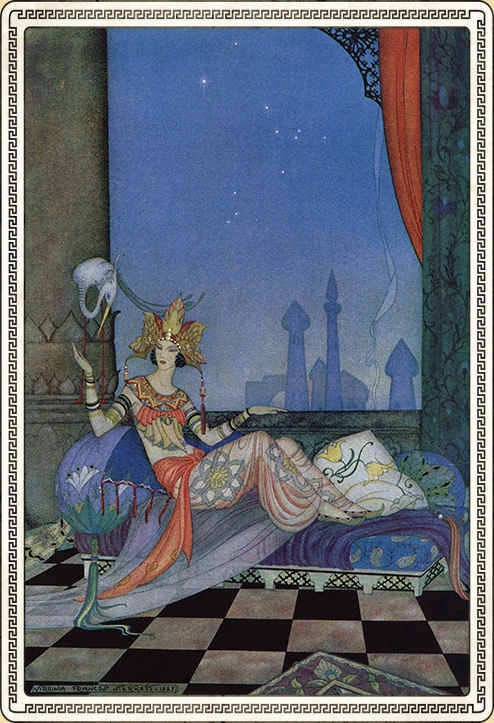
Now we can return to Scheherazade with different eyes.
Her name is Persian in origin. Its most accepted meaning is “daughter of the city” (شهرزاد — Shahr: city, zad: born of) — or alternately, “of noble lineage.” Either way, she is urban: a product of civilization, of accumulated writing and thought. Her counterpart, King Shahryar — the executioner who kills his new bride every dawn — carries a name meaning *”holder of the city”* or “lord of the kingdom” (شهريار — Shahr: city, yar: keeper).
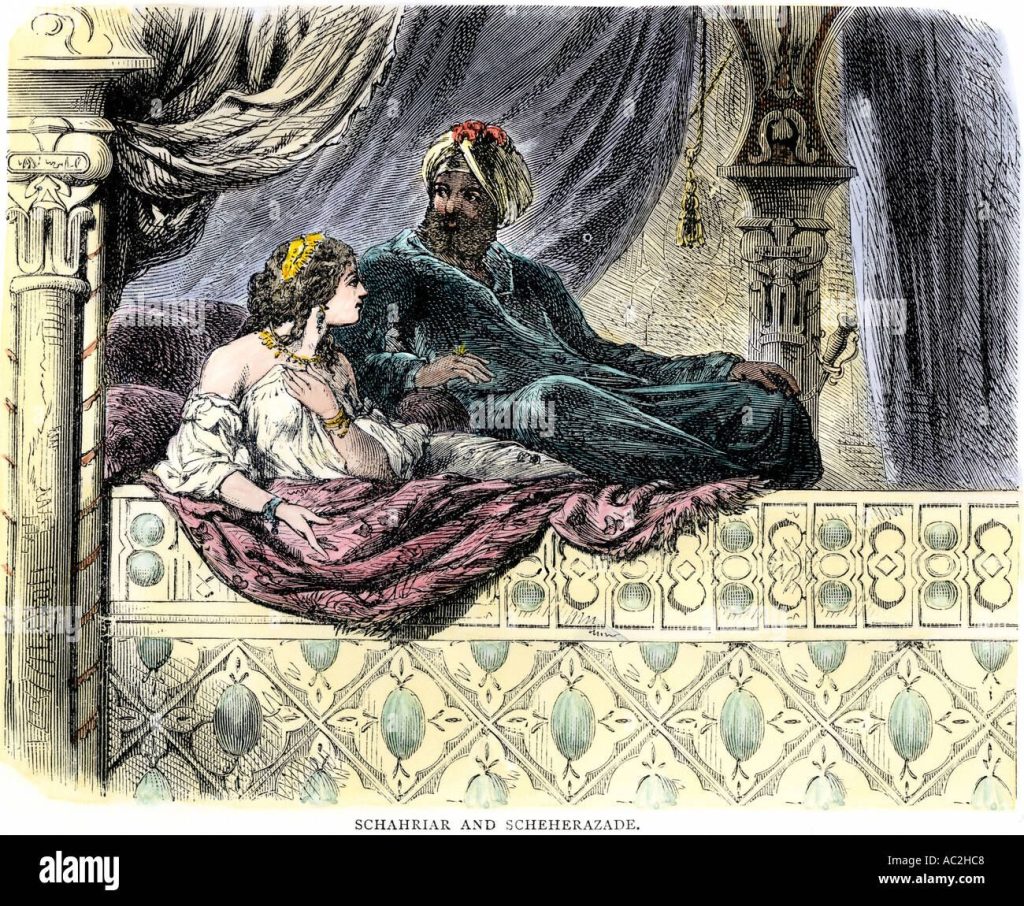
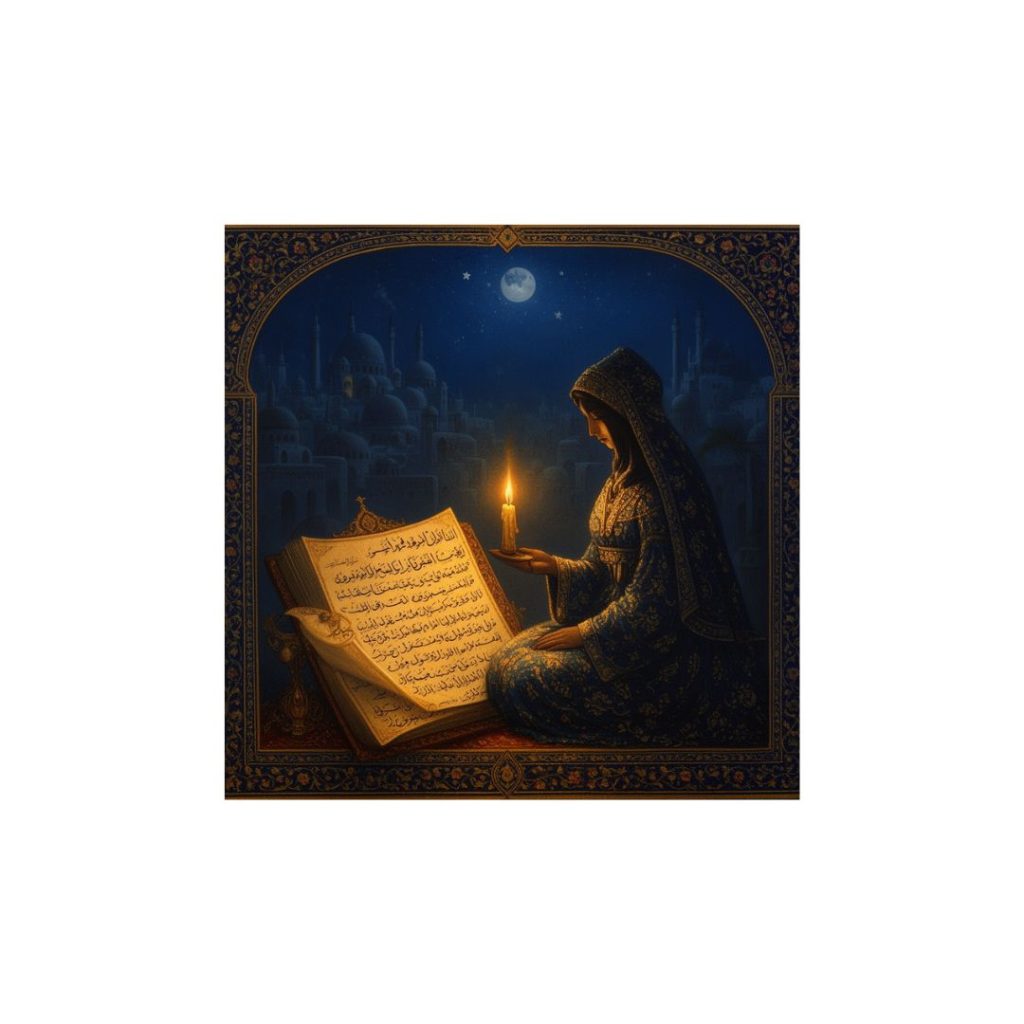
Sit with this for a moment: the Daughter of the City stands before the Holder of the City — not with a sword, not with revolt, not with screaming. She stands with an unfinished story.
This is not an amusing detail. This is the political idea hidden at the very heart of the book.
Who truly makes a city? The one who holds it by force, or the one who inhabits it, builds it, and carries its memory? Shahryar possesses power, but Scheherazade possesses knowledge — the narrative, the civilizational accumulation that gives the city its meaning in the first place. What the book does across one thousand and one nights is prove, slowly and with extraordinary calm, that power without wisdom cannot govern a city, and that the sword without the word builds no civilization.
Borges wrote in one of his lectures on One Thousand and One Nights: “The book is so vast that it is not necessary to have read it — it has become part of human memory itself.” [3]
What Borges means by “vastness” is not merely page count. He means that the book operates beyond its physical boundaries — it seeps into the collective unconscious and reshapes the way we think about the relationship between ruler and ruled, between power and knowledge, even when we have no idea we are being shaped by it.
One Thousand and One Nights: A Book with No Author
There is a strange paradox in this book’s history: no one knows who wrote it.This is not a weakness in its documentation. It is part of its identity.
The origins trace back to a Persian collection called Hazar Afsaneh — “A Thousand Tales” — believed to have been compiled as early as the third and fourth centuries CE, long before Islam. It then passed into Arabic in Abbasid Baghdad around the ninth century CE, gathering along the way stories from India, Egypt, Iraq, and the Levant — each culture adding its own layer, each layer reflecting the fears and desires of its era. The earliest complete Arabic manuscript we possess dates to the fourteenth century, though most scholars agree the roots go far deeper.
Then the West discovered the book in 1704 through the French Orientalist Antoine Galland, who did not so much translate it as reinvent it. Stories such as Ali Baba and Sinbad — which many assume are authentically Arab — were added by Galland himself, or heard verbally and transcribed without full disclosure. Scholars later noted that the very ending of One Thousand and One Nights — the scene in which the king pardons Scheherazade — was also Galland’s invention, absent from the original manuscripts. [4]
This alone reveals something about the Western mind when it encounters Eastern literature: there must be a clear happy ending, a beginning, middle, and conclusion in the Aristotelian sense. But the original Scheherazade — we do not know how her story ends. And perhaps that is the more honest version, because she who narrates life cannot have her story end with a full stop.
Adonis writes, diagnosing the traditional mind: “What draws us in our heritage is precisely the work connected to the path of transformation — the very work that our ancestors in the past rejected in one way or another, and which remains to this day outside the basic structure of Arab society.” [5]
This is exactly what happened with One Thousand and One Nights: the radical social critique hidden beneath the surface of entertainment was frequently dismissed by traditional elites, classified by conservatives as “literature of the common crowd” rather than elevated letters — while it actually contained, in its depths, a bold dismantling of the architecture of power, and a celebration of the word in the face of force.
The Word as the Weapon of Those Who Have None
To understand why Scheherazade, Kalila wa Dimna, al-Jahiz, and others like them turned to the literary mask, symbol, and ustura, we must remember that they were speaking in eras when a dissenting opinion could cost its holder their head.Direct political speech was a luxury available only to those protected by their own power. The thoughtful writer, the translator, the careful intellectual — turned instead to what Scheherazade does every night: say the truth wrapped in a story, and leave the listener free to draw whatever conclusion they can bear.
This is why Scheherazade always begins her story in the middle of the night and cuts it at dawn — not because she grows tired, but because dawn is the hour of judgment, the hour when Shahryar carries out his executions. The unfinished story is her guarantee of survival. Curiosity is the prison in which the Daughter of the City holds the Holder of the City captive.
And the weapon is never drawn once and then set down. Scheherazade does not tell one story — she tells stories within stories within stories. This multiplication is not repetition; it is intensification. She builds a parallel world as large as the real one, placing inside it models of every ruler and every ruled, every betrayal and every loyalty, and leaves Shahryar to see himself in the mirrors without knowing he is looking at them.
When a Story Is Translated, Its Meaning Changes
This is what the West failed to grasp when it read One Thousand and One Nights.
Galland’s French translation, and the English translations that followed, attended to the stories and neglected the frame. They transferred the tales and erased the structure. They saw Scheherazade as a teller of charming Eastern fables and never asked: why is she telling them? For whom? What does she gain and lose with each night?
Borges wrote elsewhere: “When you read One Thousand and One Nights you accept Islam, you accept stories woven by generations as if from the pen of a single writer — or more precisely, as if they had no author at all.” [6]
This observation is sharp, but it needs one clarification: “no author” does not mean spontaneous or random. It means many voices accumulated and intertwined until the whole became greater than its parts. Each voice added a layer carrying its own concerns, its own politics, its own philosophy. And Scheherazade is the vessel that held all these layers and gave them a name, and a voice.
What was lost in translation was not words — it was function. Translating “Scheherazade” from the Arabic preserves the sound and loses the meaning, just as translating “ustura” into “myth” transforms it from “what was written in lines” into “what is not believed” — from a documented account into a questioned fable.
What Scheherazade Left Behind
You may ask: what is the use of all this today?
The use is that we live in a world where the West produces thousands of hours of content daily, while the Arab world ends up consuming that content as the default standard — while its own heritage, embedded with resistance and political intelligence and encoded wisdom, sits on an academic shelf, forgotten or filed away under harmless entertainment.
Scheherazade did not invent the story to entertain. She invented the unfinished night to survive. And the civilization that produced her knew something few are willing to say plainly today: narrative is power. Whoever holds the story holds the truth.
In a world where algorithms construct the narrative and determine what is seen and what is hidden — where certain cultures control the frames through which people think — we need Scheherazade more than we realize. Not as a character from the past, but as a method for the present: say the truth inside a story, choose the right moment to cut it, and trust that curiosity is stronger than the sword.
Adonis wrote: “Heritage is not what makes you — it is what you make. Heritage is not transmitted; it is created.” [7]
And perhaps this is what Scheherazade does each night: not transmit a heritage, but create it anew — breathing into it exactly what her era needs. And exactly what we need, in ours.
References & Notes
1. Adonis (Ali Ahmad Said Esber, b. 1930) — Syrian-Lebanese poet and literary critic, widely considered one of the most influential Arab intellectuals of the twentieth century.
Al-Thabit wa al-Mutahawwil (The Fixed and the Changing: Research into Creativity and Imitation among the Arabs), Vol. I, Dar al-Awda, Beirut.
2. Taha Hussein (1889–1973) — Egyptian writer and intellectual, known as the “Dean of Arabic Literature.” His 1926 book Fi al-Shi’r al-Jahili (On Pre-Islamic Poetry) caused a major controversy for applying Western scientific methodology to the Arab literary canon.
Fi al-Shi’r al-Jahili, Egyptian National Library Press, 1926, p. 393.
3. Jorge Luis Borges (1899–1986) — Argentine writer and poet, one of the most influential literary figures of the twentieth century. His lecture on One Thousand and One Nights appears in Seven Nights (1977), translated by Eliot Weinberger, Faber and Faber, 1986.
4. Antoine Galland (1646–1715) — French Orientalist and the first European translator of One Thousand and One Nights (1704–1717). His translation added several stories absent from the original manuscripts. See the critical edition by Muhsin Mahdi, Alf Layla wa Layla, Brill, Leiden, 1984, for a scholarly account of which elements are authentic and which were introduced by Galland.
5. Adonis, Al-Thabit wa al-Mutahawwil, Vol. I, ibid.
6. Borges, Seven Nights, ibid.
7. Adonis, Al-Thabit wa al-Mutahawwil, Vol. III: The Shock of Modernity, ibid.
8. Brothers Grimm (Jacob 1785–1863, Wilhelm 1786–1859) — German scholars who collected and published European folk tales in Children’s and Household Tales (1812). On the cross-cultural distribution of the Little Red Riding Hood tale, see Jack Zipes, The Trials and Tribulations of Little Red Riding Hood, Routledge, 1983, which traces versions across European, Chinese, and other oral traditions.