Seven Decades in a Single Line

A 67-year-old language still processes your ATM transactions today. A corporation built its fortune on being the only one who truly understood it. Then one morning, a program announced it could read what only specialists once could. This was not an ordinary tech story — it was a moment when the question of who owns knowledge, and who sells it, quietly shifted.
The Story of the Old Code That Refused to Die… Until Now
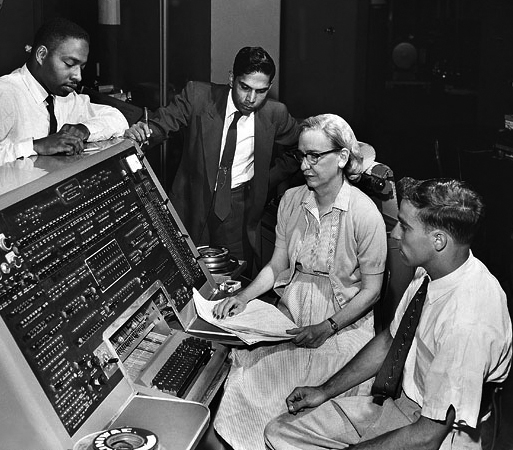
It was 1959 when a woman named Grace Hopper sat before a computer the size of an entire room and began writing the rules of a new programming language. She had no idea that what she was writing would still be alive 67 years later — running banks, governments, and airports across the earth, processing the ATM transactions that millions tap through daily without ever knowing its name. She called that language COBOL. A giant corporation called IBM built an empire on it that lasted for decades. Then came Monday, the twenty-third of February 2026, to announce that something had changed.

The Code That Would Not Die
To understand what happened, we must first understand the nature of this ancient code and why it held its ground across all these decades.
Nobody learns COBOL today. University curricula do not teach it. Young programmers know it only by name. Yet the world’s major banks, government institutions, and insurance companies still run on millions of lines written in it. A reliable estimate suggests that roughly 95% of ATM transactions in the United States pass through this language before the money reaches your account. The same is true of banks across wide regions of the world.
The problem is that the programmers who understand this language are shrinking in number every year — through retirement, through time. And this scarcity was precisely the foundation on which IBM built a significant part of its dominance. The company held the historical expertise and specialized teams capable of maintaining and modernizing these aging systems. Work that could take months or years, costing millions of dollars, with IBM as virtually the only vendor able to deliver it with the required guarantees.
What Anthropic Announced
On that Monday, the American artificial intelligence company Anthropic published a post on its blog describing a new capability in its tool Claude Code. The tool can now read thousands of lines of legacy code written in COBOL, map the dependencies and relationships between its components, document how it works in detail, and identify its fragile and high-risk sections — all in a fraction of the time human specialists would require.
What used to demand a team of consultants working for months can now have its most time-consuming phase completed in weeks. Not necessarily a full translation of the code in one pass, but the part that consumed the most time and money: understanding it, mapping it, and documenting its internal logic.
Markets Do Not Wait for Verification
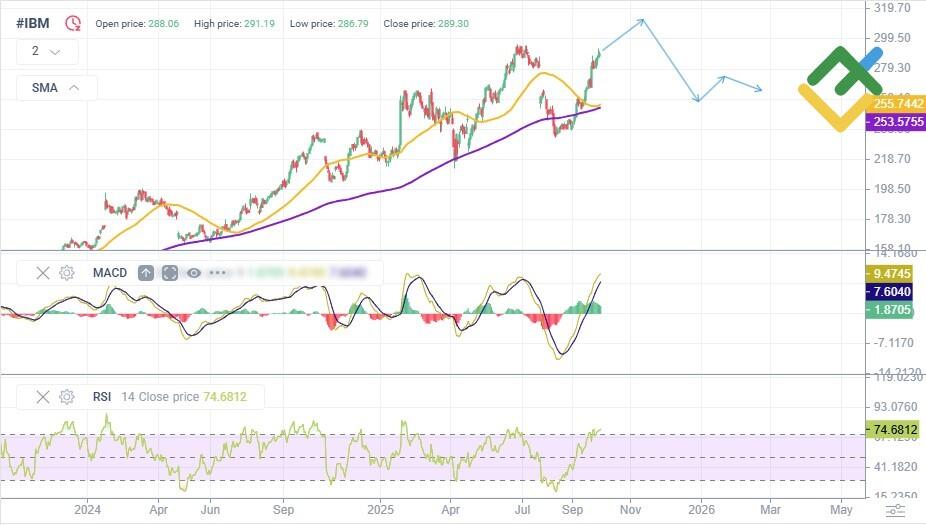
The market’s reaction was immediate and brutal. IBM shares collapsed 13.2% in a single trading session, wiping out more than 31 billion dollars of market value in one day — the company’s largest single-day loss since October 2000. Over the entire month of February, the stock fell 27%, placing it on course for its worst monthly performance since at least 1968. IBM was not alone; major technology consulting firms that operate on the same model saw sharp declines the same day.
Worth noting: this was not the first time this month. The week before, Anthropic had released a security feature in the same tool and sent shares of major cybersecurity companies into a sharp drop. The pattern had become recognizable — one announced capability, billions erased in hours.
IBM Did Not Stay Silent
The company responded with measured confidence. Its executives said that translating COBOL code is the easy part, and that the real challenge lies in redesigning data architecture, ensuring the integrity of large-scale financial transactions, and managing performance at an institutional scale that tolerates no margin for error. They pointed to their own COBOL modernization tool, launched in 2023, with an established base among actual clients. Some analysts agreed and said the market’s reaction was exaggerated — that real execution still lives in the hands of companies with deep institutional experience. But markets do not always listen to analysts.
Claude Code: What the News Does Not Say
Claude Code is not simply a tool for reading old code. It is a developer-focused interface built on Anthropic’s Claude — an AI system designed to work directly inside the environments where engineers and programmers operate. But what has drawn increasing attention in recent months goes well beyond programming.
Claude — in its general form — is considered by a growing number of specialists and content-focused reviewers to be among the most capable tools available for processing, editing, and restructuring long and complex texts while preserving the original author’s voice. This distinction matters in a landscape where most content AI tools tend to produce writing that sounds standardized and tonally uniform. There are technical reasons for this related to how the model was trained and the size of the context window it can process at once — though head-to-head comparisons between AI tools remain subjective and depend heavily on the nature of the task.
Not the End of IBM — The End of a Model
The larger picture suggests that what is happening is not a battle between one AI tool and one company. What is happening is that artificial intelligence has begun to challenge the value of scarcity itself. The great technology empires historically built their dominance on holding rare knowledge that no one else possessed. When that knowledge becomes available at a monthly subscription price, the entire equation shifts.
COBOL will continue running deep inside banking systems for decades to come. IBM will remain a major corporation. But the model it was built on — *I alone understand what no one else can, and I will charge accordingly for that rarity* — that model may have genuinely begun counting its days.
Grace Hopper Did Not Know
The circle brings us back to where we began. Grace Hopper wrote a language to solve the problems of her present, not knowing she was writing the language of the future. IBM built its empire on maintaining the past, not knowing that a day would come when a program could read that past, understand it, and document it in weeks.
There is no day in technical history when an era ends precisely on schedule. But there are certain mornings when the markets look at the numbers and say: something has genuinely changed. Monday, February 23, 2026 may have been one of those mornings.
Glossary
Anthropic
An American artificial intelligence company founded in 2021, headquartered in San Francisco, focused on AI safety research and development.
Claude Code
A developer-focused interface built on Anthropic’s Claude AI, designed for direct interaction with programming environments and codebases.
COBOL — Common Business-Oriented Language
A programming language developed in 1959, still in active use today inside banking, government, and insurance systems worldwide.
IBM — International Business Machines
An American technology corporation founded in 1911, specializing in computing, enterprise services, and technical consulting.
Accenture
A global technology and business consulting firm, among the largest providers of legacy system modernization services.
Cognizant
An American technology consulting firm specializing in enterprise system development and maintenance.
References
1. IBM stock movement reports, Bloomberg and Reuters, February 23, 2026.2. Anthropic official blog — Claude Code COBOL modernization announcement, February 2026.3. Analyst coverage of AI-driven market disruption, February 2026.