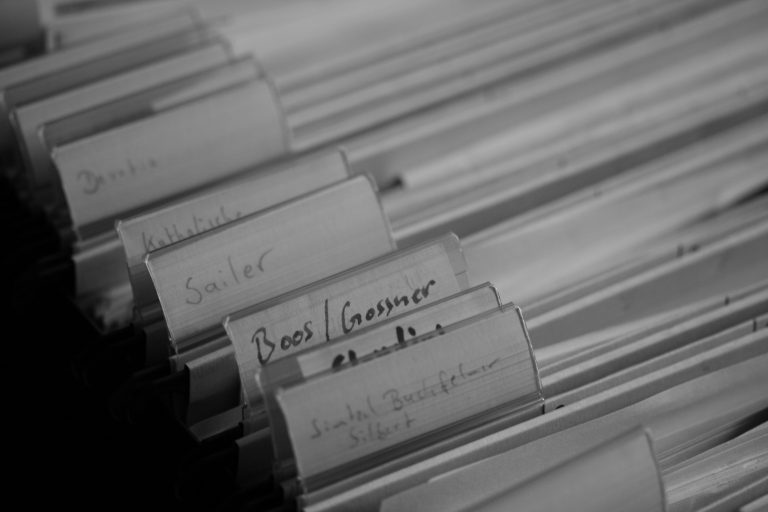
Yoko Ogawa | Japanese Calm in Words

Yoko Ogawa doesn’t write to describe — she writes to restore the reader’s bond with vanishing things. A read on the literature of calm and mono no aware.
I can’t quite remember what made me pick up The Memory Police from the shelf. Maybe it was the cover — a quiet grey with type that seemed to recede rather than shout. Or maybe it was the name: Yōko Ogawa. A name that seems to carry a silence inside it.
I read the novel in two nights. I didn’t cry. But I sat for a long time afterward staring at the empty space in front of me. That, I think, is what great Japanese literature wants from you: not to feel the story, but to become part of it.
A Writer Between Two Disappearances
Yōko Ogawa was born in 1962 in Okayama, Japan, and studied literature at Waseda University in Tokyo. She married, left her job as a medical university secretary, and wrote while her husband was at work — a common arrangement for her generation. When her debut novel won a major Japanese literary prize in 1988, her husband learned about her writing for the first time. She hadn’t intentionally hidden it. She had simply been living inside the writing the way one lives inside a dream: with a quiet interior that requires no announcement.
Since then, she has published over fifty works of fiction and nonfiction and won virtually every major Japanese literary award, including the Akutagawa Prize and the Tanizaki Prize. Yet the world largely didn’t know her until 2019, when the English translation of The Memory Police appeared — a novel she had written in 1994. Twenty-five years between writing and reaching. That delay itself seems drawn from inside her novel: things disappear slowly, and those who remember them are few.
“I am not someone who invents stories — I am a medium. I decipher what is buried in the world like fossils and turn it into words.” — Yōko Ogawa
Mono no Aware — The Beauty of What Fades
To understand Ogawa’s writing, it helps to approach a Japanese concept: mono no aware (物の哀れ). Its literal translation is something like “the gentle sadness of things” or “sensitivity to the transience of existence” — an aesthetic sensibility describing the bittersweet sensation of encountering beauty in the process of fading. Cherry blossoms falling. A childhood passing. Saying goodbye to someone without knowing it is the last time.
Ogawa doesn’t write about this concept — she writes from inside it. In The Memory Police, things vanish from the island gradually: birds, ribbons, roses, perfume. And as each thing disappears, the islanders cease to remember it — not through force, but through quiet acquiescence. That is Ogawa’s real terror: not the loss itself, but the indifference that follows. Because it resembles, more than a little, what the digital age is doing to our attention.
Unfinished stories hold a particular pull — (See our article: The Attraction of Unfinished Stories). But in Ogawa’s world, the gravitational pull reverses: stories don’t remain unfinished — they disappear before they can be told.
The Memory Police — A Novel Written Before Its Time
Yōko Ogawa reads from The Memory Police in Japanese and speaks about the novel | The Booker Prize Official Channel
On an unnamed island off an unnamed coast, objects are disappearing — hats, ribbons, birds, roses — and with each disappearance, the islanders forget. The narrator, a novelist, hides her editor in a secret room beneath her floorboards because he retains the memory of things already lost. When novels themselves disappear from the island, she continues typing — as though the act of writing is the last form of resistance available.
Ogawa wrote it in 1994 as a tribute to Anne Frank’s diary — not as a political statement. But when the English translation appeared in 2019, amid rising authoritarianism and fake news, it read as though written yesterday. When Ogawa reread it herself, she said: “I thought the world would move further away from the book over time — but readers are finding themselves closer to it than I ever expected.”
The novel won the American Book Award and was shortlisted for the International Booker Prize in 2020 — all for a work written a quarter century earlier. Real literature doesn’t live in the time of its writing. It lives in the times of its readers.
Writing as Ritual — Hand, Paper, Pulse
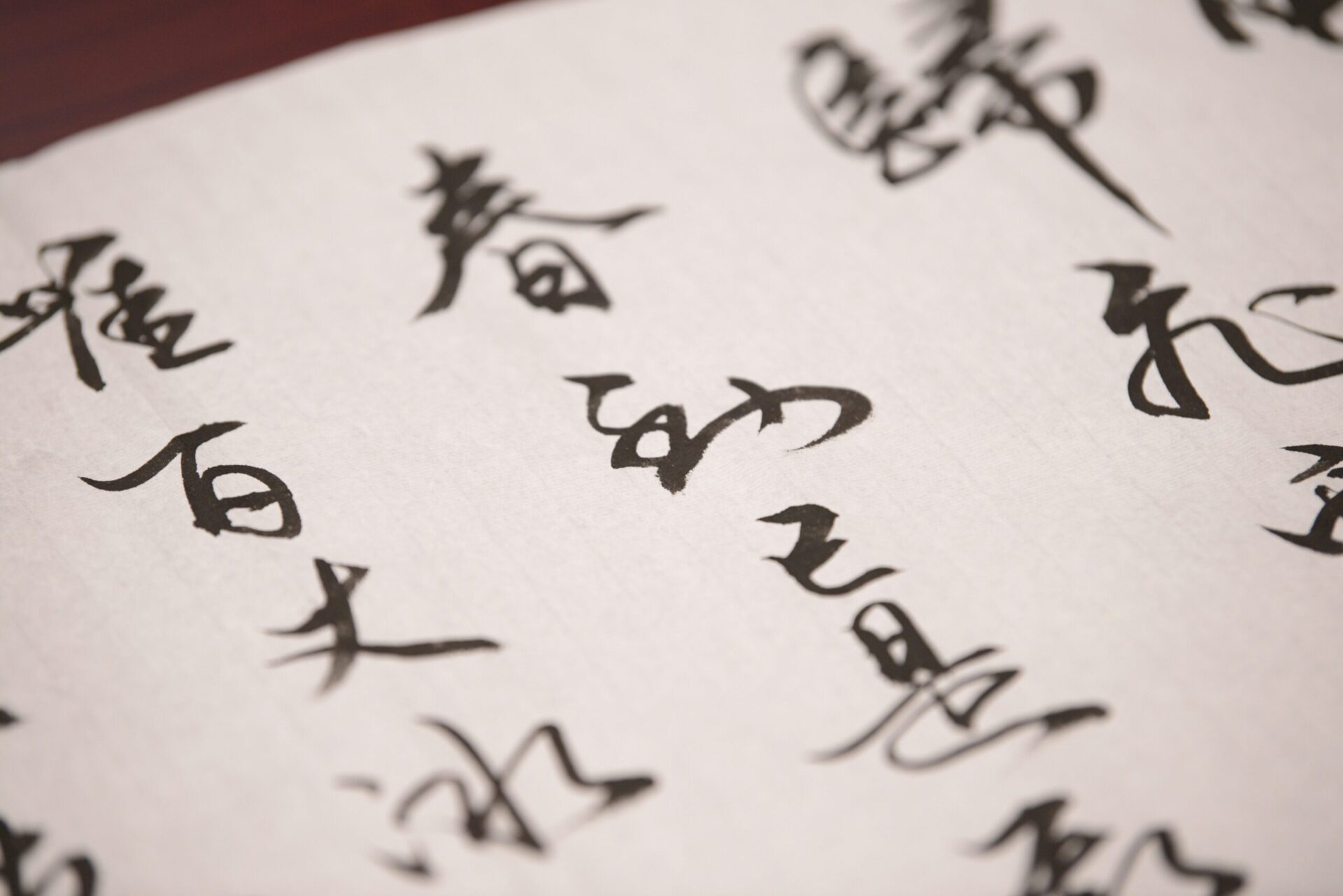
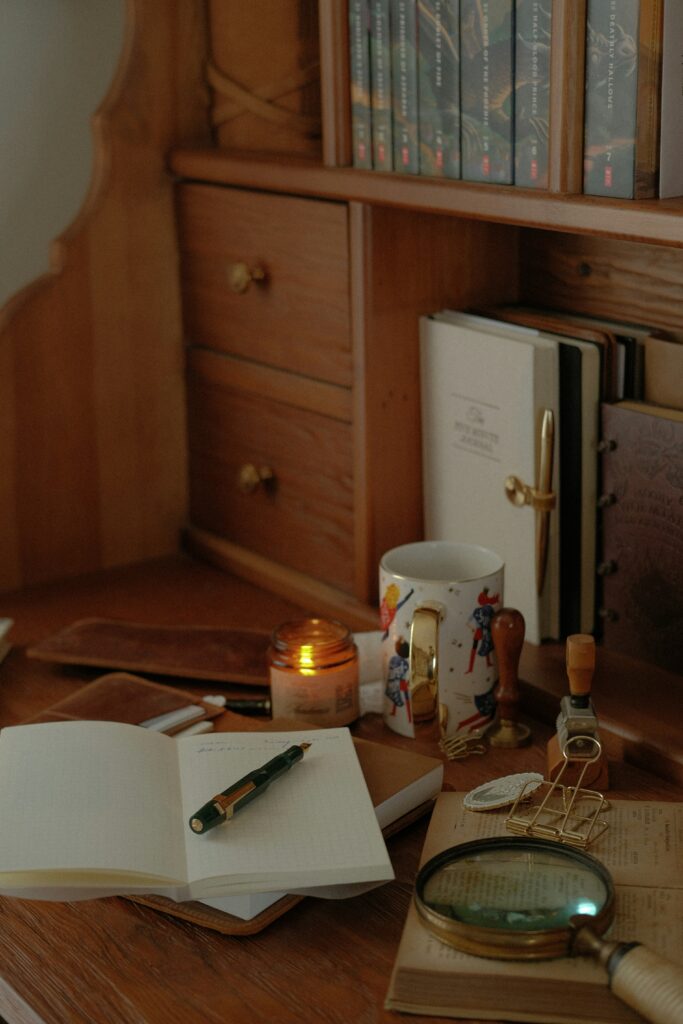
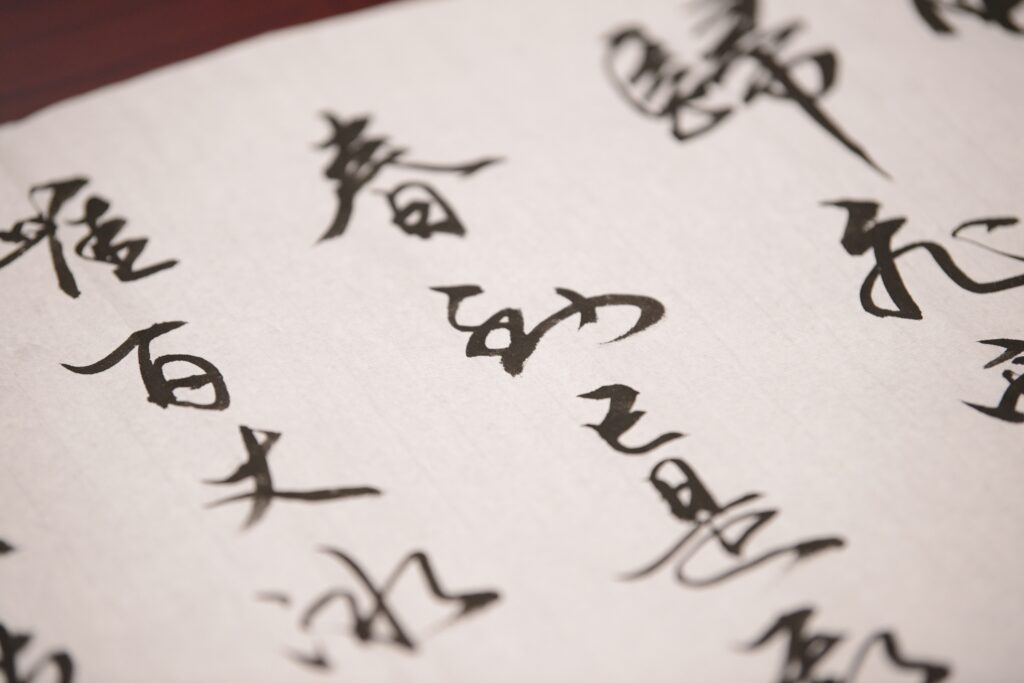
What sets Ogawa apart from generations of digital writers is her insistence on writing by hand. She composes her first drafts with pen on paper — believing that something passes from the pulse of the wrist to the page that a keyboard cannot transmit. Her sentences are shaped slowly and precisely, the way a bowl of tea is prepared in the Japanese ritual of Chanoyu (茶の湯): no hurry, no unnecessary ornament, and the full meaning in the small details.
Her English translator, Stephen Snyder, has said of her style: “There is a naturalness to what she writes so it never feels forced — her narrative seems to be flowing from a source that’s hard to identify.” That is perhaps the hardest thing to say about a writer: that she doesn’t appear to be writing at all, but rather that the writing passes through her.
Her economy with words is partly inspired by Japanese silent cinema — she believes that expression through the eye or a gesture is sometimes more truthful than long speeches. A single quiet sentence can carry what paragraphs cannot. And that’s what makes her books accessible to any reader, regardless of their familiarity with Japanese literature: she speaks in the language of the common human, not the specialist.
Mathematics and Memory — A Mind Working in the Logic of Poetry
There is an unexpected dimension to Ogawa: her passion for mathematics. Her novel The Housekeeper and the Professor centres on a mathematics professor whose short-term memory spans only eighty minutes — beginning each day from zero with his housekeeper and her son, and yet building between them a complete and warm world within those eighty minutes.
Mathematics for Ogawa is not equations — it is a metaphor for beautiful order within chaos. Numbers do not lie, and mathematical patterns reveal beauty the passing eye cannot see. This is precisely what her writing does with the small details of everyday life: it grants them the precision of an equation and the wonder of a dream simultaneously.
In a world drowning in digital noise, her style stands as a counter-question: can a single carefully chosen word do what a thousand rushed ones cannot? Her books answer yes — with a simplicity that is close to miraculous. This connects directly to questions we’ve explored about art in the age of AI generation — (See our article: The Third Simulation: Art in the Age of Generative AI). When machines produce language at scale, the handwritten sentence becomes an act of resistance.
What Japanese Calm Teaches Us
I live in Paris — a city that believes noise is proof of life. Restaurants are loud, streets pulse, conversations collide with a directness that has no patience for the whisper. And in that context, reading Ogawa feels like meditation: a quiet voice that doesn’t raise itself because it doesn’t need to.
Zen philosophy says: attend to what is before you, now, with full attention. Ogawa translates this into literature: attend to the small detail — the shade of green in a Japanese forest, the sound of rain on glass, the texture of old paper. These details are not decoration — they are the meaning itself. And when you give them your full attention, you discover that something like happiness isn’t found in large events, but in the attention given to the small.
It’s said Ogawa carries in her memory more than forty names for shades of green visible in Japanese forests — names that have no direct equivalents in other languages. That’s not obsession. That’s what full attention means: seeing what others don’t because they don’t allow themselves enough time to look.
The Japanese calm in Ogawa’s writing is not the absence of noise — it is a deeper presence that requires silence to hear.
This is literature that cannot be read fast. It is read the way Ogawa writes it: one hand, one pen, and enough time to let the word settle before moving to the next.
If this piece drew you toward Japanese literature, you might find our essay on Mishima — Japan’s other great literary obsessive, working in an entirely different register — equally compelling: (See our article: Hundred Years of Mishima | Why Does the World Read Him More Today Than When He Was Alive?).
And if you work in translation and are drawn to the challenge of carrying a literary voice across culturally distant languages — Ogawa’s English translations offer a masterclass. We’ve explored this challenge in our essay on: (See our article: The Audience Decides | Cultural Adaptation in Translation).
References & Further Reading
- Yōko Ogawa — Wikipedia
- Stories of Memory and Loss — Nippon.com (Interview)
- Ogawa, Y. (2019). The Memory Police. Trans. Stephen Snyder. Pantheon Books.
- Ogawa, Y. (2009). The Housekeeper and the Professor. Trans. Stephen Snyder. Picador.
- Reading Guide: The Memory Police — The Booker Prize