
The Land of One Sun: The Philosophy of China’s Social System Through Time and Geography

A small incident with a Chinese client over WhatsApp leads to a philosophical reflection on how China unifies the lives of 1.5 billion people under one single clock.
Beijing Time Ticks in the Far West
A philosophical reading of the Chinese social model between centralization and diversity.
We begin with a small incident, one that seemed at first like a purely technical inconvenience, before it turned into a doorway onto a question far larger than a time difference between two cities.
We were coordinating with a Chinese client over WhatsApp, following up on a transcription project our team was running through the Magic Data platform. As with any daily dealing with clients in the Far East, we had grown used to calculating the time difference between us as six hours: China’s official time is GMT+8, Cairo’s is GMT+2. A simple calculation, repeated hundreds of times without ever raising a question in our mind. Yet the client would sometimes be slow to respond to messages we sent at what we assumed was his morning. We looked into it, and discovered that when we messaged him at what we thought was ten in the morning his time, he was, in fact, still asleep.
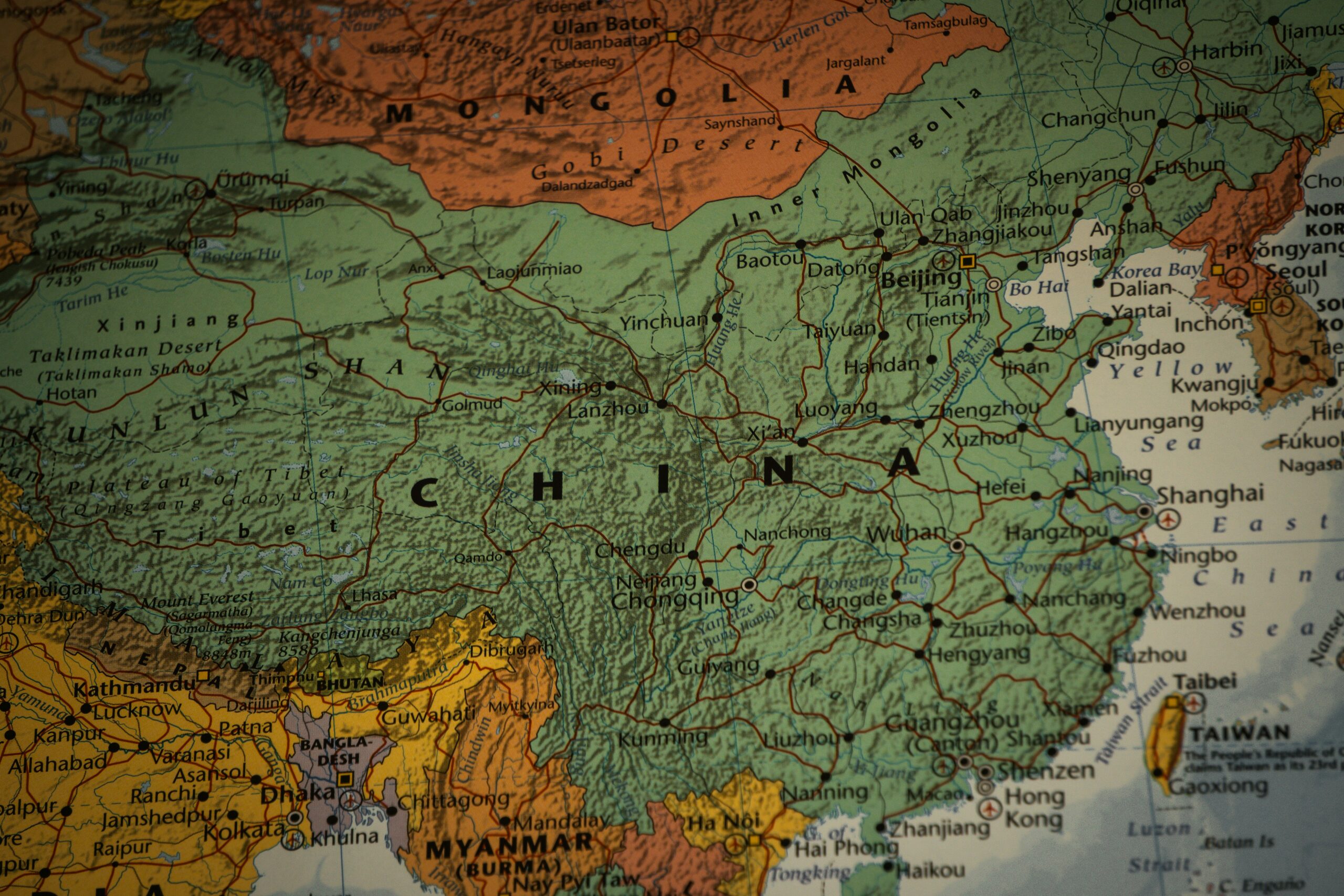
The gap was not in our arithmetic, but in a basic assumption we had gotten wrong: that “China time” was, in the astronomical sense, actually one single time. Digging a little deeper, we found that the geographic time difference between China’s easternmost and westernmost points spans nearly five full solar hours. And yet the entire country, from Shanghai in the east to Kashgar in the far west, officially observes one single clock: Beijing Time.
What made this discovery more striking to us is that, working with distributed teams across continents on transcription projects, we had grown used to treating time differences as a purely astronomical given, fixed and beyond debate: a given longitude implies a given hour, regardless of any other consideration. Through this small incident, we discovered that this assumption, true for most of the world, collapses entirely in China’s exceptional case, where political will overrides astronomical fact itself. That apparent contradiction, between what the sun says and what the state says, struck us as an ideal starting point for a deeper understanding of this society.
This is where the question shifted, in our mind, from technical to philosophical: how does a political system unify the daily life of a billion and a half people, different in ethnicity, geography, social standing, and faith, under one official sun, even when it rises over a genuinely different sky?
A Vast Geography, One Time: The Story of Beijing Time
Before 1949, China did not operate on a single time zone. Under the Republican era, the country was officially divided into five time zones, reflecting its enormous east-west span, in a manner not unlike other geographically vast nations such as the United States or Russia. The founding of the People’s Republic of China, however, brought a radically different decision: the elimination of this plurality, and the unification of the entire country under a single time, that of the capital, Beijing (GMT+8).
The decision was political as much as it was administrative. A single time zone implicitly means a single state, one with no room for regional distinction, not even down to the hour by which days are measured. The symbolism here mattered more than the practical convenience: one nation, under one sun, regardless of what astronomical physics might otherwise dictate.
When the Sun Rises at “Ten in the Morning”
The daily impact of this decision is most visible in the far west, particularly in the Xinjiang region, where the sun rises very early according to its actual geographic position, while the official clock reads ten in the morning or later. Residents there, especially those outside government employment, developed a practical, unofficial workaround: a parallel local time, sometimes called “Xinjiang Time,” by which markets and daily social appointments are run, while official institutions, schools, and trains remain strictly bound to Beijing Time.
This coexistence between social flexibility and legal rigidity is, in essence, a microcosm of what we will explore throughout this piece: how actual diversity can live alongside official unity, without either necessarily erasing the other.
It is also worth noting that this decision, despite its long history, has never been seriously debated at the official level, even as academic and administrative voices have repeatedly pointed to the economic and logistical costs of unifying time in this way, from delayed effective working hours in the west to genuine difficulties in scheduling transport and education. Yet political symbolism, it seems, has always won out over purely practical considerations, and that, in itself, is a telling indicator of this system’s priorities.
The Philosophical Roots of Chinese Society: Before Communism
To understand how peoples across such an enormous expanse came to accept living under one, at times strict, umbrella, we need to go back further than any modern political system: to the Confucian philosophical heritage that, for centuries, formed the backbone of Chinese social life.
Confucianism rests on a set of interlocking ideas, chief among them a deep respect for hierarchy in human relationships: son toward father, subject toward ruler, younger toward elder. Yet this respect is not mere raw submission; it is part of a broader ethical system aimed at achieving what is known as harmony, a delicate balance in which the interest of the collective takes precedence over individual desire, not to erase the individual, but to contain them within a larger whole that grants them meaning and a role.
The Mandate of Heaven: Legitimacy Conditioned on Order
Alongside this stands a pivotal philosophical-political concept: the Mandate of Heaven, under which a ruler’s legitimacy derives not from lineage alone, but from their actual ability to manage the affairs of the people, maintain order, and preserve the geographic unity of the empire. When a ruler fails at this, disasters and unrest were historically read as signs that this mandate had been withdrawn. In other words, unity and order were never a political luxury in classical Chinese thought; they were an existential condition for the legitimacy of any authority whatsoever.
We should not overlook a parallel philosophical current here, less present in direct political discourse yet no less influential in the collective psyche: Taoism, with its emphasis on harmony with the course of nature, and the idea of non-forceful intervention in the order of things. If Confucianism supplies the strict moral and social framework, Taoism offers a corresponding spiritual balance, one that allows the individual to make peace with their place within that framework without necessarily feeling like a mere prisoner of it. This balance between Confucian rigor and Taoist fluidity is one of the keys that partly explains how this society tolerated strict systems for successive centuries without collapsing from within.
Alongside these two currents, the Legalist school contributed another idea of no less importance: that state authority must stand above any familial, tribal, or local consideration, and that a single law, strict and applied to everyone without exception, is the sole guarantor of cohesion for a state of this scale. This blend of Confucian ethics, Taoist flexibility, and Legalist rigor formed, over long centuries, a complex intellectual structure capable of absorbing the internal tensions of a vast society without falling apart.
The Great Transformation: Between the Hammer and the Anvil of Communism
When communism arrived in China in the twentieth century, it did not encounter a blank philosophical slate. It found a deeply rooted Confucian heritage, embedded in collective consciousness for centuries. Rather than attempting to erase it entirely, Chinese communism, in a notably shrewd move, redeployed this heritage within its own project: the idea of obedience to the collective, and the priority of shared interest over individual interest, found a relatively easy path into the new socialist discourse, even as its vocabulary and symbols changed.
This is how what might be called the “new Chinese person” was born: a citizen serving the collective and the state, within a framework that essentially recycled an ancient concept of social harmony into a modern ideological mold.
The Challenge of Diversity Under One Umbrella
Yet this unifying project faced, and continues to face, a structural challenge that cannot easily be resolved: the enormous ethnic and religious diversity within the country’s borders. Alongside the Han majority, Muslim minorities, Tibetan Buddhists, and other ethnic groups live within the state, each with its own history, language, and beliefs. The challenge facing any centralized system here is how to craft an inclusive cultural and political identity, one that embraces this real diversity without erasing it, while also not allowing that diversity to unravel the very idea of the central state. This remains, to this day, a live and contested question, and we try here to present it as it is, without siding with any one party to the debate.
From another angle, this challenge can be seen as a continuation, with modern tools, of an old question posed by successive Chinese empires throughout history: how do you govern distant peripheries, culturally and religiously different from the center, without them actually breaking away? Historical solutions ranged from partial self-rule, to gradual cultural assimilation, to, at times, direct force. The contemporary system has inherited this broad spectrum of tools, and draws on a mix of them depending on context and region, a genuinely contested matter both inside and outside China that we cannot claim to resolve here, so much as we try to point to its deep historical roots.
The Economy as an Alternative Engine of National Revival: Pragmatism Before Ideology
By the late 1970s, China entered a pivotal phase of transformation, associated with the leadership of Deng Xiaoping, who steered the country toward what became known as “socialism with Chinese characteristics.” This was not a complete abandonment of the ideological framework, so much as a reordering of priorities: economic pragmatism first, and pure political slogans placed second.
The social contract gradually shifted from one built on abstract ideological loyalty, to one closer to realism: rapid economic growth and a tangible improvement in living standards, in exchange for broad popular acceptance of the existing system. Economic figures replaced slogans as the real measure of the system’s success or failure in the eyes of its citizens, a profound shift that deserves reflection in its own right, regardless of where one stands on its political particulars.
This shift was not merely a redistribution of resources, but a complete reformulation of the very source of legitimacy. Where legitimacy, in the first decades of communist rule, was drawn primarily from revolutionary discourse and class affiliation, it became, with the onset of economic opening, increasingly tied to the system’s ability to deliver tangible growth and lift hundreds of millions out of poverty within a relatively short span of decades, an economic achievement that is difficult to deny however one weighs its social and political costs. This helps explain why economic pragmatism gradually turned into something resembling an alternative ideology in its own right, no less powerful than any prior political slogan.
A Traveler’s View: Signs of Unity and Order in Everyday Life
When an outside observer visits a major Chinese city, what strikes them first is a comprehensive social discipline, one that is largely absent from many major cities elsewhere in the world: orderly queues at subway stations despite dense crowds, and remarkably advanced digital systems managing every detail of daily life, from electronic payments to public transport, with a smoothness that is hard to believe until experienced firsthand.
Here a striking, thought-provoking contradiction emerges: a Western visitor, steeped in a culture that sanctifies individual choice, may perceive this system as a set of constraints on personal freedom. A neutral observer, by contrast, might see the very same system as a formidable mechanism for preventing chaos in a society of a billion and a half people, one where the absence of such collective discipline would look less like a minor inconvenience and more like an inevitable logistical catastrophe.
The truth, as we see it, likely lies somewhere between these two poles: neither an absolute constraint, nor a perfect solution free of human cost, but a complex equation that deserves to be studied away from ready-made, prior judgments.
It is enough to consider the high-speed rail network linking cities hundreds of kilometers apart in record time, or the digital payment systems so woven into daily life that cash transactions have become closer to the exception than the rule in many major cities, to grasp the scale of infrastructure, both physical and digital, standing behind this visible discipline. These systems are not separate from the idea of central order discussed earlier; they are, at their core, a modern technical extension of an old idea: that strict central coordination can produce an efficiency difficult to achieve through more decentralized means, even at the cost of a wider margin of individual privacy, a cost each society weighs on its own scale.
Challenges and the Future: Can “Beijing Time” Withstand the Changing Times?
This model faces, today, a challenge of an entirely different kind: a growing gap between a new generation, opened up to the world through the internet and cultural globalization, and a traditional collective legacy inherited by previous generations, whether willingly or through acquiescence. This new generation does not necessarily reject the idea of unity or order, but it raises questions that were not previously posed with the same intensity: about individuality, about freedom of expression, about one’s personal place within this cohesive whole.
At the same time, the balance between strict centralization and the genuine need for flexibility and innovation, particularly in fields such as technology and the knowledge economy, remains a critical equation with no final or decisive answers. Creativity, by its nature, requires a measure of individual freedom, while social stability, as we have seen, requires a corresponding measure of collective discipline. How can the two be reconciled, and for how long can this delicate balance hold? An open question, one we do not claim to answer definitively, nor do we believe anyone truly does.
Add to this a mounting demographic and economic challenge: a society aging at an accelerating pace, with younger generations relatively fewer in number compared to previous ones, asked to carry a growing economic and social burden. This demographic shift, on its own, may force the system into a fundamental rethinking of many of its entrenched assumptions about the relationship between the individual and the collective, and between labor and social welfare, entirely apart from any ideological or political debate. Time, here too, imposes its own rhythm, regardless of any officially adopted clock.
Conclusion: The Symbolism of Time and Unity
We return, at the close of this piece, to our Chinese client, asleep at the very moment we assumed he had been awake for hours. He was not asleep out of negligence, but because he simply lives by an official sun, not the sun actually rising over his head. That small detail, which at first seemed to us a minor technical obstacle in following up on a transcription project, turned, before us, into a window onto a far deeper idea.
Perhaps the most important philosophical takeaway from this journey is that China, at its core, is not merely a modern state in the sense we have come to understand over the last two centuries, but something closer to a civilization spanning thousands of years, one that chose, at a particular historical juncture, to don the mask of the modern nation-state, with all the borders, institutions, and single official clock that mask imposes. Beneath that mask, the questions of harmony, mandate, and unity continue to interact, in new forms, with challenges that neither Confucius nor Deng Xiaoping themselves ever knew.
Like any ancient civilization, China does not move according to a single, pure, contradiction-free logic; it holds together, at once, strict central tendencies and unofficial local flexibility, declared collective discourse and quiet individual practice, an exceedingly old philosophical heritage and an exceedingly modern technological ambition. Perhaps it is precisely this coexistence of apparent contradictions that makes China a subject worthy of renewed reflection, rather than hasty judgment, every time we think we have finally understood it.
Perhaps the question worth carrying with us, as outside observers, is not “is this system right or wrong?” but a more modest and more genuine one: how do different societies, each in its own way, manage the dilemma of reconciling vast geography and human diversity with their shared need for a system that binds them together? It is not a question China alone owns, but it may be one of the clearest examples in history of a society that posed it directly, and crafted an answer that remains, to this day, a work in progress.
Further Reading
- The history of China’s time zone unification after 1949 and the adoption of a single Beijing Standard Time.
- The concept of the Mandate of Heaven in classical Chinese political thought and its link to the legitimacy of rule.
- Deng Xiaoping’s economic reforms and the concept of “socialism with Chinese characteristics.”
- (See our article: Technology and Identity in Contemporary Asia)