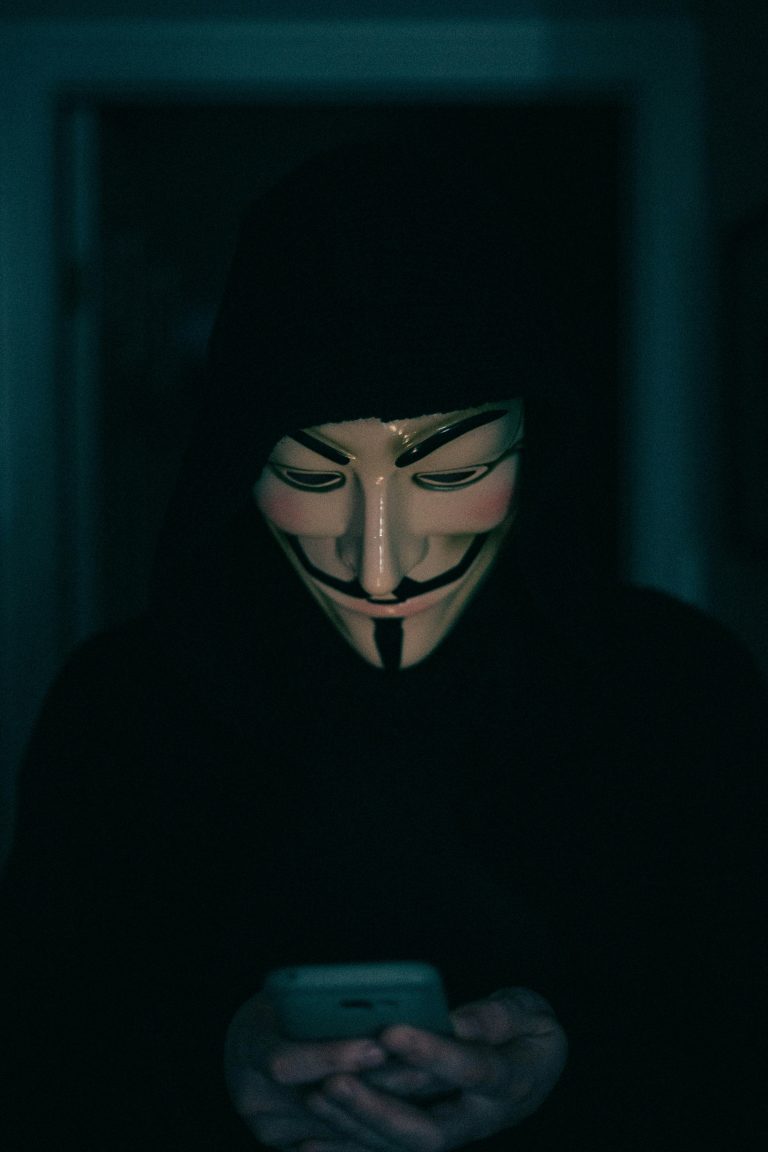

The Ring of Gyges Online: Morality Without Consequences

The internet may be the most powerful invisibility ring ever created. The real question is not what we do when no one sees us — but who we become.
In the summer of 2012, a community called r/jailbait appeared on Reddit, containing leaked images of minors. Its creator was known only by a digital username — beloved by hundreds of thousands of users for other posts considered bold and satirical. When the outlet Gawker uncovered his real identity, he turned out to be a schoolteacher with a wife, children, and colleagues who held him in high regard. None of them knew anything about his second life behind the screen.
This man’s story is not a shocking exception. It is the most consistent explanation of a pattern that repeats itself daily in countless forms: the human being behind the screen, with no real name, no visible face, and no immediate consequences, behaves in ways he would never consider in a room that knows who he is. Not necessarily with this degree of criminality, but across a wide spectrum — from the cutting comment to the deliberate lie to systematic harassment to the exposure of others’ private information.
In our previous article, The Third Simulation: Art in the Age of Generative AI, we asked who a person is when he creates. Today we ask a more pressing question: who is he when no one can see him?
Plato had already raised this question — in a different formulation — twenty-four centuries ago.
The Ring of Gyges: The Myth That Waited for the Internet
In the second book of Plato’s Republic, one of the interlocutors — Glaucon, Plato’s own brother — tells a story known as the myth of the Ring of Gyges. It is worth noting that Plato habitually uses his brother and his teacher as characters through whom he speaks the thoughts he wishes to convey, and his dialogues may reflect what was actually discussed between them — or may be his own philosophical invention placed in their mouths. The story itself is brief: a Lydian shepherd named Gyges discovers a golden ring in a cave exposed by an earthquake. When he turns the ring’s bezel toward his palm, he becomes invisible. When he turns it back, he reappears. Gyges uses the ring to enter the royal palace, kill the king, seize his throne, and marry his queen.
It is worth a brief historical aside: the real king of Lydia — the ancient kingdom in what is now western Turkey, neighbor to Greece — was Gyges himself, one of the most important monarchs in that region’s history, credited with founding a powerful dynasty and minting what may have been the world’s first metal coins in the seventh century before our era. Plato was not interested in historical accuracy. He borrowed the famous king’s name to construct a moral fable — asking: if any person were given a ring that makes him invisible, a power without accountability, would he remain just? Or would he become a criminal?
Glaucon poses this story as a challenge to Socrates: if a just person were given a ring like Gyges’, would he not behave exactly as the unjust Gyges did? Is justice a genuine virtue, or merely fear of punishment dressed in the language of virtue? In the Republic, Glaucon represents the honest truth-seeker — unlike Thrasymachus, who openly champions the strong — and his question comes not from cynicism but from a real desire to know whether justice can survive the removal of its consequences.
Plato had to invent the ring, or at minimum chose to place it in a hypothetical exchange between a teacher and a brother, perhaps because the scenario had no real-world counterpart. It was a thought experiment with no mechanism of realization. What neither he nor anyone in his era could have anticipated was a communication technology that would hand a comparable ring to billions of people simultaneously. The internet did exactly that, and did so gradually enough that it came to seem natural before it became a settled structure.
What troubled Glaucon was hypothetical: one person, one ring. What no one anticipated is that everyone would hold the ring at once — and that most would use it not to kill kings, but to kill something more subtle: accountability.
Online Anonymity: A Technical Anatomy of Concealment Levels
Online anonymity is not a single uniform phenomenon but a spectrum of levels, each carrying different psychological and ethical consequences. Understanding this spectrum is necessary before judging it.
At the first level — pseudonymity — the user does not reveal a real name but maintains a fixed digital identity that carries history, reputation, and relationships: a YouTube channel, a Twitter profile without a real name, a Reddit account with a username. This form of concealment grants privacy without eliminating accountability entirely. The pseudonym’s reputation can be built or destroyed.
At the second level — full anonymity — participation occurs with no persistent identity: an unregistered comment on a website, a post on 4chan’s fully anonymous boards, an encrypted message via Tor. Here the digital reputation also vanishes, leaving only content severed from its author.
At the third level — impersonation — accounts are created that claim to be someone else, real or fictional. This is the most dangerous form, because it adds the exploitation of another’s identity on top of concealing one’s own.
| Level | Example | Available Accountability | Primary Risk |
|---|---|---|---|
| Fixed pseudonym | Reddit username account | Digital reputation and platform bans | Erosion of traditional social inhibitions |
| Full anonymity | 4chan post, Tor message | Specialized digital forensic investigation | Absence of social and legal deterrent |
| Impersonation | Fake accounts posing as real people | Criminal prosecution in most jurisdictions | Systematic manipulation of public opinion |
The digital identity researcher danah boyd described this spectrum with a useful formulation: the internet does not hide you from everyone — it hides you from those you choose to hide from. Digital concealment is selective by nature: you are unknown to your employer, your spouse, and your neighbor, while being fully visible to others in a shared digital space who know you by your username. What changes is not visibility as such but the social context of visibility.

The Disinhibition Effect: When Social Controls Fall Away
The American psychologist John Suler formulated a concept in 2004 that he called the Online Disinhibition Effect — one of the most precise descriptions of what happens when a person puts on the digital ring.
Suler identified two sides to this effect: a benign side and a toxic one. On the benign side, people disclose deep feelings, fears, and secrets more easily online, form genuinely intimate relationships with strangers, and seek help with things they could never raise publicly. In this sense, online anonymity gives voice to those who have none in physical life — though it is worth noting that this is not entirely unlike what alcohol does, loosening what is otherwise held in.
On the toxic side, some people say behind screens what they would never say with uncovered faces — attacking, humiliating, threatening, lying without ever glimpsing the human reaction on the face of the person receiving it. Here too the parallel to intoxicants holds: both remove restraint, though the internet, unlike a bar fight, leaves no immediate physical consequence the aggressor must face.
Suler identified six factors that combine to produce this effect. First, dissociation of identity — the person does not know the other as a full human being, only as text on a screen. Second, invisibility — no one sees your facial expressions or physical reactions. Third, asynchronicity — the response does not arrive instantly, removing the moment-to-moment social pressure of face-to-face exchange. Fourth, minimized self-awareness — the “digital self” feels separated from the “real self.” Fifth, equalized status — behind the screen everyone feels equal, weakening the usual hierarchical barriers. Sixth, fantasy projection — the other person becomes a character in an internal drama more than a human being with genuine feelings.
What is philosophically significant in Suler’s fourth factor is the sensation many users report of “this isn’t really me” when they act with cruelty or audacity online — as though the ring does not merely change the person, but convinces him that the one wearing it is someone else entirely.
This mental state recalls one of the most disturbing social experiments in the history of performance art: Marina Abramović‘s Rhythm 0 (1974). For six hours in a Naples gallery, the Serbian artist stood completely still and allowed the audience to do anything they wished to her body using any of 72 objects she had placed on a table — among them a rose, a feather, honey, a whip, and a loaded gun. The early interactions were gentle. Within hours, the crowd had cut her clothes, hurt her, drawn blood, and pointed the loaded weapon at her. The experiment ended when her collaborators intervened. Abramović later described the transformation she observed: the moment people perceived themselves as unaccountable, ordinary visitors became capable of extraordinary cruelty.
The medical drama House M.D. revisited this dynamic in its seventh season through a fictional artist character who invited the public to photograph and physically interact with her in a gallery setting — until one visitor attempted to set her on fire. The writers drew explicitly on Abramović’s work. Both the real experiment and the fictional dramatization demonstrate the same mechanism Suler described: behind the cover of art, or behind the cover of a screen, human beings shed their inhibitions the moment they perceive the target as “available” and their own identity as “protected.”
Cyberbullying: When the Ring Becomes a Collective Weapon
In 2010, a thirteen-year-old American girl named Megan Meier died by suicide following a sustained harassment campaign on MySpace. The person orchestrating the campaign was the mother of Megan’s former friend, hiding behind a fake account constructed as a fictional teenage boy named Josh — who built a romantic connection with Megan before destroying it suddenly through organized cruelty. Megan was thirteen years old.
This example is not unique. What makes it particularly revealing is that the perpetrator was an adult, a mother, who personally knew her victim. The ring did not transform a stranger with violent tendencies. It transformed a woman in her forties living an ordinary life in a small community. What concealment released was not a monster lying in wait — it was the capacity to separate an action from its consequences, a capacity that existed, but that ordinary social pressure had contained.
Cyberbullying differs from traditional bullying in three dimensions that make it more severe. The first is permanence: the painful written message does not dissolve the way sound does. It stays. The victim searches for it. It is preserved in screenshots and resurfaces in moments of vulnerability. The wound does not permit itself to close. The second is reach: what once happened in a schoolyard before twenty people can be seen by twenty thousand within hours. Shame multiplies with the audience. The third is inescapability: the victim of an earlier generation came home and closed the door. Today the door stays open as long as the phone is within reach. Nowhere is far enough.
Doxing: When the Exposure of Identity Becomes a Weapon
In contrast to anonymous harassment, a different phenomenon has emerged from the same underlying dynamic: doxing — the gathering and public release of a person’s private information without consent, with the intent to harm, harass, or intimidate.
The name derives from “docs,” short for documents. The practice includes publishing home addresses, phone numbers, workplaces, photographs of children, financial records — any private information that converts a person who may be shielded online into an exposed, reachable target.
What makes doxing philosophically significant rather than merely criminal is that it employs the exposure of identity as a punishment administered outside any legal system. An anonymous group decides a target deserves punishment, compiles the information, publishes it, and incites. No trial. No evidentiary standard. No right of defense. Verdict, execution, and sentence occur within minutes, delivered by a group with no face.
This pattern was conspicuous in what became known as GamerGate in 2014, when several women working in the video game industry were subjected to organized doxing campaigns and threats, forcing some to leave their homes. The aggressors were fully anonymous. The victims were fully exposed — complete names, addresses, phone numbers — to anyone who wished to find them.

Reddit, 4chan, and X: Three Platforms That Embody the Spectrum
The history of social media platforms and their relationship to anonymity offers a case study in how technical architecture shapes moral behavior.
Reddit built communities organized around fixed usernames. The username carries a history and can accumulate or lose “karma” points. This system created social pressure within the platform even in the absence of real names. But it also produced a culture of the “legendary username,” where highly influential users are protected by their communities even when they cause harm.
4chan, by contrast, was built on full anonymity from its first day. Every post is by default from “Anon,” with no persistent identity. This architecture produced a space of nearly absolute expressive freedom on one hand, and a laboratory for collective radicalization on the other. Some of the most culturally influential internet phenomena of the past two decades originated on 4chan — whether funny, disturbing, or both simultaneously.
Twitter X underwent a revealing experiment when Elon Musk attempted in 2022 to link accounts to verified identity through a paid subscription. The immediate result was a wave of impersonations of famous figures on the first day, followed by stabilization around a system that verifies not identity but payment. What is verified is not a real name but a credit card — and a credit card has a traceable owner. That small structural change measurably reduced certain forms of harassment, demonstrating that even modest friction in the anonymity layer has behavioral consequences.
Socrates Answers Glaucon: Does a Just Person Need to Be Watched?
In the Republic, Socrates responds to Glaucon’s challenge with an argument: a truly just person does not behave differently with the ring or without it, because his justice does not originate from fear of punishment but from a settled character. The unjust person performs justice when observed; given the ring, he reveals his true nature.
This answer was philosophically satisfying in Plato’s time. Modern psychology complicates it fundamentally. Research on moral self-licensing shows that people do not possess a uniform, stable moral character. We act according to context, relationships, surveillance, cognitive fatigue, and dozens of shifting variables. The person who displays cruelty in an anonymous comment may be, on the same day, a compassionate companion to a sick friend in a hospital. They are not two different people — they are one person in two different contexts, each of which activates a different portion of the moral spectrum.
This finding does not excuse anonymous cruelty. It establishes the necessity of social design to constrain it. If morality is partly contextual rather than purely fixed, then building contexts that reduce the possibility of harm is not coercion toward virtue — it is the necessary condition for whatever virtue already exists to be expressed.
Is Anonymity an Absolute Evil? The Necessary Counter-Argument
To arrive here without hearing the other side would be a serious philosophical error. Online anonymity is not an unqualified harm, and there are strong arguments in its favor that deserve a genuine hearing.
In countries that prosecute dissidents, journalists, and activists, anonymity is not a moral luxury — it is a survival tool. The Syrian, Belarusian, or Iranian blogger who criticizes his government needs the ring not to cause harm but simply to speak truthfully without being punished for it. Support groups for mental health, addiction, and survivors of assault depend on anonymity so members can speak with a honesty they could never practice in relationships tied to their real names. People in marginalized communities have found in digital anonymity the only available space to express identities their environments do not welcome.
The strongest philosophical argument for anonymity is that it corrects structural imbalances of power. A person who expresses an opinion under a full name in a community that punishes such expression does not possess genuine freedom — only the illusion of freedom at a price he cannot pay. The ring in this case does not reduce moral responsibility. It makes moral responsibility possible where it was previously foreclosed.
The problem is not the ring itself but the absence of a system capable of distinguishing between those who need it for legitimate protection and those who use it for harm without consequence.
Plato’s Cave and the Ring: A Sixth Reading
Plato did not think of the ring and the cave as two separate problems. Both appear in the same dialogue, both concern the same question — the difference between the just and the unjust person — and both turn on the same gap: between what we do when the world is watching and what we do when we believe we are alone. The cave teaches us that some people do not perceive the gap at all and live contentedly among shadows. The ring teaches us that some people know the difference but choose the shadows when choice carries no consequences.
The digital cave combines both problems: a space in which distorted representations of reality are projected (the cave), while also permitting action without the actor being identified (the ring). When the two intersect, an environment emerges in which perceptual distortion and absence of accountability exist at the same time. This intersection is what Glaucon and Socrates could not have imagined.
The classical Platonic answer is philosophical education: teach people what is good so they act accordingly regardless of observation. The more practically grounded modern answer is social design: build systems that maximize accountability-based consequences without eliminating legitimate privacy. Both answers are incomplete. Both are necessary.
Conclusion: Who Are We When No One Can See Us?
Glaucon posed his question as a challenge to justice. But the real answer may be less philosophical than it is human: who are we when no one can see us? We are who we have always been — but with different parts of ourselves more visible. The ring does not create a new personality. It removes the layers that social pressure produces and reveals what was underneath.
What it reveals in many cases is not a monster but a person experiencing power for the first time, or a person expressing genuine anger through the wrong method, or a person trying on an alternative identity he does not dare wear in public. Understanding these motivations is not an excuse for harm. It is the necessary condition for designing digital spaces that are less biased toward the worst in us.
In the next article in this series — Digital Identity: Who Are You in the Metaverse? — we move from the question of who we are when we hide, to the question of who we are when we choose. When the digital space allows us to construct an identity from scratch, do we choose who we want to be? Or do we simply reveal who we already are?
References
- Plato. The Republic, Book II — The Ring of Gyges. (See our article: Plato’s Cave: A Late Reading)
- Suler, John. “The Online Disinhibition Effect.” CyberPsychology & Behavior, 7(3), 2004.
- Boyd, danah. It’s Complicated: The Social Lives of Networked Teens. Yale University Press, 2014.
- Haidt, Jonathan. The Anxious Generation. Penguin Press, 2024.
- Bernstein, Michael S. et al. “4chan and /b/: An Analysis of Anonymity and Ephemerality in a Large Online Community.” AAAI ICWSM, 2011.
- Chen, Adrian. “Unmasking Reddit’s Violentacrez.” Gawker, October 12, 2012.
- Meier, Megan — cyberbullying case. For case details: wikipedia.org
- Abramović, Marina. Rhythm 0. Performance. Studio Morra, Naples, 1974. Documentation: moma.org
- House M.D., Season 7, Episode “Unwritten.” Fox Broadcasting, 2010.
- Also in this series: The Third Simulation: Art in the Age of Generative AI
- Also in this series: The Digital Cave: Why We Choose Shadows Again
- Related: AI Is Our Mirror — And We Don’t Always Like What It Shows
- Related: AI and Privacy: What You Must Know Before Sharing Your Data