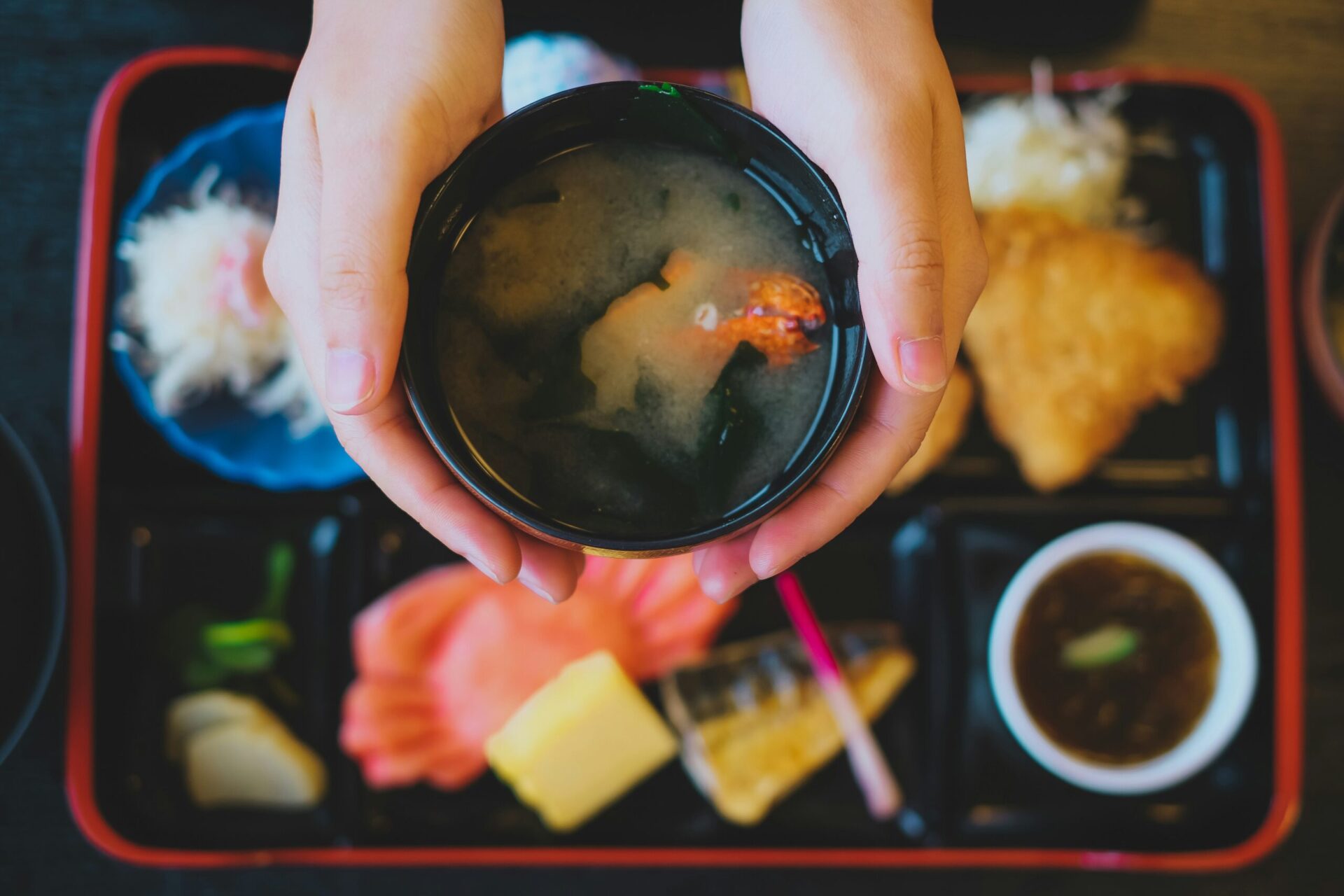
Kyushoku, Japanese School Lunches: Building Society in a Child’s Lunchbox

Japan’s kyushoku system turns a daily meal into a philosophy of equality, gratitude, and community. What’s true, what’s exaggerated, and what’s worth borrowing.
If you’ve ever watched Japanese school dramas or anime, you know the scene.
The bell rings. Desks are rearranged. Students appear in white aprons and small caps, carrying large containers with the seriousness of a formal mission. Everyone sits down — teacher included — and says together: “Itadakimasu!” before the meal begins.
This isn’t a background detail. It’s a window into an educational philosophy. The genre of Japanese filmmaking that captures it is called Gakuen-mono (学園もの) — literally “school things” — a beloved category that portrays the daily texture of Japanese school life in full, from friendships to exams to, yes, the lunch period. One of its most charming examples is Oishii Kyushoku (おいしい給食 / “The Yummy School Lunch”) — a film series that plays the school lunch period entirely straight, following a middle school teacher whose passion for the daily meal borders on the ceremonial.
But between what appears on screen and what circulates online as “mind-blowing facts about Japan,” there’s a gap worth navigating carefully.
What Is Kyushoku? — From Poverty to Philosophy
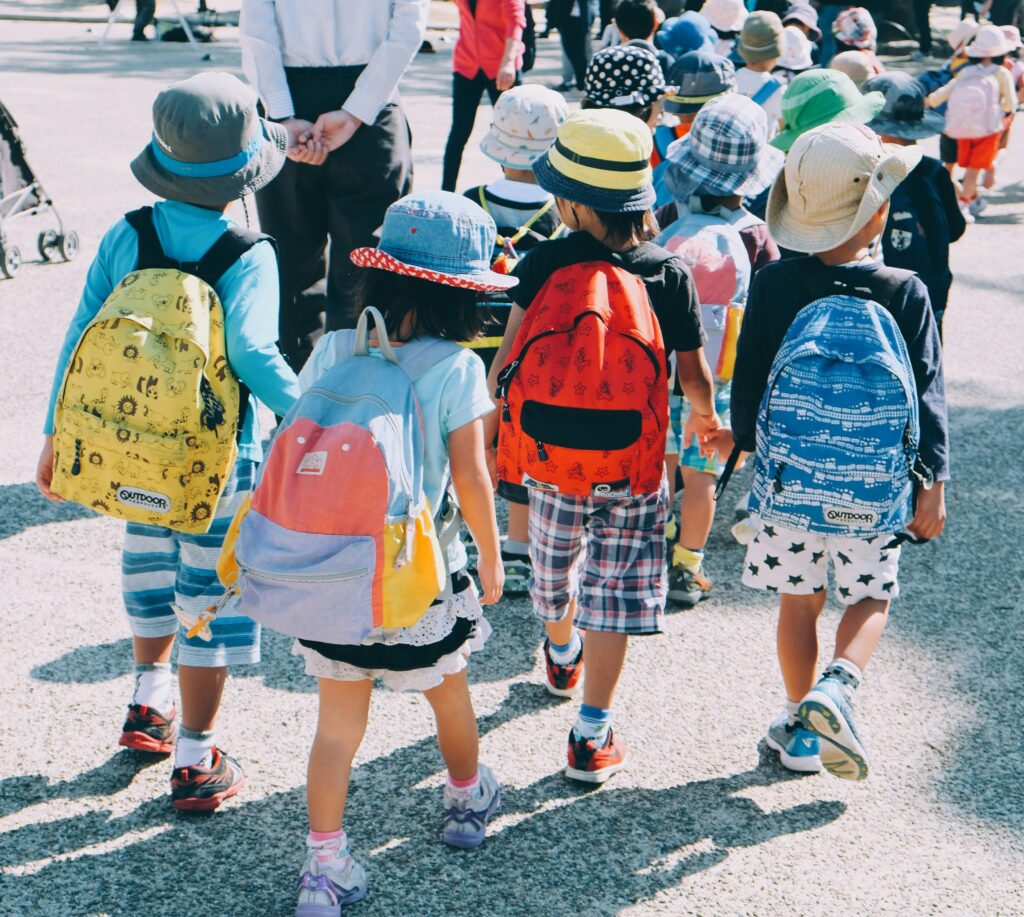
Kyushoku (給食) means, literally, “provision of food.” The first program started in 1889 at a private school within a Buddhist temple in Tsuruoka City, where priests gathered donated food from the community and served free lunches to children from poor families. It was not a luxury program — it was a response to hunger.
After World War II, widespread food shortages created an urgent need to feed schoolchildren. With support from international organizations including UNICEF and the United States, a national school lunch program was launched. The National School Lunch Program Act was passed in 1954, establishing the legal framework that still governs kyushoku today.
In 2005, the Basic Act on Shokuiku formally made food education (食育) part of the national curriculum. The meal isn’t a break from learning — it is learning.
Common Myths — And Why They Spread
A word of caution before the impressive facts: the enthusiasm for Japan’s school lunch system online often produces claims that are either exaggerated or simply wrong. Here’s what the sources actually say:
| The Common Claim | What Sources Confirm |
|---|---|
| School lunches are completely free for all students | Local governments cover staffing and operational costs, but parents pay a monthly fee for ingredients — the national average in 2024 was about ¥4,688 per month for elementary students. About 40% of municipalities now offer some form of fee waiver, and roughly 30% have made lunches fully free. Nationwide free lunches are planned for 2026. |
| Students cook the food themselves | Students serve meals to their fellow students and lead in cleaning up after — but the cooking is done by professional cooks in school kitchens or central distribution facilities. The white aprons are for serving, not cooking. |
| All meals are traditional Japanese food | Kyushoku sometimes includes Western, Chinese, and other international dishes, offering students a chance to learn about different cultures. |
| The system exists purely for nutrition and welfare | It began as hunger relief in 1889 and evolved into a full educational philosophy — but it was never a luxury. |
The Genuinely Remarkable Facts
What makes kyushoku exceptional isn’t the mythology — it’s what’s verifiably true:
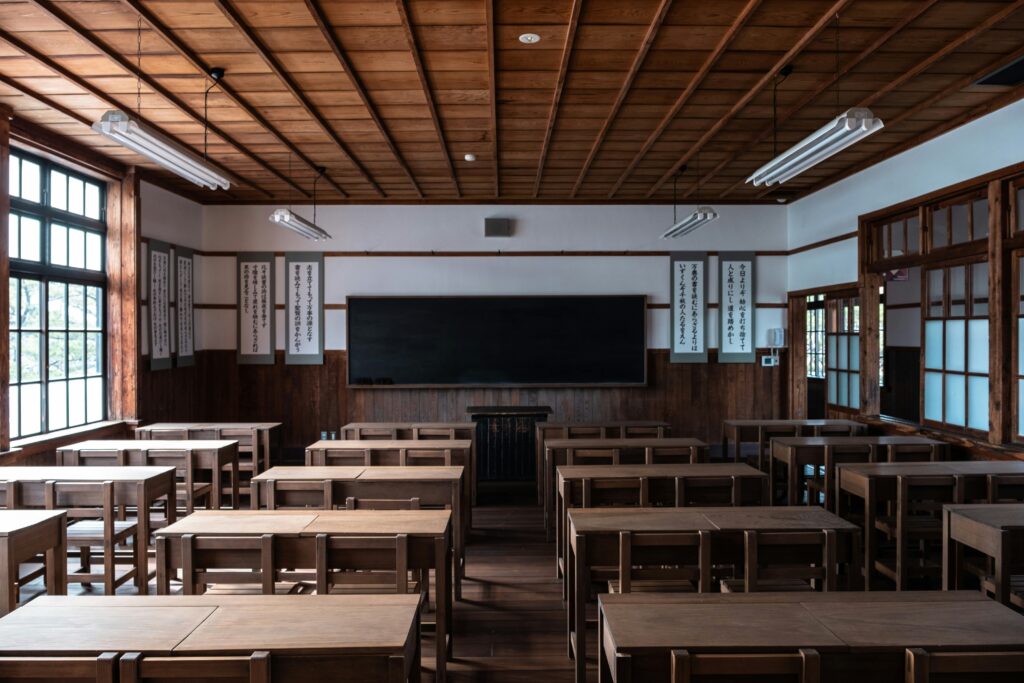
- No cafeteria — the classroom is the dining room.
Japanese students eat at their own desks or in a rearranged classroom. Crucially, the teacher eats the same meal as the students, reinforcing a sense of community and equality. There is no separate “teacher’s menu.” This is a deliberate educational choice. - No food from home — in most schools.
Children are not permitted to bring snacks from home, and they are not provided as part of kyushoku once they hit elementary school. Nutritional equality is a principle, not just a rule. - Near-zero food waste.
Waste amounts to less than 4g of food discarded per child, per meal. Students are encouraged to finish their plates, grounded in the Japanese concept of Mottainai — the sorrow of waste. - Local and seasonal sourcing.
When students are able to eat local food each school day, it helps develop students’ understanding of how their food is produced before it arrives on their plate. - 93% national coverage.
Kyushoku covers 93% of state primary and lower-secondary pupils.
When a teacher eats the same meal from the same kitchen as their students, they’re not just modeling nutrition — they’re modeling equality.
What’s Worth Borrowing — and What Isn’t Portable
Educational systems don’t transfer by copy-paste. The infrastructure behind kyushoku — licensed nutritionists per school, national dietary standards, the 1954 School Lunch Act — took decades and serious policy commitment to build. That can’t be imported overnight.
But the principles beneath it can be considered anywhere. Involving children in the responsibility of serving and cleaning up teaches accountability through practice, not instruction. Eating together — teacher and student, the same food — redraws the relationship between authority and community. Teaching a child where their food was grown before it reached their plate builds a connection between food, land, and identity.
And perhaps most transferable of all: the ritual of saying thank you before and after the meal. Itadakimasu. Gochisōsama deshita. Gratitude at the opening and closing of every shared meal — a daily reminder that nothing on the plate should be taken for granted. (See our article: Happiness Across Languages: From Hygge to Ikigai)
See also: Digital Parenting in Arab Homes: Have We Lost Control? | Helicopter Parenting in America: Is the Trend Reaching Us?
References:
- Japan Wonder Travel Blog (2025). Kyushoku: Japanese School Lunch. View article
- Global Child Nutrition Foundation (2024). Shokuiku: How Japan Leverages School Meals as a ‘Living Textbook.’ View report
- Japan Child Support (2025). School Lunch (Kyushoku) in Japan: A Guide for Foreign Parents. View article
- JoynTokyo (2025). School Lunch in Japan: Foreigner’s Guide to Kyushoku Culture. View article
- Nikkei Asia (2024). Learning from Japan’s ‘yummy’ school lunches. View article
- E-Housing Japan (2024). Japan’s School Lunch Program: Food, Education & Culture. View article
- School Food Matters. What lessons can we learn from Japan’s acclaimed school food programme? View article