Dawn of Narrative: Pre-Arabic Roots

A journey into the real origins of the Arabic novel — from pre-Islamic oral poetry and One Thousand and One Nights to the maqamat, Sufi literature, and the nineteenth-century Nahda.
There is a question that seems simple until you try to answer it: where did the Arabic novel come from?
The standard answer is ready: Naguib Mahfouz, Cairo, the middle of the twentieth century — one of the Arab novelists who won the Nobel Prize in Literature. But this answer is like saying a tree started from the first branch that appeared above the ground, while ignoring the deep roots below and the soil that held them for centuries. The Arabic novel did not appear from nothing. It was not imported ready-made from Europe, as some hasty theorists like to suggest. It is the result of a very long storytelling memory — one that goes back centuries before Islam and comes from a region that breathed stories the way it breathed air.
In this article — the first in our series The Arabic Novel: A Literary Map — we will not start with Mahfouz or al-Manfaluti. We will start from the real beginning: from the desert, the market, the journey, and the tent. From the human voice before it knew ink.
Part One: Oral Tradition — The Story Before Writing
The most common academic mistake in studying Arabic literature is assuming that literature begins where manuscripts begin. This assumption costs us entire centuries of real storytelling production.
Even if we set aside the rich heritage of the region’s earlier peoples written in other languages, the Arab before Islam already had a complete storytelling system — built on memorization, performance, and oral transmission. This system was not less sophisticated than written systems. It was different in its methods, and in some ways more powerful. The narrator — the rawi — was the center of collective memory. He memorized family trees and recited them, carried news of tribes and their wars, and passed everything across generations. And the poet stood at the heart of this system: philosopher, historian, journalist, and prophet all at once.
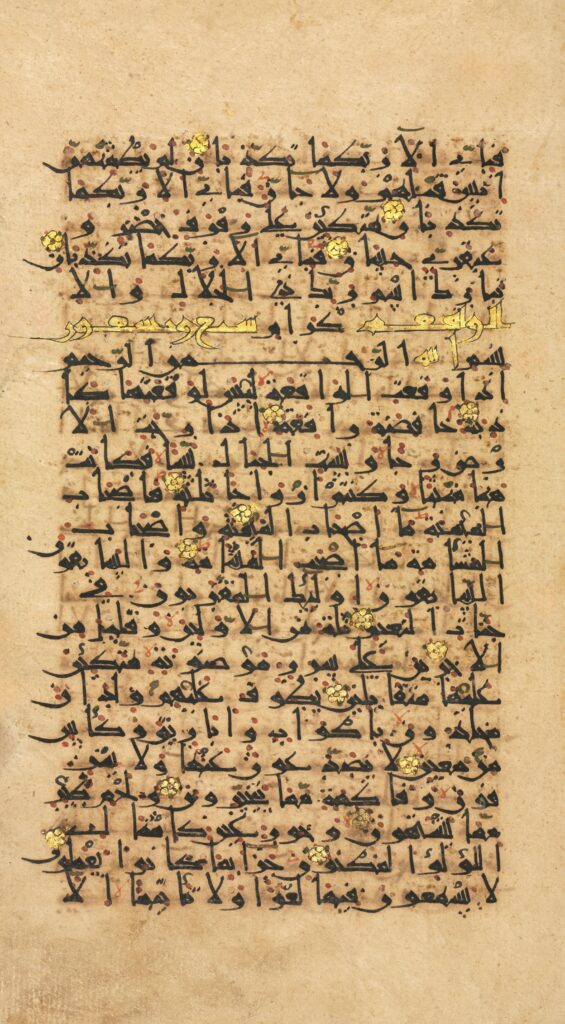
Pre-Islamic poetry is not just “poetry” — rhythms and rhymes. It is a complete cultural archive. The Seven Hanging Odes — from Imru’ al-Qays to Antara to Zuhayr ibn Abi Sulma — carry geographical maps, historical events, tribal conflicts, and full philosophies of life. Antara tells us a story of love, adventure, and heroic identity in a single poem. Zuhayr philosophizes about war, peace, and human fate with a depth that matches the Greek philosophers of his time.
Pre-Islamic poetry is the first Arabic novel — a novel broken into poems, distributed across the mouths of narrators, stored in the memory of the tribe. Not one hero, but hundreds. Not one plot, but a network of interlocking stories.
Part Two: Myth and Folk Tale — The Deeper Story
Beneath pre-Islamic poetry lies an older and wider layer: myth, legend, and folk tale. This layer has no author’s name, no clear date. It belongs to everyone — it grew from the Arab’s daily contact with the environment, the unknown, life, and death.
There are storytelling worlds in pre-Islamic Arab tradition that are as rich as Greek mythology or Indian epics: the world of jinn, ghuls, and spirits — not children’s entertainment, but a complete explanation of how the universe works and changes. The world of the “Days of the Arabs” — those great battles like Yawm Dhu Qar and Yawm al-Fijar — told with dramatic detail that resembles the Homeric epics. The world of tribal values: generosity, revenge, lineage, and honor — a complete moral system.
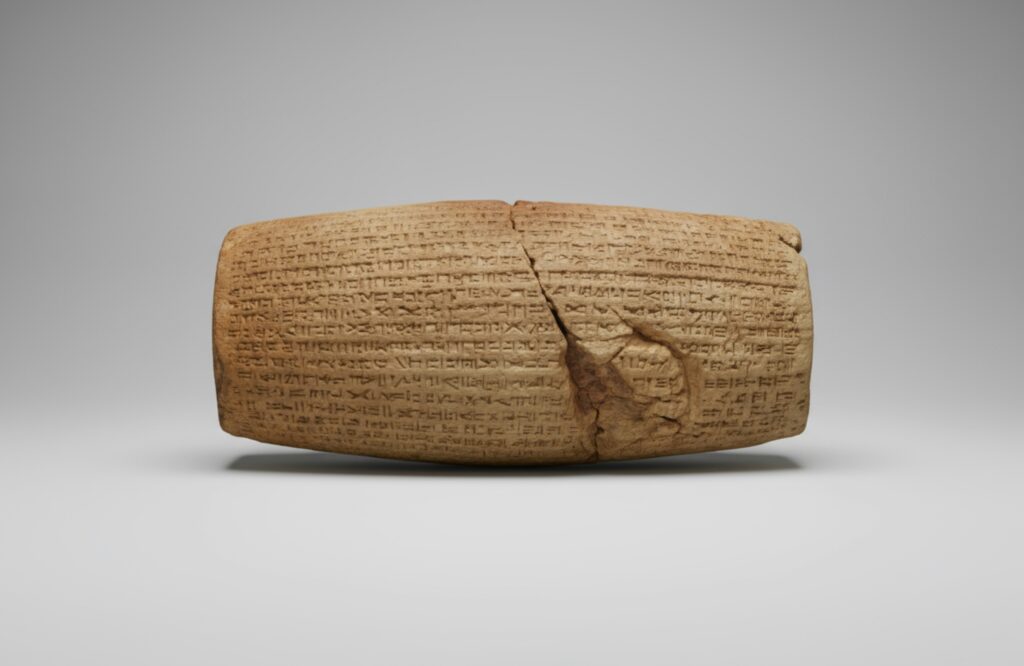
We also cannot ignore the civilizations that came before the spread of Arabic as a written language in this region. The Sumerians, Akkadians, Phoenicians, Aramaeans, and Nabataeans produced full storytelling traditions that continued to settle in the collective imagination of the region. The Epic of Gilgamesh — considered the oldest narrative text in human history — was known and told in this land thousands of years before Islam. The story of Eden, the Flood, and the sacred king: all these elements appeared later in Arabic narrative in different forms.
This crossing of the ancient Semitic heritage with the pre-Islamic Arab memory is what makes Arabic narrative unique: it stands at the meeting point of civilizations, not on the edge of just one.
Part Three: One Thousand and One Nights — The Mother of Novels
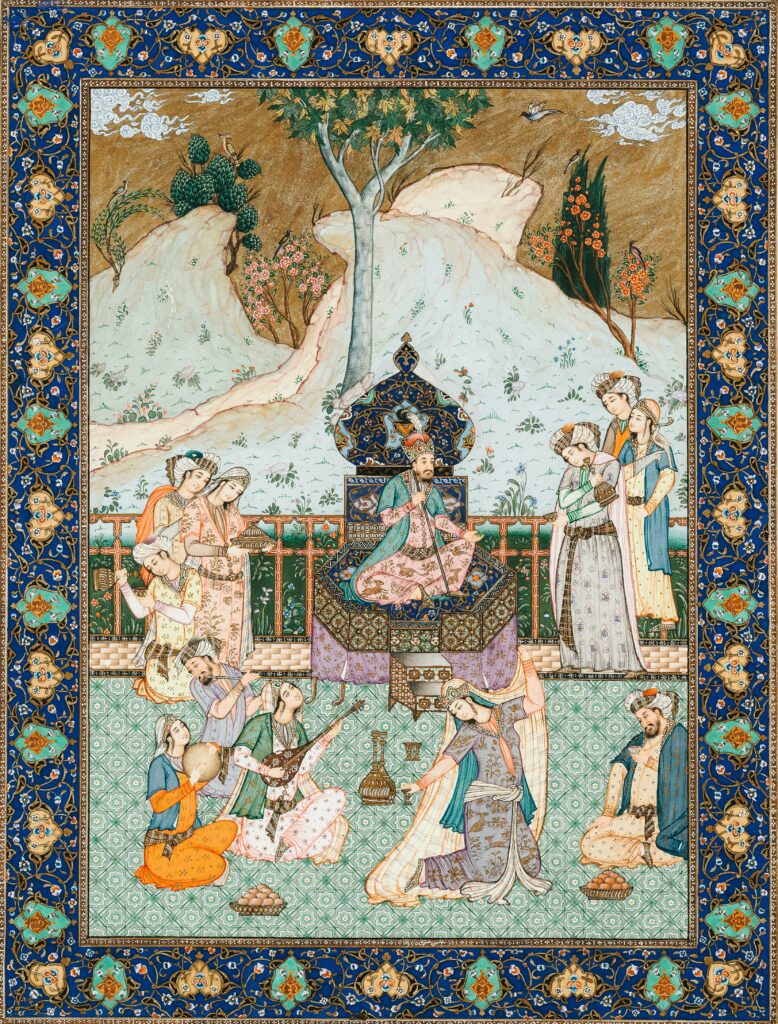
We cannot talk about the roots of Arabic storytelling without stopping at One Thousand and One Nights for a long time. This text is not just “folk tales.” It is a unique literary phenomenon in human history — the most influential Arabic text in world literature, and at the same time the most disrespected one by classical Arab academic circles, which ignored or looked down on it for centuries.
The origins of the Nights are multiple and debated. Researchers trace them to three main sources:
The Indian-Persian source: The earliest core was probably a Persian story collection called Hazar Afsana (A Thousand Tales), originally translated from Indian. This collection reached the Arab world early and carries clear marks of Indian storytelling tradition — the “box within a box” frame and nested stories.
The Iraqi-Baghdadi source: During the Abbasid Caliphate, a new layer of stories was added — stories that reflect daily life in Baghdad: caliphs, merchants, madmen, lovers, tricksters. This layer has an urban, realistic flavor, very different from the mythological character of the older layers.
The Egyptian source: In the Mamluk and later Egyptian period, more stories were added with a clear local character — reflecting the lower social classes and their popular literature, free from the rules of classical Arabic style.
One Thousand and One Nights is not a text written by an author. It is a text written by a civilization itself — layer by layer, generation by generation, over at least five centuries.
See our article: Scheherazade | When-the) Name is the Story Itselfe)
What makes the Nights especially important for studying the Arabic novel is that it developed narrative techniques that European fiction would not discover until centuries later: nested storytelling — the “Chinese box” structure where a character tells a story that contains another story that contains a third. And the function of storytelling as an act of survival — Scheherazade does not tell stories for entertainment. She tells them to live. The novel as a survival strategy: this is a very modern idea in literary theory, but it was the center of the Nights from the first pages.
The text also has a sharp social realism that is hard to find in the “high” classical literature of its time. Merchants, children, slaves, outcasts, drunks, and liars share the stage with princes and caliphs. This democratic approach to storytelling is a gift from the Nights that still appears in the best work of Naguib Mahfouz, Mohamed Choukri, and Alaa Al Aswany.
(See our article: The Narrative Mind: Philosophy and Tales)
Part Four: The Maqamat — When Language Became Art
The tenth and eleventh centuries CE saw the birth of a purely Arabic literary form with no equivalent in world literature at that time: the maqama.
Badi’ al-Zaman al-Hamadhani (969–1008 CE) invented this form, and al-Hariri (1054–1122 CE) brought it to its peak. A maqama is a short literary text mixing prose and poetry, centered on an eloquent trickster who travels through Arab cities, lying, scheming, and deceiving — but using extraordinary Arabic, full of wordplay, rare vocabulary, and linguistic games.
The importance of the maqamat for our topic appears in three areas:
First: the maqama established the model of the moving character who travels through places. Abu al-Fath al-Iskandari in al-Hamadhani, and Abu Zayd al-Sarruji in al-Hariri, are wandering heroes who move from city to city, facing different situations. This is exactly the structure that Western literature would later call the road novel.
Second: the maqama openly declared that deception and trickery are legitimate literary subjects. The clever rogue who lives by his intelligence and ability to manipulate others — this model appeared in Arabic literature long before the Spanish literature that produced the picaresque novel in the sixteenth century.
Third: the maqama made language itself the subject of the literary work. Style is not a container for meaning — it is the meaning. This awareness of language as something that shapes reality, not just describes it, appeared in the maqamat ten centuries before Western literary theory gave it a name.
Part Five: Sufi Literature — Storytelling as a Spiritual Journey
The picture of Arabic narrative before the modern novel is not complete without Sufi tradition. Islamic Sufism produced a kind of storytelling that is still present — consciously or not — in the depths of contemporary Arabic writing.
Ibn Arabi of Andalusia (1165–1240 CE) did not write novels, but his controversial texts like The Meccan Revelations and The Bezels of Wisdom carry a unique narrative and interpretive structure: the narrator sees things the reader cannot see, describes spiritual journeys between overlapping worlds, and places personal experience against the universe. This structure would later echo clearly in novelists like Ibrahim al-Koni in his desert epic and Waciny Laredj in his historical Sufi novels.
Al-Hallaj (858–922 CE) and his challenging poetry, and al-Niffari (tenth century) with his strange “stations” and addresses — these texts pushed the limits of language and broke expectation, building a discourse that says and hides at the same time. Deliberate ambiguity, double meaning, a text that speaks to the reader and to something else simultaneously — these are real narrative techniques, not vague spirituality.
When you read Ibrahim al-Koni’s novels, written in the language of sand and Tuareg myth, or when you see Bahaa Taher wrapping his stories in a Sufi haze — you realize that Arabic Sufism did not die. It transformed into a novelistic style.
Part Six: Autobiography and Travel Writing — The Self Facing the World
Before the modern novel appeared, Arabic literature knew two other forms that can be considered its direct ancestors: autobiography and travel writing.
Classical Arabic autobiography differs fundamentally from its European counterpart. When Saint Augustine writes his Confessions, he narrates an internal religious transformation along a clear timeline. When Ibn Khaldun (1332–1406 CE) writes his autobiography in Introducing Ibn Khaldun, he does not confess — he reviews. He thinks about his experiences as historical and sociological material. The difference is important: Ibn Khaldun’s autobiography is not an emotional disclosure, but a cold analysis of a man’s path through society. Unlike Dostoevsky’s deep descent into the dark corridors of the human soul, or Rousseau’s naked personal confession, Ibn Khaldun stands outside himself, observing with the eye of a sociologist rather than the heart of a confessor. This analytical approach explains why the Arabic novel developed a narrator who analyzes more than he feels.
Travel writing, on the other hand, gave Arabic literature something completely different: wonder at the other.
Ibn Battuta (1304–1368 CE) and his massive Rihla, covering seventy-three thousand kilometers, is from a literary perspective an early model of what we would call “the first-person novel.” Ibn Battuta is present as a curious, biased narrator — not an objective historian. He likes what he likes and is bothered by what bothers him. He exaggerates sometimes and changes things sometimes. In short: he is the hero of his own story. Through him, the reader sees China, India, Africa, Central Asia, and Europe — but always through the lens of an Arab Muslim man from Morocco.
Ibn Jubayr (1145–1217 CE) and his journey to the Hejaz is closer to a “religious road novel.” He mixes geographical documentation with personal feeling and social criticism in one coherent text. His tone when describing the Crusaders reveals a man who understands the complexity of the other even while rejecting him.
Al-Masudi (896–956 CE), author of Meadows of Gold, combines history, geography, and strange news in a text that resembles a narrative encyclopedia. Al-Masudi does not just record facts — he gives them a storytelling character that makes the reader feel he is reading a historical novel.
While Phileas Fogg’s journey in Jules Verne’s Around the World in Eighty Days starts from an engineering bet and a race against time to conquer geography, the journeys of Ibn Battuta and Ibn Jubayr were a tourism of the soul and a discovery of identity through the other. It does not matter when the traveler arrives — what matters is how he changes along the way. This way of building a narrator’s voice reminds us of what Paulo Coelho captured in The Alchemist, where travel is not a movement in space but a journey of self-discovery that ends in the depths of the soul, not at the edge of maps.
There is another form worth special mention: maqtal literature. The killing of Hussein ibn Ali at Karbala (680 CE) produced an extraordinary storytelling tradition. Maqtal texts are not only history — they are written tragedies that millions recite in moments of deep emotion. The characters are morally clear: a martyred hero, a wavering traitor, and a blind oppressor. The dramatic structure is strict. The audience knows the ending but still weeps. That is exactly what great literature does. Maqtal literature — despite its religious content — gave a large part of Arabic readers their first experience of Aristotelian “catharsis” through storytelling.
Part Seven: Popular Epics — Imagination Dressed as History
Between pre-Islamic poetry, the Nights, and the nineteenth-century Renaissance, there is a large literary layer that academic studies often ignore because it sits in the grey area between “high literature” and “popular literature”: the popular epics (siyar sha’biyya).
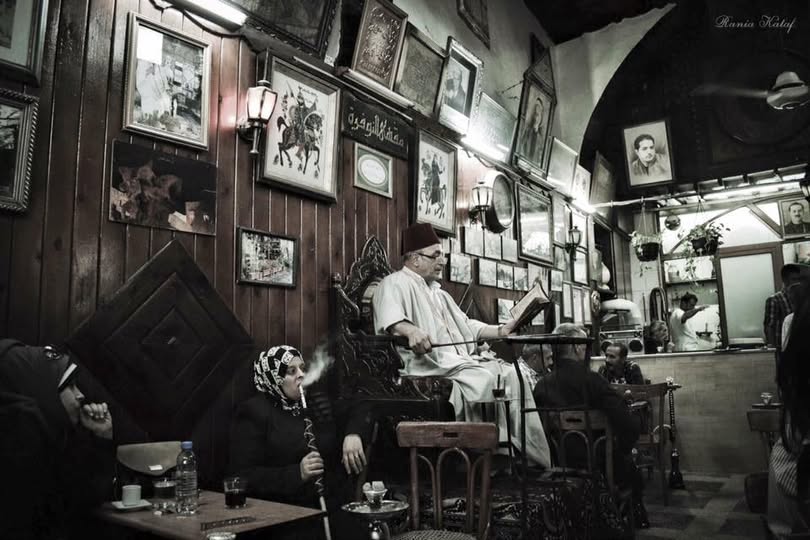
The Epic of Antara ibn Shaddad, the Epic of Banu Hilal, the Epic of Sultan Baybars, the Epic of Hamza al-Bahlawan, and — most famous today due to Syrian television drama — the Epic of al-Zayr Salem: these massive narrative texts were told in markets and popular cafés for centuries. The storyteller (hakawati) sat in front of a crowd and told episodes from these epics, adding, changing, and improvising based on his audience’s reactions. Some traditional cafés still do this today, despite all the technological changes around them.
What do popular epics offer to our understanding of narrative?
First: the open episodic structure. The epic does not end in the classical sense — new episodes can always be added. This structure resembles the modern television series and preceded it by centuries. It is fundamentally different from the Aristotelian structure of beginning, middle, and closed ending.
Second: the harmony between the historical and the mythological. Antara ibn Shaddad was a real historical figure, but his epic became a mythological legend. Baybars was a real Mamluk sultan, but his epic mixes him with impossible supernatural adventures. This tension between the real and the imaginary, between the documented and the invented, is at the heart of the modern Arabic historical novel — from Youssef Ziedan to Radwa Ashour.
Third: multiple voices. The popular epic includes different voices — the knight, the poet, the merchant, the slave, the woman. No single voice dominates. This multiplicity would appear clearly later in the structure of Naguib Mahfouz’s novels, which speak through dozens of intersecting voices.
Fourth: the audience as a creative partner. The hakawati changed his plot based on his audience’s live reaction. This interactivity, which we consider a modern digital invention, finds its echo today in TEDx events and motivational speaking, where the speaker becomes a modern storyteller reshaping his story based on the energy of the room. The successful Arab novelist today — like Alaa Al Aswany or Ahmed Mourad — is in essence a literary version of this crowd-reader; the heir of the hakawati who had the social intelligence to feel what his audience wanted, not the heir of the European author alone in his room.
Part Eight: The Nahda — The Bridge Between Old and New
The modern Arabic novel did not jump directly from the maqamat and the Nights to Naguib Mahfouz. Between them stands a necessary civilizational bridge called the Arab Renaissance (Nahda) of the nineteenth century.
The Nahda was a complex project: a revival of classical Arab heritage on one side, and an opening to European literature on the other. A man like Rifa’a al-Tahtawi (1801–1873 CE) was not just a talented translator — he was posing a question: what is the relationship between modernity and heritage? How does a civilization absorb foreign influence without losing its identity?
Francis al-Marrash, the Syrian writer (1836–1873 CE), published Ghabat al-Haqq (The Forest of Truth) in 1865 — a philosophical, symbolic, allegorical novel that many researchers consider the first Arabic novel in the modern sense. Written in clear, formal Arabic, it circles around political and social ideas encoded in symbolic form. Al-Marrash was looking at Europe and dreaming of an Arab Renaissance, writing for a small number of Arab Christian intellectuals in Lebanon and Syria who were forming an early laboratory for Arab modernity.
Jurji Zaydan (1861–1914 CE) chose a different path: popular history as a tool for national education. His historical novels about Islamic civilization were read eagerly across the Arab world — not for their high literary quality, which was modest, but because they filled a large gap: Arab readers wanted to know their history in a language they understood and a form they enjoyed. Zaydan gave them that.
What we learn from the Nahda remains true today: good Arabic literature did not grow from blindly imitating the West, or from closing itself off in tradition. It grew from the difficult, honest dialogue between the two.
Part Nine: A Quick Summary — Narrative Before the Novel
Before we move in the coming articles to the Arabic novel in its modern sense, it helps to collect what we have seen. We will draw one practical boundary: we will separate the heritage written in other languages before Arabic became the dominant written language of the region from the heritage written in Arabic — for the sake of classification only. This means we will set aside Gilgamesh for now, despite its enormous civilizational richness.
| Tradition | Approximate Period | Contribution to Narrative | Examples |
|---|---|---|---|
| Pre-Islamic oral poetry | 6th century CE and earlier | Collective memory, heroism, identity | The Seven Hanging Odes, Days of the Arabs |
| Myth and folk tale | Prehistoric – ongoing | Imagination, the supernatural, cosmic explanation | Jinn and ghuls, popular prophet stories |
| Ancient Semitic heritage | 3000 BCE and earlier | Epic, death and immortality, the Flood | Gilgamesh, myths of Ugarit |
| One Thousand and One Nights | 9th–14th century CE (accumulated) | Nested narrative, storytelling for survival, social realism | Scheherazade, Sinbad, Aladdin |
| Maqamat | 10th–12th century CE | The traveling character, language as subject, the heroic trickster | Al-Hamadhani, al-Hariri |
| Sufi literature | 9th–13th century CE | Symbol, spiritual journey, double meaning | Ibn Arabi, al-Hallaj, al-Niffari, Attar |
| Nahda literature | 19th century CE | Modern language, national education, European influence | Al-Marrash, Zaydan, al-Tahtawi |
Part Ten: Why Does All of This Matter to the Contemporary Novelist
A practical question: why should an Arab novelist in the twenty-first century know all of this?
The answer is not academic — it is purely creative. A novelist who does not know the roots of his storytelling tradition is like an architect who does not know the nature of the ground he is building on. He may raise a beautiful structure, but he will be surprised by cracks he cannot explain.
When Khaled Khalifa uses a circular narrative structure in In Praise of Hatred and gives the role of narrator to a woman speaking from behind a veil — he is drawing on the background of the Nights. When Ibrahim al-Koni builds his desert epic with a slow poetic rhythm and a mythological vocabulary — he is drawing from pre-Islamic poetry and Tuareg Sufism at the same time. When Jamal al-Ghitani uses Mamluk and archival writing techniques in Zayni Barakat — he is rehabilitating Arabic writing traditions that everyone else had forgotten.
The Arab novelist who knows his heritage does not write “in the style of the past.” He owns deeper layers than someone who starts from a blank page. The choice before him is real freedom: to use this heritage, rebel against it, or reinterpret it — but at least it is a conscious choice, not ignorance in disguise.
And for the foreign reader who wants to understand the Arabic novel: these underlying layers are the key to much of what seems strange, fragmented, or overly symbolic. The Arabic novel does not look like the European novel because it did not come from the same storytelling traditions. It is a different tree, grown in different soil. But it is a tree with very deep roots.
Next in the series: The Narrative Mind: Philosophy and Tales — where we go deeper into the classical structure of Arabic narrative and its relationship to Islamic philosophy and the science of kalam.
References
- Muhsin Mahdi (ed.), One Thousand and One Nights, Brill, Leiden, 1984.
- Charles Pellat (ed.), Maqamat al-Hariri, Catholic Press, Beirut, 1898.
- Roger Allen, The Arabic Literary Heritage, Cambridge University Press, 1998.
- Elliott Colla, Arabic Literary Salons in the Islamic Middle Ages, University of Notre Dame, 2010.
- Francesca Orsini and Katherine Schofield (eds.), Tellings and Texts, Open Book Publishers, 2015.
- Francis al-Marrash, Ghabat al-Haqq, American Press, Beirut, 1865.
- Robert Irwin, The Arabian Nights: A Companion, Penguin Press, 1994.
- Taha Hussein, Fi al-Shi’r al-Jahili, Dar al-Ma’arif, Cairo, 1926
- (See our article: Arabic Is Twenty Languages Inside One)
- (See our article: Hadith Kharafa: Between Language, Myth, and Meaning)
The Arabic Novel: A Literary Map
From Pre-Islamic Poetry to the Contemporary Novel — Nine Articles






Series: The Arabic Novel: A Literary Map — Nine Critical Articles | Zy Yazan