
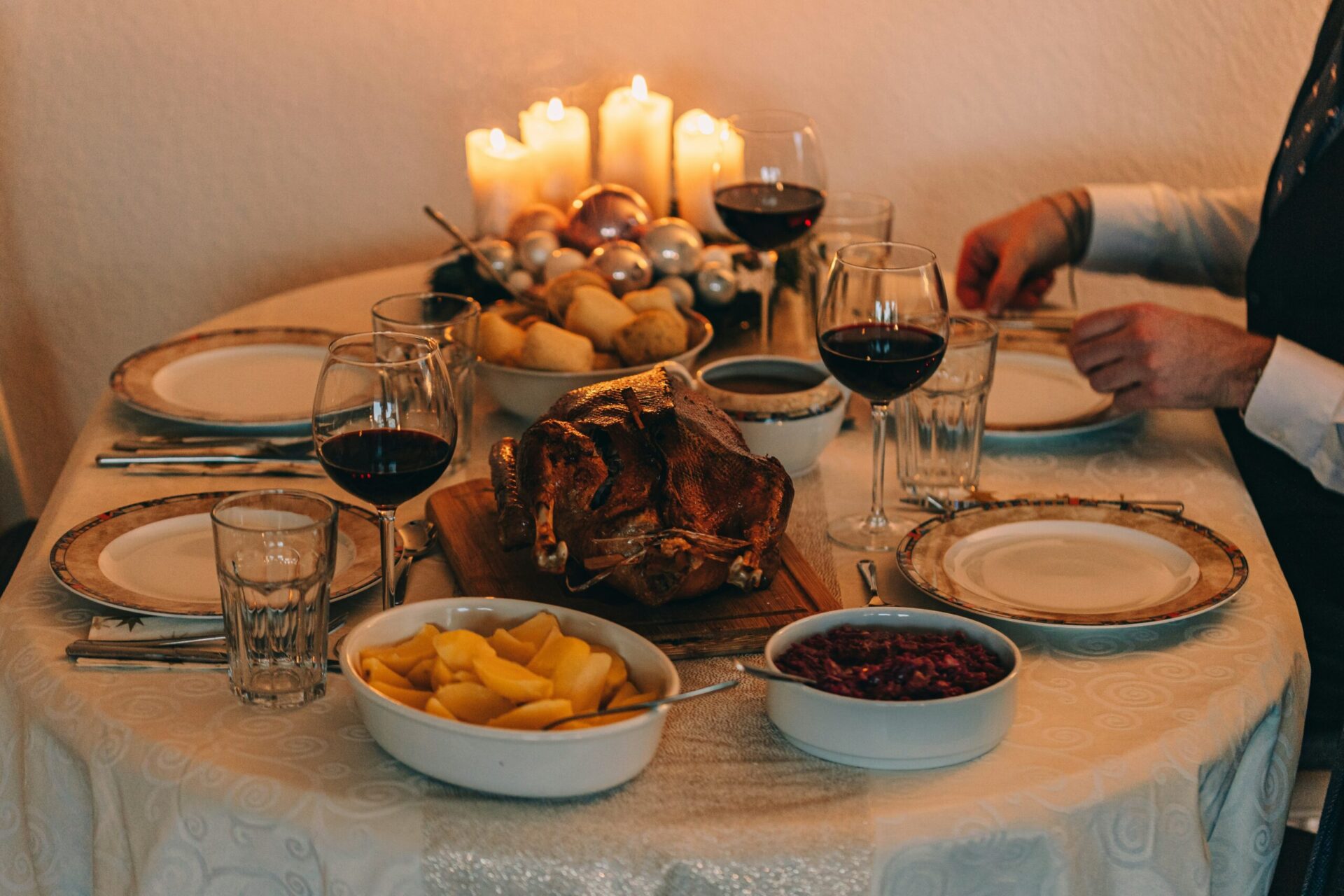
Thanksgiving Through Arab Eyes: Lessons in Family Gratitude

What does an Arab see at a Thanksgiving table that Americans no longer notice? A fresh perspective on gratitude, ritual, and what every family can borrow.
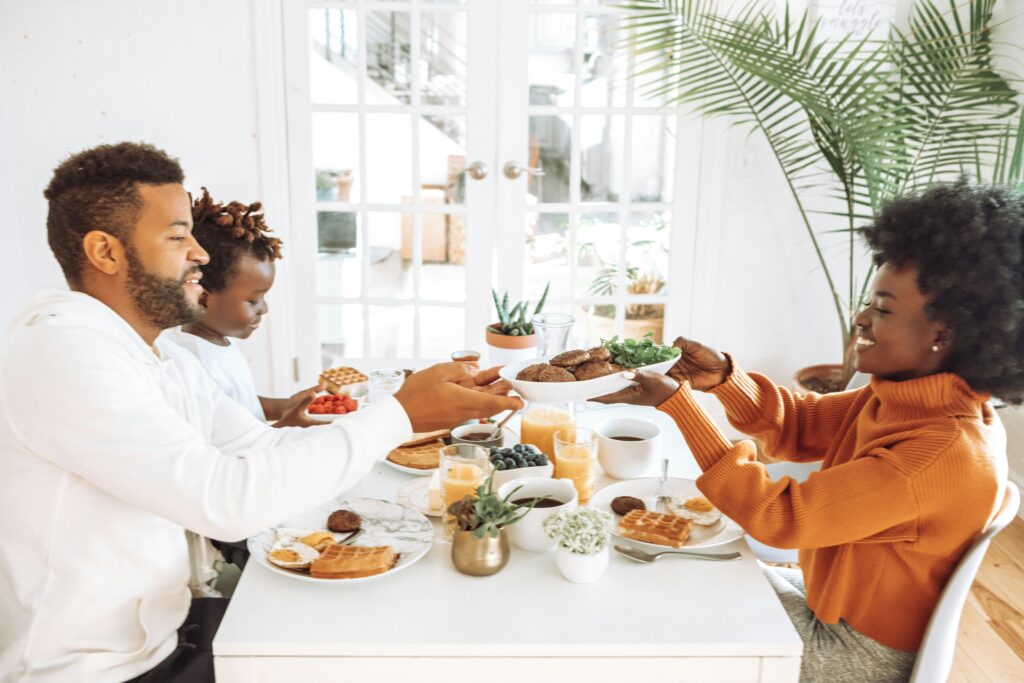
A Ritual We Live but Never Name
At its core, Thanksgiving isn’t a religious holiday or a loud national celebration — it’s an annual family ritual built around a single idea: sit with the people you love and say thank you. Thank you for what passed. Thank you for who remained. Thank you even for what was hard.
When I thought about it, I realized this idea isn’t foreign to Arab culture at all. We just don’t put it on the calendar.
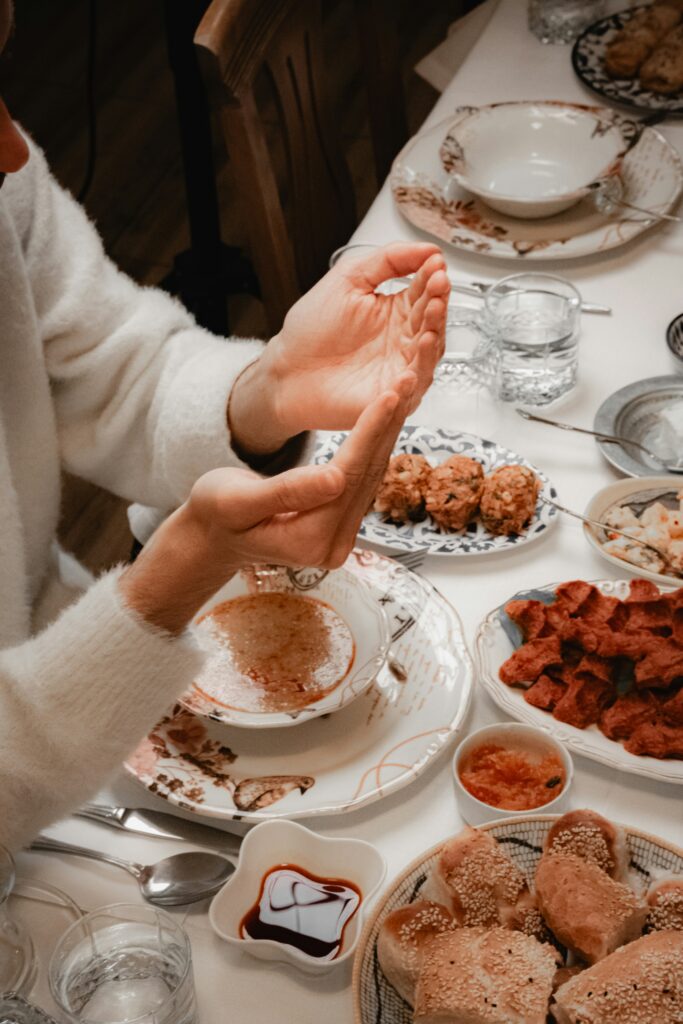
In Arab homes, gratitude surfaces constantly but informally — in the prayer said together before food, in the alhamdulillah after a meal, in grandparents’ stories about harder times that frame the present as a gift. But it arrives scattered, attached to religious occasions or passing moments, rather than as a deliberate annual gathering. (See our article: Arab Holidays | A Cultural Guide for the Foreign Visitor)
Scheduled gratitude isn’t less sincere gratitude. Sometimes it runs deeper — because it’s chosen, not accidental.
What an Arab Notices at the Thanksgiving Table
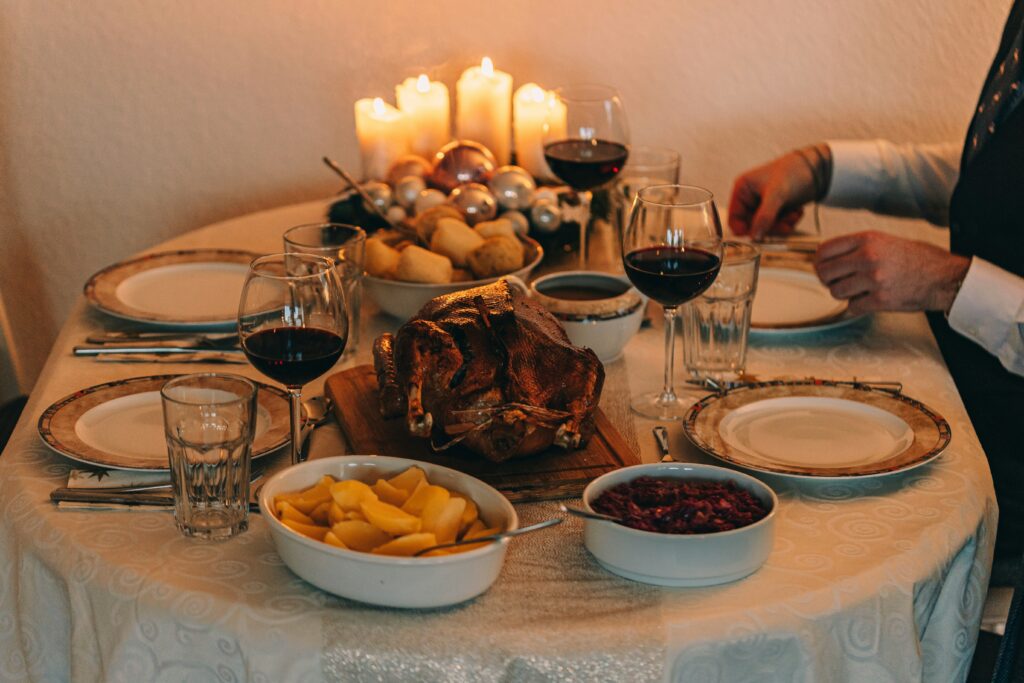
Someone sitting at an American Thanksgiving table for the first time notices things the host stopped seeing long ago:
- Food as symbol, not just sustenance — The turkey doesn’t have to be extraordinary; its absence would be unthinkable. This is deeply familiar: mansaf at a Jordanian celebration, kabsa at a Saudi gathering, the specific dish that signals this is a real occasion. What matters isn’t the flavor — it’s the shared act.
- Going home as the whole point — Thanksgiving is the busiest travel season in America precisely because the holiday demands physical presence. The adult children come back. This mirrors what Eid does in Arab families — the large home reassembles the scattered, at least for a day.
- Gratitude spoken aloud, in public — Saying “I am grateful for this” out loud, in front of your family, is not something Arab households typically do. Arab gratitude tends to be embodied in action, not announced in words. But there might be something added by the saying of it.
Arab Americans and Thanksgiving — Genuine Localization
One of the most striking things about how Arab American families approach Thanksgiving is how naturally they blend the two worlds without performing either. A Thanksgiving table in an Arab American home might hold the traditional turkey alongside fattoush, hummus, and a tray of knafeh for dessert. This isn’t a corruption of the holiday — it’s cultural localization in its most authentic form.
Throughout our Arab American Heritage Month series, we explored how Arab cuisine, music, and traditions haven’t dissolved into American culture — they’ve added a new layer to it. Thanksgiving in an Arab American home is, in many ways, a concentrated expression of that. (See our articles: From Hummus to Knafeh: Arab American Cuisine | Preserving Arab Traditions in American Life | Arab American Heritage Month 2026)
Three Thanksgiving Lessons Any Family Can Borrow
You don’t need to adopt the holiday wholesale. But there are practices worth taking seriously:
| The Lesson | How to Apply It |
|---|---|
| Explicit collective gratitude | Reserve two minutes at the end of a family dinner for each person to name one thing they’re grateful for this year — out loud |
| An annual “come home” date | Set a fixed annual gathering for the extended family — not tied to a religious holiday, just to the fact of being together |
| Food that carries a story | Ask each person to bring a dish with a memory attached — and share the story at the table |
Gratitude Is Not a Western Invention
When discussions of Thanksgiving arise in Arab or Muslim contexts, there’s sometimes a reflexive caution about “cultural import.” But gratitude itself belongs to no single culture. It’s embedded in Stoic philosophy, in Buddhist practice, in Islamic theology, in the poetry of Al-Mutanabbi and Kahlil Gibran alike. Modern psychology has produced a substantial body of research showing that regular, intentional gratitude practice measurably improves wellbeing — regardless of cultural background.
What Thanksgiving does is give gratitude a dedicated time, an audible voice, and a table that gathers people. The core idea doesn’t require a turkey.
See also: Arab American Heritage Month 2026 | Happiness Across Languages: From Hygge to Ikigai
References:
- Emmons, R. A., & McCullough, M. E. (2003). Counting blessings versus burdens: An experimental investigation of gratitude and subjective well-being in daily life. Journal of Personality and Social Psychology, 84(2), 377–389.
- Pleck, E. H. (2000). Celebrating the Family: Ethnicity, Consumer Culture, and Family Rituals. Harvard University Press.
- Arab American Institute — aaiusa.org