
The Great Unplugging: Can We Leave the Cave Anymore?

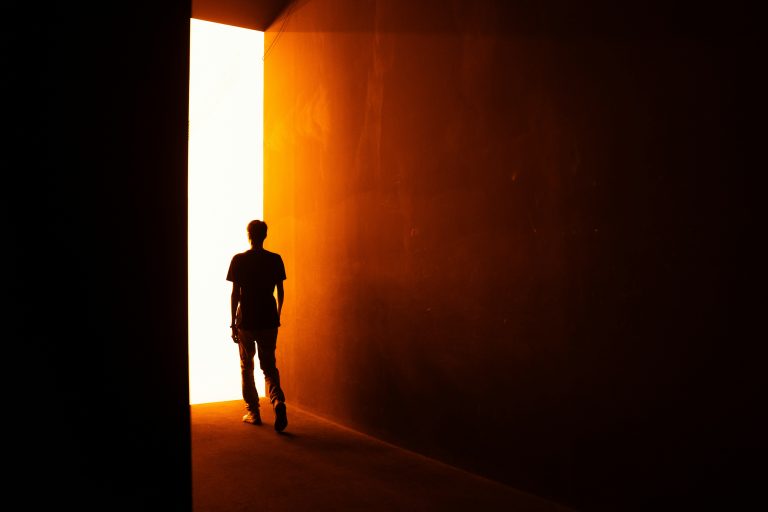
Leaving the cave was once an individual act. Today it may require dismantling the entire system that keeps us inside. But is that possible — or even necessary?
In the autumn of 2022, Scott Kelby — one of the most widely followed American photographers in his field — announced that he would delete his Facebook account after fifteen years of continuous presence. The reason was not a policy dispute or a particular incident. It was that he had spent an entire weekend on a road trip with friends and found himself thinking about how to document the moments for the platform rather than simply living them. The departure was not a protest. It was a reclamation — the recovery of a capacity to be fully present without an intermediary.
Kelby’s story is not unusual. But it raises the hardest question in this series: if we recognize that we are inside the cave, if we understand who builds it and who owns its fire and who moves its shadows, can we actually leave? And if we leave individually, as Kelby did, does that change anything about the cave or about those who remain inside it?
This article is the conclusion of our series. But it is not a comfortable conclusion — because Plato’s allegory itself, which is where we began, does not end comfortably.
The End of the Allegory: What Happens to the Philosopher Who Leaves?
In most discussions of Plato’s cave, people stop at the dramatic moment: the prisoner breaks free, climbs out, sees the sun, grasps the truth of the world. But the allegory does not end there.
Plato continues: the philosopher returns to the cave to tell the others what he has seen. But his eyes, accustomed to sunlight, cannot see well in the cave’s darkness. He stumbles. He appears more helpless than the prisoners who have spent their lives reading shadows. When he tries to persuade them that the shadows are not reality, he is ridiculed. And if he tries to force any of them toward freedom, he is killed.
Socrates was gesturing implicitly at himself when he told this. He was sentenced to death in 399 BCE, partly because he had persisted in trying to persuade the citizens of Athens that what they believed was not the complete truth. The philosopher who leaves the cave and returns does not receive a prize — he receives a punishment. Because the cave is not merely individual ignorance. It is a social system with beneficiaries who do not want it disturbed.
This is precisely what we pointed toward in our first essay on Plato’s cave (Plato’s Cave: A Late Reading): the problem is not individual illusion but the structure that produces illusion and reproduces it. And a structure is not dismantled by individual awakening.
Socrates left the cave and returned — and was killed. Kelby left Facebook and lived contentedly. The difference is not entirely philosophical. It is economic. One threatened a system of power. The other abandoned a platform whose level of threat is measured by the advertising revenue he no longer generates.
The Truman Show: Departure as an Act of Resistance
No article concluding a series called Silicon Cave can be imagined without pausing at Peter Weir’s 1998 film The Truman Show, starring Jim Carrey — not because it is the most aesthetically refined or the most philosophically intricate of the cinematic references we have drawn on throughout, but because it is the only one that addresses the question of departure directly.
Truman Burbank has lived since birth inside a fully artificial city under an enormous dome. Everything around him is designed: the weather, the neighbors, the wife, the friends, the incidents. He does not know. He believes he is living an ordinary life, but in reality he is the unwitting star of a television program watched by a billion people. Cameras are everywhere. The production company controls every detail.
The most philosophically charged moment in the film is not when Truman discovers the truth. It is when he decides — after discovering it — to walk toward the door anyway. Because the show’s producer, Christof, confronts him with a powerful argument: the world outside the dome is worse. It holds betrayal and fear and loss. Inside the dome everything is safe, organized, beloved. Exit is clear danger. Staying is guaranteed comfort.
Truman chooses the door. Not because what lies beyond it is necessarily better, but because staying means consenting to be managed by another will forever. That decision is not merely philosophical — it is political. It is a refusal to be raw material for other people’s profit, even when the raw material is comfortable.
When Truman stands at the door and casts one last glance at the camera before stepping out, the audience inside the film applauds. But Plato might have asked: this audience cheering Truman as he leaves the television is doing so from a couch in front of another screen. Has anyone actually left?

Forms of Departure: A Spectrum, Not a Single Point
“Leaving the digital cave” is not one act but a spectrum of practices with varying effects on the individual and on the system. Distinguishing between them is useful before judging any of them.
Complete exit means deleting accounts and severing the relationship with platforms entirely. This is technically possible, but it carries a real social and professional cost for those whose networks have formed digitally. We discussed this in the first article of our series (The Digital Cave: Why We Choose Shadows Again). Complete exit is not an absolute virtue — it is a choice with a price paid most easily by those who can afford it without significant damage.
Selective disconnection means redesigning one’s relationship with platforms without eliminating it: disabling notifications, setting fixed hours for use, switching off personalized recommendation and replacing it with chronological browsing, deleting apps from the phone and keeping access only through the browser — a step studies show measurably reduces addictive usage patterns. This form is more realistic for most people and less costly to existing digital social networks.
Conscious use means remaining inside the platforms with explicit awareness of their mechanisms of influence. Knowing how the recommendation algorithm works genuinely changes how one responds to it — not entirely, but measurably. Awareness reduces power without neutralizing it.
Collective departure / regulatory action means political and regulatory pressure to change the structure of platforms rather than only changing one’s individual relationship to them. This is the slowest and most difficult form, but the only one capable of addressing the cave rather than merely the behavior of its inhabitants.
| Form of Departure | Individual Cost | Effect on the System | Practical Viability |
|---|---|---|---|
| Complete exit | High: social and professional isolation | Negligible if individual | For those who can absorb the cost |
| Selective disconnection | Medium: habit redesign | Minor: marginal revenue reduction | Most realistic for the majority |
| Conscious use | Low | Negligible in practice | Necessary but insufficient |
| Collective / regulatory action | Low for the individual | The only path to structural change | The hardest, slowest, and most necessary |
Counter-Arguments: Why “Leaving” May Be the Wrong Answer
Before surrendering to the narrative of departure as virtue, we owe serious attention to counter-arguments that are equally compelling.
The first is that individual exit resembles abandoning a sinking ship rather than repairing it. If the most aware users leave the platforms, those who remain are the least resistant. The digital space does not become empty when the educated depart — it becomes a cleaner arena for the worst content. Exit surrenders the cave to those who prefer it dark.
The second is that digital platforms were not inherently only instruments of control. They have constituted a genuine part of the public sphere for minorities and the marginalized who had no audible voice in traditional media. Absence from the platforms for some will not mean a return to an original freedom — it will mean a return to an original silence. The cave, for all its flaws, gave voice to people who would not have been heard outside it.
The third is that awareness of the cave does not collapse the cave. You can know everything we have described in this series — about recommendation algorithms, biometric data, the Proteus Effect, anonymous identity — and still open the platform every morning. Not because you lack willpower, but because the cave was engineered with a precision that makes willpower alone insufficient. This is not a philosophical surrender. It is an accurate diagnosis that demands a response at the same level of accuracy.

Awareness as Beginning, Not End
In the final scene of Plato’s allegory as Socrates tells it, the philosopher who has returned does not transform the cave by describing it. The cave resists, mocks, punishes. But Socrates continues anyway — not because he believes in guaranteed success, but because an accurate description of reality is the necessary, if insufficient, condition for any possible change.
This is what we have attempted in this series. Not a call for complete exit, and not a justification for passive staying. Rather: a description of the cave in its nine layers. Why we choose the shadows. Who builds the walls and owns the fire. What the nature of what is shown to us actually is. What happens to our bodies, our identities, our morality, our art inside it. Who governs it without anyone ever voting for them. And what remains of us when we want to leave.
In every article of this series, we found that the digital cave differs from Plato’s cave in one fundamental respect: Plato’s cave was a structure imposed on the prisoners without their knowledge. The digital cave is a structure we participate in building every day — with every interaction, every comment, every subscription, every service fee we pay. We are not only imprisoned in it. In some part, we are also those who cast the shadows.
That recognition is uncomfortable. But it is also the only thing that transforms the question from “can I leave?” into “what do I choose to build?”
What Remains of the Human Being in the Cave?
In George Orwell’s Nineteen Eighty-Four, Winston Smith writes in his secret diary: “Writing to the future or to the past, for a time when thought is free.” He knows that what he writes will probably never be read in his lifetime. But he writes. The act of writing itself is a form of departure, even when the body remains bound.
This image recalls something I find myself believing, after everything I have read and written across this series: the deepest departure from the cave is not distance from the screen, but the preservation of the capacity to question from within it. The capacity to read a piece of news and pause and ask: who wants me to see this? The capacity to feel rage at a post and ask: why am I angry, and who benefits from my anger? The capacity to sit before a beautiful avatar and ask: what is being communicated to me about my real body by comparison?
This capacity does not close the cave. But it makes the fire that casts the shadows visible. And when the fire becomes visible, the shadows stop being all there is.

A Farewell from the Cave: Closing the Series
We began this series with a question that seemed simple: is the metaverse Plato’s new cave? We found that the answer is more complex than the question implies.
The digital cave is more severe than Plato’s cave in one dimension: Plato’s cave was a uniform darkness. The digital cave is a personalized darkness, designed specifically for you, knowing your vulnerabilities and anxieties and the kinds of content that keep you seated. No cave in history has known its inhabitants with this degree of precision.
But the digital cave is less severe than Plato’s cave in another dimension: in Plato’s original, the chains were physically real. In ours, the chains are digital and their effects statistical and probabilistic. They can be resisted. They can be mitigated. They can, with effort and collective will, sometimes be redesigned.
What does not change between the two caves is this: awareness of the cave is not sufficient for leaving it. But it is the condition without which no departure is possible.
Thank you to everyone who has accompanied us on this journey from the first article to here. The questions we have raised do not end at the end of the series. They begin after it.
Series index:
- The Digital Cave: Why We Choose Shadows Again
- The Metaverse as Infrastructure: Building the Cave
- Forms vs. Code: Are Digital Worlds More Real Than Reality?
- The Body Is the New Cage: Escaping Biology Through Technology
- Algorithmic Republic: Who Governs the Digital City?
- The Third Simulation: Art in the Age of Generative AI
- The Ring of Gyges Online: Morality Without Consequences
- Digital Identity: Who Are You in the Metaverse?
- The Great Unplugging: Can We Leave the Cave Anymore?
References
- Plato. The Republic, Book VII — The Allegory of the Cave. (See our article: Plato’s Cave: A Late Reading)
- The Truman Show. Dir. Peter Weir. Paramount Pictures, 1998.
- Orwell, George. Nineteen Eighty-Four. Secker & Warburg, 1949.
- Newport, Cal. Digital Minimalism: Choosing a Focused Life in a Noisy World. Portfolio/Penguin, 2019.
- Harris, Tristan. Center for Humane Technology. humanetech.com
- Haidt, Jonathan, and Rausch, Zach. “Why the Mental Health Crisis Hit Teenage Girls So Hard.” The Atlantic, 2023.
- European Commission. Digital Services Act — Overview. digital-strategy.ec.europa.eu
- Also in this series: Digital Identity: Who Are You in the Metaverse?
- Also in this series: The Digital Cave: Why We Choose Shadows Again
- Also in this series: Algorithmic Republic: Who Governs the Digital City?
- Related: Plato’s Cave: A Late Reading
- Related: Smart Cities: Is Humanity Ready for Life in the Future?
- Related: BYOM and AI Sovereignty: Will Users Own Their Own AI Models Soon?
Silicon Cave
Is the Metaverse Plato’s New Prison? — Nine Articles


Silicon Cave | Is the Metaverse Plato’s New Prison? — nine articles on philosophy, technology, and the digital condition | Zy Yazan