The 100 Arab Novelists Guide

An interactive guide to 100 Arab novelists organized by literary current — from Mahfouz and Kanafani to the millennial generation. With analysis of the Booker Prize, the reader crisis, and a tribute to Colette Khoury.
Ask any Arab reader: “Who is the greatest Arab novelist?” — you will get an instant answer. But ask the same person: “Which Arab novelists have you actually read?” — and they hesitate. This gap between name-recognition and real reading is one of the biggest problems in the Arabic novel landscape. We know the names because we have heard them, not because we have read the people behind them.
In this article — the third in the series The Arabic Novel: A Literary Map — we do more than list names. We approach the modern Arabic novel landscape with classification and criticism: who are the founding fathers, what currents shaped the Arabic novel, and where does it stand today after the passing of the pioneering generation and the rise of the prize economy and commercial fiction?
Part One: The Founding Fathers — The Generation That Invented the Arabic Novel
There was no Arabic novel in the modern sense before the twentieth century — and this is not an insult, it is a historical fact. The novel as a long prose form with a complete narrative structure, complex characters, and a conscious relationship with social time — this novel was born in Arabic in the environment of the Nahda and modernization. It needed founding fathers to invent a new language for a new reality.
Kahlil Gibran (1883–1931) — Lebanon/America — sits in a grey area between poetry, narrative, and philosophy. The Broken Wings (1912) is not a novel in the strict sense — it is a long prose poem in the shape of a love story. But The Prophet (1923), written in English, became an unprecedented global phenomenon for a writer of Arab origin. Gibran wrote for two worlds at once: the Arab world in Arabic, and the English-speaking world in its own language. He is therefore the first model of the bilingual Arab writer who thinks in Arabic and speaks to the West in its own tongue. His critical problem is that the West loved him for his packaged spirituality, while Arabs did not always take him seriously in the context of Arabic fiction because his most important works were written in English. He remains, however, a gateway that cannot be bypassed.
Taha Hussein (1889–1973) — Egypt — the title “Dean of Arabic Literature” was not given to him by chance. The blind scholar who absorbed both al-Azhar and the Sorbonne produced Al-Ayyam (The Days, 1929): the first real Arabic autobiography in the modern literary sense. But even more important than Al-Ayyam was Fi al-Shi’r al-Jahili (On Pre-Islamic Poetry, 1926): an intellectual slap that declared the critical mind capable of questioning everything, even fixed truths. Taha Hussein did not write novels in the usual sense — he built the cultural environment that allowed the Arabic novel to breathe.
Tawfiq al-Hakim (1898–1987) — Egypt — Awdat al-Ruh (Return of the Spirit, 1933) laid the foundations of the Egyptian novel before Mahfouz. And Bird of the East (1938) is the first Arabic novel of civilizational shock: an Egyptian who collides with the West and returns more confused than when he left. Al-Hakim did not love human characters — he loved ideas. This is why his novels were called “intellectual novels”: the character is not a developing human being but a philosophical position debating another position.
Suhayl Idris (1925–2008) — Lebanon — founder of Al-Adab magazine in 1953, the single most influential literary journal in the history of modern Arabic literature. Al-Hayy al-Latini (The Latin Quarter, 1953) is the story of a Lebanese man in Paris — but it is really the story of an entire generation: the Arab intellectual who experiments with Western freedom, discovers it does not answer his questions, and returns to his Arab identity.
Abd al-Rahman al-Sharqawi (1920–1987) — Egypt — Al-Ard (The Land, 1954) is the ideal model of the socially committed novel with an epic quality. The Egyptian peasant against feudalism and colonialism — this three-part structure (individual / class / history) would be repeated in many Arabic novels that followed.
Naguib Mahfouz (1911–2006) — Egypt — cannot be reduced to a paragraph, but we try: he is more than a writer, he is an institution. The Cairo Trilogy (Palace Walk, Palace of Desire, Sugar Street) is the great Egyptian epic, following three generations in the heart of Cairo over half a century. But Mahfouz did not stop at realism: Children of the Alley (1959) is the symbolic novel that tells the story of all humanity in a single alley — and it remained banned in Egypt for decades. His output exceeds fifty works, and he is still one of the least actually read Arab writers relative to his fame.
Part Two: The Novel of Identity and Conflict
Tayeb Salih (1929–2009) — Sudan — Season of Migration to the North (1966) is simply the most complex and debated Arabic novel of the twentieth century. Mustafa Sa’eed — the Sudanese man who goes to London and conquers its women the way colonialism conquered his country — is an inverted image of the colonizer. His direct European counterpart is Joseph Conrad’s Heart of Darkness: both texts tell the same journey from two opposite directions.
Abd al-Rahman Munif (1933–2004) — Saudi Arabia/Jordan — Cities of Salt (five-volume series, 1984–1989) is the most ambitious novelistic project in Arabic literary history: it documents how the Gulf transformed from a tribal desert to a petroleum state, and what human price was paid. Place is the hero. Oil is the hidden evil. Munif had his Saudi citizenship revoked because of his novels.
Ghalib Halasa (Jordan, 1932–1989) — Al-Dahk (The Laughter), Bortrait — an authentic Jordanian voice that remained on the margins of Arab attention despite the depth of his work.
Hani al-Rahib (Syria, 1939–2000) — Al-Waba’ (The Epidemic), Al-Mahzumun — wrote about politics and the body with a boldness that audiences did not accept during his lifetime.
Mu’nis al-Razzaz (Jordan, 1951–2002) — Alive in the Dead Sea — mixed the fantastical with the political very early in the Jordanian context.
Part Three: The Palestinian Question — When the Novel Becomes a Witness
The modern Arabic novel cannot be read without understanding the enormous weight the Palestinian question placed on the novelistic imagination. Palestine was not one subject among many — it was the open wound that bled into every text, even when not mentioned directly.
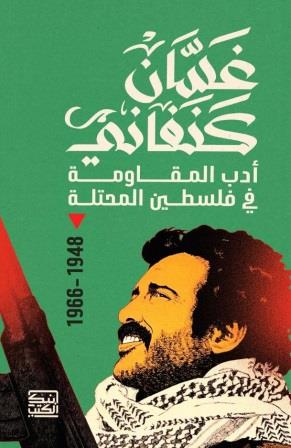
Ghassan Kanafani (1936–1972) — Palestine — he had not yet turned thirty-six when he was killed by a car bomb in Beirut. But in that short life he wrote enough to be considered the unrivaled genius of the Palestinian novel. Men in the Sun (1963) — three Palestinians hiding in an empty water tanker crossing the desert toward Kuwait, who suffocate in silence. The final sentence: “Why didn’t they knock on the walls of the tank?” — is the question of the entire Palestinian generation to itself.
Emile Habibi (1921–1996) — Palestine — The Pessoptimist (1974) is the most intelligent and moving work in Palestinian literature. Its hero “Sa’id the Pessoptimist” observes the occupation through a lens of bitter irony. Habibi convinced the world of something difficult: that satire can be more cutting than weeping.
Elias Khoury (Lebanon, 1948) — Gate of the Sun (1998) — the Lebanese writer who produced the most complex Palestinian novel since Kanafani: an epic of memory, forgetting, and the interlocking myths of the Nakba generation.
Rashad Abu Shawar (Palestine, 1942) — Lovers in a Long War — the voice that accompanied the Palestinian revolution from the inside and wrote about its human reality, not its slogans.
Ibrahim Nasrallah (Palestine/Jordan) — The Palestinian Comedy — the most ambitious epic project in Palestinian fiction since Kanafani’s generation.
Today, more than seven decades after the Nakba, amid the massacres in Gaza that survivors document moment by moment — Palestinian fiction faces an existential question: can imagination still contain what surpasses imagination in its cruelty? The answer will be written by the generations to come.
Part Four: The Female Voice — From Whisper to Shout
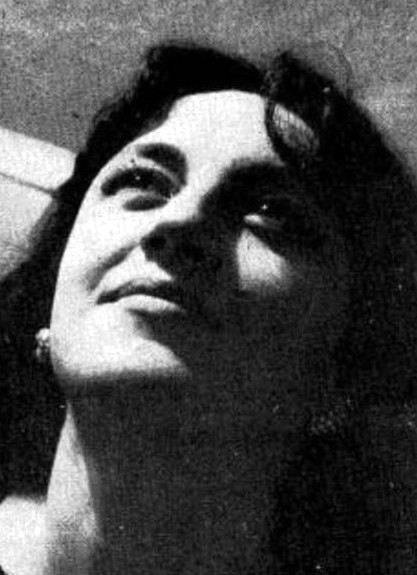
In 1958, Colette Khoury published her novel Ayyam Ma’ahu (Days With Him) — and the Arab world was not ready for a woman who wrote about love, desire, and freedom from inside her own feminine experience without apology.
On the tenth of April 2026 — just days before these lines were written — Colette Khoury passed away in Damascus after a life spanning roughly ninety-five years and more than thirty books. Granddaughter of the national statesman Faris al-Khoury, she studied law and French literature, and wrote in a transparent, emotional Arabic that opened a wide door for women’s writing to go beyond its traditional limits. Colette Khoury did not write about women as a subject — she wrote about them as a complete subject who thinks, chooses, and holds herself accountable. She shared with Nizar Qabbani — Damascus’s great poet — a clear spiritual and literary kinship: both were from Damascus, both wrote about the body and love in an era that did not forgive such writing, and both paid a social price. Together they formed a picture of what Damascus was in the 1960s: a city that held the beauty of language and the boldness of voice at the same time. Her passing is a real and irreplaceable loss.
Before Colette, May Ziyada (1886–1941) — a Lebanese woman in Egypt — was opening the way from a different angle: not a novelist in the strict sense, but a critic and salon hostess who gathered the geniuses of her era. Her intellectual and emotional relationship with Kahlil Gibran through letters — and they never met in person — is the most famous literary love story in Arabic literature of the twentieth century.
Nawal El Saadawi (1931–2021) — Egypt — the physician who made feminist rebellion a complete political program. Woman at Point Zero (1975) is built on the true story of a woman on death row — the female body as a battlefield of social conflict. El Saadawi did not always write beautiful literature — but she wrote necessary words. This difference matters.
Ghada al-Samman (1942) — Syria — Beirut 75 was written months before the Lebanese civil war broke out and predicted it. Her prose is closer to music than to ideological speech.
Ahlam Mosteghanemi (1953) — Memory in the Flesh is the best-selling Arabic novel ever written by a woman — and it is a critical phenomenon in itself: she writes in the language of the audience, not the language of academia. This is an achievement, and also an open question.
Part Five: Political Fiction and the New Gulf Voice
Ihsan Abd al-Quddus (1919–1990) — Egypt — labeled a “popular writer” in a dismissive and unfair way. He observed the Egyptian woman in the city with genuine social sensitivity in La Anam (I Do Not Sleep) and other works. Yusuf Idris (1927–1991) — primarily a genius short story writer rather than a novelist, but his stories about the peasant and the body read like chapters of a great novel that was never written. Comparing him to Chekhov is not an exaggeration.
Khaled Khalifa (1964) — Syria — In Praise of Hatred is the deepest novelistic dissection of the Syrian experience of despotism. Then No Knives in the Kitchens of This City and Death Is Hard Work — an unannounced trilogy about Syria from the inside.
Youssef Ziedan (1958) — Azazeel, which won the Arabic Booker Prize, provoked sharp religious controversy and opened the file of the Arab Christian history that had long been silenced.
Ghazi al-Gosaibi (1940–2010) — Saudi Arabia — minister, diplomat, poet, and novelist in one person. Shaqqa al-Hurriyya (The Apartment of Freedom) tells the story of a Saudi student in 1950s Cairo. Al-Usfuriyya (The Mental Hospital) is the most daring novel ever written by an Arab government official: a man enters a psychiatric institution and discovers that the mad are wiser than the sane.
Turki al-Hamad (1952) — the Adama trilogy opened Saudi society from the inside with a boldness that drew accusations of blasphemy.
Raja Alem (1956) — Tawq al-Hamam, which won the Arabic Booker — mysterious Meccan fiction layered with Sufi symbolism.
Raja al-Sanie (1981) — Girls of Riyadh, a mass phenomenon first and a literary one second: millions of copies in twenty languages.
Haydar Haydar (Syria, 1936) — A Feast for Seaweed triggered in Egypt in 2000 a storm of protests and book burnings when it was redistributed there — a sexual, political, and Sufi novel he wrote in the 1970s in one long breath.
Amin Maalouf (Lebanon/France, 1949) — Leo the African and others: he writes in French and remains one of the most influential voices of Arab origin in world literature. The question of his identity — Arab writing in French, or French writer of Arab origin? — has no answer, and that is what makes it interesting.
Ahmed Khaled Tawfik (1962–2018) — Egypt — “Doctor Horror” of the Arabs, as his readers call him. The Ma Wara’ al-Tabi’a (Supernatural) series brought millions of young Arabs to reading — which is an achievement that should not be minimized. Then came Utopia (2008) — a novel about Egypt in 2023 written with a prophet’s eye. He died before seeing how right he was.
Part Six: The Arabic Booker — Prize or Direction?
Since the International Prize for Arabic Fiction launched in 2007 with British-Emirati backing, the Arabic novel landscape has organized itself around it. This is not necessarily a compliment.
The gains are clear: novels reached longlists, got translated, and found readers they would never otherwise have reached. Azazeel, The Bamboo Stalk, Celestial Bodies — without the Booker, none of these would have reached half the audience they found. But the deeper problem is the mechanism of unannounced direction: the serious Arab novelist today knows — or guesses — what the committee “wants”: a novel with a “boldly” acceptable social subject, written in language that does not frighten the Western translator, with characters that satisfy Western curiosity about “the East.” This leads to writing toward the prize instead of writing toward the truth.
The painful irony: the deepest novels in the history of modern Arabic literature — Season of Migration, The Committee, Cities of Salt, The Pessoptimist — never won the Booker. When readers recognize this gap between “what won” and “what is truly great” — a healthy sense of dissatisfaction grows in them.
Part Seven: The Passing of the Pioneers and the Reader Crisis
Between 2006 and the death of Colette Khoury in April 2026 — an entire generation passed that founded the Arabic novel and defined its identity: Mahfouz, Radwa Ashour, al-Gosaibi, Edwar al-Kharrat, Baha Taher, Khairy Shalaby, Jamal al-Ghitani, Nawal El Saadawi, Ahmed Khaled Tawfik, and others.
This generation possessed three things at once: lived historical experience (colonialism, the Nakba, the 1967 defeat, oil), a shared cultural project, and patience with writing as a long act that asks for no immediate reward. The new generation writes in a different world: the great projects have collapsed, and platforms reward fast content. And the level of the Arab reader has declined — not because readers have become less intelligent, but because the best world novels are now available in Arabic at low cost. Why would a young Arab read an unknown local writer when Crime and Punishment and One Hundred Years of Solitude sit on the same shelf? This challenge is for the next generation of Arab novelists to answer through their work.
Part Eight: The 100 Arab Novelists — Interactive Guide
Use the search field to find a name, nationality, novel, or literary current:
| # | Name | Country | Literary Current | Key Work |
|---|---|---|---|---|
| 1 | Naguib Mahfouz | Egypt | Realistic epic | The Cairo Trilogy |
| 2 | Tayeb Salih | Sudan | Identity and conflict | Season of Migration to the North |
| 3 | Ghassan Kanafani | Palestine | Resistance symbolism | Men in the Sun |
| 4 | Jabra Ibrahim Jabra | Palestine/Iraq | Urban modernism | The Search for Walid Masoud |
| 5 | Abd al-Rahman Munif | Saudi Arabia/Jordan | Petroleum critique | Cities of Salt |
| 6 | Edwar al-Kharrat | Egypt | Sensory experiment | Rama and the Dragon |
| 7 | Emile Habibi | Palestine | Political satire | The Pessoptimist |
| 8 | Hanna Mina | Syria | Maritime realism | The Sail and the Storm |
| 9 | Ibrahim al-Koni | Libya | Desert epic | The Bleeding of the Stone |
| 10 | Sonallah Ibrahim | Egypt | Political archive | The Committee |
| 11 | Jamal al-Ghitani | Egypt | Heritage experiment | Zayni Barakat |
| 12 | Alaa Al Aswany | Egypt | Social realism | The Yacoubian Building |
| 13 | Baha Taher | Egypt | Sufi humanism | Sunset Oasis |
| 14 | Khaled Khalifa | Syria | Anatomy of despotism | In Praise of Hatred |
| 15 | Youssef Ziedan | Egypt | Historical controversy | Azazeel |
| 16 | Ahmed Saadawi | Iraq | War fantasy | Frankenstein in Baghdad |
| 17 | Sinan Antoon | Iraq | Language of death | The Pomegranate Alone |
| 18 | Inaam Kachachi | Iraq | Exile and memory | The American Granddaughter |
| 19 | Nawal El Saadawi | Egypt | Feminist rebellion | Woman at Point Zero |
| 20 | Ghada al-Samman | Syria | Alienation and liberation | Beirut 75 |
| 21 | Hoda Barakat | Lebanon | War psychology | The Stone of Laughter |
| 22 | Radwa Ashour | Egypt | Humanist history | Granada Trilogy |
| 23 | Sahar Khalifeh | Palestine | Feminist occupation | Wild Thorns |
| 24 | Latifa al-Zayyat | Egypt | National liberation | The Open Door |
| 25 | Ahlam Mosteghanemi | Algeria | Romantic memory | Memory in the Flesh |
| 26 | Waciny Laredj | Algeria | Historical Sufi | Nouar al-Luz |
| 27 | Mohamed Choukri | Morocco | Raw marginality | For Bread Alone |
| 28 | Tahar Ben Jelloun | Morocco | Identity and exile | This Blinding Absence of Light |
| 29 | Tahar Wattar | Algeria | Revolutionary critique | Al-Laz |
| 30 | Bensalem Himmich | Morocco | Philosophical historical | The Theocrat |
| 31 | Taha Hussein | Egypt | Intellectual memoir | The Days |
| 32 | Tawfiq al-Hakim | Egypt | Intellectual novel | Return of the Spirit |
| 33 | Suhayl Idris | Lebanon | Arab existentialism | The Latin Quarter |
| 34 | Abd al-Rahman al-Sharqawi | Egypt | Socialist realism | The Land |
| 35 | Yusuf Idris | Egypt | Realist short fiction | The Shame |
| 36 | Ihsan Abd al-Quddus | Egypt | Social romance | I Do Not Sleep |
| 37 | Fathi Ghanem | Egypt | Journalistic psychology | The Man Who Lost His Shadow |
| 38 | Khairy Shalaby | Egypt | Egyptian popular | Salih Hisha |
| 39 | Ibrahim Abd al-Majid | Egypt | Alexandrian historical | No One Sleeps in Alexandria |
| 40 | Mohamed al-Bisatie | Egypt | Quiet rural | Houses Behind the Trees |
| 41 | Mansoura Ez Eldin | Egypt | Feminist experiment | Beyond Paradise |
| 42 | Ahmed Khaled Tawfik | Egypt | Youth horror | Utopia |
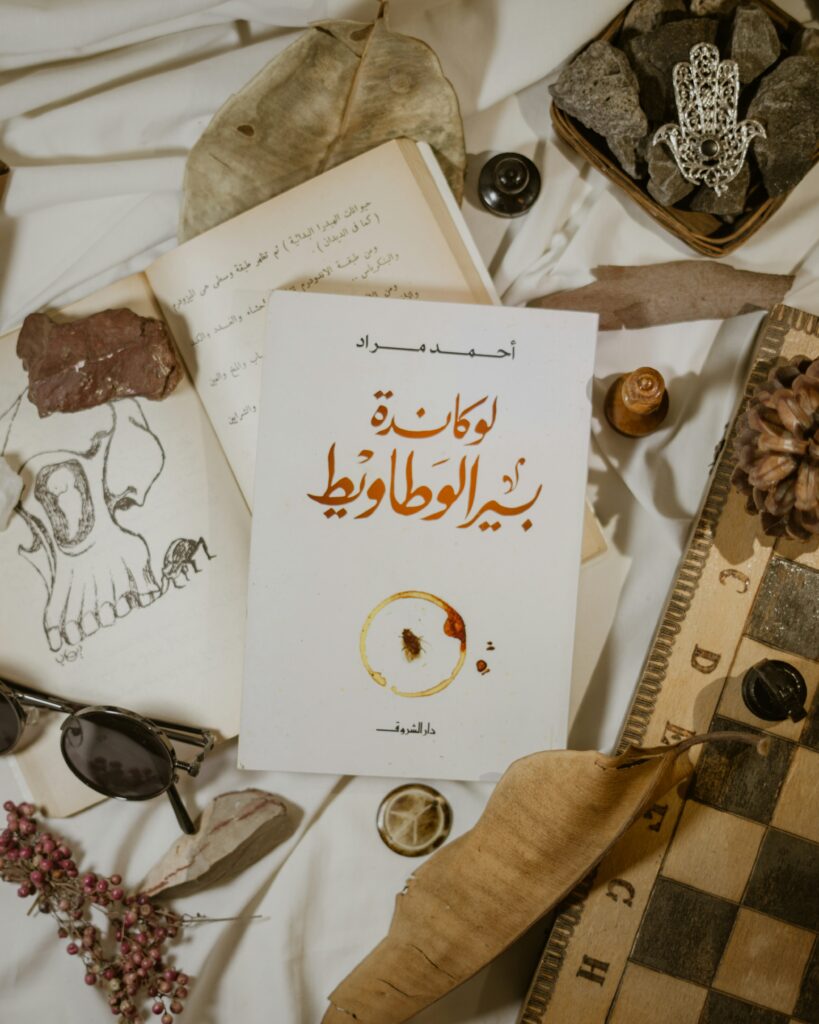
| 43 | Ahmed Mourad | Egypt | Cinematic thriller | Vertigo |
| 44 | Elias Khoury | Lebanon | Palestinian multivocal | Gate of the Sun |
| 45 | Rabi’ Jabir | Lebanon | Historical fiction | Druze of Belgrade |
| 46 | Rashid al-Daif | Lebanon | Experimental war | Dear Mr. Kawabata |
| 47 | Jabbour Douaihy | Lebanon | Lebanese generational | June Rain |
| 48 | Hanan al-Shaykh | Lebanon | Candid feminist | The Story of Zahra |
| 49 | Alawiya Sobh | Lebanon | Oral feminist | Maryam of the Stories |
| 50 | Fawwaz Haddad | Syria | Philosophical historical | The Traitorous Translator |
| 51 | Rosa Yassin Hassan | Syria | Political feminist | Proof of Honey |
| 52 | Mamdouh Azzam | Syria | Aleppan nostalgia | Palace of Rain |
| 53 | Nabil Sulayman | Syria | Syrian epic | Orbits of the East |
| 54 | Fuad al-Takarli | Iraq | Psychological realism | The Long Way Back |
| 55 | Ghaib Tu’ma Farman | Iraq | Baghdadi social | The Palm Tree and the Neighbors |
| 56 | Ali Badr | Iraq | Intellectual musical | Papa Sartre |
| 57 | Betool Khedairi | Iraq | Feminine war | A Sky So Close |
| 58 | Hassan Blasim | Iraq | Horrific surrealism | The Madman of Freedom Square |
| 59 | Hisham Matar | Libya/Britain | Exile coming-of-age | In the Country of Men |
| 60 | Jokha Alharthi | Oman | Omani social | Celestial Bodies |
| 61 | Saud Alsanousi | Kuwait | Gulf identity | The Bamboo Stalk |
| 62 | Layla al-Uthman | Kuwait | Maritime social | The Woman and the Cat |
| 63 | Raja Alem | Saudi Arabia | Meccan mystery | The Dove’s Necklace |
| 64 | Abdo Khal | Saudi Arabia | Wealth and corruption | Throwing Sparks |
| 65 | Ghazi al-Gosaibi | Saudi Arabia | Minister and novelist | The Apartment of Freedom |
| 66 | Turki al-Hamad | Saudi Arabia | Identity and rebellion | Adama |
| 67 | Raja al-Sanie | Saudi Arabia | Bold social | Girls of Riyadh |
| 68 | Ibrahim Nasrallah | Palestine/Jordan | Palestinian epic | Time of White Horses |
| 69 | Rabai al-Madhoun | Palestine | Diaspora identity | Destinies |
| 70 | Rashad Abu Shawar | Palestine | Revolution and humanity | Lovers in a Long War |
| 71 | Kahlil Gibran | Lebanon/America | Poetic philosophical | The Broken Wings |
| 72 | May Ziyada | Lebanon/Egypt | Feminist essayist | Warda al-Yaziji |
| 73 | Colette Khoury ✦ | Syria | Damascene feminist | Days With Him |
| 74 | Haydar Haydar | Syria | Sufi political | A Feast for Seaweed |
| 75 | Hani al-Rahib | Syria | Bold political | The Epidemic |
| 76 | Ghalib Halasa | Jordan | Existential margins | The Laughter |
| 77 | Mu’nis al-Razzaz | Jordan | Fantastical political | Alive in the Dead Sea |
| 78 | Amin Maalouf | Lebanon/France | Global historical | Leo the African |
| 79 | Amir Tag Elsir | Sudan | Surreal humanist | The Grub Hunter |
| 80 | Salim Barakat | Syria/Sweden | Kurdish surrealism | The Feathers |
| 81 | Shukri al-Mabkhout | Tunisia | Academic political | The Italian |
| 82 | al-Habib al-Salmi | Tunisia | Exile silence | Lovers of the Alhambra |
| 83 | Bachir Mefti | Algeria | Existential political | Ghosts of the Rooster |
| 84 | Rachid Boudjedra | Algeria | Experimental provocateur | The Obstinate Snail |
| 85 | Fadhila al-Faruq | Algeria | Contemporary feminist | Ta’ al-Khajal |
| 86 | Mouloud Feraoun | Algeria | Kabyle realism | The Poor Man’s Son |
| 87 | Mohamed Berrada | Morocco | Narrative modernity | The Game of Forgetting |
| 88 | Mohamed Zafzaf | Morocco | Moroccan margins | The Woman and the Rose |
| 89 | Mohamed al-Ash’ari | Morocco | Poetic political | The Bow and the Butterfly |
| 90 | Miral al-Tahawy | Egypt | Bedouin feminist | The Tent |
| 91 | Muhsin al-Ramli | Iraq | Rural humorous | The President’s Gardens |
| 92 | Kateb Yacine | Algeria | Francophone revolutionary | Nedjma |
| 93 | Mohammed Dib | Algeria | Colonial social | The House on the Hill |
| 94 | Leila Abouzeid | Morocco | Traditional feminist | Year of the Elephant |
| 95 | Abd al-Rahman Majid al-Rubaie | Iraq | Southern realist | The Tattoo |
| 96 | Najwa Barakat | Lebanon | Fantastical margins | Bread on Uncle Milad’s Table |
| 97 | Muhammad Khudayyir | Iraq | Basra experimental | Basrayatha |
| 98 | Mohamed al-Mansi Qandil | Egypt | Romantic historical | Moon Over Samarkand |
| 99 | Atheer al-Nashmi | Saudi Arabia | Romantic popular | Forgive Me |
| 100 | Khawla Hamdi | Tunisia | Religious social | In My Heart Is a Hebrew Woman |
✦ Colette Khoury (1931–2026) — passed away in Damascus on April 10, 2026. The list is open to debate — some names near the end sit in contested territory between literary fiction and commercial writing, and that debate is itself part of what this series examines.
Next in the series: Orientalism’s Mirror: Said and Translation — how the West shaped the image of the Arabic novel from the outside.
References
- Roger Allen, The Arabic Novel: An Historical and Critical Introduction, Syracuse University Press, 1995.
- Sabry Hafez, The Genesis of Arabic Narrative Discourse, Saqi Books, London, 1993.
- International Prize for Arabic Fiction: arabicfiction.org
- (See our article: The Narrative Mind: Philosophy and Tales)
- (See our article: Dawn of Narrative: Pre-Arabic Roots)
- (See our article: Scheherazade: When the Name Is the Story Itself)